“When in Rome, do as the Romans do”
In this section we go through enduring sayings that still resonate, we read them to reflect on our own lives and choices.
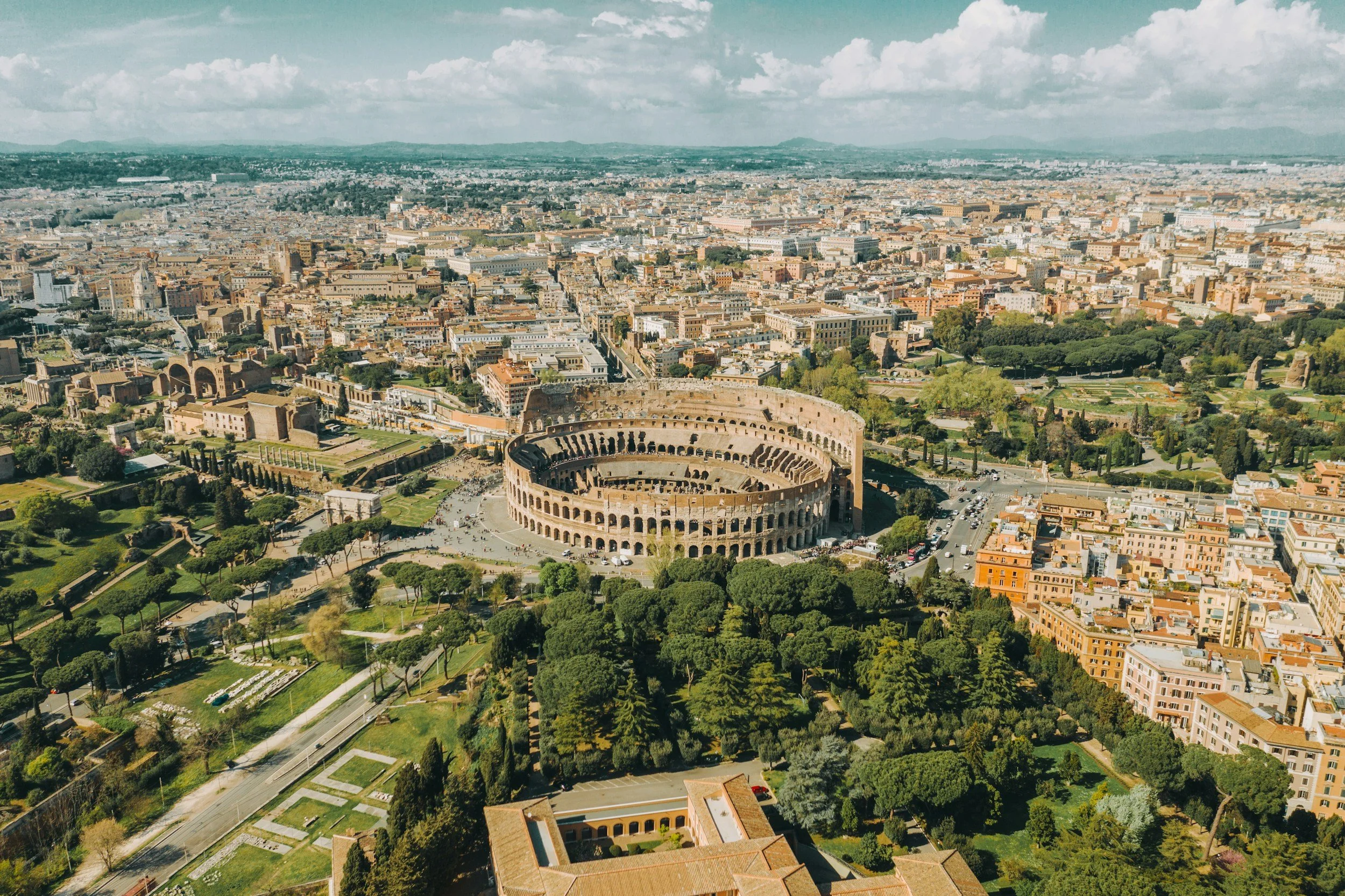
General view of Rome.
The quote “When in Rome, do as the Romans do”, “A Roma, fai come i Romani”, traces back to 1700 years and still resonates today as one of the oldest travel quotes constituting a historical reminder to respect the culture and customs of the place you’re in.
Its significance today goes beyond travel to reach social behavior, diplomacy, business and culture as it encourages blending in smoothly out of respect to the other cultures, without having to lose one’s identity. It encourages us to observe, adapt, and participate rather than stand apart.
Before becoming a general travel quote, this saying had religious roots.
The story goes back to the 4th century when Augustine of Hippo arrived in Milan coming from Rome in 384 AD. Confused by the different religious customs between the two cities, Augustine asked Ambrose, the bishop of Milan, for advice.
At the time, Augustine noticed that in Rome, people fasted on Saturdays, while in Milan, they did not. Unsure what to do, Augustine asked Ambrose for guidance.
Ambrose famously replied: “When I am in Rome, I fast on Saturday; when I am in Milan, I do not.”
That practical advice is a call to adapt to the local customs of wherever you are, and it eventually evolved into the modern expression “When in Rome, do as the Romans do.”
Openness
At its heart, the quote is about openness. When you travel, or even when you step into a new environment, you’re entering someone else’s way of life. Eating at their pace, greeting people the way they do, or embracing local habits isn’t about losing yourself; it’s about showing respect.
In many ways, it’s also an invitation to experience life more fully. Trying unfamiliar foods, adopting new routines, or even slowing down as in Mediterranean cultures, can reveal perspectives you might otherwise miss. By “acting like the Romans,” as Saint Augustine recorded in his writings quoting Ambrose, you’re not pretending, you’re learning.
Ultimately, the quote encourages connection, by saying that when we make the effort to meet people where they are, we don’t just fit in, we enrich our own view of the world.
Its meaning still resonates today, especially across the Mediterranean, where traditions, rituals, food, and social customs shape everyday life.
The Mediterranean is an ideal example for this coexistence; it is a sea that has been blending civilizations for 5,000 years. The alphabet you are reading right now, the olive oil in your kitchen and the variety of food on your table.
All of it is the result of cultures that knew how to blend through travels.
Augustine (354–430 CE) was the bishop of Hippo (in present-day Algeria), he spent years exploring different philosophies before converting to Christianity in 386 CE. He became one of the most influential theologians in Western Christianity specifically with his work “The City of God”.
Ambrose of Milan(c. 340–397 CE) was the bishop of Milan, one of the most important cities of the late Roman Empire. He was a powerful church leader and skilled preacher. He played a key role in Augustine’s conversion through his preaching and personal example.