How Cyprus’ Beloved Sausage Became Second Best in the World?
It is summertime and grilling season has just kickstarted in the Mediterranean region, specifically Cyprus. Among the favorite grills, one beloved sausage appears at family celebrations, weekend barbecues, Easter feasts, name-day parties, and picnics.
For many Cypriots, it represents the taste of childhood, the smell of summer, and the gathering of family around the grill. It is an ideal Mediterranean harmony of flavors, and the good news is that in 2025, it was ranked as the second-best sausage dish in the world.
This is Sheftalia, the traditional Cypriot sausage that beat German and Argentinian sausages, consecutively ranking 7th and 5th on the TasteAtlas food platform.
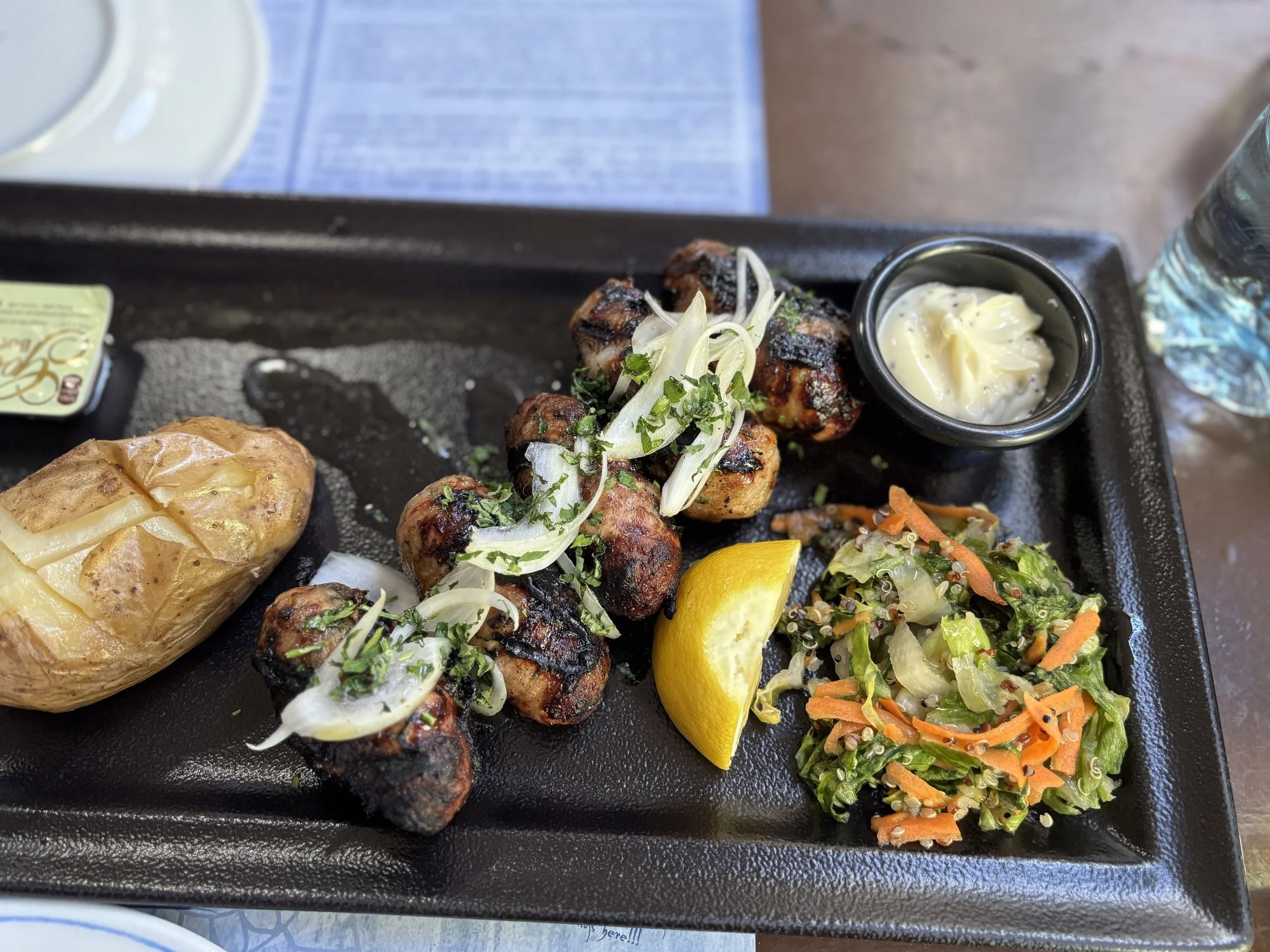
Sheftalia served with baked potato and salad.
What is Sheftalia?
In every barbeque party I attended or hosted in Cyprus, the top favorite grills of course are the Souvlaki (meat cubes whether pork or chicken), Souvla (bigger chunks of lamb or chicken), Loukanika and Pastourma, the traditional local sausages, Halloumi cheese and next to those, of course, is Sheftalia, the omnipresent sausage.
What makes this sausage different is that it has no casing, no synthetic skin and no factory process. It is purely natural.
This traditional Cypriot sausage is made from a mixture of minced pork and lamb, chopped red onion and parsley, all wrapped in caul fat which is a thin fatty membrane that lines the stomach of cows, sheep, and pigs.
What holds Sheftalia together is the caul fat. It looks, up close, like a delicate spider web made of the finest fat. When the caul fat meets the heat of a charcoal grill, it does two things simultaneously: it crisps from the outside, creating a golden, slightly smoky shell, while melting inward to soften the meat as it cooks.
One slight detail differentiates this sausage: a pinch of cinnamon added with salt and pepper.
This last ingredient deserves a moment: cinnamon is part of the spice routes that ran through Cyprus for millennia.
The TasteAtlas Ranking
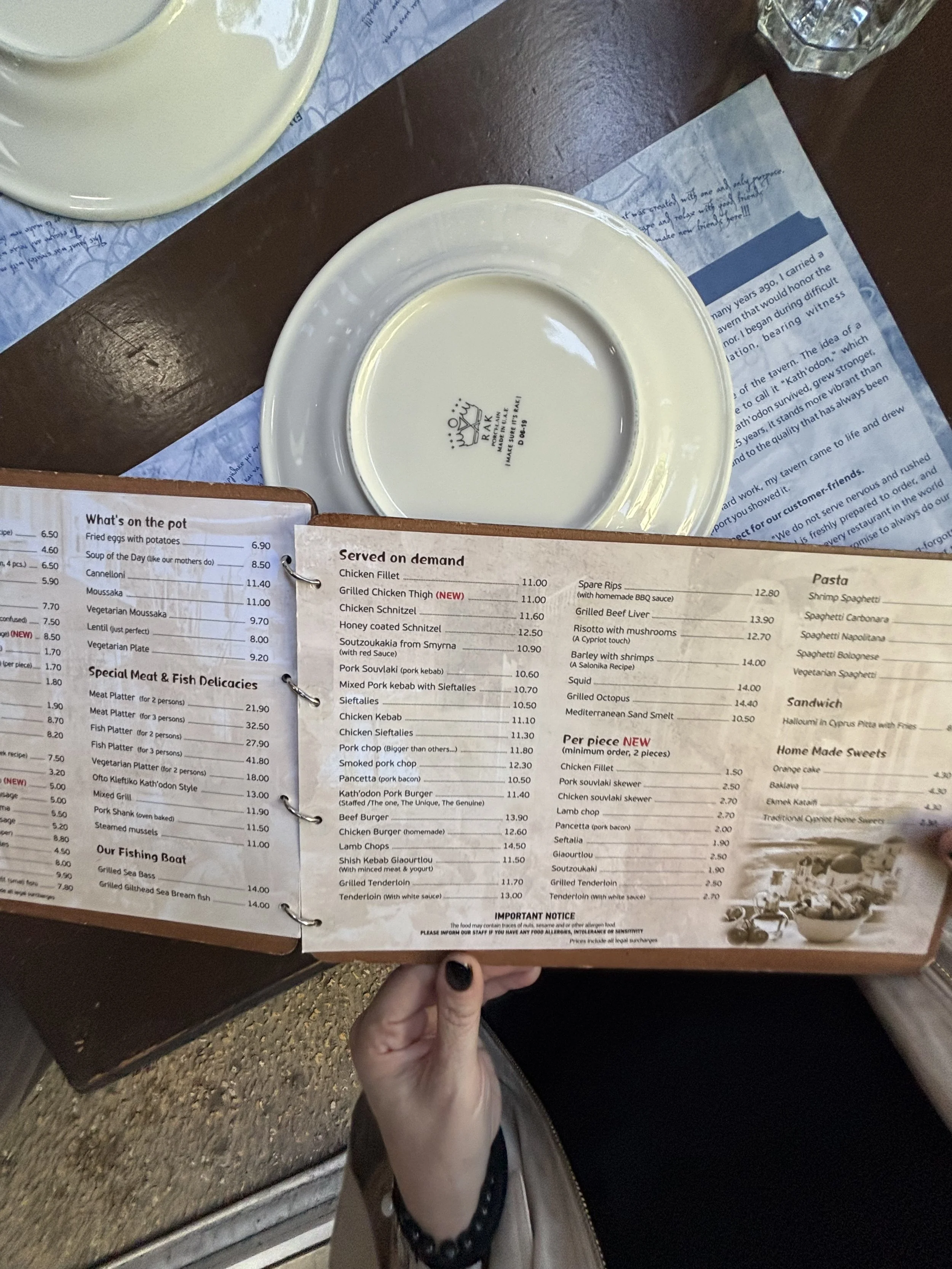
Sheftalia on the menu of Kath’odon tavern in downtown Nicosia.
In October 2025, TasteAtlas, the international food atlas that maps and rates traditional dishes from every country in the world, released its list of the world's best sausage dishes.
Sheftalia came second, with a score of 4.3 out of 5, behind only Spetsofai, the rustic Greek sausage and pepper dish from Thessaly.
It was a big leap as it came ahead of Pigs in Blankets and of Argentina's Chorizo a la Parrilla and Germany's Currywurst or Vietnam's Nem Nuong and Portugal's Ovos mexidos com Farinheira.
This ranking place Cypriot cuisine in conversation with the world's great food cultures and confirms that the simplest dishes are often the most extraordinary.
How to Eat Sheftalia?
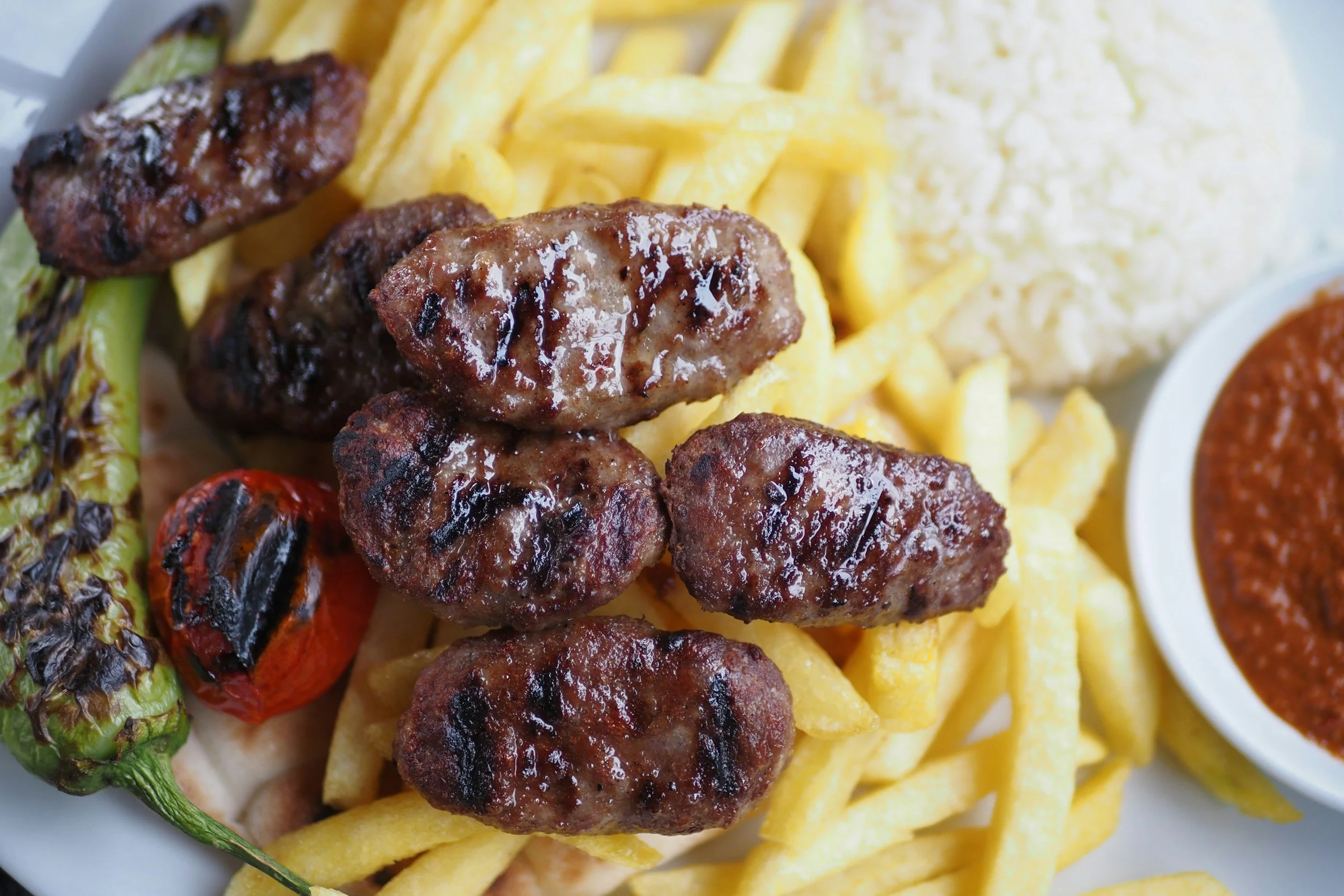
Sheftalia is almost never eaten alone. It is part of a table language.
In the street food tradition, it comes tucked inside a soft, pillowy pitta topped with salad and tzatziki, a sauce made with yogurt, cucumber and olive oil, with a squeeze of lemon.
Sometimes it comes alongside souvlaki, in the same bread. But in the local taverns it comes in a dish, either alone or part of the full meze meal, alongside fries or baked potatoes and salad.
This is one of the most perfectly calibrated combinations in Mediterranean food.
Sheftalia is honest food. It was invented by a street vendor, or named for a fruit, or both. It uses every part of the animal. It has been made the same way for centuries because it does not need to change.
It is protected under the EU's Traditional Specialties Guaranteed (TSG) program which highlights the traditional composition and method of preparation of the foodstuff.
Final word
Sheftalia remains a timeless symbol of Cypriot culinary heritage, bringing people together through its rich flavors, tradition, and unmistakable Mediterranean character.
And always, always: it is best eaten with people, loudly, with bread on the table and no plan for the rest of the afternoon! This is slowing down!
Et voilà! Kali Orexi everyone.
Five Facts about Sheftalia:
1- Sheftalia’s name traces its roots either to a street vendor who invented it or it was named after a fruit, Seftali meaning peach in Turkish.
2- For the wine pairing, a full-bodied Cypriot red, a Merlot, a Syrah, or ideally a Cabernet Sauvignon handles the richness of the meat.
3- Different regions have developed their own interpretations: in Larnaca and Limassol they add coriander, in Paphos and Troodos, lamb is preferred over pork, with fresh mint and green onions.
4- An average piece of Sheftalia, 100 to 150 grams, has 261 calories for 100 grams with 20 grams of protein, and 19 grams of fat.
5- Grilling minimizes added fats, making it a healthier option than frying, but portion control is key for balancing its caloric impact.