A wall, a song, and a new Europe! How did November 9, 1989, change a whole continent?
On that night, the Berlin Wall separating West and East Germany fell down, a divided city found its way back to itself, and a song would soon become the soundtrack to one of the most extraordinary moments of the twentieth century.
What Happened That Night?

For almost three decades, the Berlin Wall had stood as a concrete symbol of division, separating families, friends and an entire city. It represented more than a physical border: it embodied the ideological divide between East and West during the Cold War.
Then, on an unexpected November evening, everything began to change.
The events that led to the opening of the Berlin Wall were as extraordinary as the moment itself.
Following months of growing public demonstrations and political pressure across East Germany, an announcement by East German official Günter Schabowski about new travel regulations prompted thousands of people to gather at the border crossings.
When asked when the new rules would take effect, Schabowski indicated that they applied immediately.
What followed was an extraordinary scene. Thousands of East Berliners made their way to the checkpoints, where overwhelmed border guards eventually opened the gates.
People crossed freely between East and West Berlin. Strangers embraced, families reunited, and celebrations filled the streets. Some climbed onto the Wall itself, while others began chipping away at the concrete that had divided their lives.
It was not simply the opening of a border. It was the beginning of the end of an era.
A Song Taking Shape
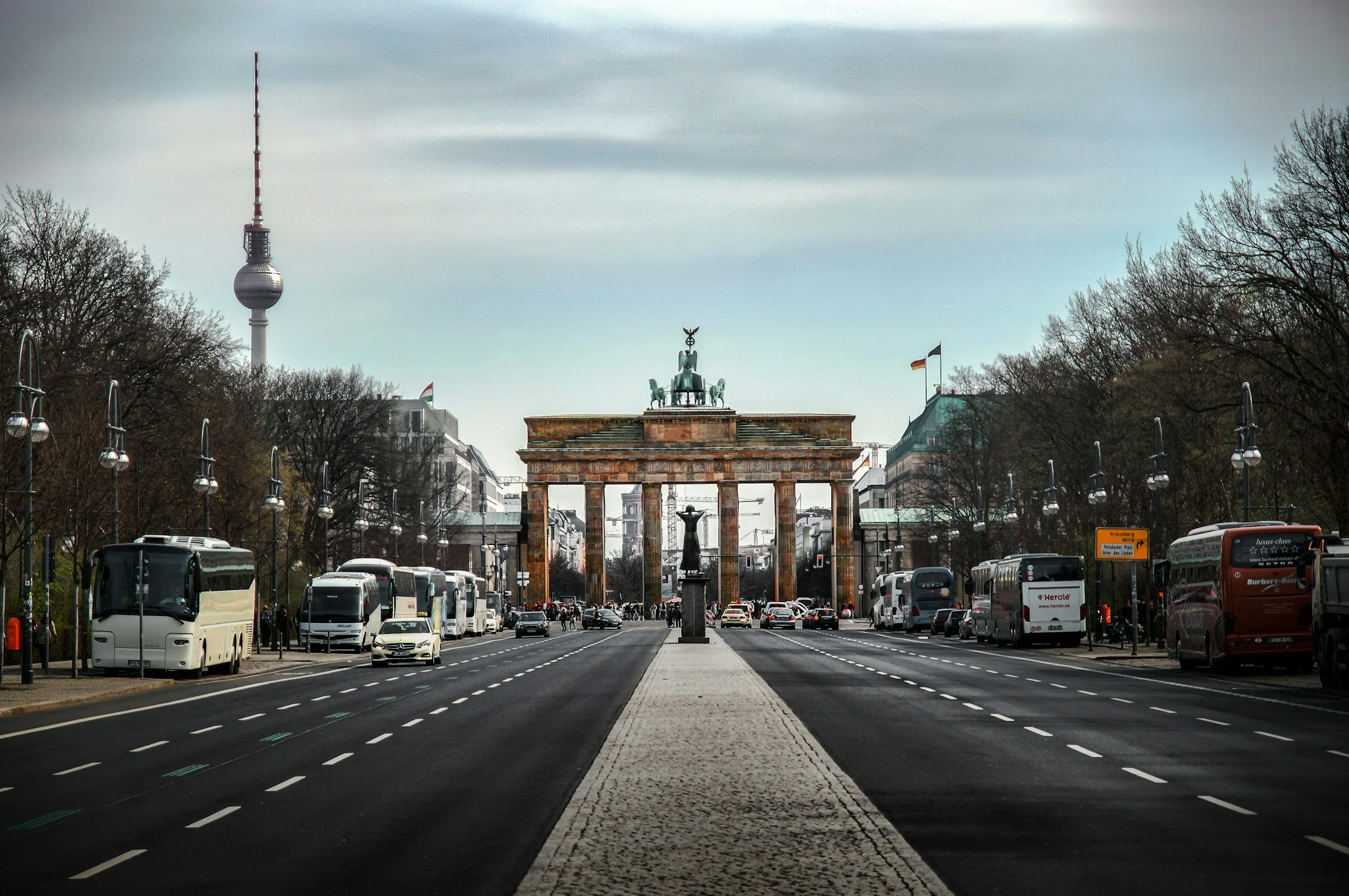
The Brandenburg Gate in Berlin.
German reunification would formally follow on 3 October 1990, but 9 November 1989 remains etched in history as the night the Wall came down.
A song born before history made its mark
Interestingly, one of the songs most closely associated with this extraordinary moment had already begun to take shape before the Wall fell.
In August 1989, German rock band Scorpions travelled to Moscow to perform at the Moscow Music Peace Festival, alongside international acts including Bon Jovi and Mötley Crüe.
It was a remarkable gathering at a time when the political climate between East and West was beginning to shift. Musicians from different countries shared a stage, while young people came together through their love of music.
For Scorpions frontman Klaus Meine, the experience was deeply inspiring.
The atmosphere of possibility, the sense of a changing world and the feeling that music could bring people together across political boundaries stayed with him.
Back in Germany, in September 1989, Meine began writing what would become one of the most recognizable rock ballads in music history: “Wind of Change.”
Born Out of Hope
The song was inspired by the atmosphere of transformation he had witnessed in Moscow, rather than by the fall of the Berlin Wall itself. Yet, when history unfolded just weeks later, its message seemed to capture the emotions of an entire generation.
A melody that had been born out of hope suddenly found its historic moment. When music becomes the soundtrack of history.
Released as part of Scorpions' Crazy World album, “Wind of Change” became much more than a successful rock ballad.
Its instantly recognizable whistled introduction, evocative lyrics and powerful melody came to represent a period of optimism, reconciliation and the possibility of a different future.
It became closely associated with the peaceful revolutions across Eastern Europe, the opening of the Iron Curtain and the eventual end of the Cold War.
What made the song so enduring was its ability to express something that political speeches and historical documents often struggle to capture: the human emotion behind monumental change.
Hope, freedom, belonging, and the possibility of starting again.
Final Word
On every November 9 th, as the world looks back at the events of 1989, the opening notes of “Wind of Change” evoke a time when hope travelled across borders.
It was a moment when people dared to imagine a different future, and an entire generation witnessed history being rewritten.
And that is how “Wind of Change” gave a melody to that historic moment, and the world still remembers!
Five Facts About the Fall of Berlin Wall and the Scorpions’ song:
1- The Berlin Wall had divided East and West Berlin since 13 August 1961, or around 28 years, and its opening on 9 November 1989 represented the fall of the Iron Curtain and the end of Europe's Cold War division.
2- The events of 1989 accelerated the transition from communist one-party systems towards multiparty democracy in Poland, Hungary, Czechoslovakia and Bulgaria.
3- Following these events, and the reforms launched before years, the Soviet Union formally dissolved itself on 26 December 1991.
4- The song “Wind of Change” became an anthem of the end of the Cold War and its themes of hope and brotherhood and peace resonated worldwide.
5- Born from a concert in Moscow, embraced by a reunifying Germany and remembered across Europe, it became the soundtrack of a historic turning point.