Photographer Boyana Loizou still capturing the human touch in the age of AI
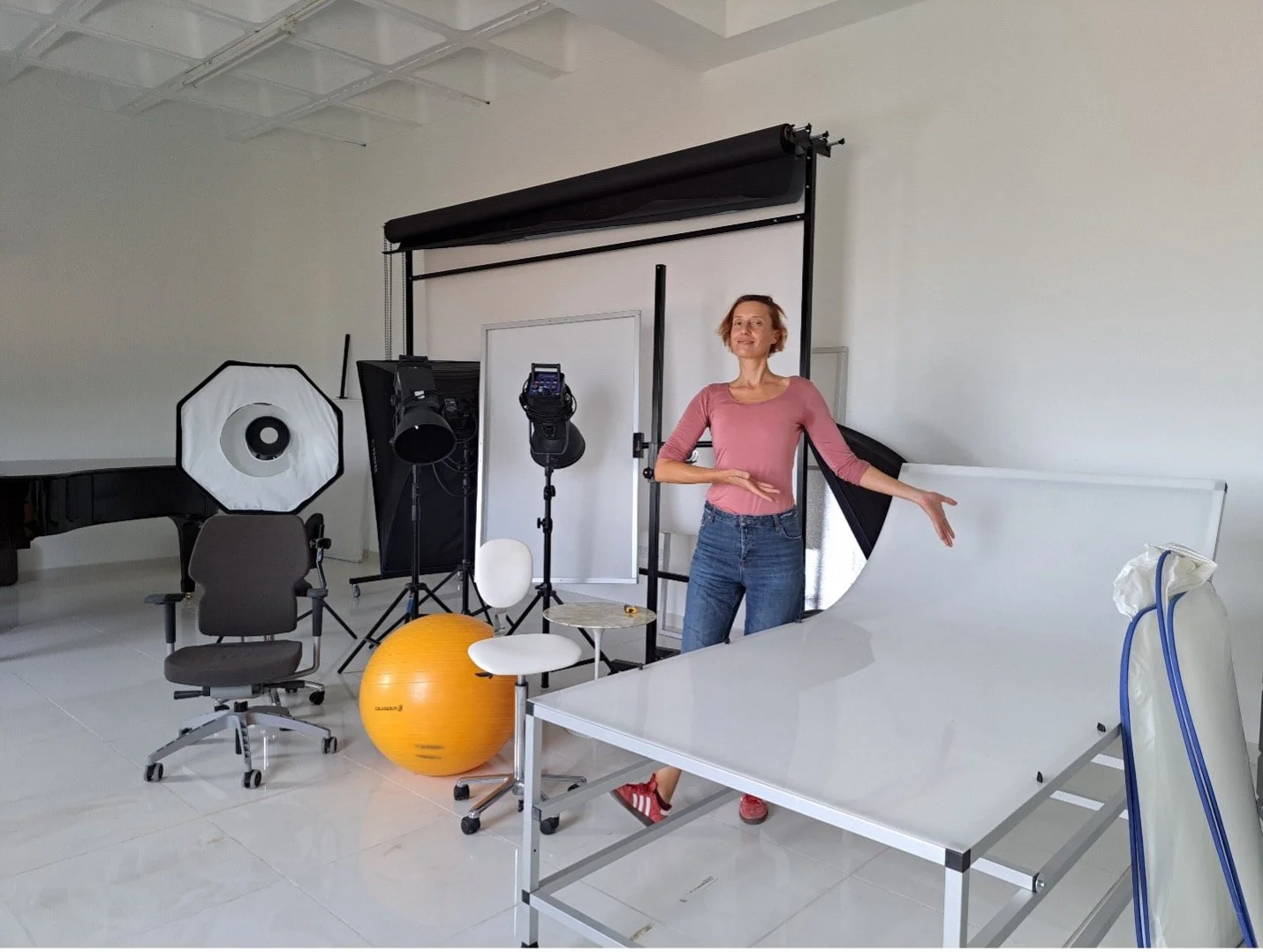
Boyana Loizou in her studio in Nicosia.
In a world where artificial intelligence can generate images with a few clicks, some photographers feel the ground shifting beneath their feet, but are still confident that the human touch will weather the storm and survive. Among them is Boyana Loizou, the professional photographer based in Cyprus and founder of “bless this mess photography”.
Boyana is of Slovenian origin and took Cyprus as a second home, chasing the light, the sun and new perspectives. She introduces herself on her social media pages as “Image taker+maker”, “focusing on human because there is so much raw beauty in any kind of scenery!”.
She considers herself one of the last professional photographers who capture images through human vision, skill and intuition and believes that growing up during the final years of the communist era shaped her work ethics and endurance in facing difficult situations. Yoga occupies a big part of Boyana’s life and she is a certified yoga teacher since 2017.
Personal experience
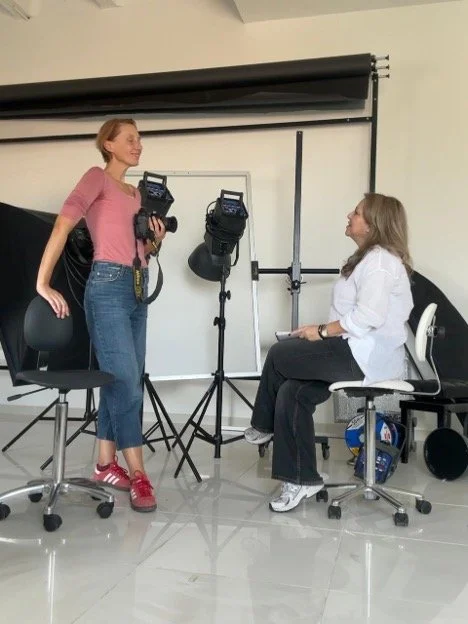
Norma with Boyana Loizou in the studio.
I am proud that I was part of this journey, as I passed under Boyana’s lens for a long photo shoot. It was a memorable day full of fun, conversations and creative connection. She wasn’t just taking photo, she was observing, listening, noticing small details in posture, expression, and mood.
Her kindness and patience created a quiet trust, turning the shoot into a shared moment rather than a performance. Between shots, we laughed, adjusted, paused, and let things unfold naturally. She had an eye for beauty and the camera became almost invisible.
For Boyana, photography is more than pressing a button. It’s about timing, emotion, and connection. She believes the magic of a photograph comes from the photographer’s eye, patience, and understanding of light, not from algorithms or AI filters.
I met Boyana in her studio in Nicosia to ask her about her journey and to find out her perspectives about photography and life.
“The final generation”
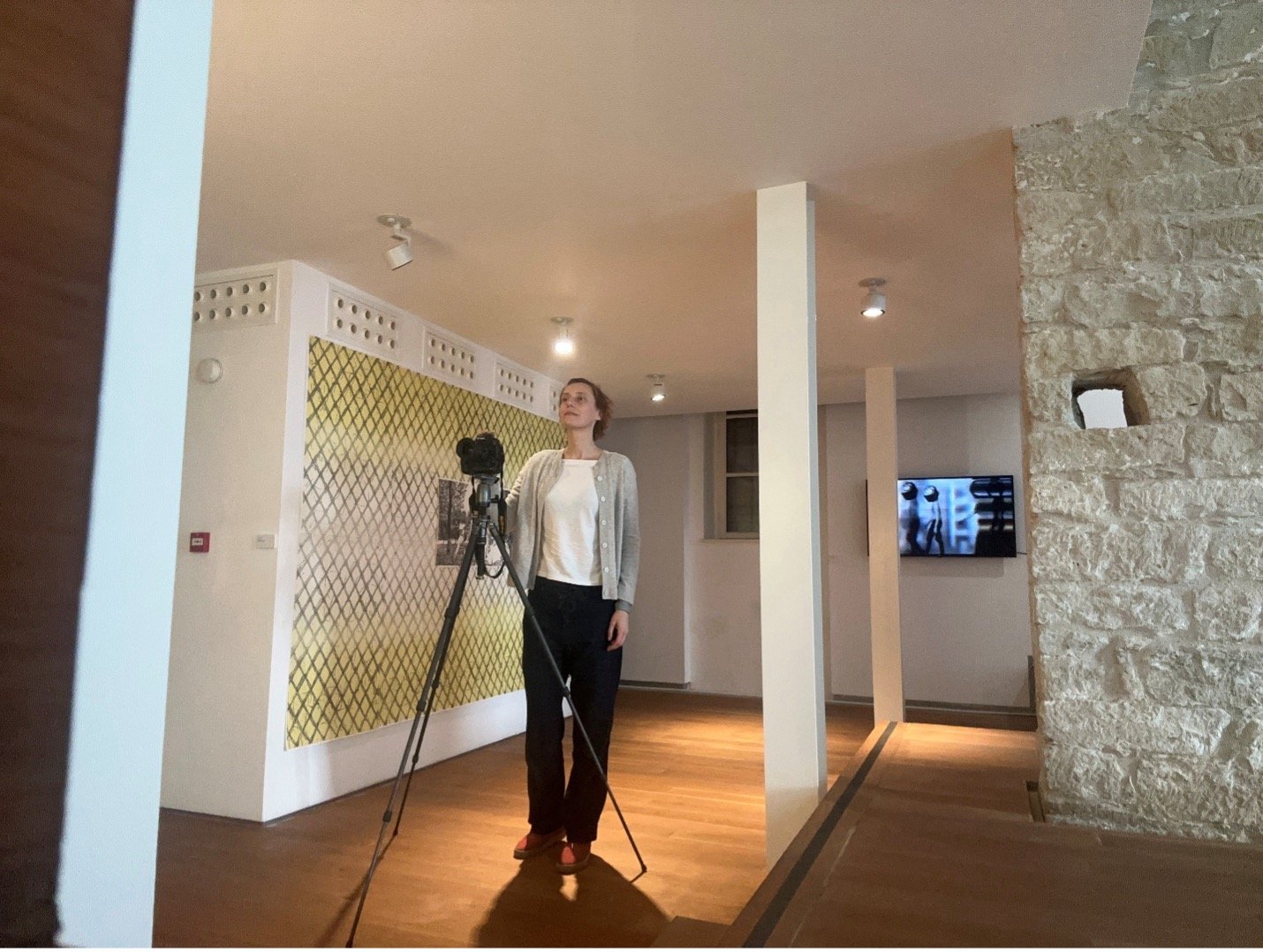
Boyana Loizou in action
“I often joke that my photographic style is one of the last truly classic ones. I belong to the final generation that learned on film: shooting negatives, working with large-format cameras, and spending long hours in the darkroom”, says Boyana about the challenges that photographers are facing with the flourishing AI formats.
She describes how her upbringing in communist Slovenia shaped her personality saying “my artistic spirit was also shaped, and at times restrained, by the strong work ethic I grew up with during the final years of the communist era” as in “1980s Slovenia, being a “good worker” offered stability, but not much room for curiosity”.
Boyana also says “I like to think that my artistic spirit hasn’t yet fully revealed itself. I worked to make a living. Sometimes to create work worthy of exhibitions, but motherhood often took precedence over my own expression, especially after relocating to Cyprus” adding “still, I was fortunate to find meaningful work in image consultancy, advertising, theatre, and the film industry”.
“Human hands and heart”
As AI-generated images flood social media and galleries, Boyana faces a new challenge: explaining why her work, crafted with traditional cameras, lenses, and darkroom techniques, is still relevant.
She comments “I am completely restructuring both my work and my identity. Traditional photography, as I knew it, almost doesn’t exist anymore, yet I’ve discovered great joy in teaching and in collaborating with special clients who still appreciate art made by human hands and heart”.
A source of her strongest inspiration has always been “women: mothers, muses, bodies, sisterhood stories form the core of my documentary approach”.
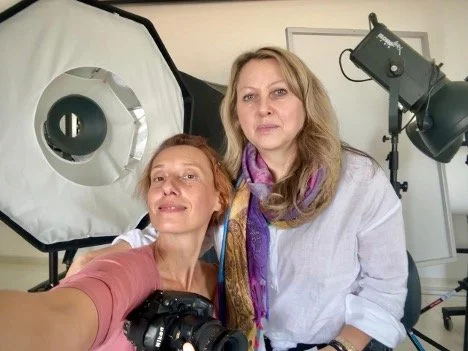
Souvenir photo of Boyana and Norma.
“A picture speaks a thousand words”
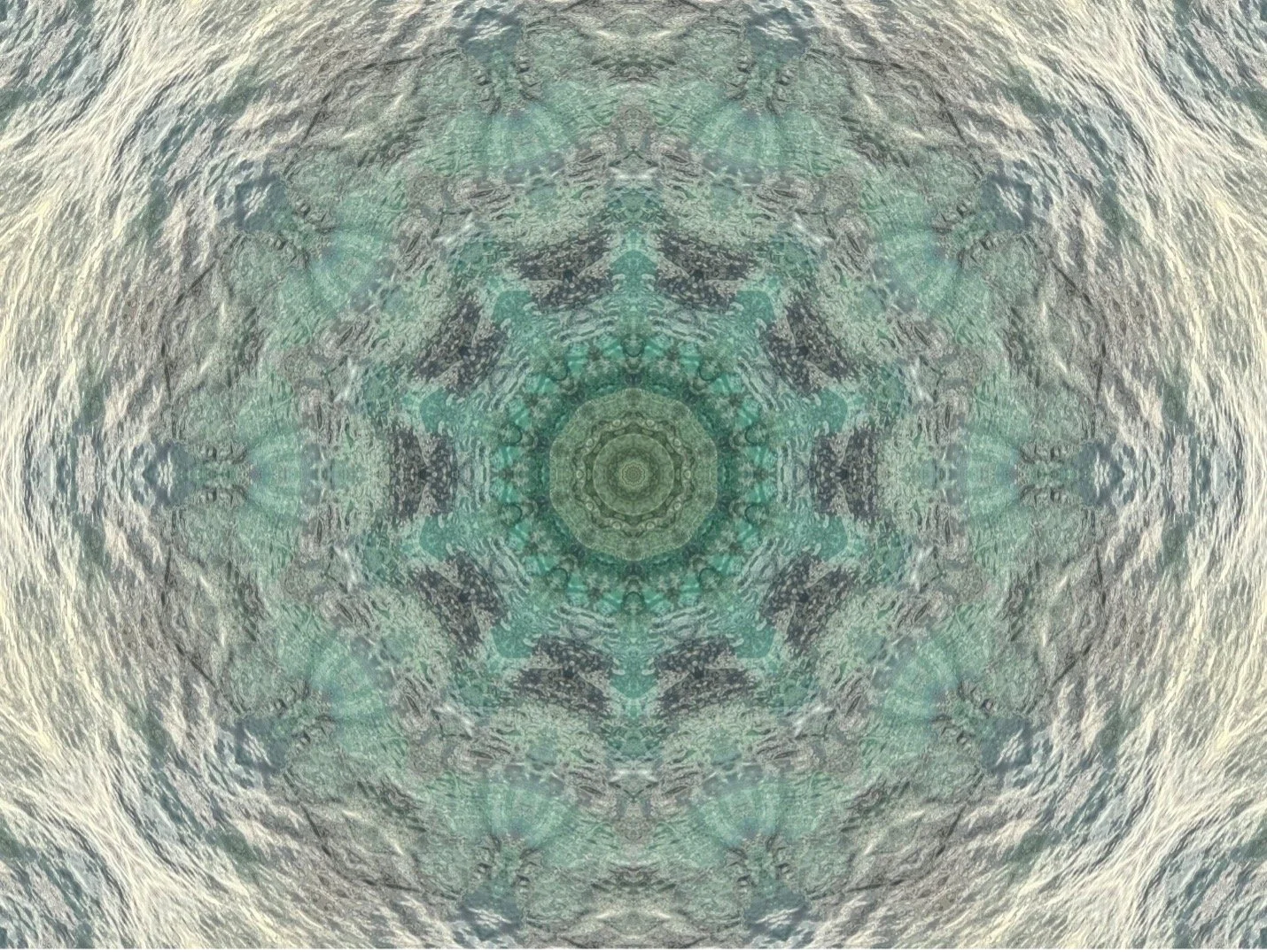
Part of a series created by Boyana under the headline “Feel Landscapes”, where the photographer took pictures of beloved landscapes and digitally manipulated them.
She goes on “nature sparks my creativity, while yoga, meditation, and supportive friends help me stay grounded”, telling me how yoga practice opened up new horizons in shaping her personality.
Boyana recalls that it was her introverted nature that guided her to photography. She adds “as people say, a picture speaks a thousand words, hence why I have always been a better listener, observer, and empath than a talker. But a new side of me emerged in my early thirties when yoga became a transformative practice. Eventually, I pursued certification and now have years of experience in teaching, finally learning to use my own voice and discovering my extroverted side as well”.
“Island of beauty”
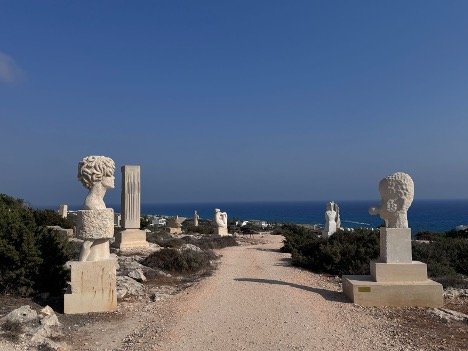
Open museum in Ayia Napa (Norma Karim)
About her life and experiences in Cyprus, Boyana affirms that “one of the greatest gifts Cyprus offers is the opportunity to evolve”.
She adds that this “island of beauty and endless sunlight reveals every conscious and unconscious part of ourselves. Sometimes gently, sometimes without any mercy and as Mary Poppins said, “The only way is up.” And since photography literally means “drawing with light,” I have to say: thank you, Cyprus, for the beautiful light”.
This light inspires by revealing beauty in constant change: the sea, sand and the sky encouraging reflection and creativity and lifting spirits with warmth and clarity.
In the beautiful sunny Cyprus, Boyana keeps on drawing with light, representing a growing voice among creatives who feel that technology should enhance, not replace, the human side of photography. They are the keepers of a fading tradition, striving so that the human vision remains at the heart of photography.
Et voilà! This is the story of a struggle to keep authenticity alive.
Five facts about the art of photography:
The word photography comes from Greek roots meaning “drawing with light”.
Photography is both an art and a science, combining creative vision with technical control of light, timing, and composition.
Photography began in the early 19th century, with the first permanent photograph created by the French inventor Nicéphore Niépce in 1826.
The transition from film to digital photography in the late 20th century revolutionized how images are captured, edited, and shared.
Smartphones have made image creation immediate and global, with billions of photos shared daily.