“Tina” dancing between two worlds to the heartbeat of the East
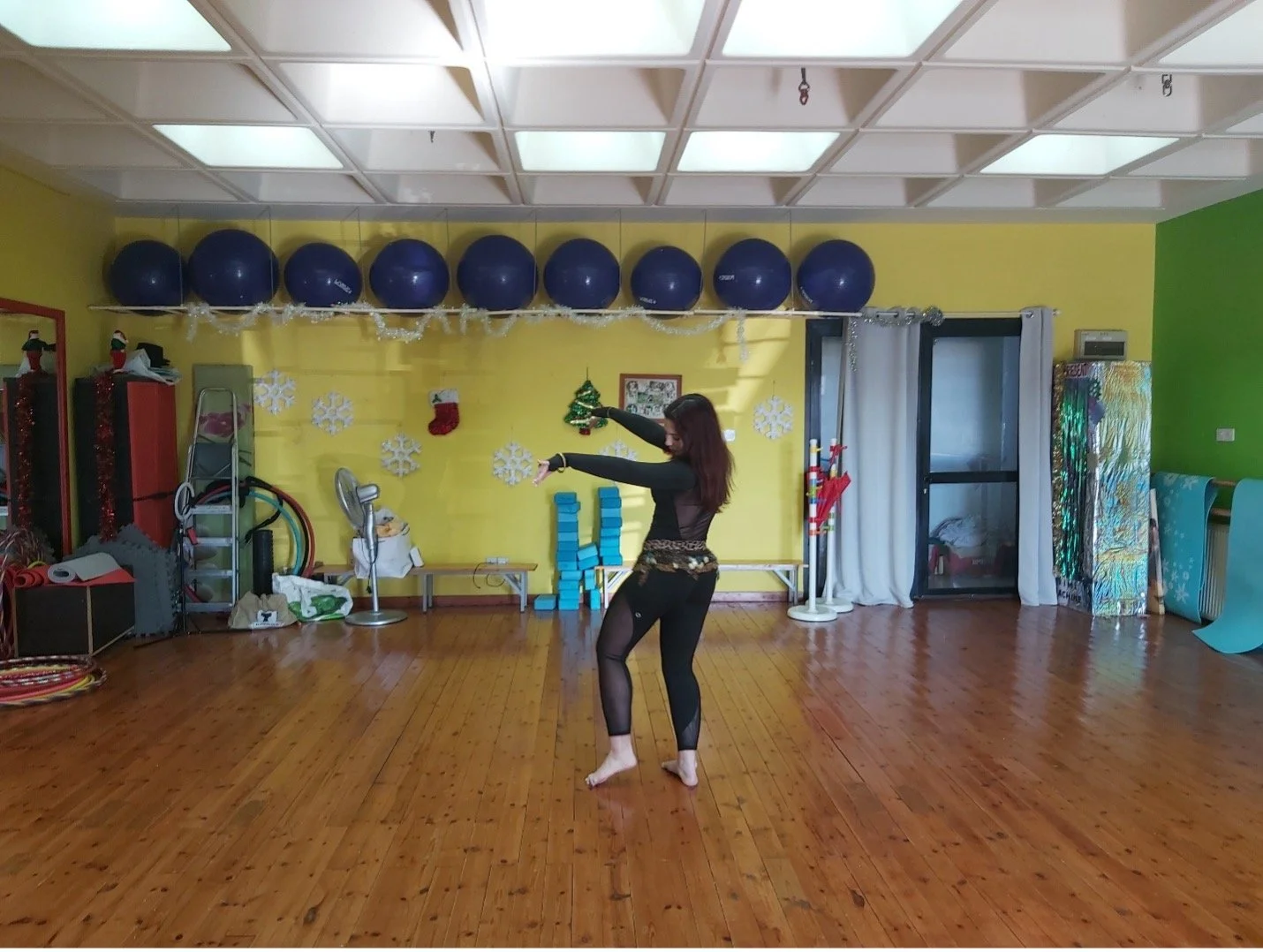
Konstantina training in the studio in Nicosia
At the crossroads of East and West, Cyprus has always been a place of cultural dialogue. This is reflected in the moves of a Cypriot woman who has transformed oriental dance into a living expression of identity, merging traditions and music of the Middle East with European influences, and carrying that fusion onto international stages.
Konstantina Mouskounti is a 20-year-old young lady who fell in love with the Oriental rhythms, Mediterranean melodies and culture. As a result, and at the age of five, she started practicing belly dancing and by the age of 17, she turned into a belly dance teacher! She chose the artistic name “Tina the Queen”, in Arabic Tina Al Maleeka, following the recommendation of a Jordanian friend of hers.
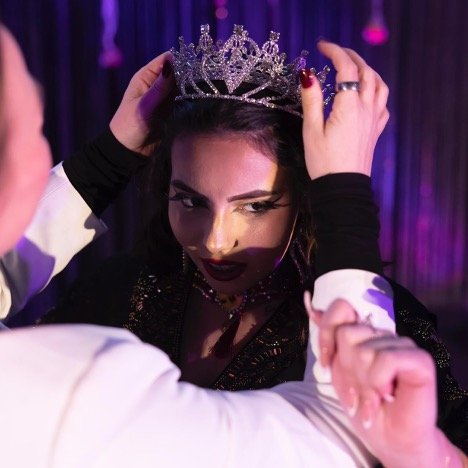
Konstantina being awarded in an international dance festival in Finland in 2025 where she won first prizes in two categories as well as another prize.
This fusion has not gone unnoticed. Performing at international dance festivals across Europe, she earned multiple awards, standing out among dancers from vastly different backgrounds. Judges and audiences alike have praised her ability to honor the roots of belly dancing while pushing its artistic boundaries, proving that tradition and innovation are not opposites, but partners.
“Empowerment”
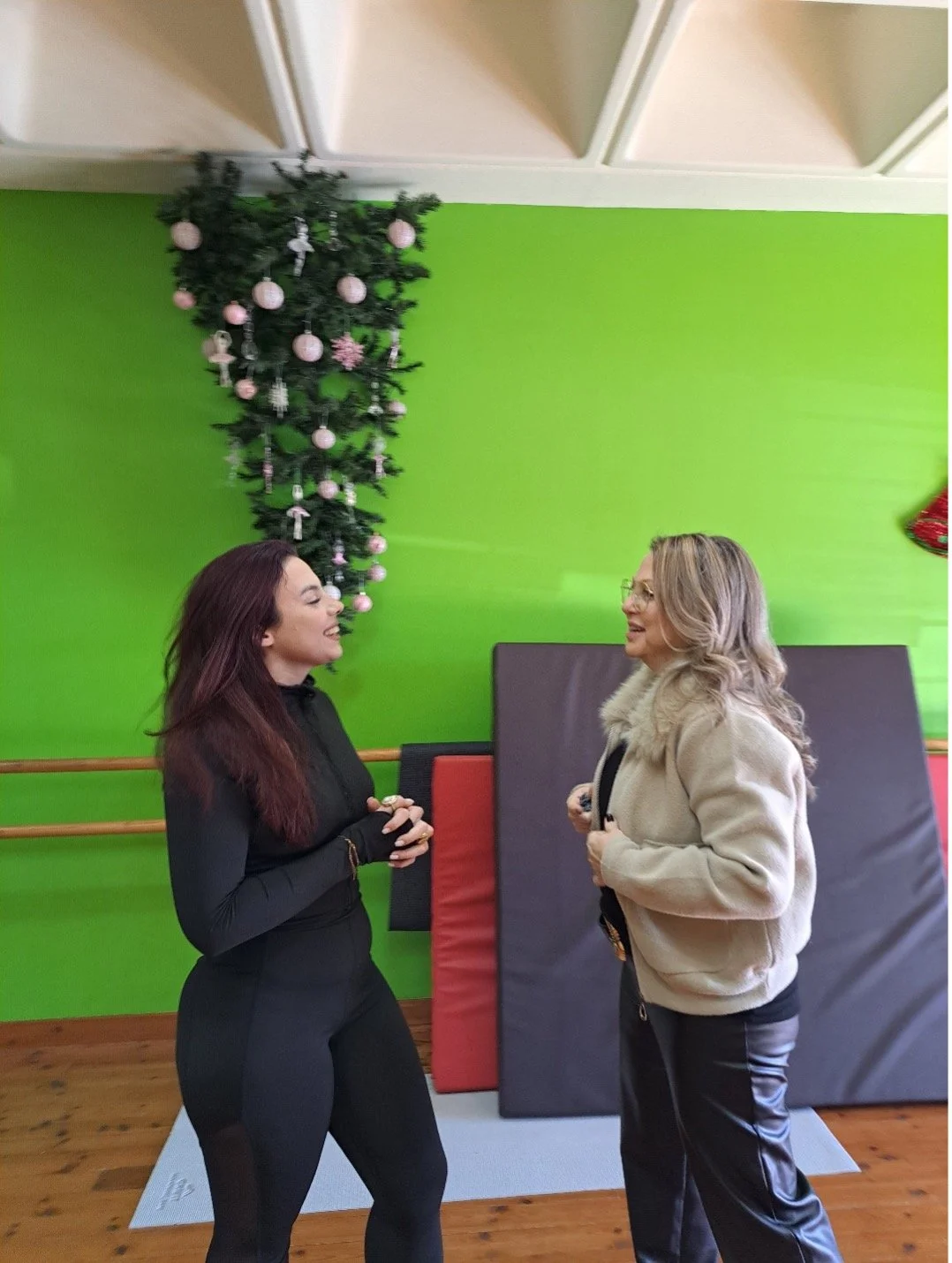
Norma with Konstantina at the studio where she trains in Nicosia
I met Konstanina in the studio where she trains in Nicosia where we had a long chat. She told me her story and how she began practicing this artistic expressive style of Oriental dance.
From a young age she started practicing and then at “the age of 16 I started training by myself and at 17 I started teaching” she says, adding “at first it was for fun, then I began to understand more the oriental culture with maturity. I love the culture and with time I appreciated it even more!”
About the source of her inspiration, she adds “when I hear the tune, immediately I imagine drawings in my head: lines and circles that guide my choreography”.
“I design my own choreography depending on the occasion. I translate Arabic songs so that I can understand well the lyrics and feel them while performing. This way, I have more connection with my audience by feeling what I am dancing.”
Konstantina grew up in Cyprus and was exposed to those oriental tunes from an early age. However, although she didn’t realize it at the time, this cultural mix shaped the way she danced, reflecting oriental and European influences at the same time especially after she pursued ballet lessons as well.
While training on belly dancing, she learned the importance of grounded movement, musicality and respect for the roots of this ancient art form. She says that the belly dance taught her how to listen to music with her whole body.
She mentions that “belly dancing is so important and empowering. It makes you appreciate being a woman, because it focuses on the midsection of the body: the belly where everything starts, life starts from there!”
International awards
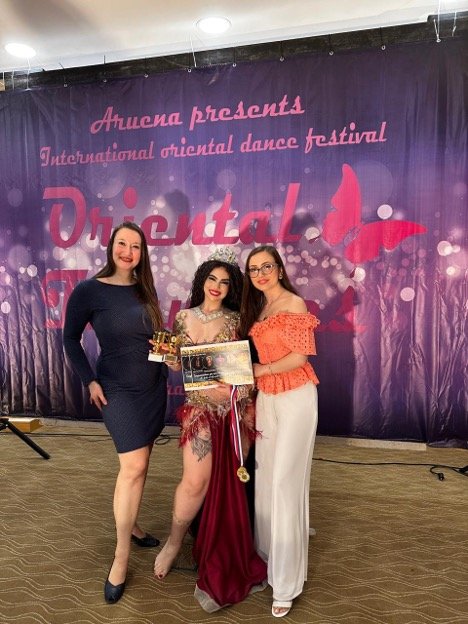
Konstantina in the middle, receiving her prize as queen of the international festival in Serbia in 2024.
Konstantina participated in many international festivals and competitions mainly in Ireland, Serbia, Portugal, Finland as well as other countries. In Serbia she won the first prize in 2025, whereby in 2024, and in her own country of Cyprus, she won the prize as a queen of the festival in Nicosia.
The blend of Mediterranean, Middle Eastern and European histories is not strange to Cyprus. And here again Konstantina pairs traditional Oriental movements with European elegance: elongated lines, refined posture, and a theatrical sense of storytelling. The result is a style that feels both ancient and modern, deeply cultural yet unmistakably personal.
She says “festivals are more exciting and a better experience because there is no stress of competing and winning, so it can be more fun as we interact with other participants from all over the world and we dance more freely”.
For her, these prizes represent more than personal achievement. They are recognition of the richness of her identity, a reminder that staying true to the roots while embracing evolution is the right path, a validation that authenticity resonates.
“Alf Leila w Leila” (A thousand and one nights)
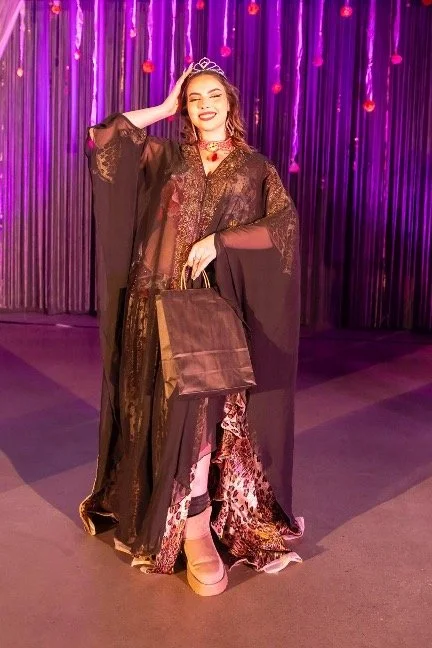
Konstantina in one of the international festivals
Konstantina trained dancing on the iconic song “Alf Leila w Leila” (a thousand and one nights) of Umm Kulthum (1969) which is not just a song, it’s a cultural masterpiece with deep musical, emotional, and symbolic significance in the Arab world and beyond.
This song composed by Baligh Hamdi, one of Egypt’s most celebrated composers, and written by poet Morsi Jamil Aziz is considered a musical journey, a timeless expression of a sense of dreamlike wonder, blending reality and fantasy. No belly dancer has not danced at least once on its tunes. It has been remixed by many famous DJ’s around the world.
On a cool summer night, I experienced firsthand the scope of the popularity of this song. What better expresses the fact that it has traveled the world, than climbing the stairs to a rooftop bar in the heart of Athens, just as the city exhales into night and the Acropolis floating above it all, when suddenly this tune drifts through the air, as if it was a greeting sign from the DJ in Arabic.
For a moment, hearing the clink of glasses and quiet conversations, the city felt beautifully folded in between East and West under the string of lights and the soft breeze. (see video below).
Hope
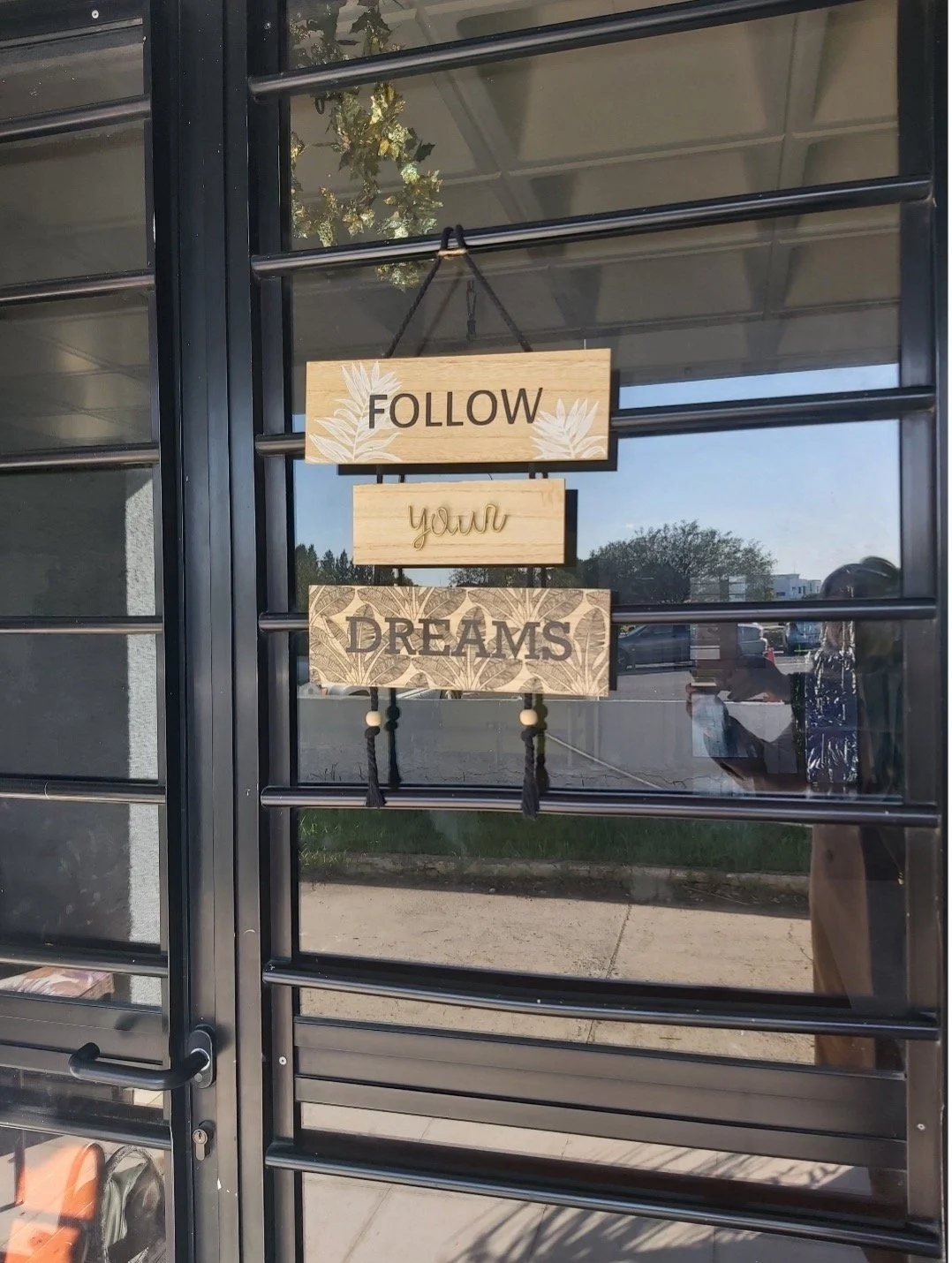
The entrance of the studio where Konstantina trains in Nicosia.
After enjoying the tune and the song one more time, Konstantina wrapped up her training session.
She expressed her hope that this dance will find its way more and more to the artistic scene in Cyprus and that people would appreciate Oriental dance as a cultural language that goes beyond only entertainment.
She says “oriental dance has given me a voice beyond words, because when I dance, I’m not just performing, I’m telling a story”.
A stark reminder of the famous quote of the influential American dancer and choreographer, the late Martha Graham: “the body says what words cannot!”
Et voilà! That was a story of how life redirects you when you follow the path of the soul!
Five facts about Belly Dance:
Belly Dance is both a cultural art and a performing art, combining technique, creativity, choreography and tradition.
This form of dance uses movement, rhythm and emotion to express music and feeling, and dancers interpret the music personally, making each performance unique.
Belly dance originated in the Middle East and North Africa, mainly Egypt, Turkey, and the Levant and it spread worldwide in the late 19th and early 20th centuries.
The Egyptian Samia Jamal (1924- 1994) is widely considered the most famous belly dancer in history as she helped bring this dance to international fame.
Today, there are many fusion styles, blending belly dance with flamenco, ballet, hip-hop, and modern dance.