Aphrodite: The Timeless Goddess of Love
“Where there is love there is life.”
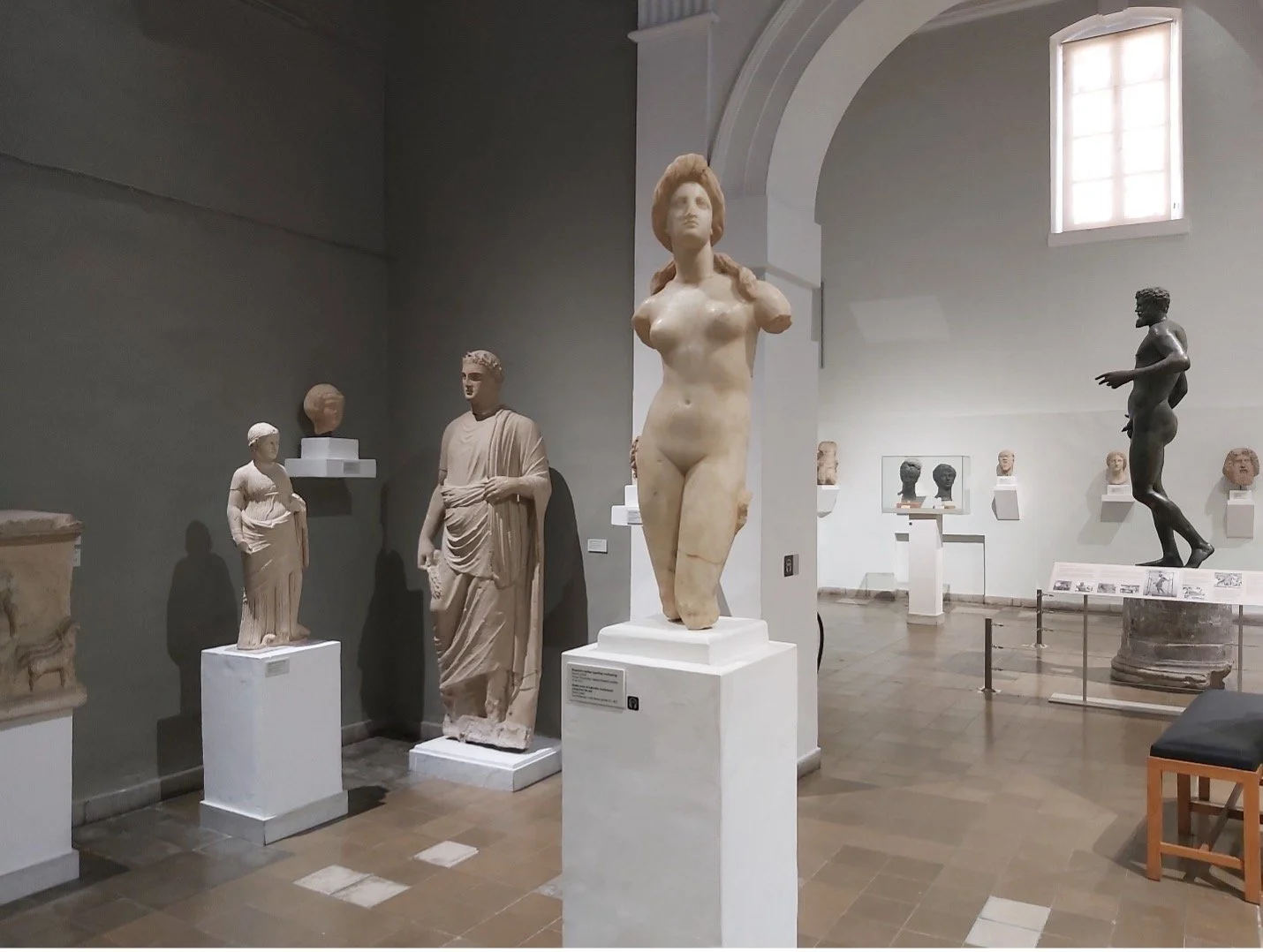
The statue of Aphrodite in the Cyprus Museum.
As February, the month of love, slips in, Valentine’s Day takes over the whole space which is often filled with roses, chocolates, and candlelit dinners, but beneath the modern symbols of romance lies a story far older and richer.
In mythology, it is the story of Aphrodite, the Greek goddess of love, beauty, desire, fertility, and attraction whose power over desire, beauty, and connection has captivated humanity for millennia.
According to myth, Aphrodite’s birth is as extraordinary as her nature. She emerged fully formed from the sea foam near Cyprus, carried by the waves. Some claim also that she is the daughter of Zeus and Dione.
Her birth from the sea is symbolic: like the ocean, love is both vast and uncontrollable, gentle and fierce, capable of calm serenity or turbulent storms.
The rock and the bath
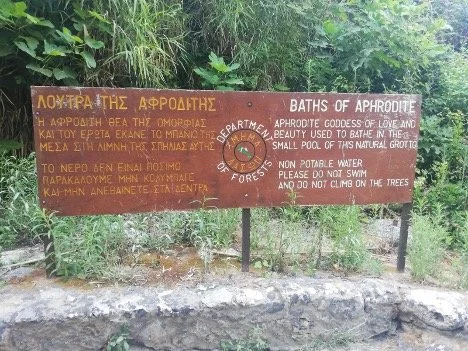
The site Baths Of Aphrodite on the Akamas Peninsula in the Paphos district.
Her connection to Cyprus is embodied in two of the most visited touristic places on the island: the rock where she emerged and the bath some kilometers away from that.
The myth says that this rock is the site of the birth of the goddess Aphrodite because of the foaming waters around it and it is called Petra Tou Romiou or Aphrodite’s rock, in the village of Kouklia in the Paphos district (150 Km from Nicosia).
Also, the Baths of Aphrodite are located in the Akamas Peninsuula, near the fishing village of Latchi, just 45 km away from the city of Paphos.

A map on site showing the location of the Baths of Aphrodite.
Those two sites make Aphrodite deeply rooted in Cyprus where her legacy survives through statues, paintings, images and souvenirs.
The main symbols of the Goddess of love and beauty are shells, roses, myrtle, mirrors, girdles (belts) and gold accessories.
The Birth of love
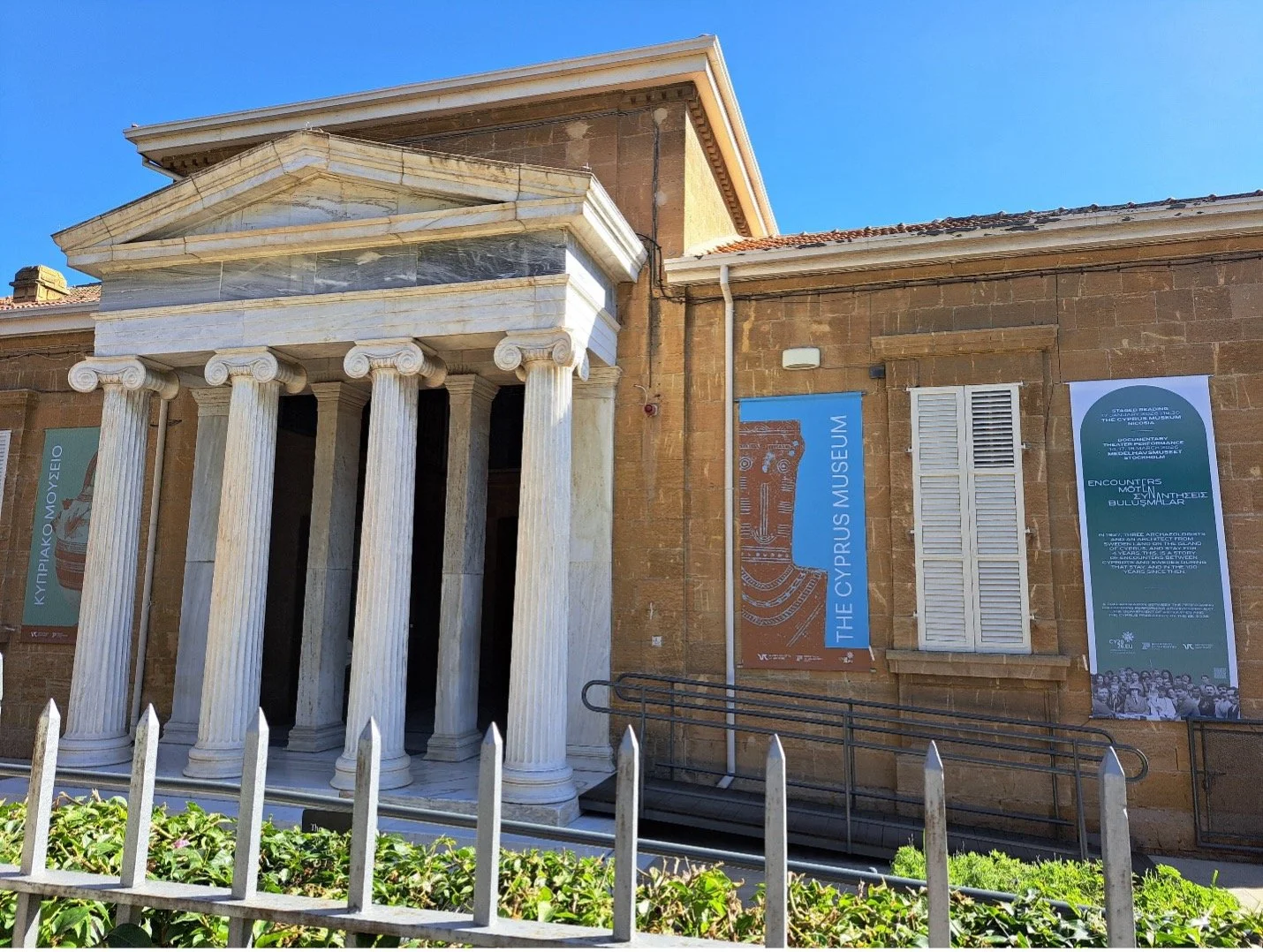
The entrance of the Cyprus Museum in Nicosia.
With the rise of Aphrodite from the sea, love emerged as an irresistible force, and her birth in mythology marked the moment love took form and it became a way of living.
Aphrodite’s stories are filled with drama: lovers, rivalries, and mischief. Yet each tale carries different messages mainly that love has the power to transform and that beauty, when appreciated within ourselves, in others and in the world at large, can be an act of love. One lesson also drawn from her myth that love is rarely simple but it deserves the effort to fight for it.
Beauty as Power
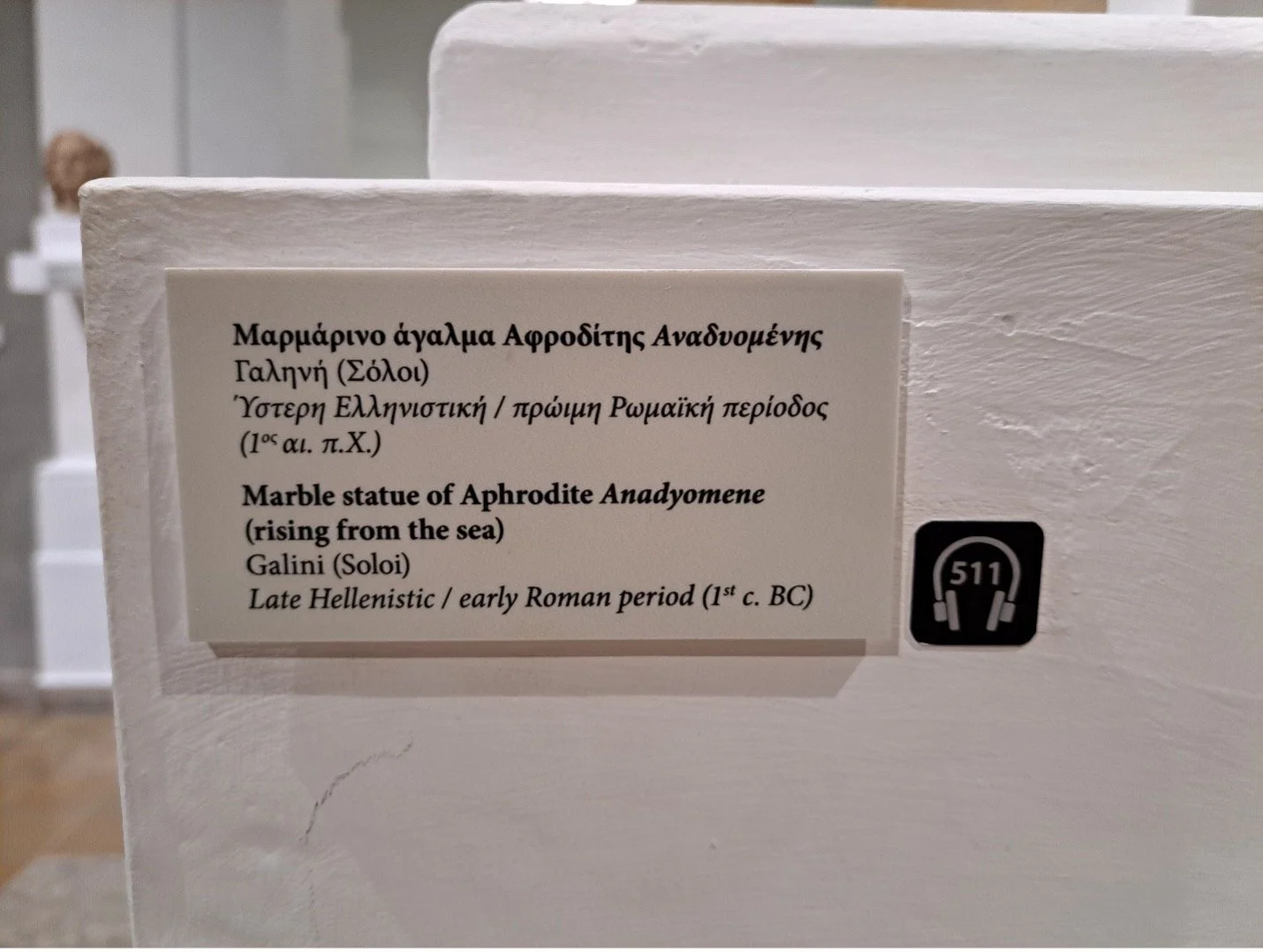
Description of the statue of Aphrodite in the Cyprus Museum.
Unlike Valentine’s Day, Aphrodite’s myths are less about romance and more about self-worth, beauty as agency, and quiet power.
People worshiped Aphrodite because beauty weighs on behavior and is influential, a soft form of power, and the message here is that how you present yourself affects how the world responds.
Long before the trend of life coaches, Aphrodite taught us that beauty, when owned consciously, is a form of power. She reminds us that everything starts with how you see yourself and how you judge your self-worth.
From Aphrodite to Venus

The Baths of Aphrodite.
As Greek myth met Roman power, Aphrodite became Venus. The Romans reshaped her meaning in Greek culture to match Roman values: power, lineage, order, and empire.
All of a sudden, Venus became a stabilizing force representing a different kind of love associated with fertility and love as harmony, and not as an irrational power as it was with Aphrodite.
Love became a power that stabilizes society, and the biggest transformation was when Venus became a national propaganda. She was made the ancestor of Rome and Julius Caesar claimed Venus as his divine ancestor.
As the Romans preferred gods that modeled values, Aphrodite was tamed into a virtuous Venus who teaches how love should behave and not how it overwhelms and destroys.
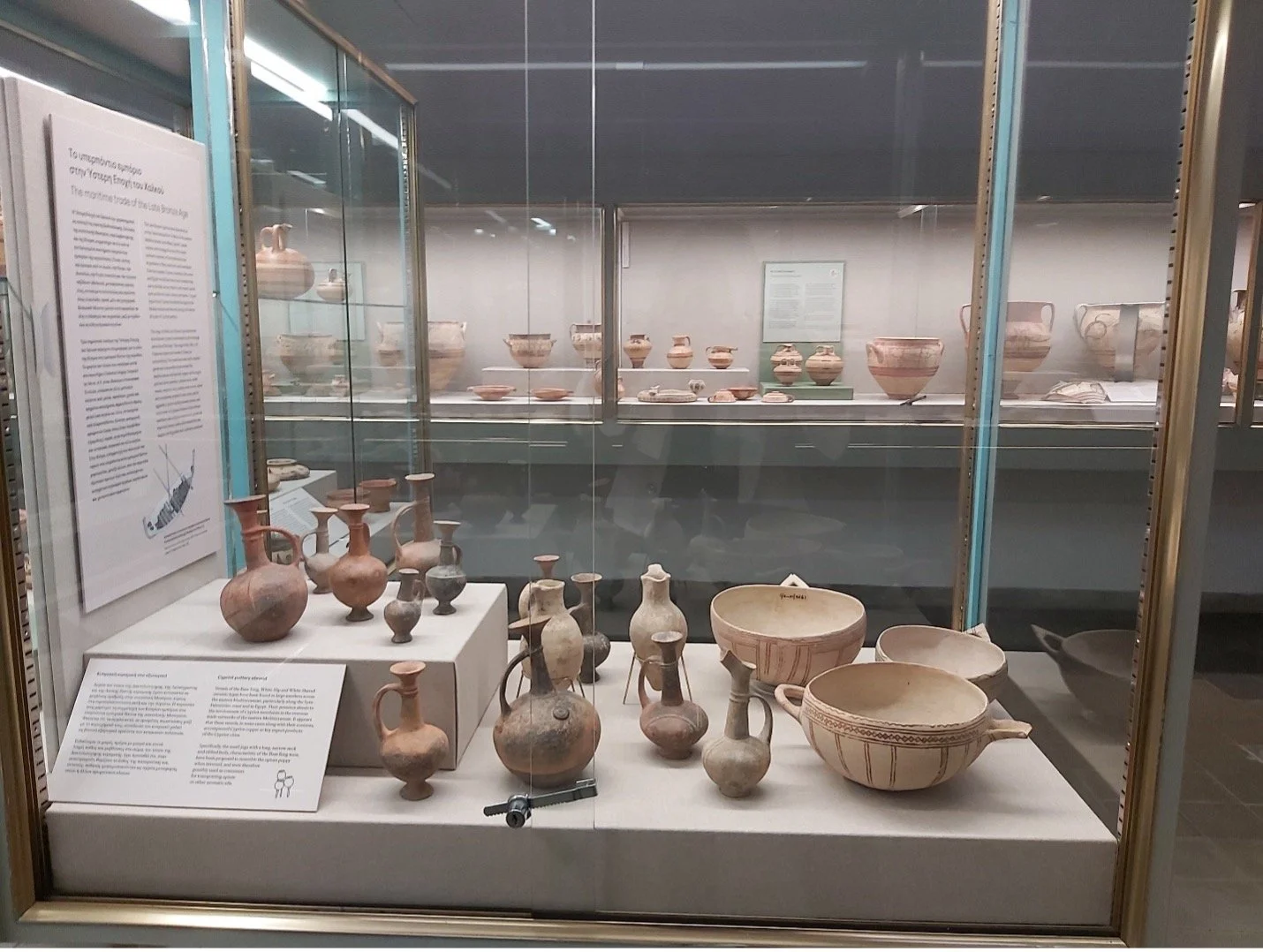
Artifacts displayed in the Cyprus Museum.
While as Aphrodite represented liberal love, Venus came to represent love that supports a system.
The ultimate result was that Aphrodite speaks to personal self-worth and desire while as Venus speaks to image, influence, and social power.
Aphrodite and Saint Valentine
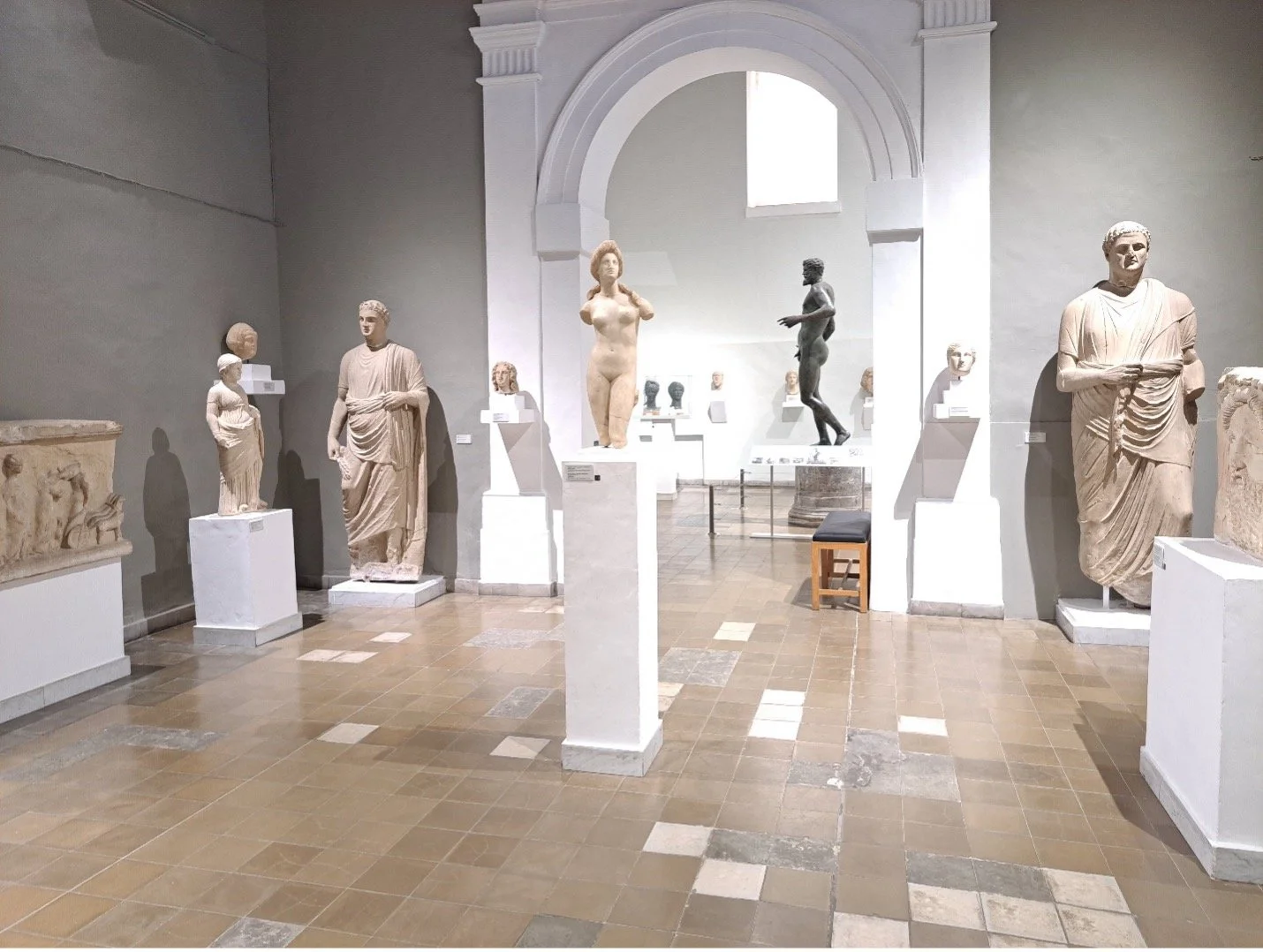
The statue of Aphrodite in the middle of one of the rooms of the Cyprus Museum.
While Valentine’s Day is widely seen as a celebration of romantic love, whether through giving flowers or sharing a dance or a fancy dinner, the legacy of Aphrodite comes to remind us that self-love is foundational: everything begins with loving yourself.
She encourages to love boldly and creatively which goes hand in hand here with the rituals of Valentine’s Day of gift giving, enjoying music, dance and art with loved ones.
The final message is that self-worth is inherent and beauty is agency.
Et voilà! The myth of Aphrodite teaches us that love in all its forms should flow freely as the sea!
Five facts about Aphrodite:
Aphrodite had a magical girdle (belt) that made anyone irresistible when worn.
Artists across centuries, from classical sculptors to Renaissance painter, have returned to her image which did not represent perfection but the irresistible force of attraction.
Aphrodite was married to Hephaestus, the god of craftsmanship and her most famous lover was Ares, the god of war, and she played a key role in the Trojan War by promising Helen to Paris, a Trojan Prince.
When the Romans transformed Aphrodite into Venus, she became a more restrained, political figure and inspired many famous artworks in history.
The image of Venus shaped Western ideas of femininity and beauty for centuries.