Mediterranean Living: Between Two Shores
“A Mediterranean scent we need not express, we feel it through our skin”. (Albert Camus)
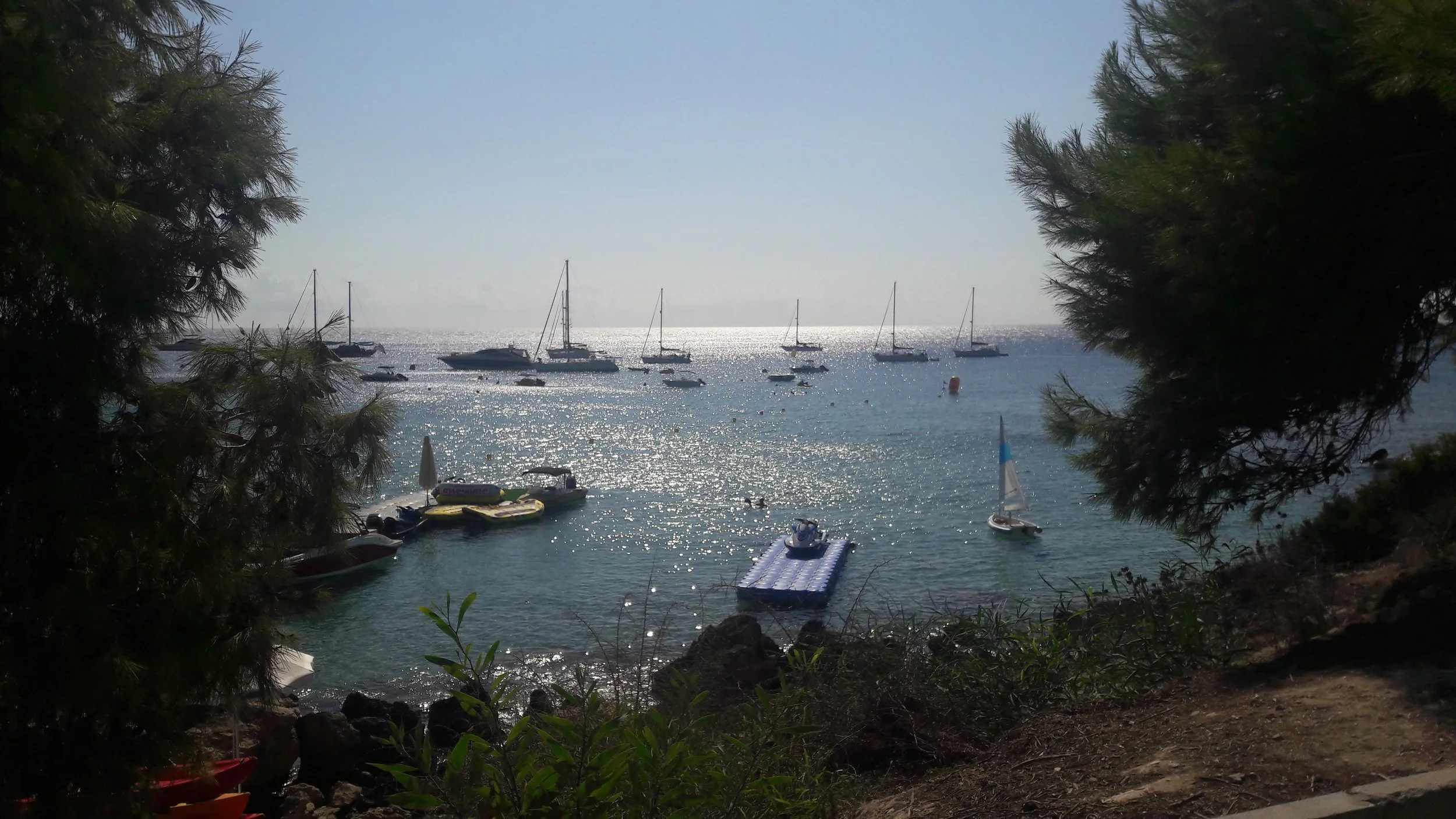
The picturesque Konnos bay located on the southeast coast of Cyprus, between the resorts of Ayia Napa and Protaras.
The Mediterranean is more than just a sea: it is a way of life, a spirit wandering between the blue skies and the blue sea. This echo is clearly reflected in the sunny stretch between Cyprus and Lebanon extending over 200 km of open sea, these two Eastern Mediterranean neighbors are not only connected by geography, but they share a rich heritage of culture, cuisine, family values and coastal living that defines what it truly means to be in the Mediterranean.
Cyprus and Lebanon are located at the crossroads civilizations connecting Europe, Asia and the Middle East. They form with this strategic position a bridge between continents. Separated by the sea and a short flight of 40 minutes, yet connected with the rhythms of Mediterranean living, people in both countries enjoy a similar lifestyle consisting of long lunches, close family ties, evening promenades and gatherings as well as a shared deep love for the sea that shapes their lives around the coastal life.
Bounty of land and waves
Mediterranean cuisine also unifies those two sides of the Mediterranean as the mezze is omnipresent on both tables: fresh salads, olives, dips, cheeses, seafood and grills. Local markets compete to showcase fresh produce from local fruits and vegetables to seasonal preserves and homemade products making every meal a celebration. Although some of the 21 countries in Southern Europe, West of Asia and Northern Africa, overlooking the Mediterranean Sea share many of these features specifically the jewels of the Mediterranean Sea Italy, Southern France and Spain, the Eastern part of the sea continues to charm.
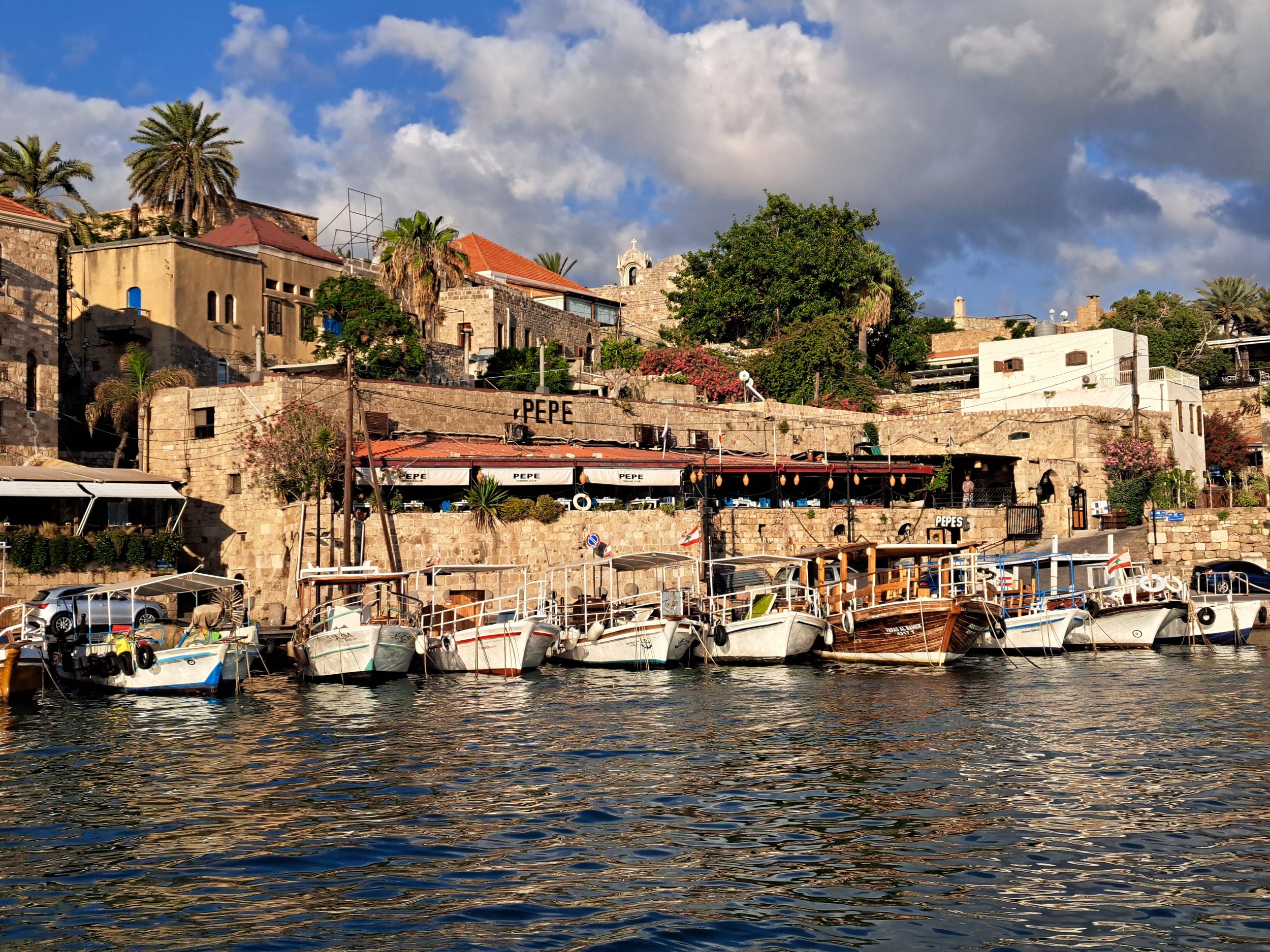
The ancient port of Byblos, the Lebanese coastal city located some 40 km north the capital Beirut.
Phoenician footprints
Historically, Cyprus and Lebanon share a rich Phoenician heritage, the ancient maritime civilization known for its seafaring, trade and the spread of the alphabet that influenced Greek and Latin scripts, originating from the ancient cities of Byblos, Tyre, Sidon and establishing settlements in many regions like Cyprus and specifically Kition- present day Larnaca, a Phoenician story written across the sea.
Later, both regions fell under the same imperial powers: Hellenistic, Roman, Byzantine, and Ottoman empires ruled over both Cyprus and Lebanon at different points in history, weaving similar administrative, cultural, and religious threads into their social fabrics. Then both countries went under the authority of European colonial powers: Cyprus under British control (1878–1960) and Lebanon under French mandate (1920–1943).
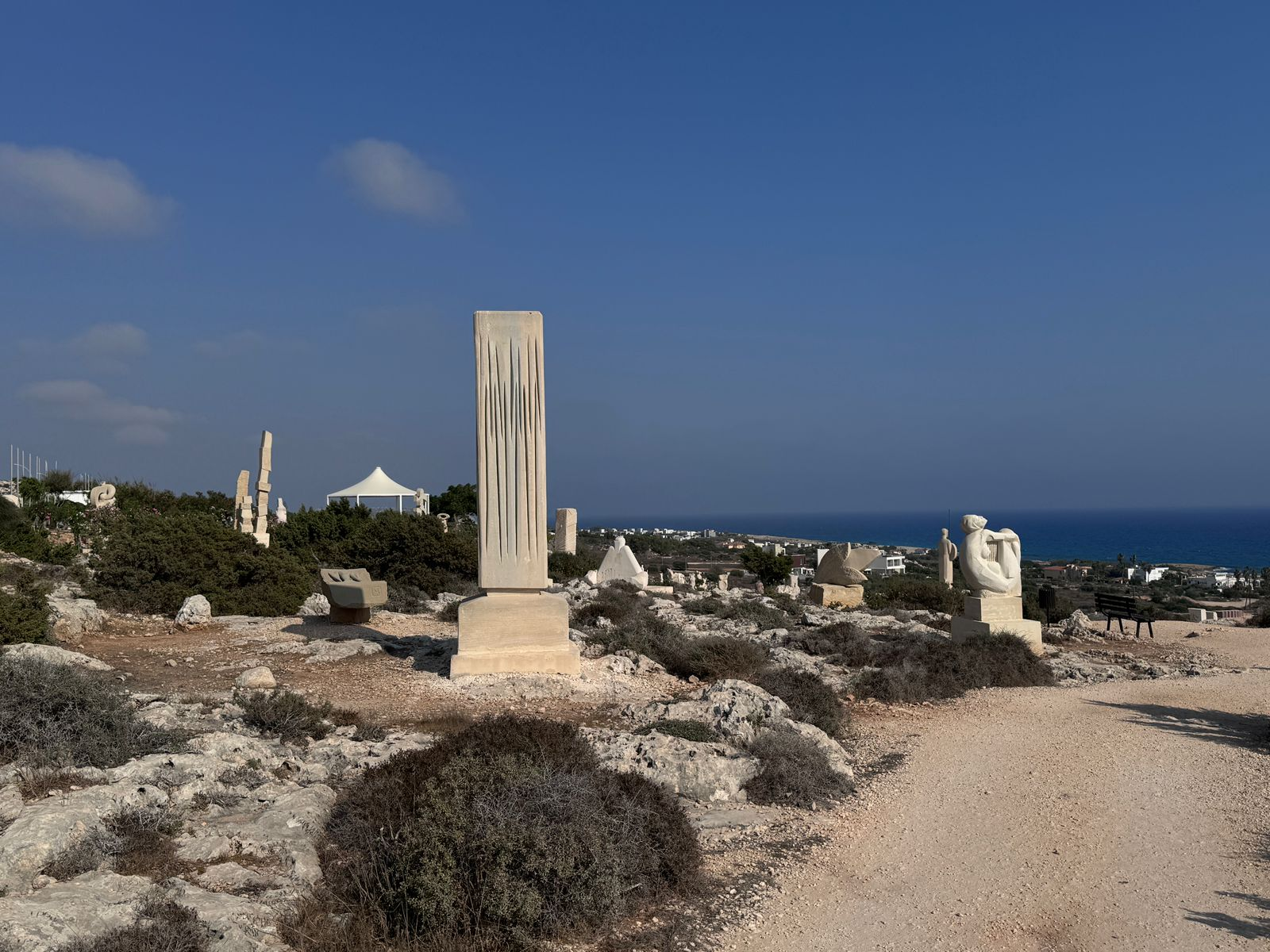
The Ayia Napa sculpture open park
Time takes a pause
Life in this part of the world evolves around nature where the majestic mountains rise above villages, vineyards and the deep blue waters. In Cyprus, the Troodos Mountains rise above picturesque villages and vineyards stretch under sapphire skies. Meanwhile, Lebanon offers dramatic contrasts — snow-capped mountains just a drive away from the warm Mediterranean shore. You can ski in the morning and swim in the afternoon as the Lebanese like to say.
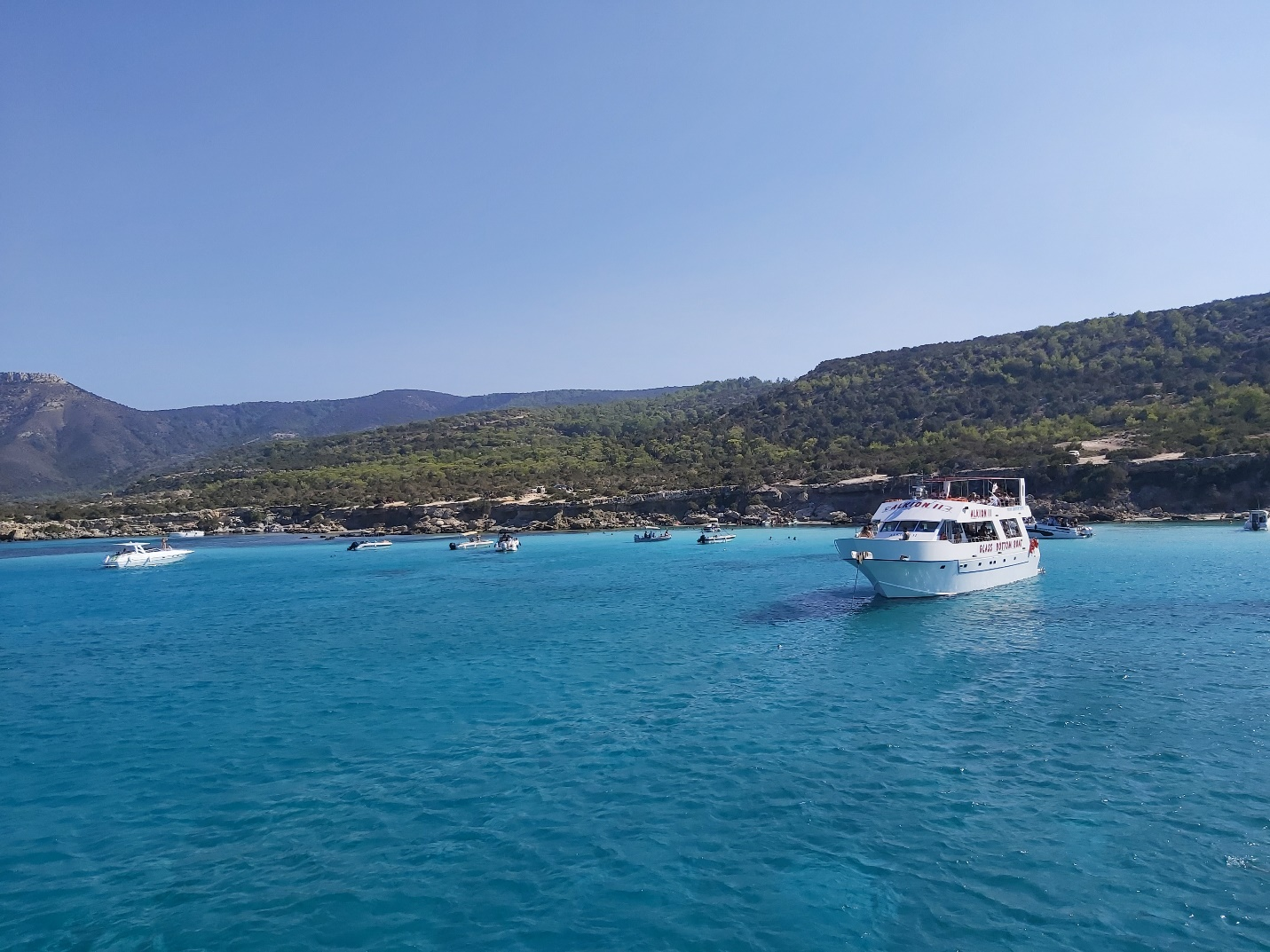
The Akamas Peninsula National Park, a boat trip from the harbor of Latchi, around 186 km from Nicosia
The sea is not just a horizon, it is a vibe, a way of life. Waterfront cafes stretch on coastlines and promenades in both countries, rooftop bars offer stunning views of the sea and the vibrant cities, fishermen still cast their nets in traditional boats and people still look for calm by the seaside practicing their relaxing fishing hobby, and locals gather by the water enjoying the sea breeze, sipping drinks or smoking the flavored shisha with family members or friends exchanging endless conversations. Time here takes a pause, slows down offering people the chance to stop and savor life and not just make a living. The social life extends to the promenades, to the coastal restaurants valorizing family gatherings, hospitality and embracing the beauty of life.
Despite the political tensions and economic challenges that both regions have faced, the spirit of Mediterranean living prevails as an experience, radiant, generous and bustling with festivals, processions, parties, exhibitions, culinary art and lounging to enjoy the mild winters and warm summers.
Et voilà, Let’s embark on a Mediterranean journey!
Admiring the beautiful Limassol Marina (photo by Bojana Loizou)
Five things to know about the Mediterranean:
1. The Mediterranean Sea is enclosed between three continents: Europe, Asia and Africa covering an area of around 2,5 million square kilometers.
2. It is referred to as the "cradle of civilization" because it was crucial to the rise of ancient cultures such as the Egyptians, Greeks, Phoenicians, and Romans.
3. It is connected to the Atlantic Ocean by the Strait of Gibraltar and bordered by over 20 countries.
4. It is divided into several smaller seas such as the Aegean Sea, Ionian Sea, Adriatic Sea, Tyrrhenian Sea, and Levantine Sea.
5. The French philosopher and writer Albert Camus (1913 – 1960), winner of the Nobel prize of literature in 1957, had a close connection with the Mediterranean basin and was influenced by the culture and values of that region.
Iconic sayings about the Mediterranean Sea
- “The Mediterranean sun... it sharpens the shadows and sculpts the soul.” (Albert Camus)
- “The Mediterranean is an absurdly small sea; the length and greatness of its history makes it seem larger than it is.” (Lawrence Durrell, British writer, The Alexandria Quartet)
- “Each person’s identity is made up of many elements... and it’s the combination of them that makes each human being unique.” (Amin Maalouf Lebanese-born French author)
- “Home is not where you are born; home is where all your attempts to escape cease.” (Naguib Mahfouz, Egyptian Nobel Laureate)
The phrase "A Mediterranean scent we need not express, we feel it through our skin" originates from a lecture delivered by Albert Camus in 1937 at the Maison de la Culture in Paris. In this lecture, Camus explored the essence of Mediterranean culture, emphasizing its unique way of life and shared sensibilities. He described the Mediterranean as possessing a distinct "scent"—a metaphor for the region's vibrant, tactile, and communal spirit—that transcends words and is felt instinctively by those who experience it.
This evocative imagery underscores the deep connection between the Mediterranean people and their environment, highlighting how the region's culture is not just observed but physically and emotionally felt.