Coastal Lifestyle: Ayia Napa the jewel of Cypriot tourism
A town of two worlds where culture meets the sea
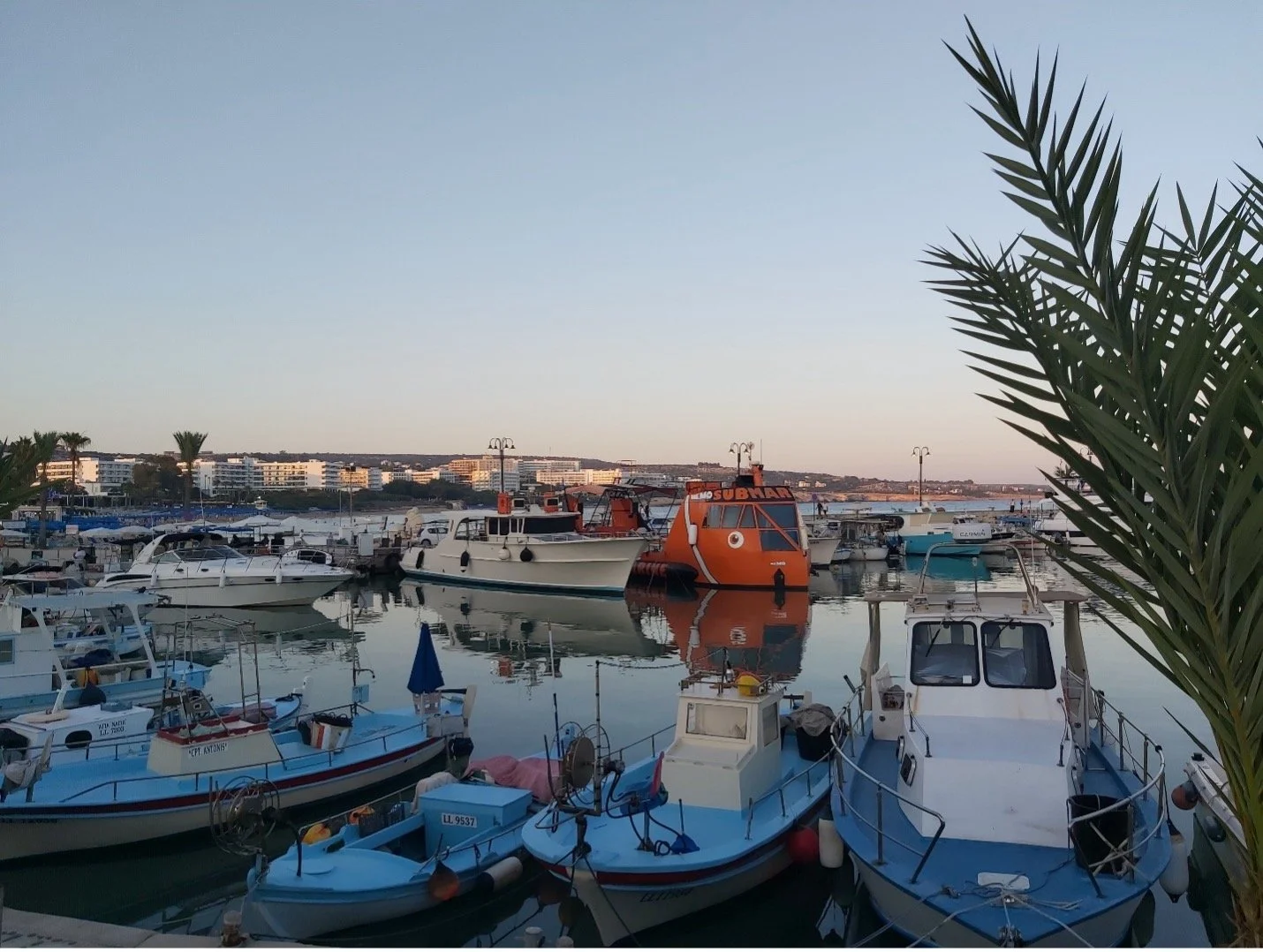
Ayia Napa port, Limanaki, summer 2025
Taking the left exit from the highway connecting Larnaca with Ammochostos district, signals you are entering a new horizon: the alluring life by the sea where everything feels different from the fresh breeze to the slow sunsets or the smell of salt in the air. It is freedom from the everyday stress and urban life, reflecting an enduring dream not linked only to the location but to the mindset. All of sudden, life becomes simpler, full of outdoor activities starting with swimming and lounging in the sun and never ending with gastronomic dining and long nights out and this is no longer a treat, it is a daily routine in a place where tourists and locals blend smoothly as one.
With the many beaches, bars and restaurants that area offers, Ayia Napa the picturesque resort town on the southeastern coast of Cyprus stood out as the jewel of tourism in that district with the wide range of cultural and fun activities it offers satisfying different tastes. For a long time, Ayia Napa was known for its bustling nightlife and considered a haven for party lovers, but over the years transformed its identity into a more sun kissed family friendly resort with its famous Blue Flag beaches and wide range of gastronomy and entertainment for all age groups.
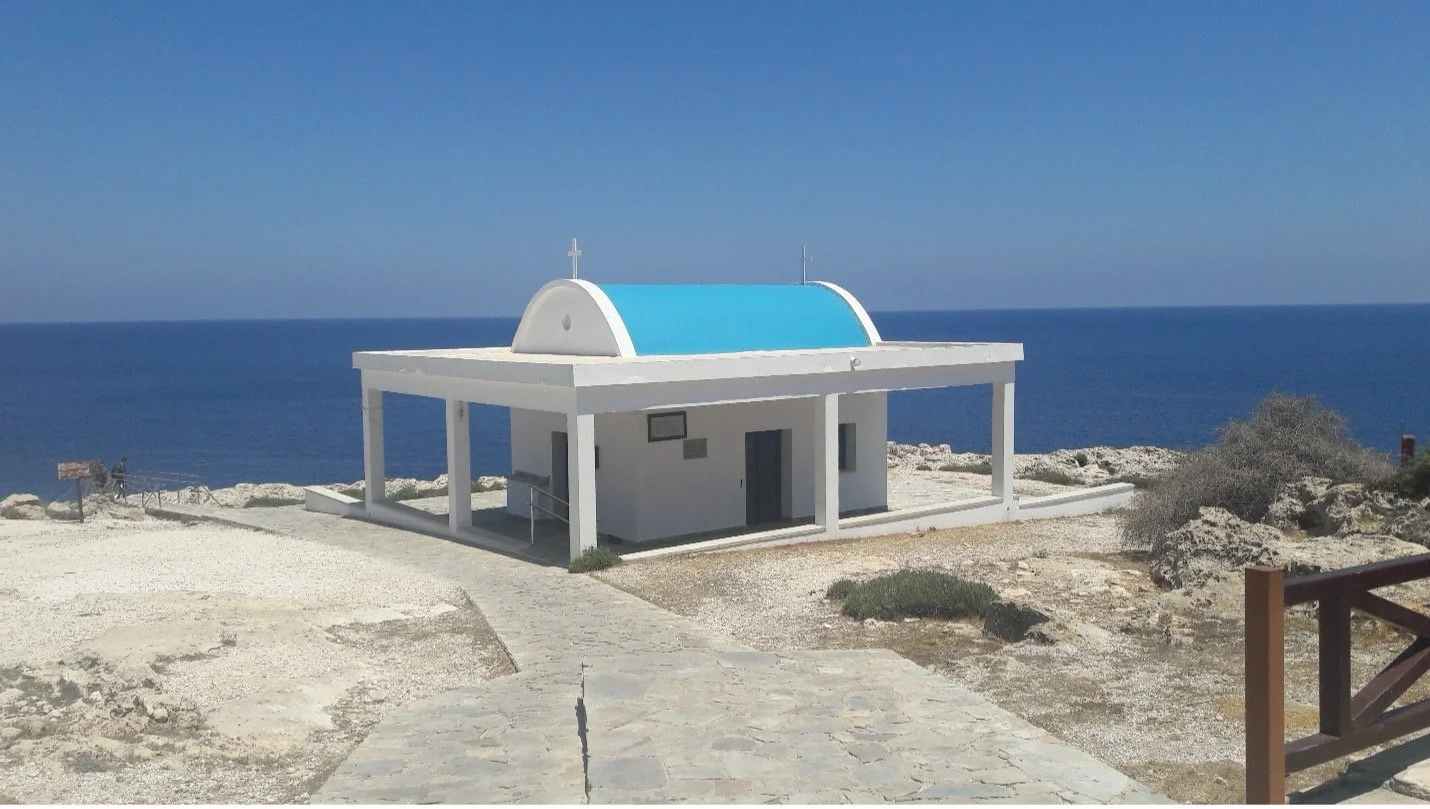
Ayioi Anargyroi Chapel overlooking the sea caves in Cape Greko at the edge of Ayia Napa, dedicated to Saints Cosmas and Damian (“Anargyroi”- meaning “without money”).
Ayia Napa keeps up with its reputation as hosting some of the best beaches on the island, as Cyprus was awarded 66 Blue Flags in 2025, out of which 64 for beaches and 2 for marinas namely Limassol Marina and Ayia Napa Marina. Ayia Napa had 16 blue flag beaches among this classification, while as the neighboring Paralimni-Deryneia region comprises 18 blue flag beaches.
What is a Blue Flag?
“Pure water, clean coasts, safety and access for all” summarizes the Blue Flag message on its website. This program is run by the Foundation for Environmental Education and based in Copenhagen, oversees the quality of the waters and decides whether it is fit for swimmers, and certifies also the general quality of the beaches’ environment. It works to ensure the expansion of its guidelines with the moto on its website that says “we educate to protect. To protect not just our environment but the people who live in it, the communities who depend on it, the businesses who profit from it and the ecosystems which rely on it!”. In fact, the Ayia Napa beach experience became a model for other cities in Cyprus where the municipalities of Kourion (southwest) and Limassol announced in late July that they will manage parts of their beaches similarly by providing low-cost services for locals and visitors.
Transformation
After being seen as the Ibiza of the Eastern Mediterranean in the late 1990’s and early 2000 s, Ayia Napa became the number one-party destination in Cyprus for holidaymakers and locals as well, pouring into its many clubs and bars at night and partying on cruises and beach bars daytime. In an effort to change this image of a destination for young party people, and in order to have a more sustainable touristic season, the municipal authorities supported by tourism boards, launched a new strategy aimed at extending the summer season and attracting a different clientele. Starting around 2010, the town’s central square which embraced once clubs and bars and where loud music was echoing from it, became the meeting point for families, tourists and local communities alike to enjoy a nice meal or check the local products exhibited on special occasions and where the corn on the cob stalls became a staple of every evening.
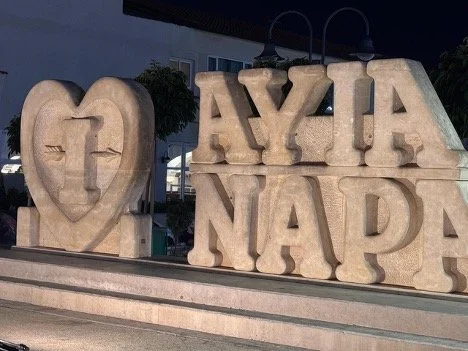
The famous sign of Ayia Napa in the heart of the monastery square
The image of the town shifted to a family-friendly, cultural and nature-oriented destination, and in 2014 the Cypriot government gave it the title of a “main city-urban center” in recognition of its economic significance. Seeing young couples pushing strollers or toddlers running around the main square became familiar, and the iconic Love Bridge as well as the sculpture open park overlooking the sea became the necessary spot for photo shoots, while the clubbing scene for youngsters and other age groups remained intact in its specific zone, on the hill behind the monastery which reflects in its own rights the historic background of the town.
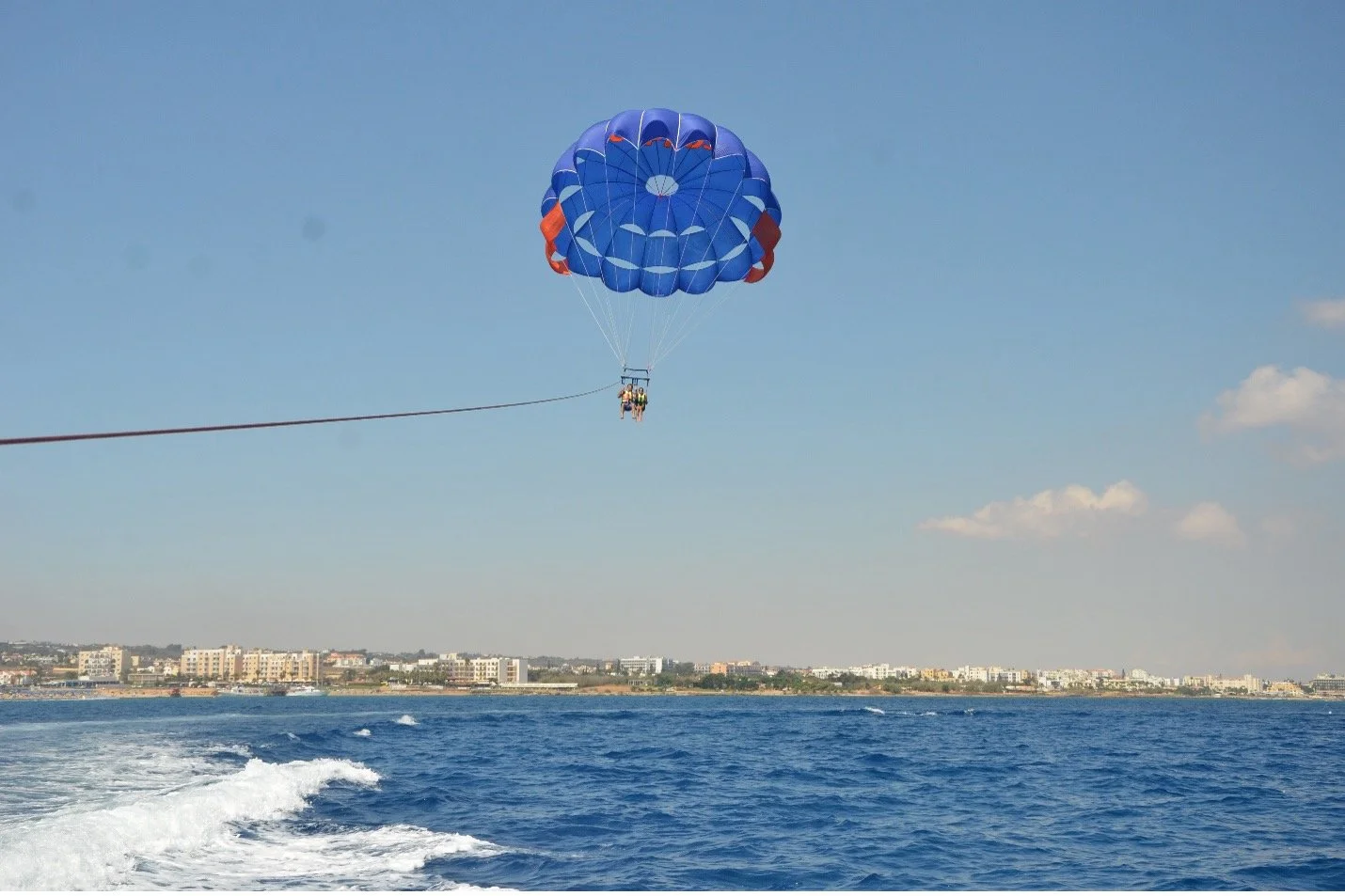
The popular parasailing water sport found on most beaches in Ayia Napa and Protaras giving stunning views of the coastline.
The Iconic Ayia Napa Monastery
Blending the past with the present is the cornerstone of this success story of reinvention, what was once known as a party hub became a destination for all tourists alike and all evolves around the famous monastery square. This iconic monastery dates back to the 15 th century and the legend says that a hunter found an icon of the Virgin Mary in a cave, which led to the construction of the church and later the monastery styled with Gothic and Venetian influences, which is used nowadays for cultural events and some religious services.
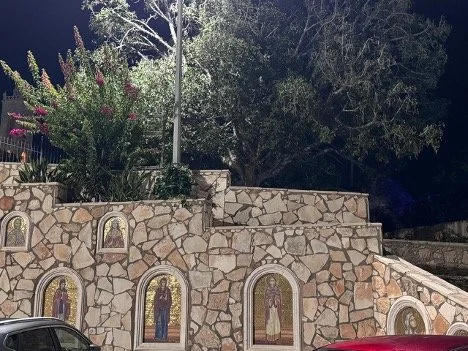
One side of the iconic Ayia Napa monastery.
The central courtyard of the monastery is used also to host local and international festivals and concerts as well as art exhibitions, and no walk in the town is complete without visiting the Ayia Napa square after a long day by the beach whether swimming or enjoying the Waterworld Water Park, themed around ancient Greece and which is considered as one of the biggest parks in Europe, or a visit to the Thalassa Museum around the corner or even a tour in the huge amusement park Parko Paliatso.
Exotic destination for weddings
Gradually wedding tourism gained momentum in the city as many factors combined to make it an ideal destination for this special day away from home: civil weddings are easily facilitated by the local municipality, gorgeous coastal settings set the tone for a dream wedding with the golden sand beaches and turquoise Mediterranean sea, and there is a big venue variety for such events ranging from indoor town‑halls to beachfront gazebos, hotel ballrooms or private venues.
On the website of Agia Napa municipality this inviting atmosphere is portrayed through the message, “Reveal YOUR LOVE AND MAKE YOUR dreams COME TRUE ON THIS SPECIAL DAY OF YOUR LIFE. EXPERIENCE THESE EXCLUSIVE MOMENTS AT THIS FRIENDLY PIECE OF PARADISE, NESTLED BETWEEN THE TRANQUIL WATERS OF THE MEDITERRANEAN SEA AND THE CLEAR BLUE SKY. LIVE IT AT AYIA NAPA. LIVE THE WEDDING YOU ALWAYS DREAMED AND IMAGINED!”. The municipality also honors some people who visit the city regularly and awards them the title “Ambassadors of Agia Napa Tourism”.

Norma in one of the coastal cafes in summer 2025. (photo by Bojana Loizou)
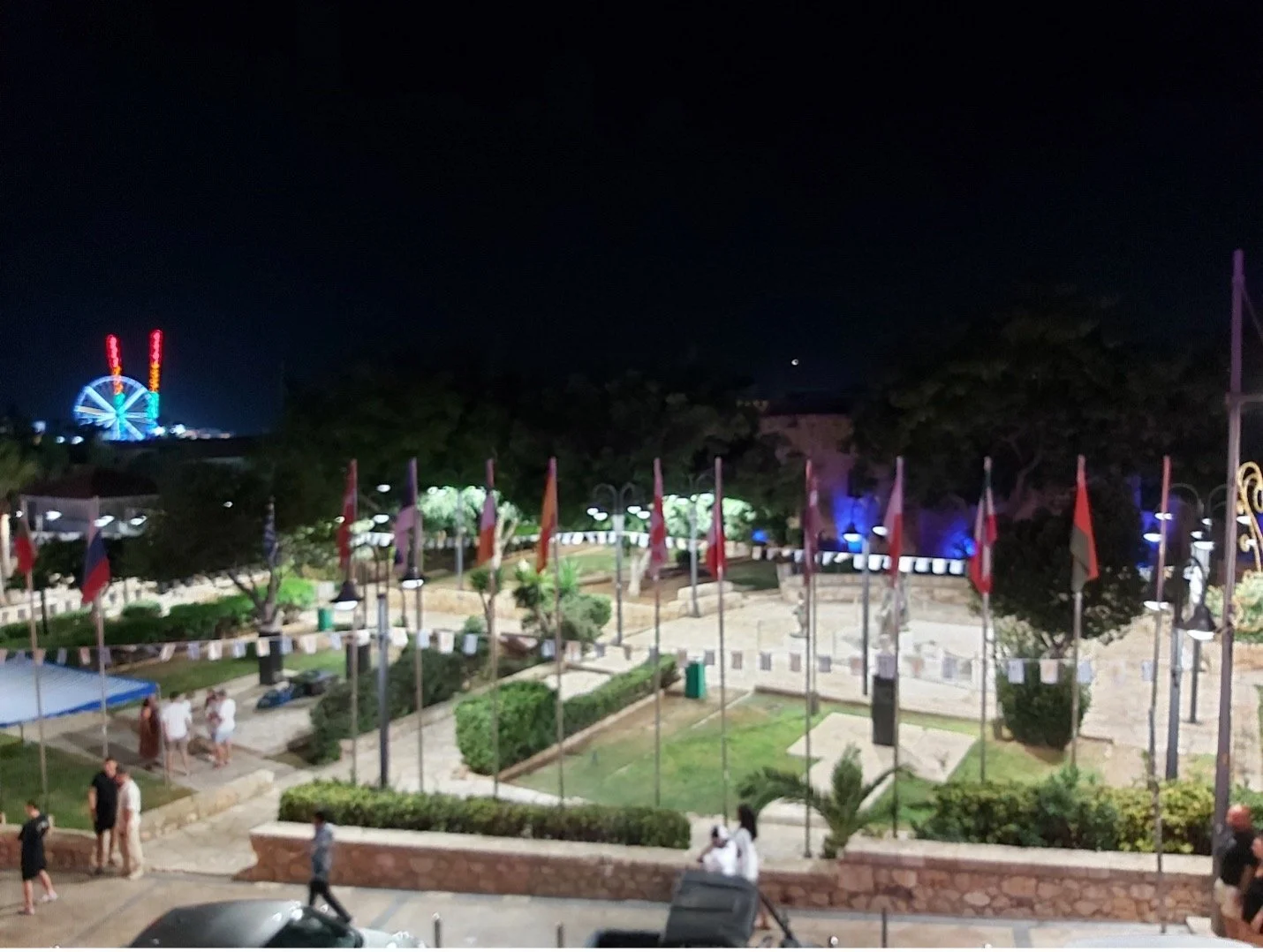
Ayia Napa square as seen from the terrace of Hard Rock café.
Coastal living whether inside the city or around this waterfront city offers a unique opportunity of serenity and connecting with the shoreline: strolling in the beautiful cobble streets of Limanaki, the port of Ayia Napa, enjoying a nice meal and drinks or just walking in the square after a long day at the beach whether lying on the clean sands of Nissi Beach or swimming around the sea caves in Cape Greko National Forest Park east of the city or jumping from its cliffs, or even sipping a coffee at the elegant Ayia Napa Marina with its beautiful sceneries, all represent a sense of freedom away from the noise and stress of urban life where the coastal breeze is unmatched in its freshness and the feelings of relaxation it brings.
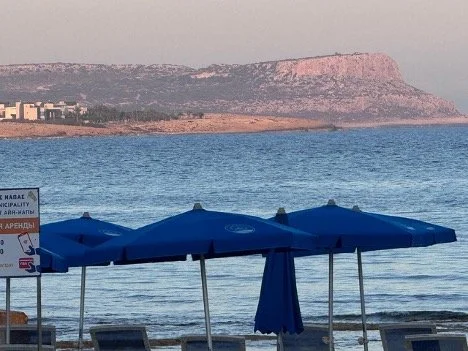
Cape Greco seen from a beach in Limanaki area in the heart of Ayia Napa in summer 2025.
The lifestyle encourages simplicity where casual comfortable dressing becomes a common denominator connecting all people there alike, while as women compete in the evenings in showcasing the latest beachwear trends. Visiting the local markets overflowing with fresh fruits and vegetables and fish, enjoying long days at the beach and watching the sunset become a daily ritual connecting people to nature and the art of coastal living.
It is simply an enduring dream, a mindset of slowing down and grasping the moment.
Et voilà! Let’s explore part of the culinary heritage of Cyprus and what is better than Halloumi cheese!
Five things to know about Ayia Napa
Up until the seventies, Ayia Napa was a small fishing village. After the Turkish invasion of the northern part of the island in 1974, many Greek Cypriots moved to the area and founded hotels and businesses leading to a boom in tourism.
Permanent Population is estimated by around 4700 people and the number of visitors soars dramatically during the summer season to reach approximately 650, 000.
Ayia Napa stretches on an area of around 31 km²
Ayia Napa is 58 Km away from Larnaca International airport and 85 Km away from Nicosia.
Ayia Napa is home to Nissi Beach, one of the most famous beaches in Europe, known for its white sand and turquoise waters and is often ranked among the top beaches in Europe, and it attracts mainly young travelers.