How Dubai’s Signature treat entered the World of Luxury Chocolate
“Chocolate is happiness that you can eat ”
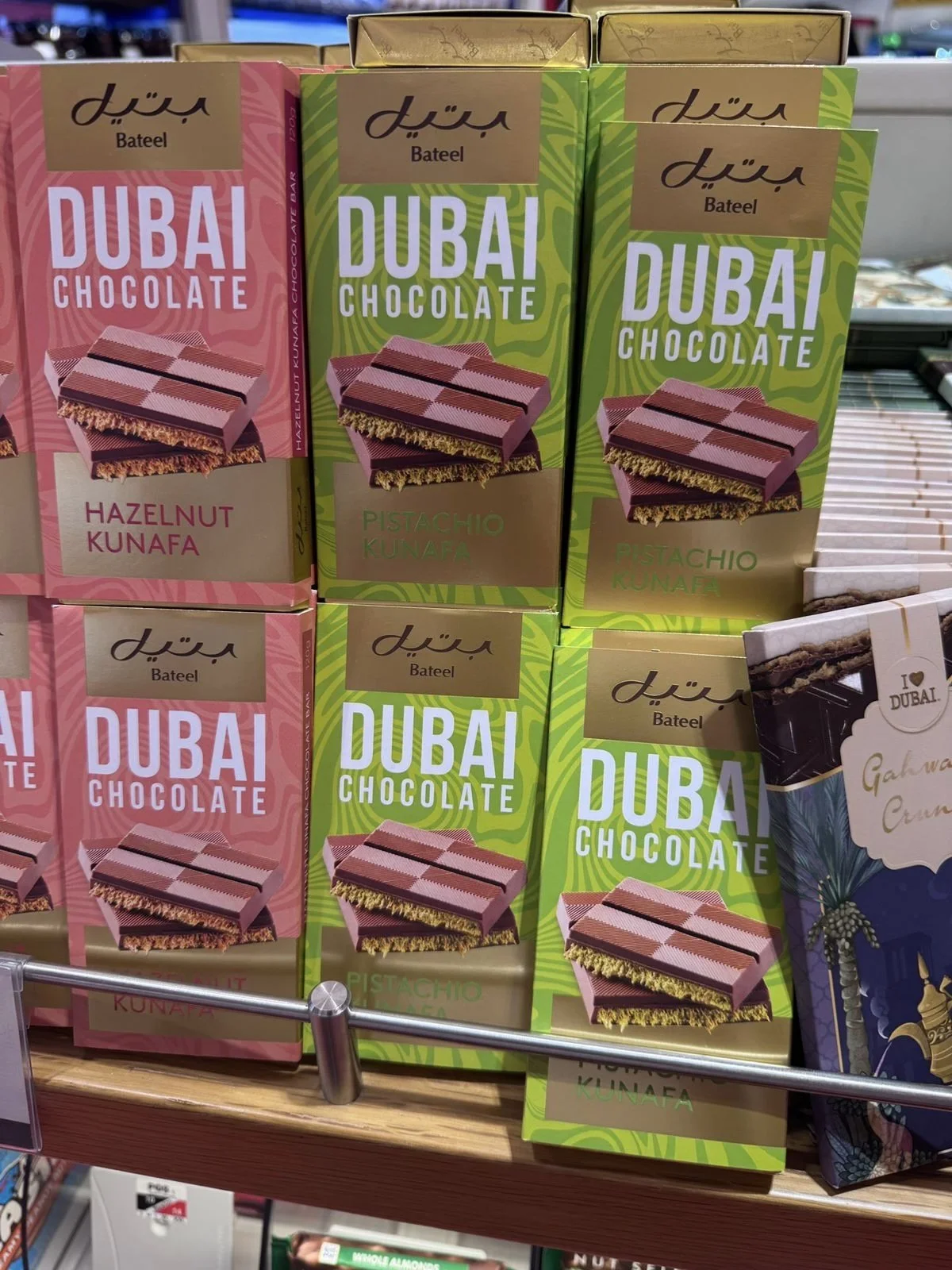
Dubai Chocolate variations at Dubai airport.
When people think of Dubai, they picture glittering skyscrapers, golden dunes, and luxury shopping, but tucked between the city’s futuristic skyline and traditional souks lies another innovation: chocolate. This is not just any chocolate: it is the Dubai chocolate that has taken the world by storm. Dubai has become a hub for artisan and luxury chocolate that rivals the world’s finest.
Chocolate has always been a symbol of art, hospitality and identity. Each creation tells a story of heritage, travel, and taste but sometimes palates unite in a certain type of chocolate. Dubai’s chocolate craze reflects the essence of the city itself: luxurious yet rooted in tradition, global yet proudly local. Whether you’re strolling through an artisan market or savoring a gold-dusted truffle in a five-star lounge, every bite captures the magic of the Middle East’s most cosmopolitan city.
Chocolate was the theme of many songs and movies, the most famous of which is “Charlie and the Chocolate Factory”. The film celebrates the value of kindness, curiosity, innovation, the importance of family and “Chocolate” that highlights the clash between tradition and change, where chocolate becomes a metaphor for embracing pleasure, choice and personal authenticity.
How did it all start?
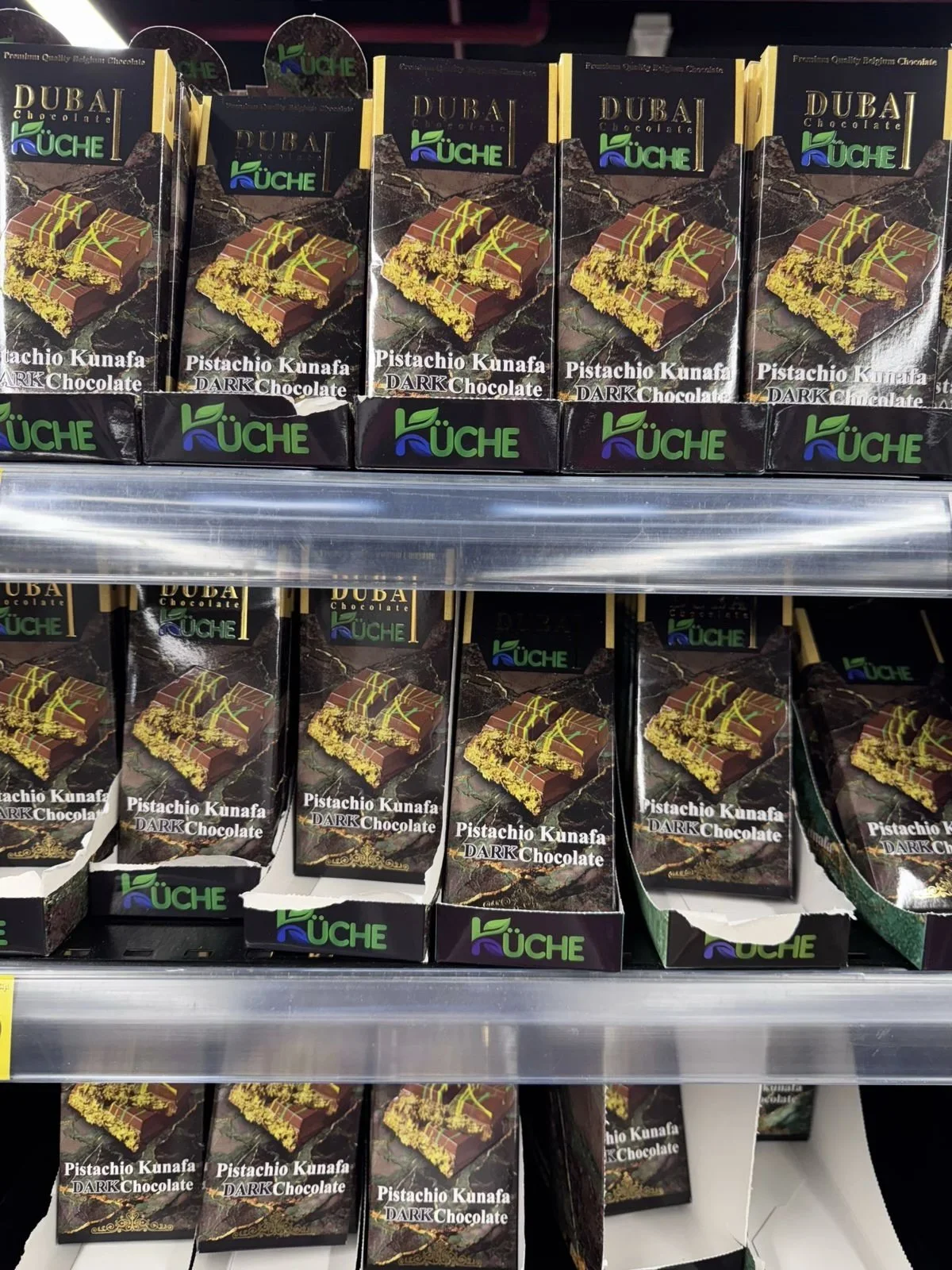
Dubai chocolate selection in one supermarket in Dubai.
his trend started with “Fix” dessert chocolatier that has risen to international prominence as the original Dubai chocolate. But where did the idea come from?
The founder of Fix, Sarah Hamouda, an Anglo-Egyptian engineer, said in a video posted on Instagram on 9th of September 2024 that Fix is a “freaking incredible experience”, “it’s a dessert encased in a chocolate”.
She says “Fix started simply because I had a crazy craving while I was pregnant with my second daughter. I used to send my husband into Dubai to find me different desserts, different chocolates which were all great but never gave me my fix”.
Hamouda adds “I wanted something different, nostalgic flavors that my mother used to make for us, such as knafeh”.
Decades ago, imported European brands dominated the market and enjoyed mostly as gifts or during celebrations. Today, homegrown chocolatiers and boutique brands have turned Dubai into a melting pot of cocoa creativity. Local artisans have elevated chocolate into an art form infusing it with Middle Eastern flavors like saffron, dates, pistachios, cardamom, rosewater, and presenting it in packaging as elegant as Dubai’s skyline.
Because of its Middle Eastern-inspired filling, pistachios, sesame (tahini) and the shredded phyllo pastry (knafeh), it feels different from Western or typical European chocolates; it fuses chocolate tradition with regional dessert heritage.
From Dubai to the world
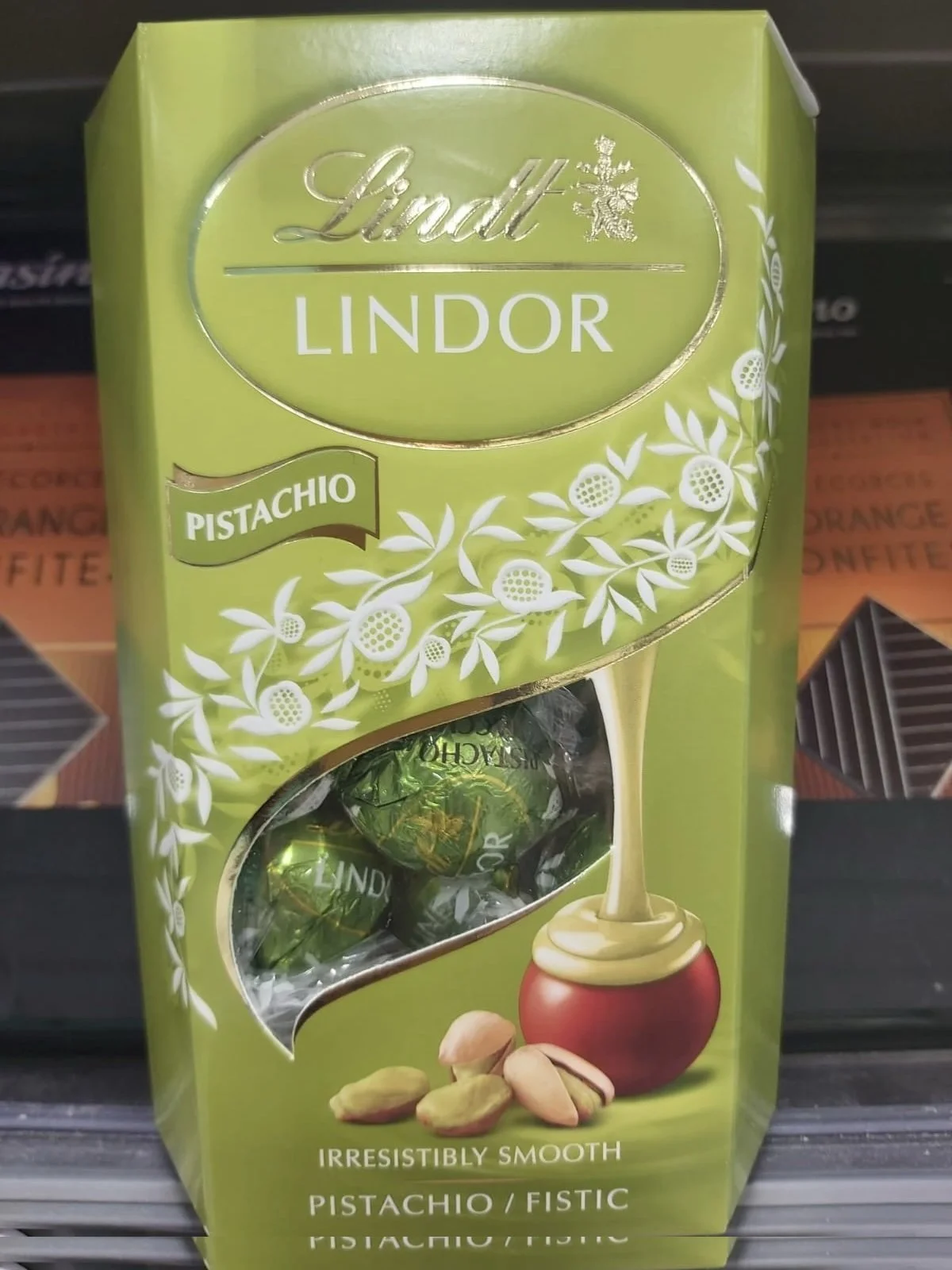
The famous Lindt chocolate maker launched its own pistachio chocolate.
Not to be outdone by Dubai, the pistachio chocolate flooded the markets of the world as well. The combination of phyllo, pistachio and chocolate has since inspired countless other desserts with similar flavor profiles.
Global brands and small bakers are riffing on the concept, turning it into croissants, milkshakes and more creative products. Fillings range from peanut butter and jelly to matcha.
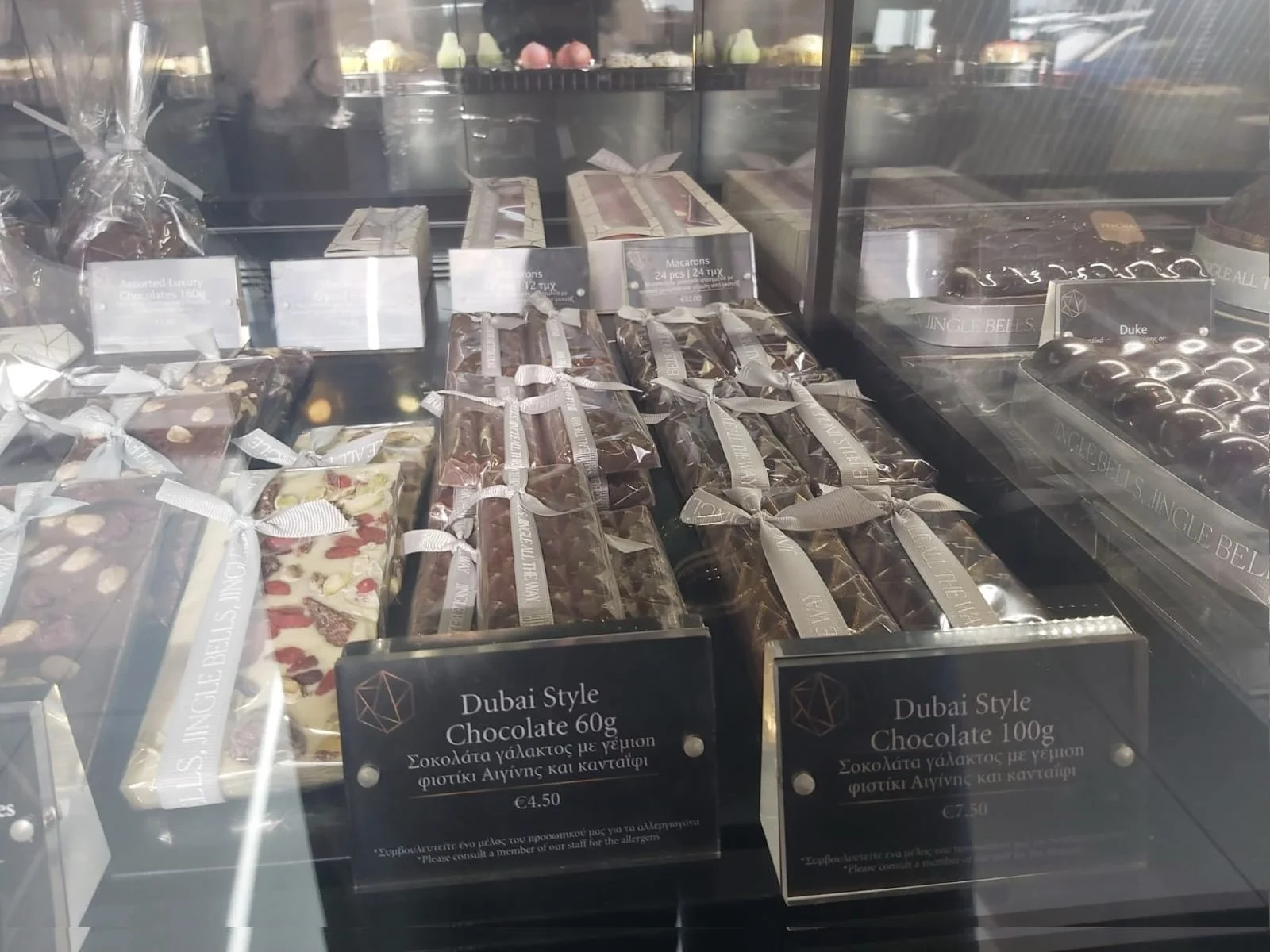
Dubai style bars as pictured in Pralina confectionaries in Nicosia.
Many retailers, artisan chocolatiers, and even large international chocolate brands started offering their own “Dubai chocolate–style” bars like the Swiss Lindt or different local confectionaries.
All this made Dubai Chocolate a famous item that now represents more than taste — it symbolizes the city’s ability to blend old and new, East and West, authenticity and ambition.
Homemade Recipe
What gives the Dubai Pistachio Chocolate Bar its famous crunch and unique taste?
The signature experience comes from blending three core elements: smooth chocolate, rich pistachio paste and roasted kunafa phyllo which is a traditional Middle Eastern pastry used also in many Greek recipes.
How to make it at home?
Place chopped chocolate (and cocoa butter if using) in a heatproof bowl, melt using a double boiler or microwave and stir until smooth. Then pour half the mixture in a mold or a lined tray and refrigerate until firm.
In the meantime, prepare the Kataifi or Kunafa pastry (phyllo) by roasting and mixing it with the pistachio cream and some tahini (optional). Add this mixture to the refrigerated chocolate and cover with the remaining chocolate to have two layers. This way, the pistachio mix will be sandwiched between the two layers of chocolate. Refrigerate again and serve. Bon appétit!
Et voilà! Since it is the chocolate season as the world prepares for Christmas, let’s uncover the magic of Christmas traditions!
Five things to know about chocolate:
Calories: A typical dark chocolate packs about 598kcal per 100g
Chocolate comes from the cacao tree, Theobroma cacao, where the edible part is the cacao bean. Theobroma means “food of the gods” in Greek.
Heart Health: Some studies suggest that dark chocolate may help improve blood flow, lower blood pressure, and reduce risk factors for cardiovascular disease.
Mood Effects: Theobromine and caffeine can give a mild stimulating effect. Flavanol-rich chocolate may boost brain function by improving blood flow to the brain. (source: Healthline).
Dark chocolate is rich in Flavonoids/Polyphenols, antioxidants linked to health benefits, it is also rich in minerals. Moderation is key.