A Festive Season Visit to Fikardou: Stepping into a Timeless Village
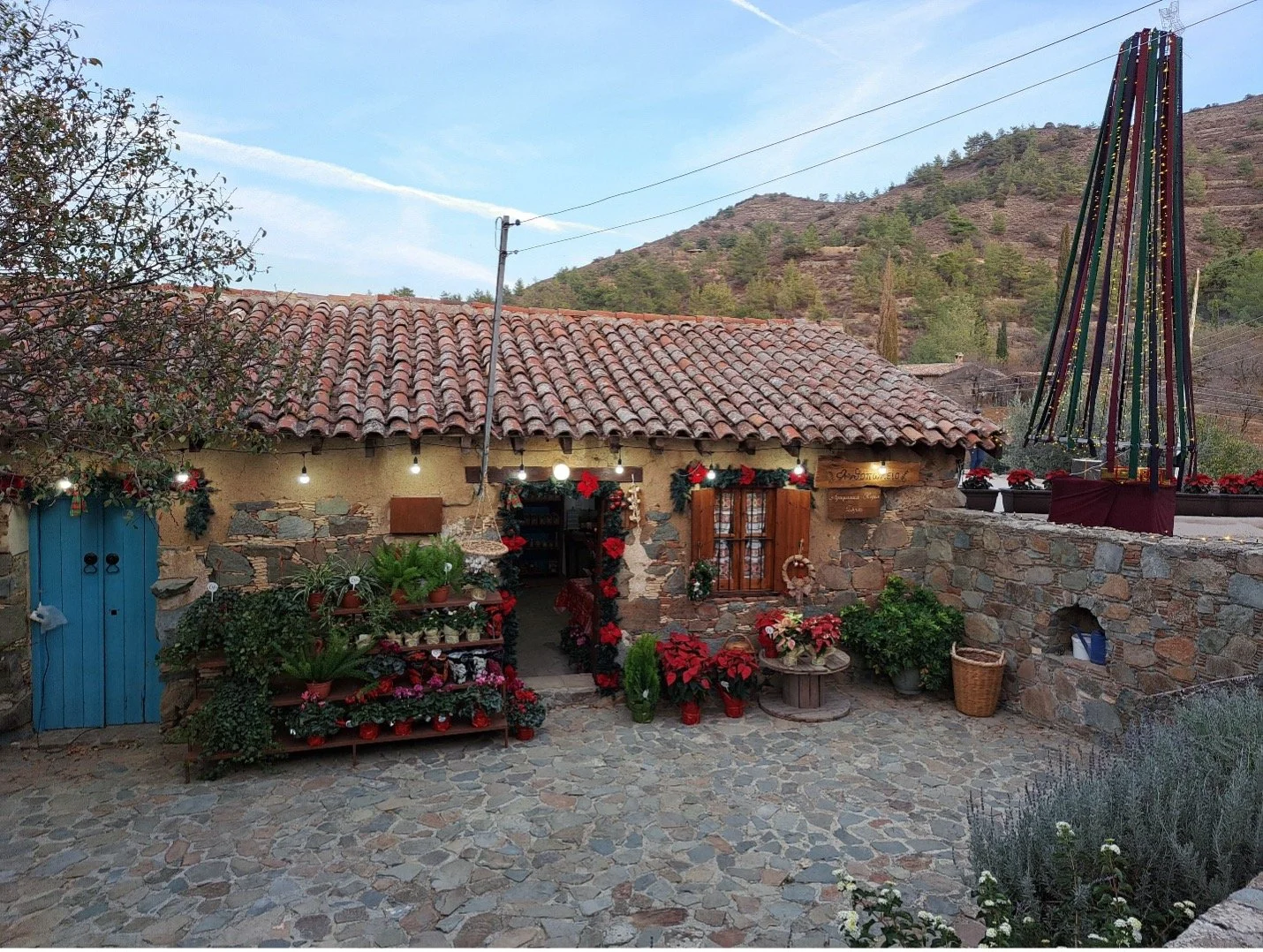
A shop in the village of Fikardou.
As the festive season begins, Cyprus slowly wraps itself in the warm glow of lights, music, and decorations. Yet just a short drive from the bustle of Nicosia lies a place where time seems to pause: the ancient village of Fikardou often described as an “open-air museum”. Visiting this rural gem at the start of the holidays feels like opening the first window of an advent calendar: surprising, intimate, and full of quiet wonder.
The village was declared an “Ancient Monument” by the national heritage authority, the Department of Antiquities of Cyprus, in 1978. In 2002, Fikardou was added to the UNESCO World Heritage “Tentative List” under the name “The rural settlement of Fikardou”, which means that Cyprus has proposed Fikardou for consideration to become a full World Heritage Site.
The village is being recognized for its architectural authenticity and integration with its natural environment by the following description: “Fikardou is an excellent example of a traditional mountain settlement, which has preserved its 18th and 19th century physiognomy and architecture, as well as its natural environment. The main aesthetic quality is the integrity and authenticity of the village, which is in complete harmony with its environment”.
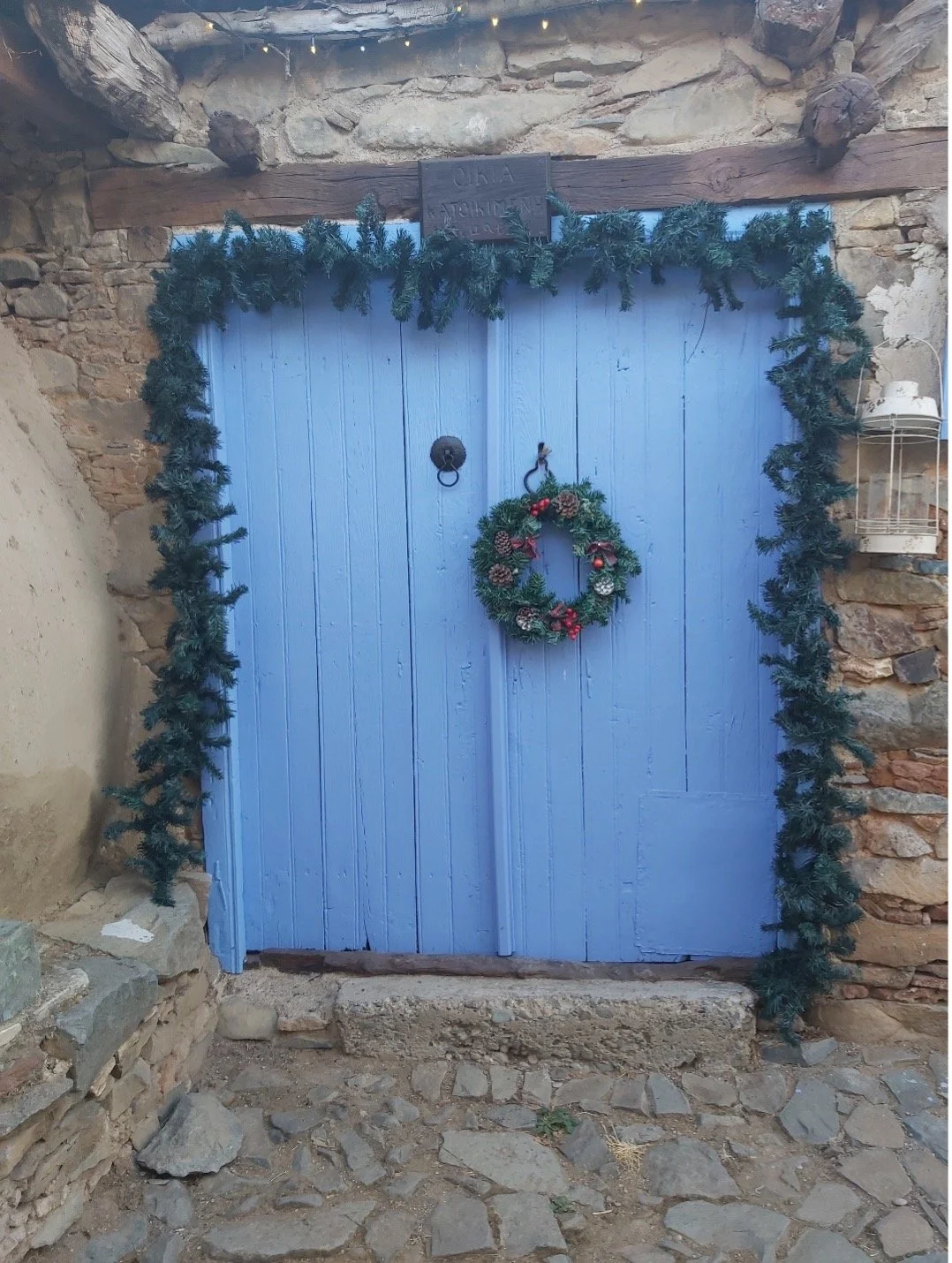
An ancient house in Fikardou.
Perched on the slopes of the Troodos Mountains, Fikardou greets you with narrow stone lanes, centuries-old houses, and the comforting scent of wood smoke. The village is almost entirely unchanged since the 18th century, and in the crisp early-winter air, its rustic charm feels even more enchanting. Traditional stone architecture blends seamlessly with the landscape, and the peaceful silence, broken only by birds and footsteps, makes you feel as if you’ve slipped into another era.
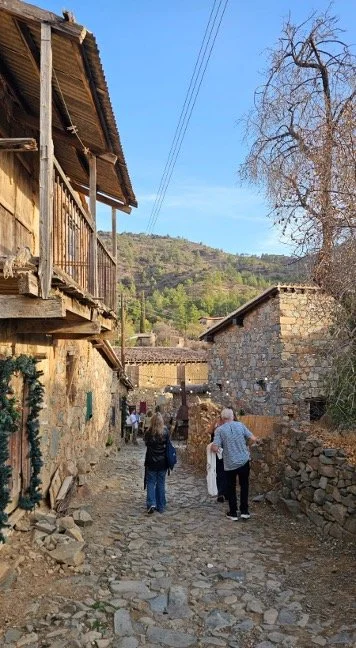
One of the narrow streets of the village of Fikardou.
Walking through the village at the start of the festive season is a sensory delight. A few homes display fine Christmas touches, handmade wreaths, simple garlands, or a twinkling light tucked behind a shutter, adding a gentle warmth to the otherwise timeless scenery. The lovingly preserved houses of Katsinioros and Achilleas Dimitris open their doors to visitors, offering a glimpse into how Cypriots once lived, cooked, and celebrated during winter months long before electricity and modern conveniences.
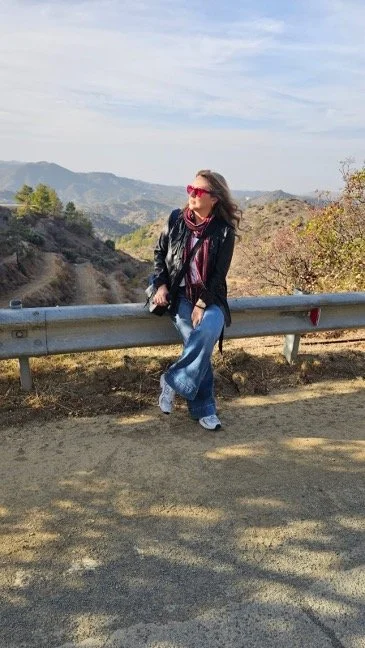
A quiet moment at the entrance of Fikardou.
Open-air museum
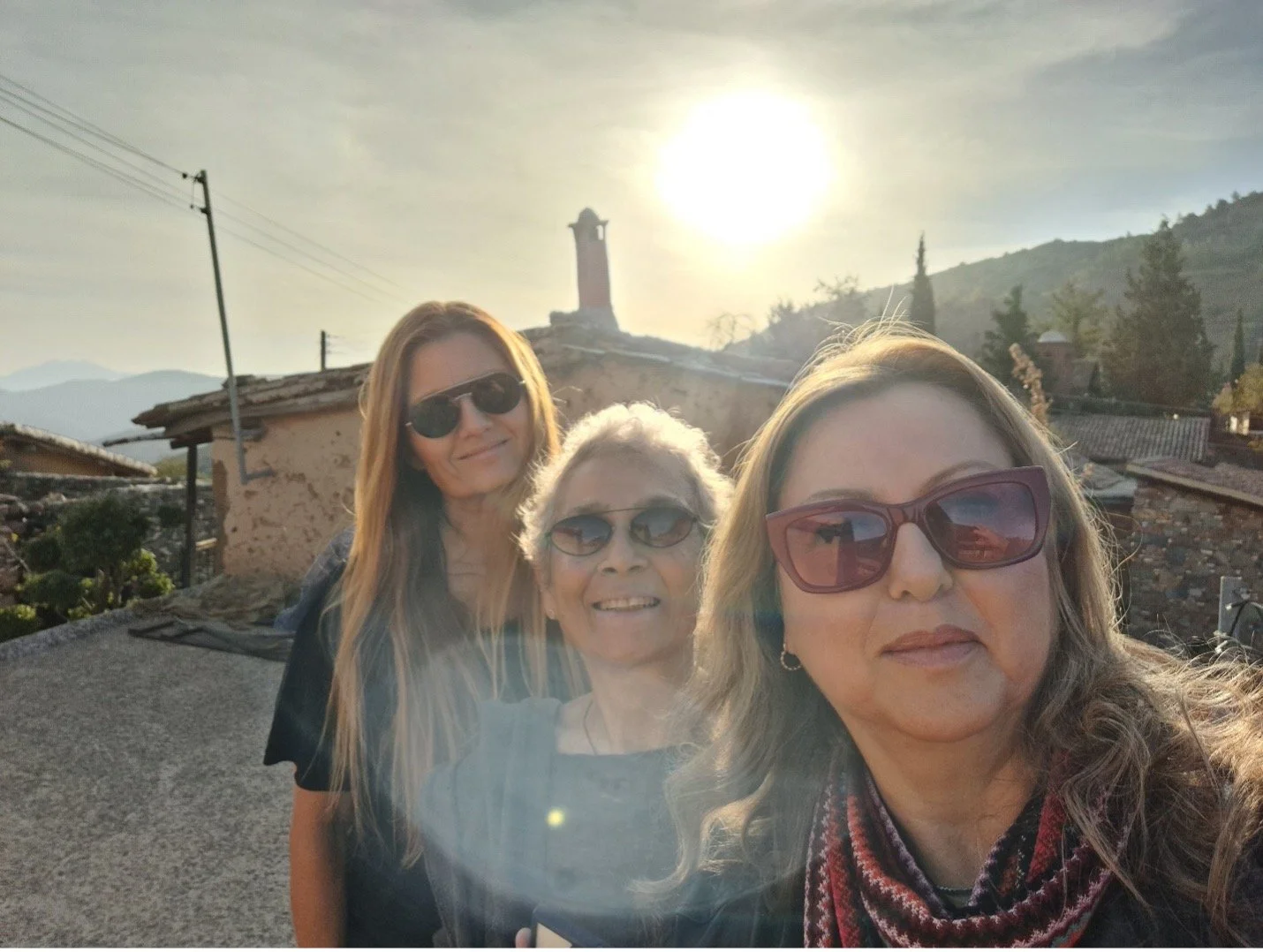
Norma with Professor Lora Nicolaou (middle) and the design consultant Rebecca Tornaritis during our visit to Fiardou.
Fikardou is considered an “open-air museum” because “the village is uninhabited” as Dr. Lora Nicolaou, Prof. of Architecture & Urbanism at Frederick University, Nicosia, explains “by definition, terms such as “historic” or “traditional” village imply the presence of a living community, which is absent in this case”.
While walking together in the narrow streets of Fikardou, she says that the classification of the village as “ancient monument” carries high significance because “classifications like that are not only important and very strict in planning terms but also carries substantial cultural value”.
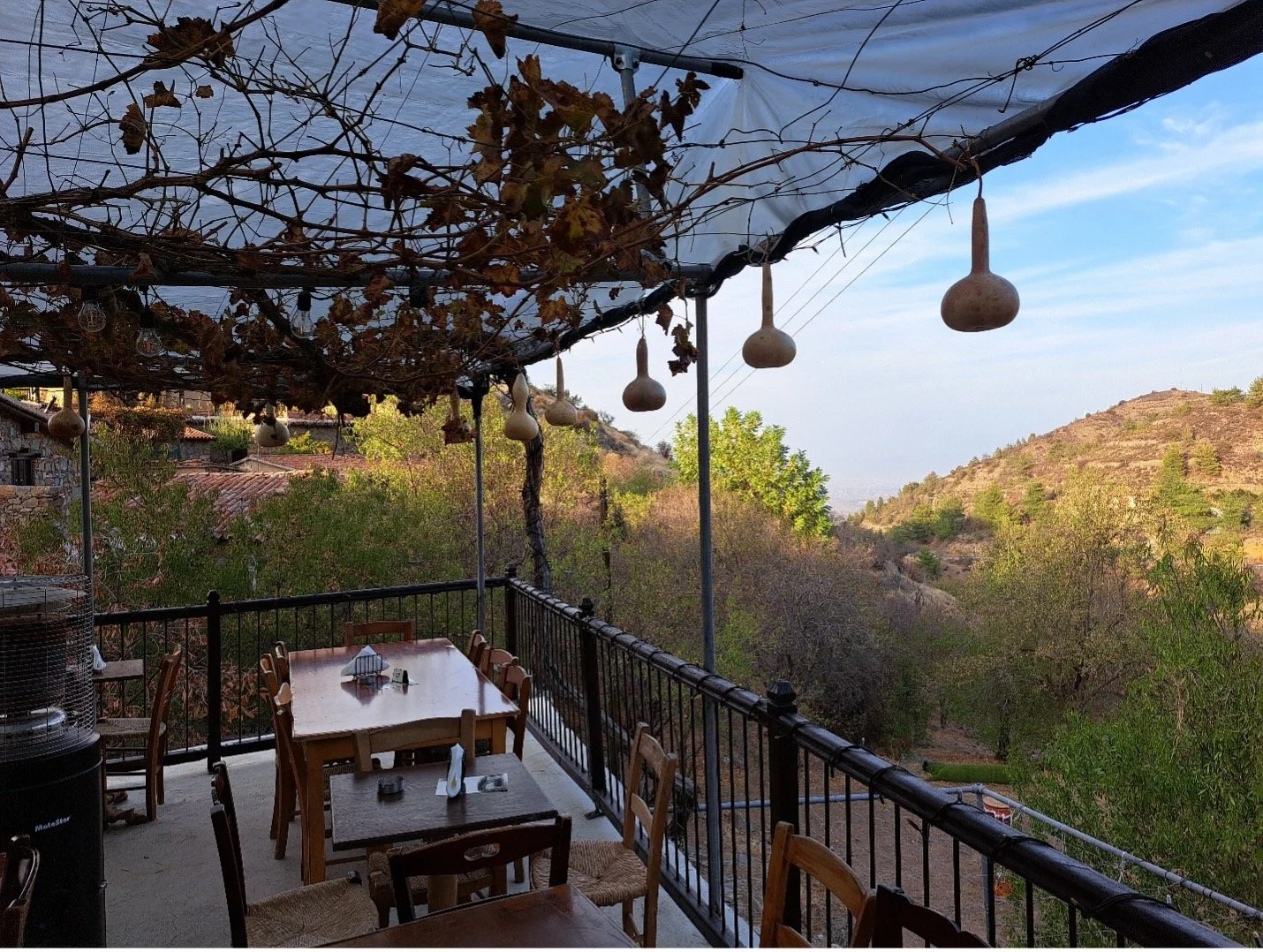
One of the traditional restaurants in Fikardou.
Dr Nicolaou also adds that the “character of places such as Fikardou (of which there were once several across the island) has been gradually eroded over time—both the buildings themselves and the overall layout—through extensions, refurbishments, and unplanned expansions lacking urban-design or architectural guidelines. Fikardou, however, was abandoned in the form you see today before such alterations took place. In this sense, it stands as a representation of a typical Cypriot village prior to the urbanization of the mid-20th century”.
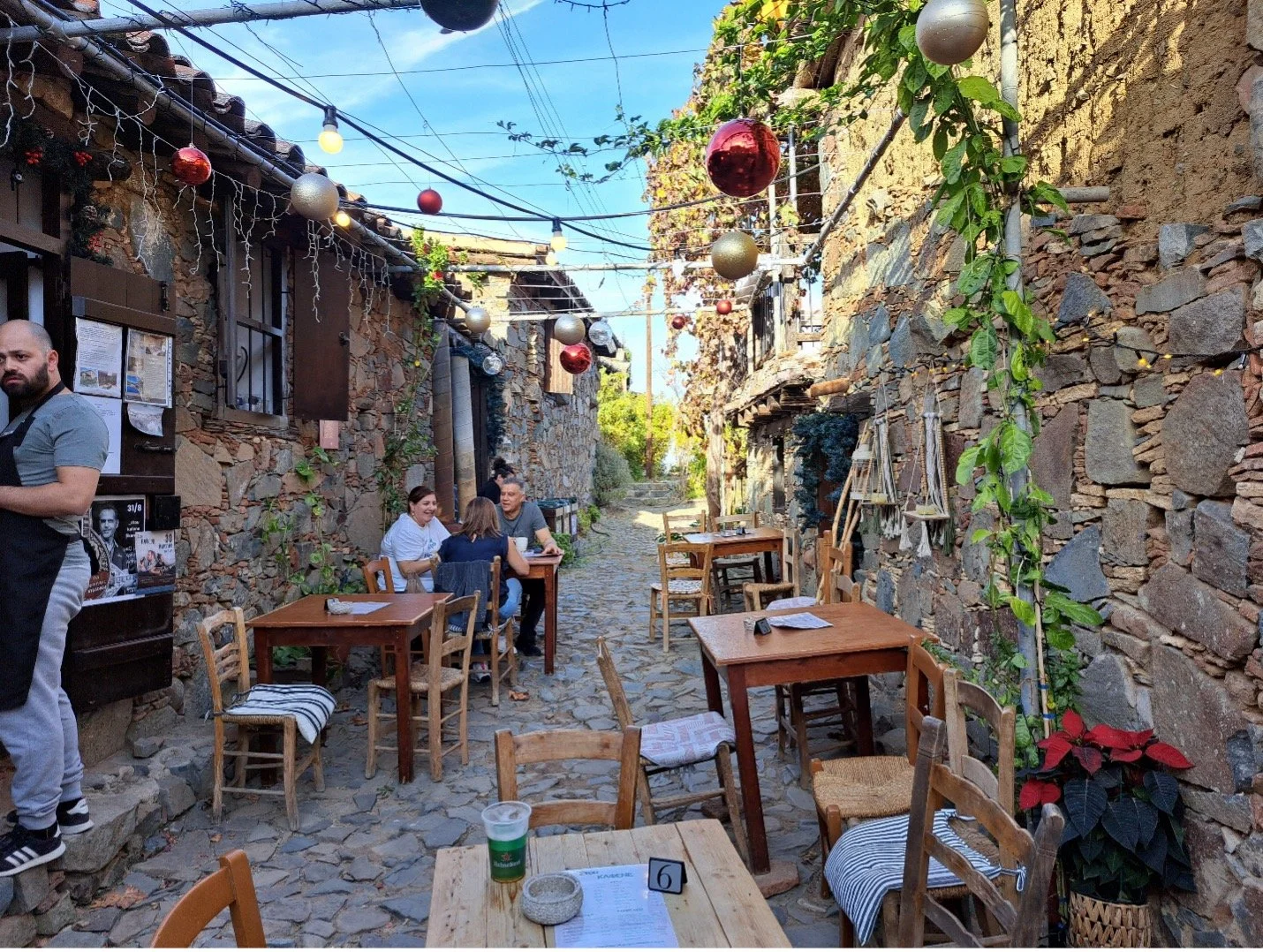
People enjoying warm drinks in a café in Fikardou.
As for the historical and architectural features that make Fikardou significant within Cypriot cultural heritage, she says that “the houses, as well as the organization of open spaces (the village layout), are typical of a mountainous Cypriot village. What sets it apart is the fact that it remains completely untouched and unspoiled by contemporary additions”.
About the preservation frameworks used by Cyprus to protect villages like Fikardou, Dr Nicolaou further explains that “planning uses two mechanisms to preserve, to some extent, the historic morphology of places: the listing of individual buildings and the designation of special character areas” and that “listed buildings are subject to strict regulations that govern any alterations, including the form and nature of extensions, the detailed design, the materials used, and so on”.
While agrotourism is quickly flourishing in Cyprus, places like Fikardou encourage other villages to promote tourism. Professor Nicolaou remarks that “as a destination, Fikardou positively influences the image and promotion of the surrounding villages, which have historically been remote and relatively isolated from other centers or main travel routes”.
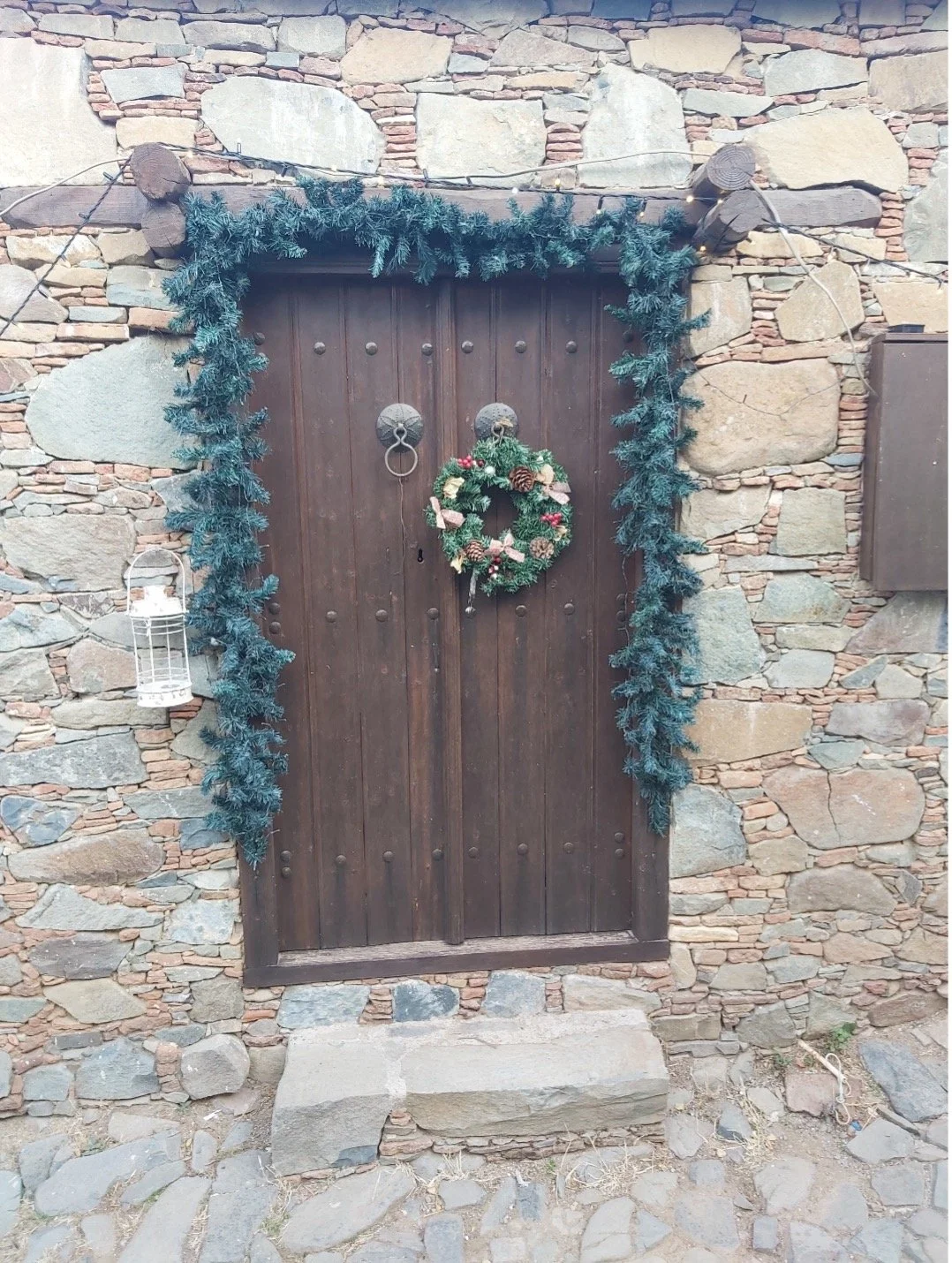
The ancient houses dress up for Christmas!
Usually “the preservation and refurbishment of traditional village cores serve as a major attraction for agrotourism and the development of parallel local economies. Old houses, which may be less comfortable for contemporary family living, are ideal for short-stay accommodation”.
Nevertheless, Fikardou is different “because of its ownership structure. The village came under public ownership about 30 years ago in an effort to save it from abandonment. The buildings have been fully restored in their traditional/original form, but not necessarily to standards suitable for rental accommodation. The planning authority responsible for the upkeep of the village does not have the capacity to manage it as a “living village,” but rather as an “open-air museum”. Dr Nicolaou concludes saying that “despite this, Fikardou attracts international visitors who travel from far away for the experience or to attend regular events held there. The local restaurant is also very famous for its traditional cuisine and draws customers throughout the week from across the island”.
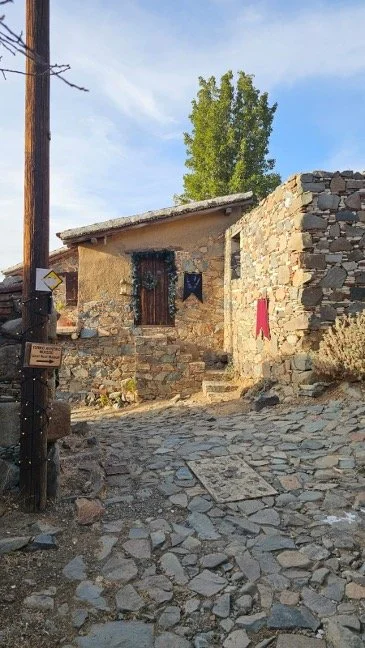
One of the many ancient houses in Fikardou.
Christmas mood
What makes Fikardou so special this time of the year is its sense of authenticity, being part of the annual Christmas villages’ festivities organized by the Deputy Ministry of Tourism, extending from 22nd November till 6th of January, along with the villages of Agros, Lekkara, Kyperounta, Deryneia, Kakopetria, Kalopanagiotos and Status Agios Fotios.
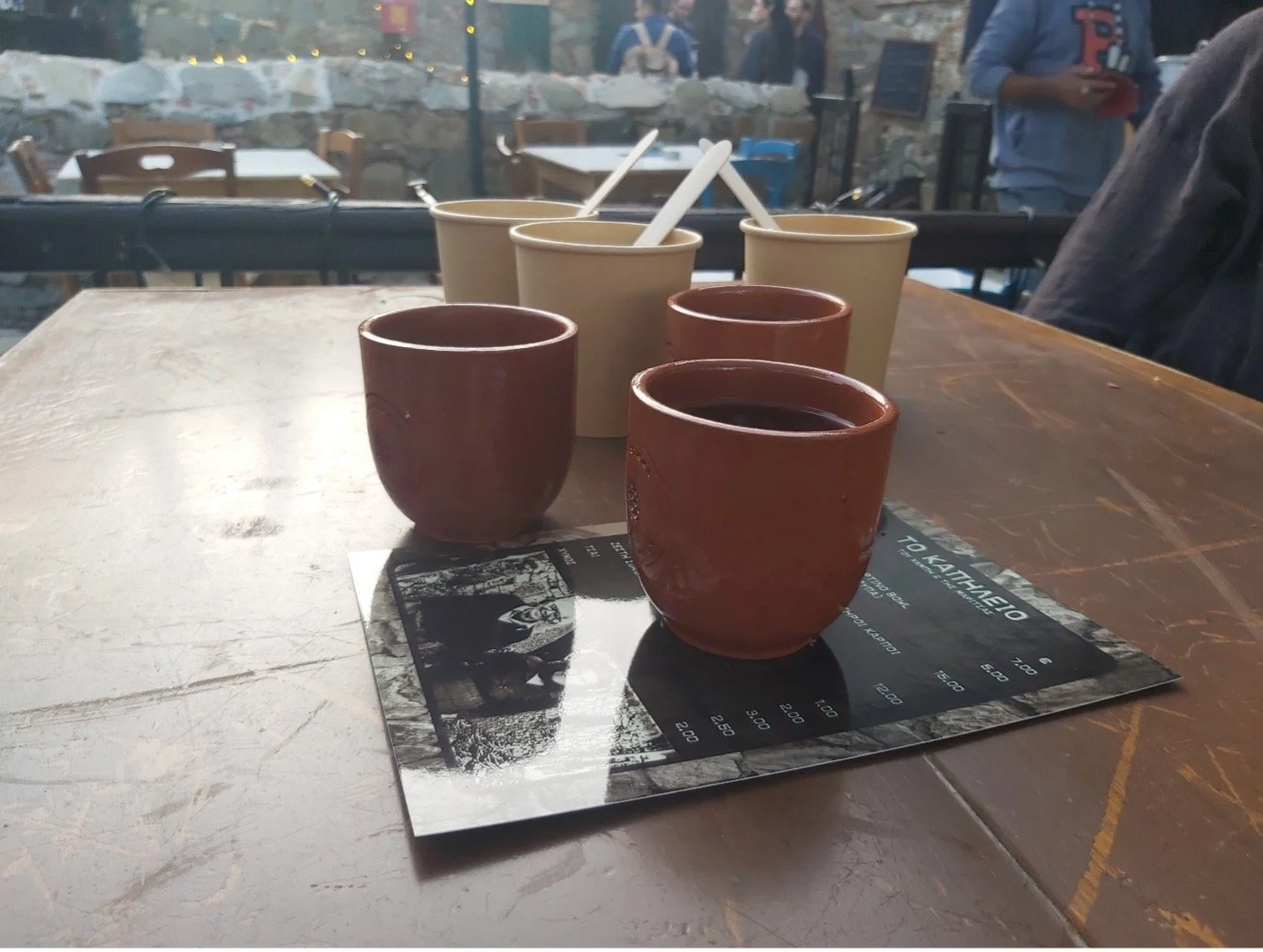
Mulled wine and Trachana soup in a restaurant in the village.
With the many market kiosks, the charm of tradition is felt everywhere, whether wandering in the alleys or sipping a warm drink in a café or enjoying the traditional Trachana soup in a nearby restaurant admiring the terraces hillsides. Fikardou invites you to slow down and appreciate the beauty of a simpler season.
A festive season visit to Fikardou is not just a trip; it’s a gentle reminder that sometimes, the most memorable moments are found in the stillness of a mountain village, where history, nature, and the spirit of the holidays meet.
Et voilà! From the village, back to Nicosia for a Christmas culinary journey!
Five things to know about Fikardou village:
Fikardou is a traditional village in the Nicosia District and it is approximately 40 Km away from the capital.
Two of the village’s restored houses, the House of Katsinioros and the House of Achilleas Dimitris, won the Europa Nostra Award in 1987 for outstanding heritage conservation. This award recognizes excellence in heritage conservation and enhancement at a European scale.
A memorandum was signed in 2022 between the municipality of Anfeh in Northern Lebanon and the council of Fikardou for cooperation in cultural tourism.
The village appears to have existed at least since medieval times, though the earliest formal written record dates to 1825 under Ottoman rule.
Over time, population decline due to urban migration left much of the village deserted.
(Sources: Cyprusalive.com, Visit Cyprus.com, whc.unesco.org, europeanheritageawards.eu /Europa Nostra Awards, efikardou.eu, cyprus.terrabook.com)