Shared Tables on Christmas: How do Cyprus and Lebanon connect through Mediterranean flavors?
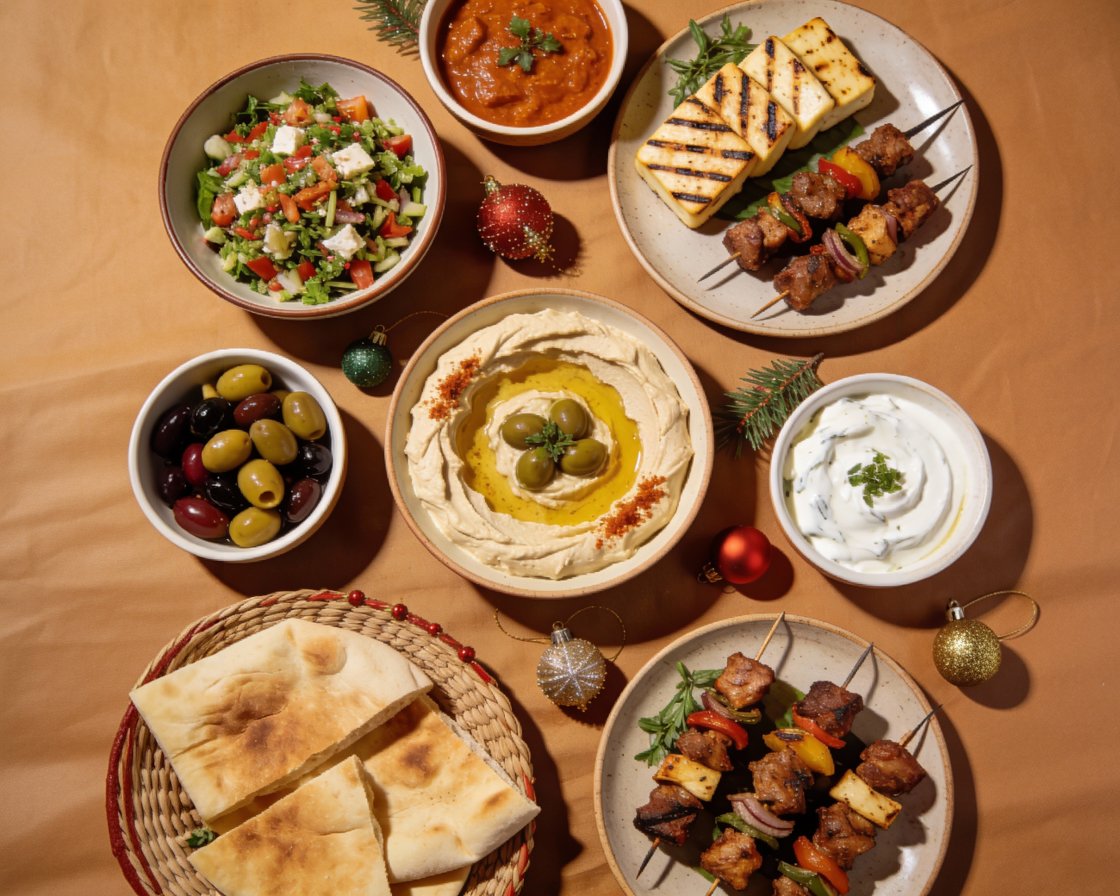
Across the waters of the Eastern Mediterranean, Cyprus and Lebanon sit facing one another: two countries sharing sea, sun, centuries of cultural exchange and many culinary habits. As the festive season is approaching its peak on Christmas day, each household is preparing the menu and decorations for that special day. During this festive season, people on both sides share not only family tables but a rich heritage.
Christmas here is more than a holiday: it’s a season of generosity, memory, and old traditions carried forward with pride. And one of the most beautiful parts? The table.
Apart from sharing the meze style of food involving many small dishes, the two countries share the Mediterranean flavors evolving around olive oil, lemon and herbs as well as the hospitality tradition.
Food is, in both cultures, a ritual, a gathering, a language of love. Nowhere is this connection clearer than in the everyday plates that Cypriots and Lebanese people prepare.
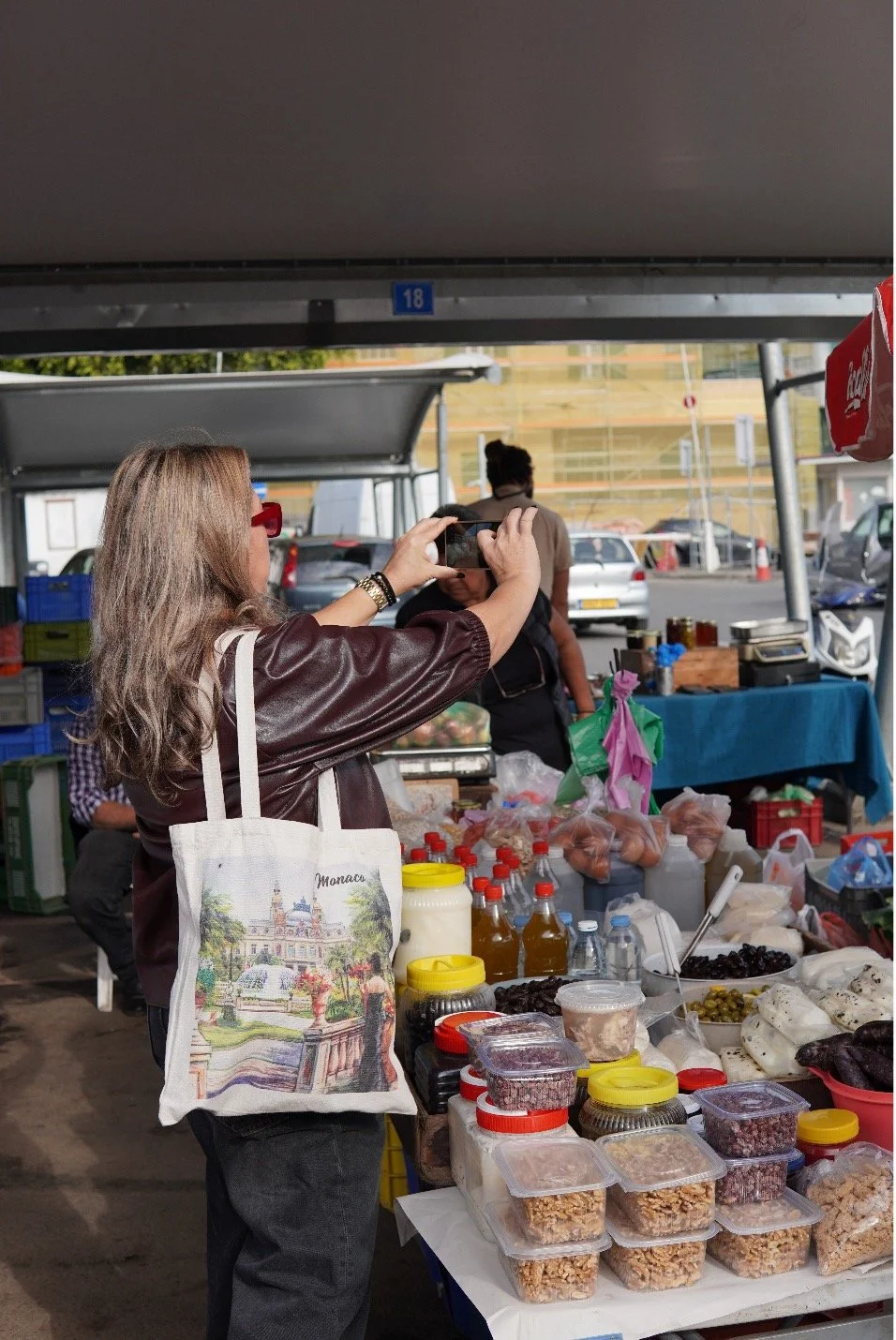
Norma in the Nicosia farmer’s market in the old town.
Mediterranean flavors and abundance
Walk into a Lebanese home at lunchtime, or sit down at a Cypriot village taverna, and the first thing you notice is abundance. Both cuisines use fresh vegetables, herbs, olive oil. This trio is the backbone of countless dishes on both sides of the sea where herbs mainly involve mint, parsley, coriander and dill.
Cyprus and Lebanon have grown up on the same Mediterranean side, sharing a climate that nurtures olives, citrus, grapes, and grains. Over centuries of travel, trade, and cultural contact, their foods have become delicious reflections of their intertwined histories.
Meze Culture: A Shared Art of Eating Together
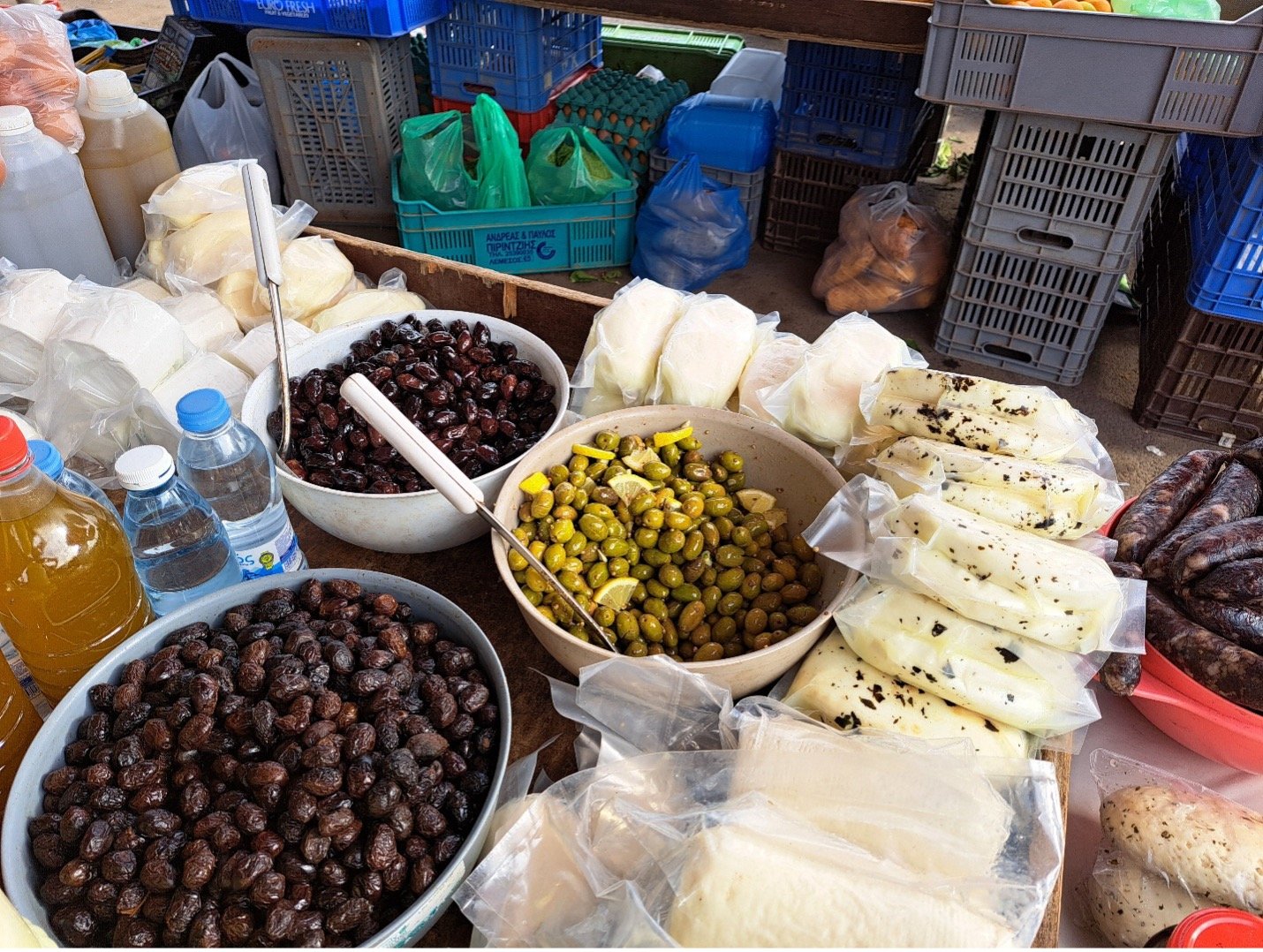
Fresh products at the Nicosia Farmers’ Market at ‘OXI’ square.
What bridges the two kitchens is the tradition of meze. In Cyprus, meze arrives as a slow parade of small dishes; in Lebanon, the same tradition appears as a colorful spread of hot and cold mezze.
Both cuisines opt for variety over a single main dish, while people cherish the time spent at tables where conversations and laughs can be heard everywhere.
Vegetables as main dishes
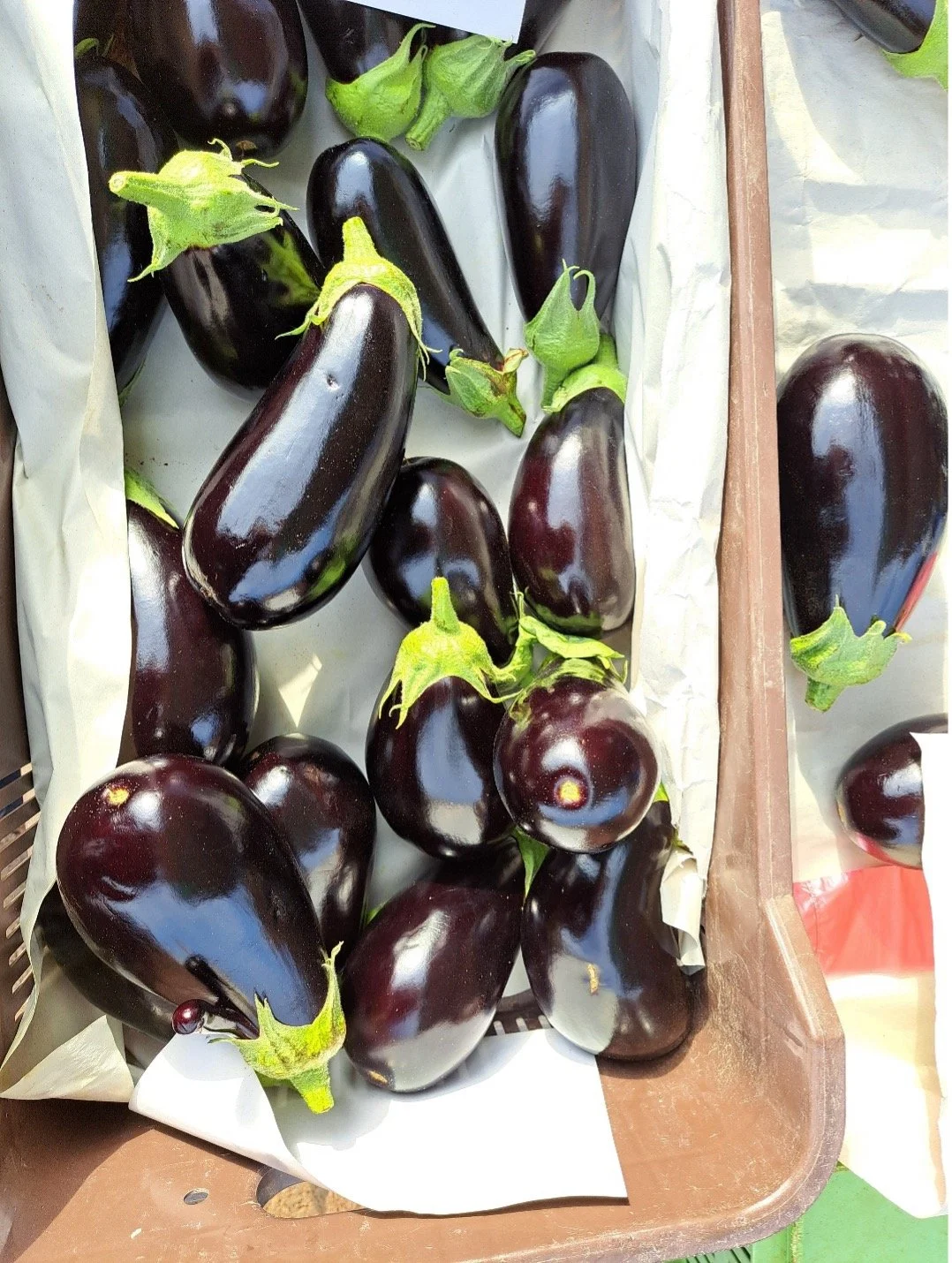
Eggplants as displayed in the Farmer’s Market in Nicosia.
One of the most interesting features of Cypriot and Lebanese cuisine is the celebration of vegetables, not as side dishes but as stars. This is part of the Mediterranean Diet, one of the healthiest diets in the world if not the healthiest, making obesity relatively rare in those two countries.
Both cuisines place vegetables at the heart of daily meals, creating dishes that are naturally wholesome, colorful, and deeply rooted in the land, on top of which are the salads: Tabboule, Fatoush from the Lebanese side and Cypriot or Greek salads on the Cypriot side.
Other veggies include grilled eggplant, zucchini mixed with eggs, vibrant plates of greens, and stuffed vegetables with rice and meat.
Christmas traditions
Walk into a Cypriot home on Christmas morning and you’ll likely find the scent of cinnamon, citrus, and roasted meats filling the air. Step into a Lebanese home and you’ll encounter something remarkably similar. The dishes may carry different names, but the flavors based on olive oil, anise, sesame, honey, nuts and cinnamon, speak a common Mediterranean language.
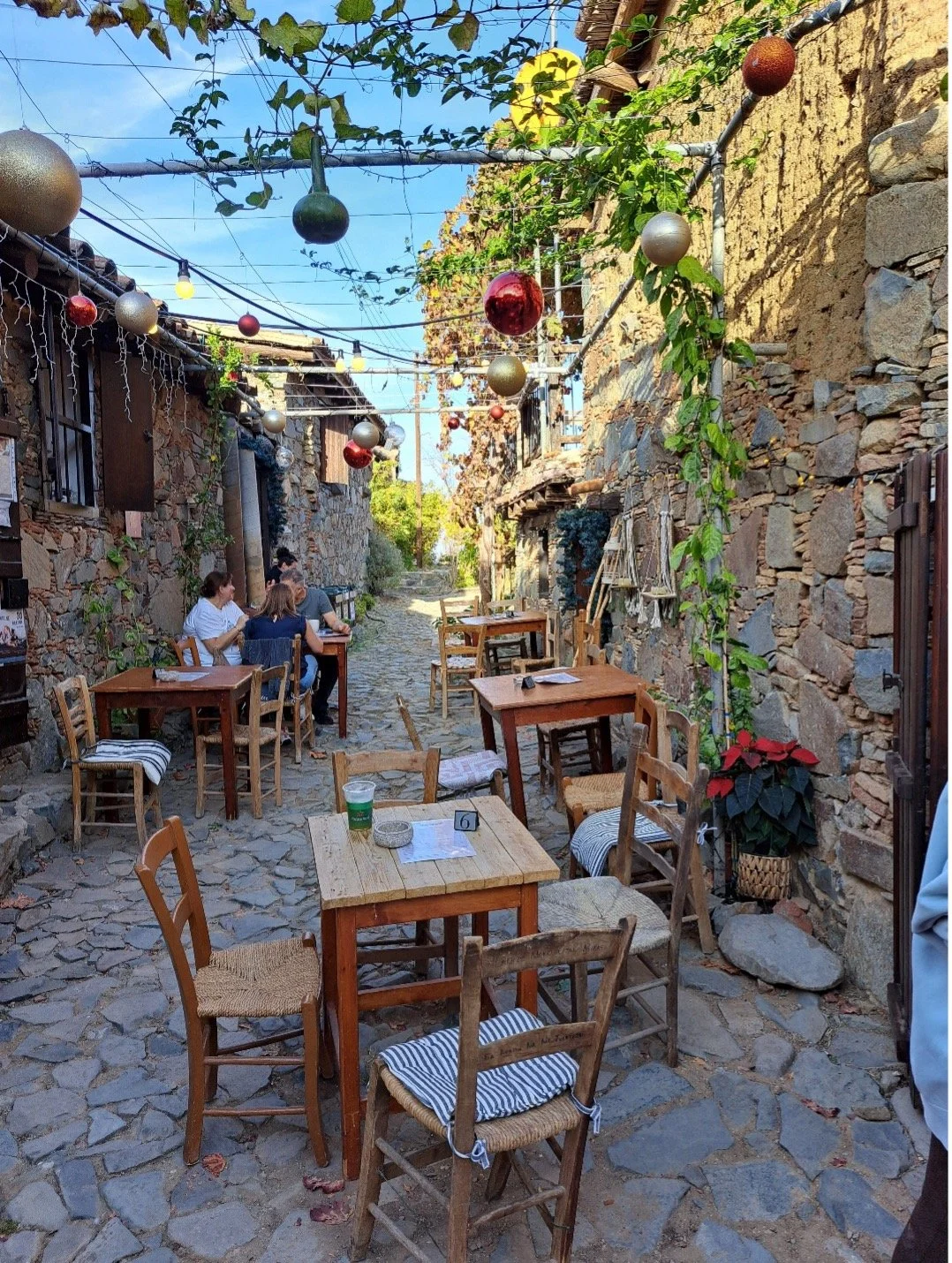
A Cyprus village
A typical Cypriot table on Christmas day would include salads, dips, sausages and the famous Souvla (grilled chunks of lamb or chicken or pork) while as a typical Lebanese table would include the salads, warm appetizers and well marinated grills. A Western style dish is always welcomed on both tables like handmade ravioli on the first, or cold cuts and cheeses on the second.
But the common dish which transcends all cultures is the roasted turkey which is the star of the show on each table and varies according to each country’s traditions. Though the Christmas turkey is often associated with English and North American traditions, many countries have embraced it in their own unique ways, and in our side of the world it is usually served with aromatic rice and decorated with chestnut, roasted nuts and dried fruits.
Even in places where turkey isn’t traditionally local, it has become a symbol of abundance, togetherness, and shared celebration. It is a dish that brings people together, across borders and traditions, during the most festive time of the year.

The traditional Cypriot sweets – kourabiedes & Melomakarona
Now it’s dessert time! Take kourabiedes in Cyprus and ghraybeh in Lebanon: both are buttery, powdered-sugar cookies; vasilopita and maamoul, each with its own ritual and its own blessing for the year ahead, yet grounded in the same idea: food as a tradition that binds families together. Of course, there is always room for Melomakarona (Semolina cookies soaked in honey syrup and topped with walnuts) and the traditional Christmas cake while on the other side of the Mediterranean the specialty would be the Yule log (bûche de Noël).
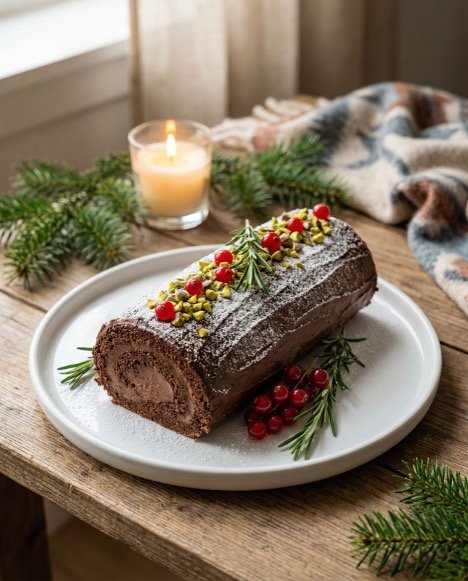
Classic Christmas log bûche de Noël
A Heritage of Hospitality
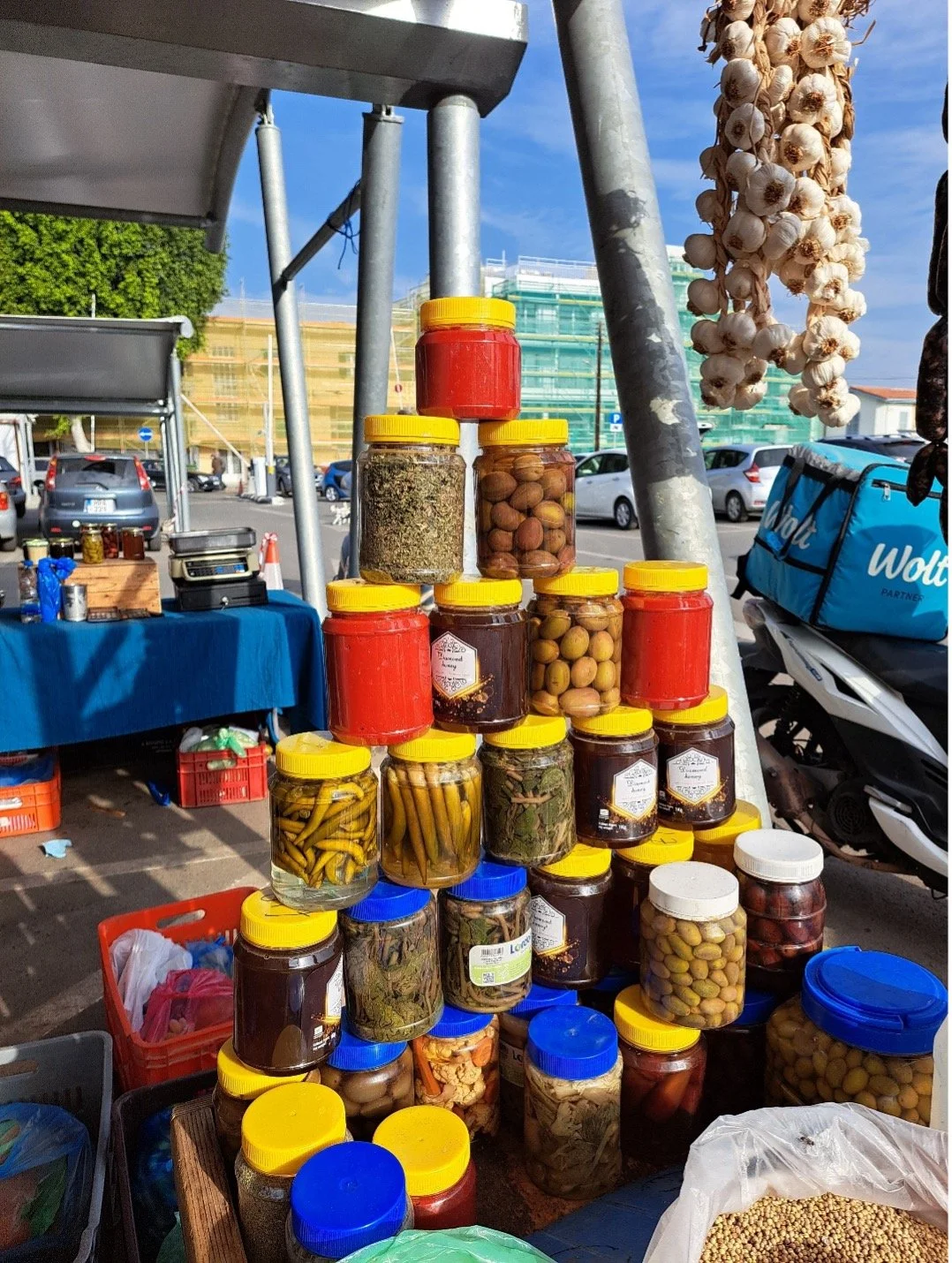
Handmade local products at the fruit and vegetable market in Nicosia.
Another shared trait is not a dish, but a feeling: the extraordinary hospitality. In both Lebanon and Cyprus, guests are welcomed with open arms and full tables where food is offered, shared, refilled and encouraged. This cultural generosity transcends recipes; it is a shared Mediterranean code that unites both peoples.
Cyprus and Lebanon may be separated by water, but their tables are connected. Their food tells a story of shared landscapes, ancient exchanges, and a Mediterranean spirit that values freshness, generosity, and community.
Common signature dishes with different names!
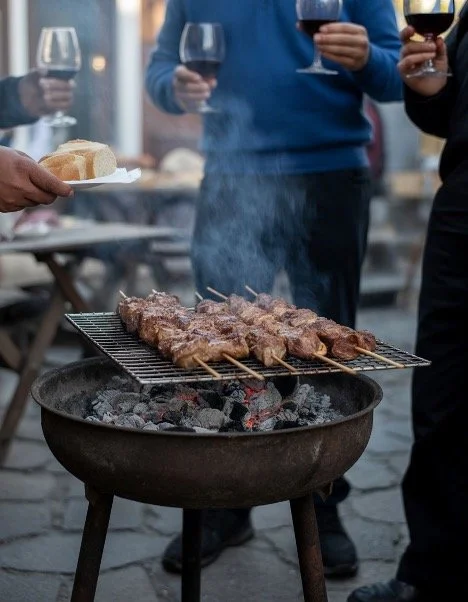
Meditteranean grills
Cypriots and Lebanese people may call certain dishes by different names, but the flavors are instantly recognizable. Fusion is also noticeable as Halloumi dishes are now being included in the Lebanese meze and Hummus is found more on the Cypriot table.
Here is a list of similar dishes found on the everyday Cypriot and Lebanese tables:
- Stuffed wine leaves: in Cyprus it is Koupepia, in Lebanon it is Warak Enab, the tender grape leaves wrapped around rice (and sometimes meat), simmered in lemony broth.
- Sausages: in Cyprus it is Loukanika, in Lebanon it is Makanek
- Bulgar wheat dishes mixed with meat: in Cyprus it is Kouppa, in Lebanon Kebbe
- Black-eyed beans: In Cyprus it is Louvi, in Lebanon it is Loubia
- Hummus & Tahini dips: Both countries share those silky lemony dips served with warm pitta bread.
- Kebabs and grilled meats: in Cyprus it is souvlaki, Sheftalia and Souvla, in Lebanon it is Kebab, Kafta, Taouk. Grilled over charcoal, seasoned with herbs, served with salads
and bread or fries, this is the shared heartbeat of Mediterranean street food.
- Lentils: whether it is Lebanon’s mujaddara or Cyprus’s fages, lentils hold a central place in both kitchens.
- Sour soups: in Cyprus it is Trachana, in Lebanon it is Keshek, the dried mix of wheat grain or cracked wheat mixed with goat’s milk or yogurt.
- Moussaka or Moussakaah, the famous Greek dish made of Aubergines and tomato sauce has a twin in the Lebanese cuisine but without the Béchamel and Cheese.
Et voilà! Let’s continue with the Christmas spirit and listen to some music as the big day is approaching!
Five things to know about the culinary habits of Cyprus and Lebanon:
Meze defines both cultures, a philosophy of serving many small dishes and celebrating sharing and socializing, as well as eating slowly.
The similarities in both cuisines are the result of thousands of years of shared influences like Phoenician routes, the Ottoman rule, as well as Italian (Venetian rule of Cyprus) and French (mandate on Lebanon) legacies.
Olive oil has been produced for over six thousand years, primarily in the Mediterranean (Greece, Italy, Spain, Cyprus, Lebanon). Olives, whether it is black or green, are a staple on both Cypriot and Lebanese tables.
Olive oil provides monosaturated fats, antioxidants and anti-inflammatory benefits while garlic, which is used frequently in both cuisines, supports immunity and heart health.
Both cuisines align closely with what modern nutrition considers a heart-healthy, anti-inflammatory, nutrient-dense diet.