A Tale of Two Worlds: Europe &the Middle East
For almost a year, I’ve been sharing stories on this blog about a variety of topics, places, and people. Today, I’m sharing a new chapter: the launch of my book, after years of research and my PhD dissertation exploring Europe and the Middle East.
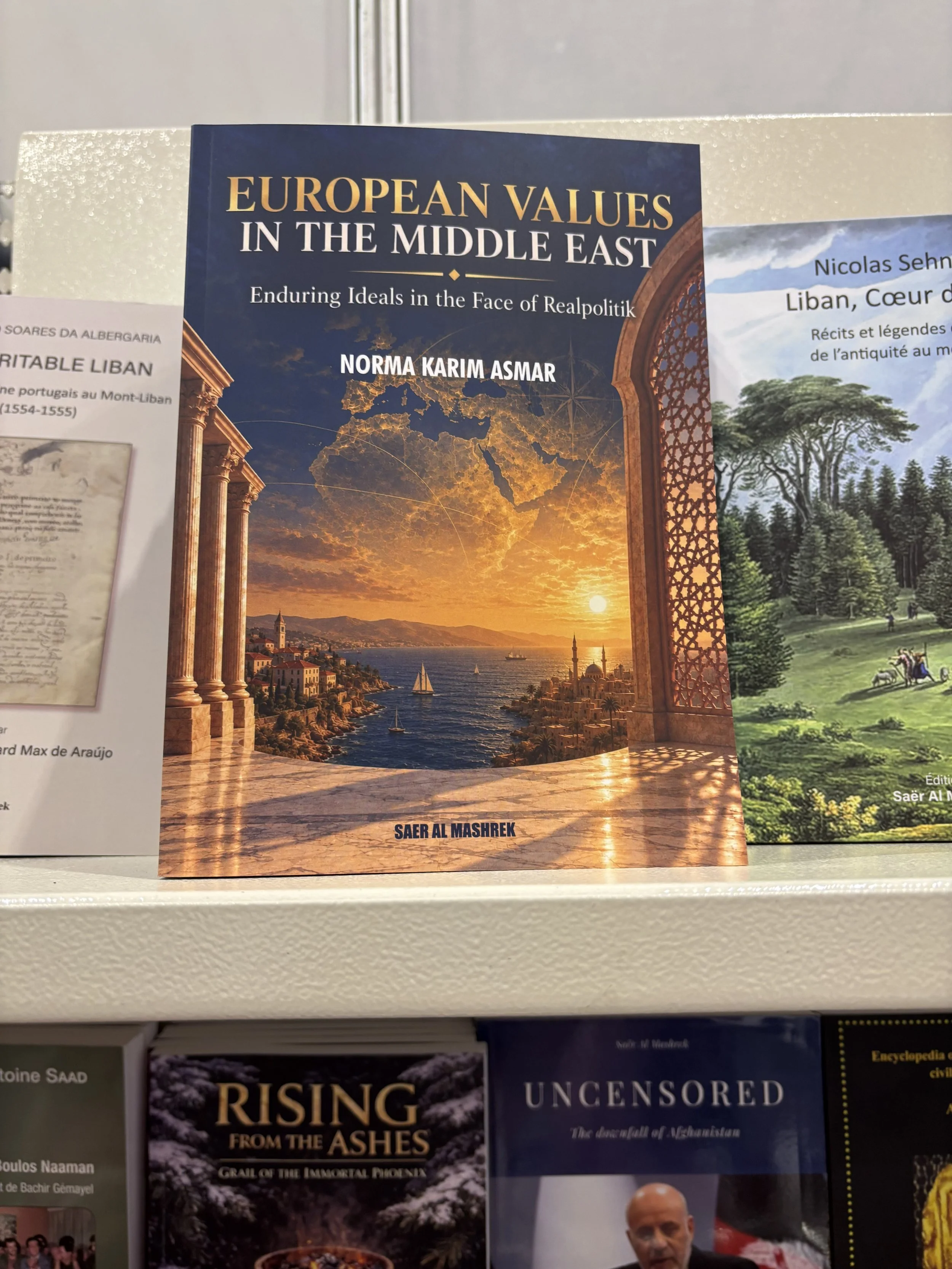
I brought my doctoral research to life through a book: “European Values in the Middle East, Enduring Ideals in the Face of Realpolitik”.
The Launch

Norma signing her book at the Beirut Arab International Book Fair.
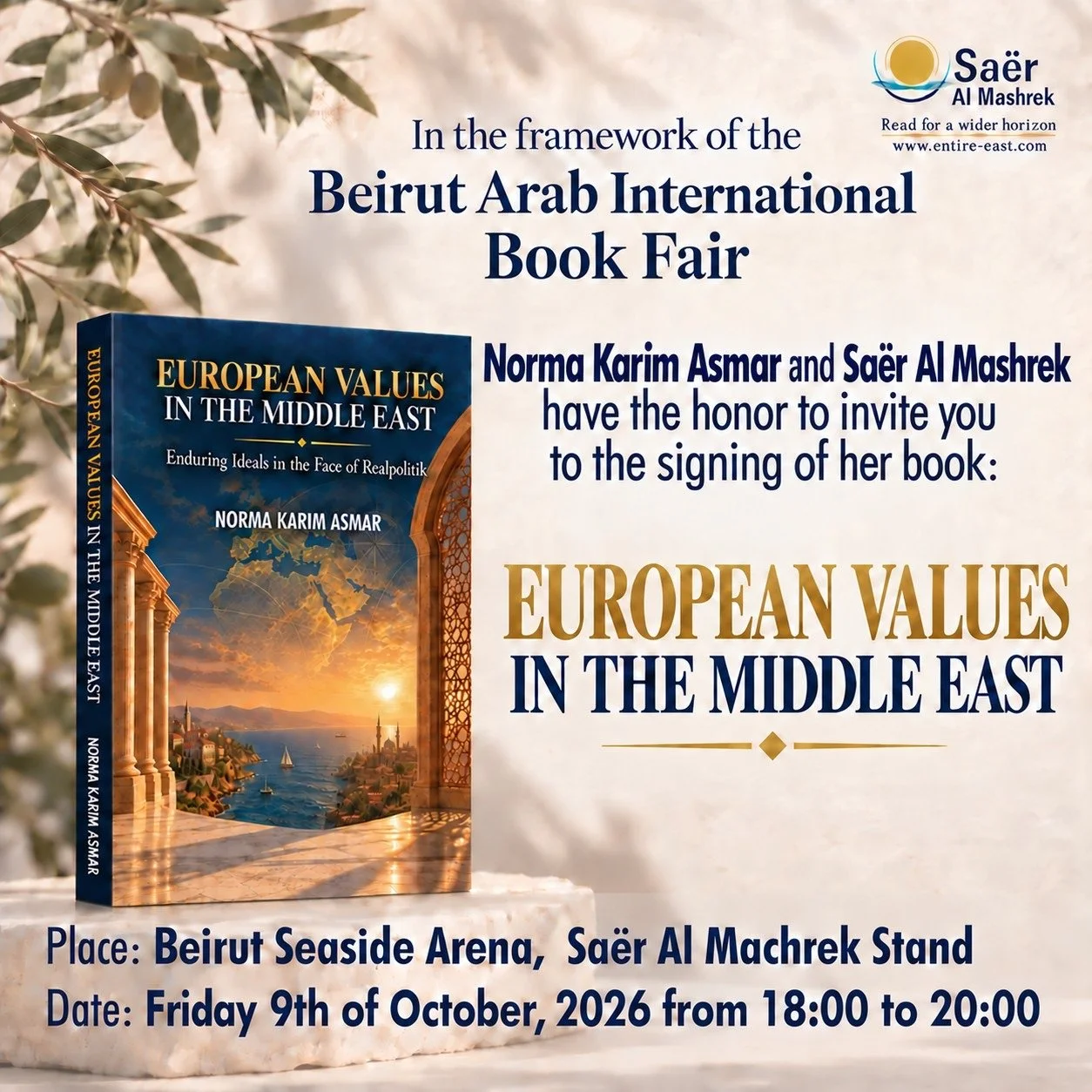
In the framework of the Beirut Arab International Fair, I signed my book at the publisher’s stand Saer Al Mashrek. Years of research, a PhD and a book, all started with a simple question: Why did the European experience progress, while state-building faltered in countries in the Middle East?
It was an amazing journey at the University of Cyprus, exploring cultures, histories, traditions, and the beautiful connections that bring those two regions together.
Launching a book is such a personal and rewarding experience, it represents dedication, creativity, countless ideas, and the desire to share something meaningful with the world.
The book is based on my doctoral dissertation, exploring the universality of European values and the complex historical, political, and cultural realities that challenge their implementation in the Middle East, bringing together my academic research and extensive experience as a journalist covering the region.
New Dialogue
What began as a research journey has become an opportunity to engage in a wider conversation about the values that shape our societies, the relationship between Europe and the Middle East, and the importance of dialogue across cultures.
Europe and the Middle East have long been intertwined through history, culture, politics, traditions, and intellectual exchange.
Through my PhD research, I had the opportunity to delve deeper into this fascinating relationship, exploring the themes and connections that make the study of these regions so meaningful.
The Content
The book provides an extensive overview of the intellectual, historical, and political events and developments that shaped the modern European experience that embedded values such as respect for human rights, the rule of law, and the establishment of institutions into the daily lives of Europeans. It also examines the political, historical, and social factors that have hindered the development of institutions in several Middle Eastern countries.
It poses a central question: how did Europe—through a long, arduous journey of conflicts, revolutions, and reforms, transition from political systems often characterized by absolute rule and religious or social strife, to a legal and institutional framework rooted in the principles of democracy, human rights, equality before the law, and accountability?

Furthermore, the book explores the relationship between values and development, highlighting the importance of institutions capable of upholding the rule of law, combating corruption, ensuring transparency, and fostering a stable environment for investment, work, and innovation.
Finally, the book sheds light on the historical and political challenges faced by various Middle Eastern countries, challenges that have prevented the consolidation of institutions capable of functioning with independence, effectiveness, and long-term sustainability.
Two Case Studies
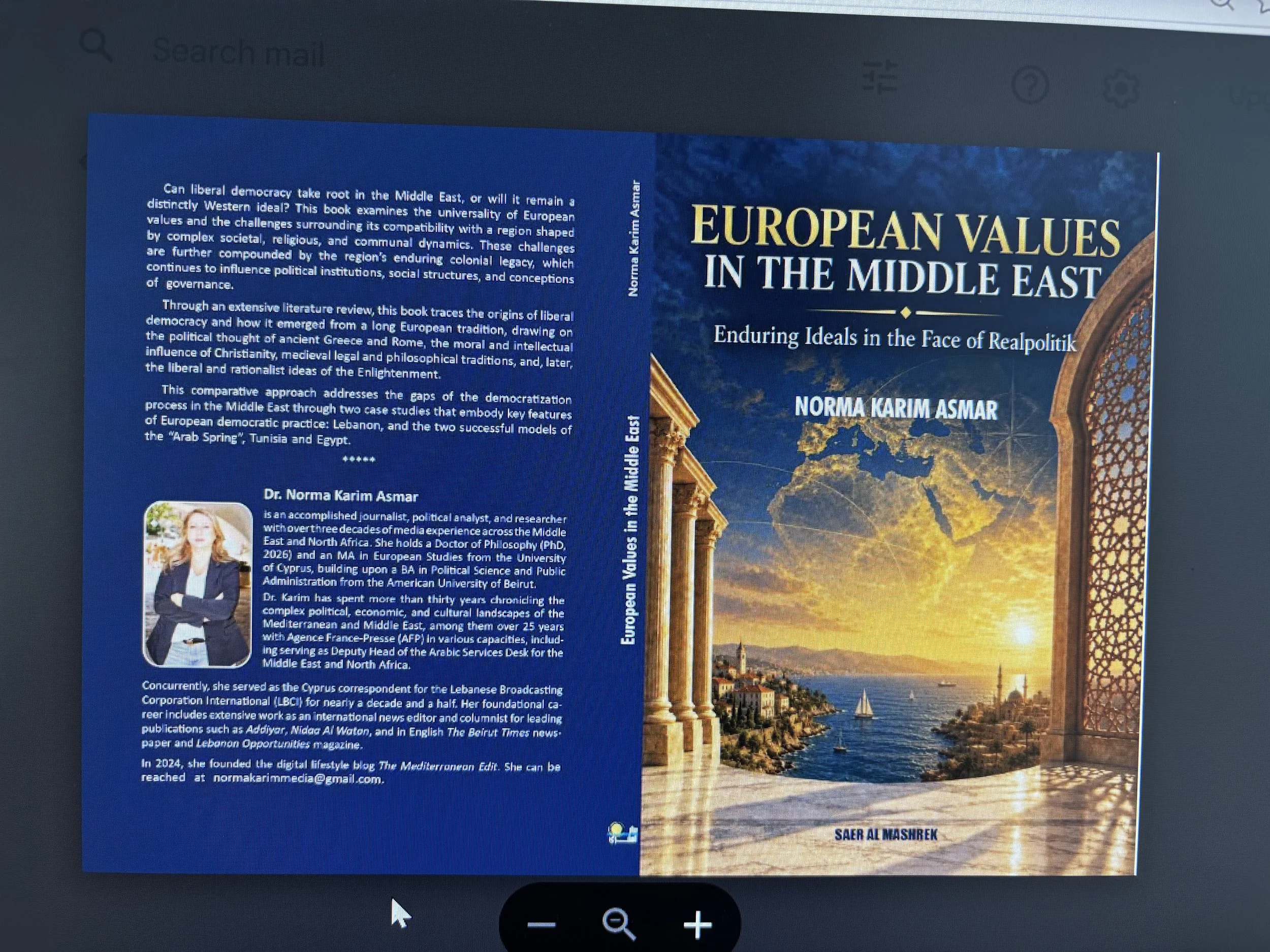
The book includes two in-depth studies: one on Lebanon, a country that long served as a "European-style" model in the region and yet failed to translate this experience into a framework of citizenship or establish institutions insulated from political and economic interests, largely due to its sectarian power-sharing system and, inevitably, its history of conflict. The second study focuses on the "Arab Spring," specifically the cases of Tunisia and Egypt, often considered the most successful examples of these uprisings, and compared to the "Spring of Nations" that swept across Europe in 1848.
The book presents the European experience as a historical trajectory, one that can be studied and from which certain mechanisms might be drawn, rather than as a ready-made model or a universal prescription that can be simply transplanted into societies with vastly different historical, political, and economic conditions.
Furthermore, the book opens the door to a broader discussion regarding the future of relations between Europe and the Middle East, emphasizing the need to shift the discourse from abstract, idealistic values toward the exploration of practical means to embed these values within legislation, governance, education, and public life.
The book will be available very soon on Amazon.
Five Facts About Europe and the Middle East:
1- The Mediterranean has always been more than a geographical boundary between Europe and the Middle East. With a coastline stretching approximately 46,000 kms, it connects countries through trade, cultural heritage, tourism, and centuries of shared history.
2- Today, this relationship also has an institutional dimension: the Union for the Mediterranean established in 2008 and bringing together 43 countries from both sides to promote cooperation in education, economic development, climate action, and regional integration.
3- Ancient Mediterranean societies interacted with Egypt, Persia, Mesopotamia, and the Levant through trade, diplomacy, warfare, and intellectual exchange, and this influenced political thought, religious traditions, architecture, and the development of cities.
4- Family relationships and hospitality are important in many European and Middle Eastern societies. The ways these values are expressed vary considerably, from extended-family gatherings to community celebrations and everyday social rituals.
5- While European imperial involvement dates back centuries, British and French control over many former Ottoman Arab territories intensified after the First World War and ended between the 1940s and 1970s.