No visit to Athens is complete without exploring the Acropolis, the fascinating landmark overlooking the city, where civic life became an intellectual pursuit that helped shape Western civilization.
This is not just an impressive ancient monument, it is a symbol of ideas about politics, philosophy, art, religion and the relationship between the individual and the state.
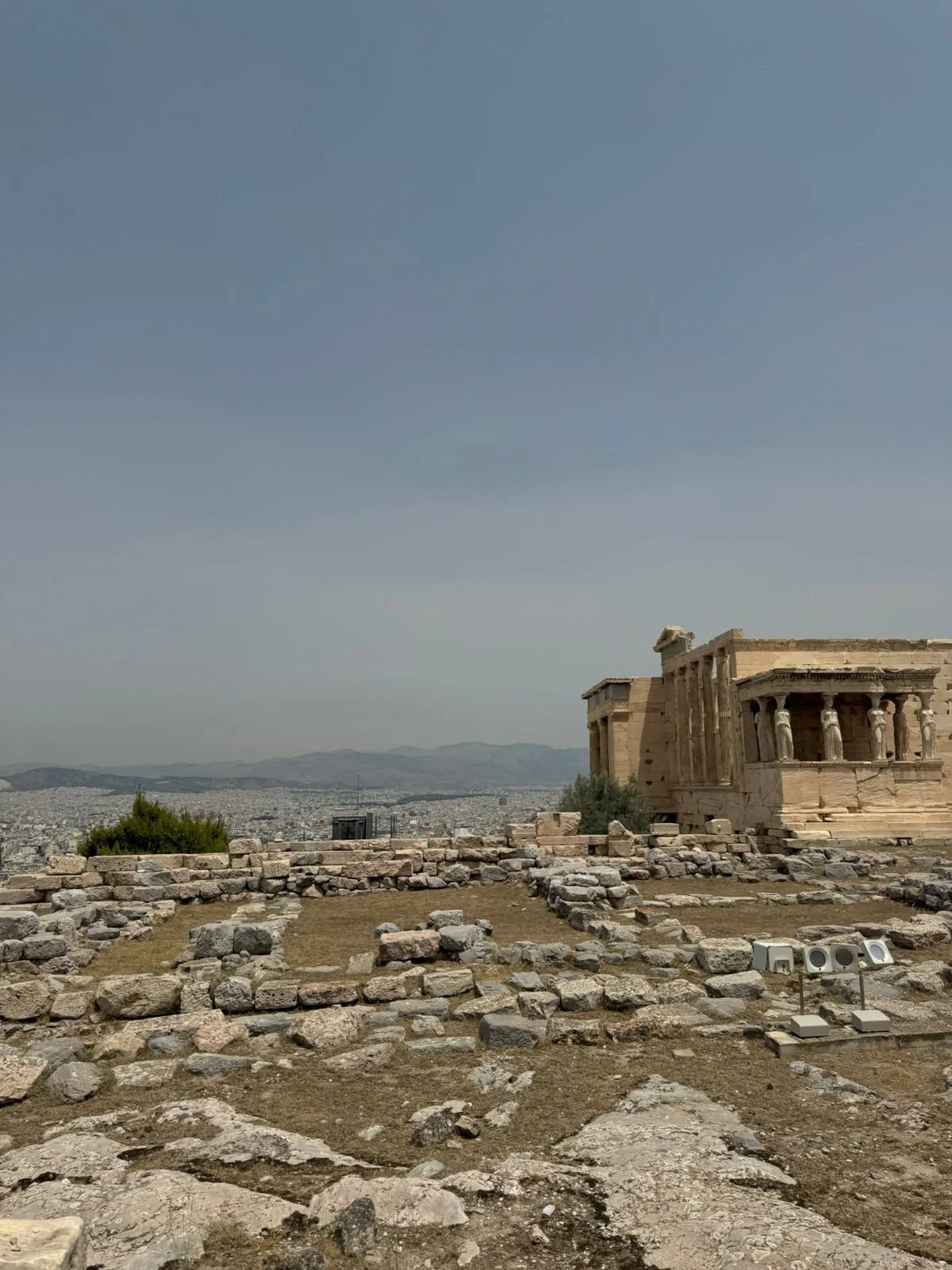
The Acropolis in Athens.
A monument of Ideas
In the fifth century BCE, Athens was experiencing one of the most remarkable periods of intellectual and cultural transformation in the ancient world.
The city was developing new forms of civic participation, while philosophers were questioning the nature of justice, virtue, knowledge, and the good life.
Artists and architects were pursuing ideals of proportion and harmony. Religious devotion, political identity, artistic ambition, and civic pride were all expressed in the architecture of the Acropolis.
At the heart of this stands the Parthenon, dedicated to Athena, the city's patron goddess.
Religious Foundation
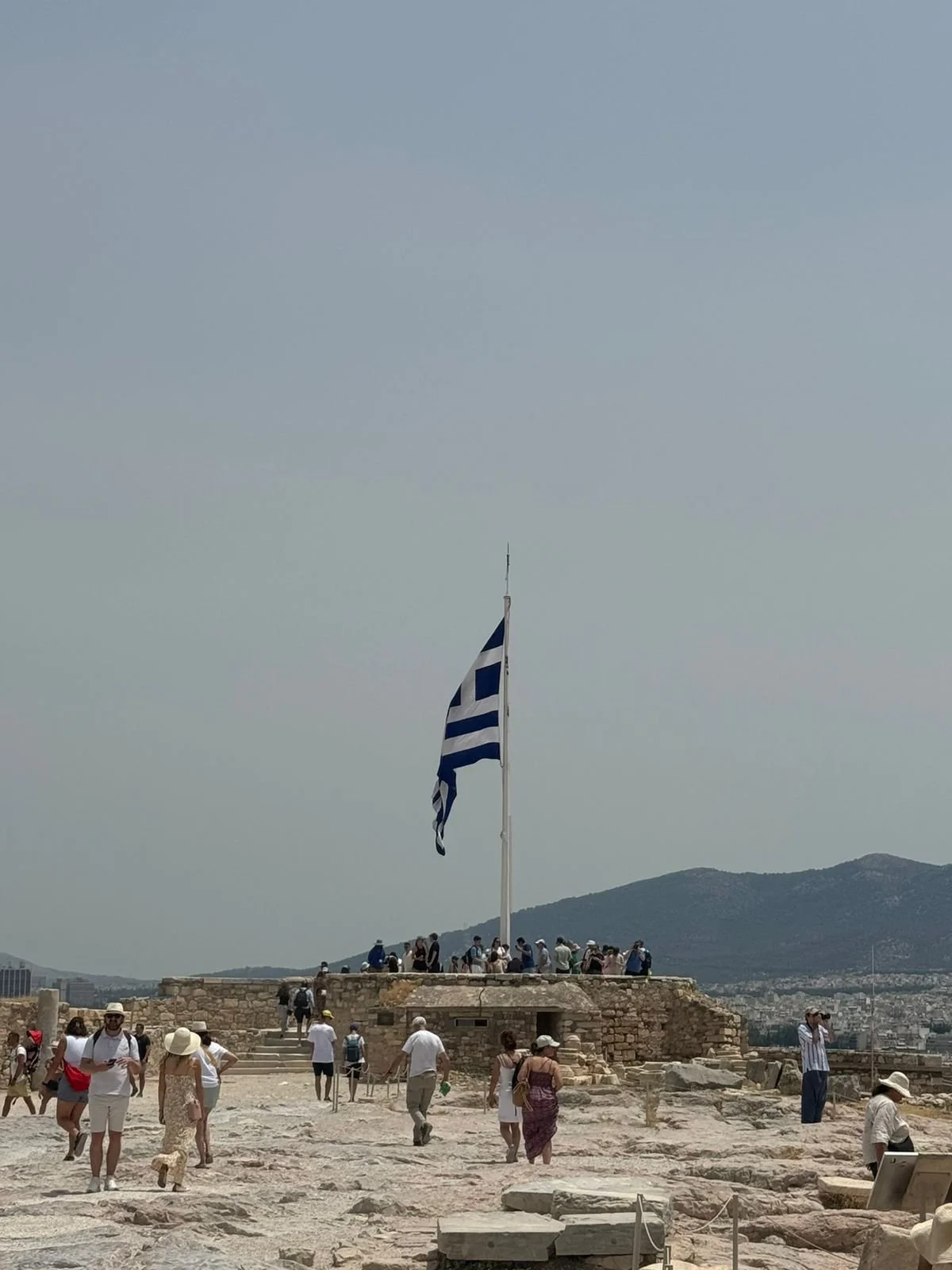
On top of the Acropolis hill.
The Acropolis was fundamentally a religious sanctuary, not originally a political building, and the Parthenon, was dedicated to Athena.
This matters because ancient Greek political life was deeply connected to religion and civic identity. The city was not simply a collection of individuals; it was a polis, a political and religious community with shared institutions, traditions, and rituals.
The Acropolis therefore represented Athens itself. Its monuments communicated the wealth, power, religious devotion, and cultural identity of the city.
The beginning of questions
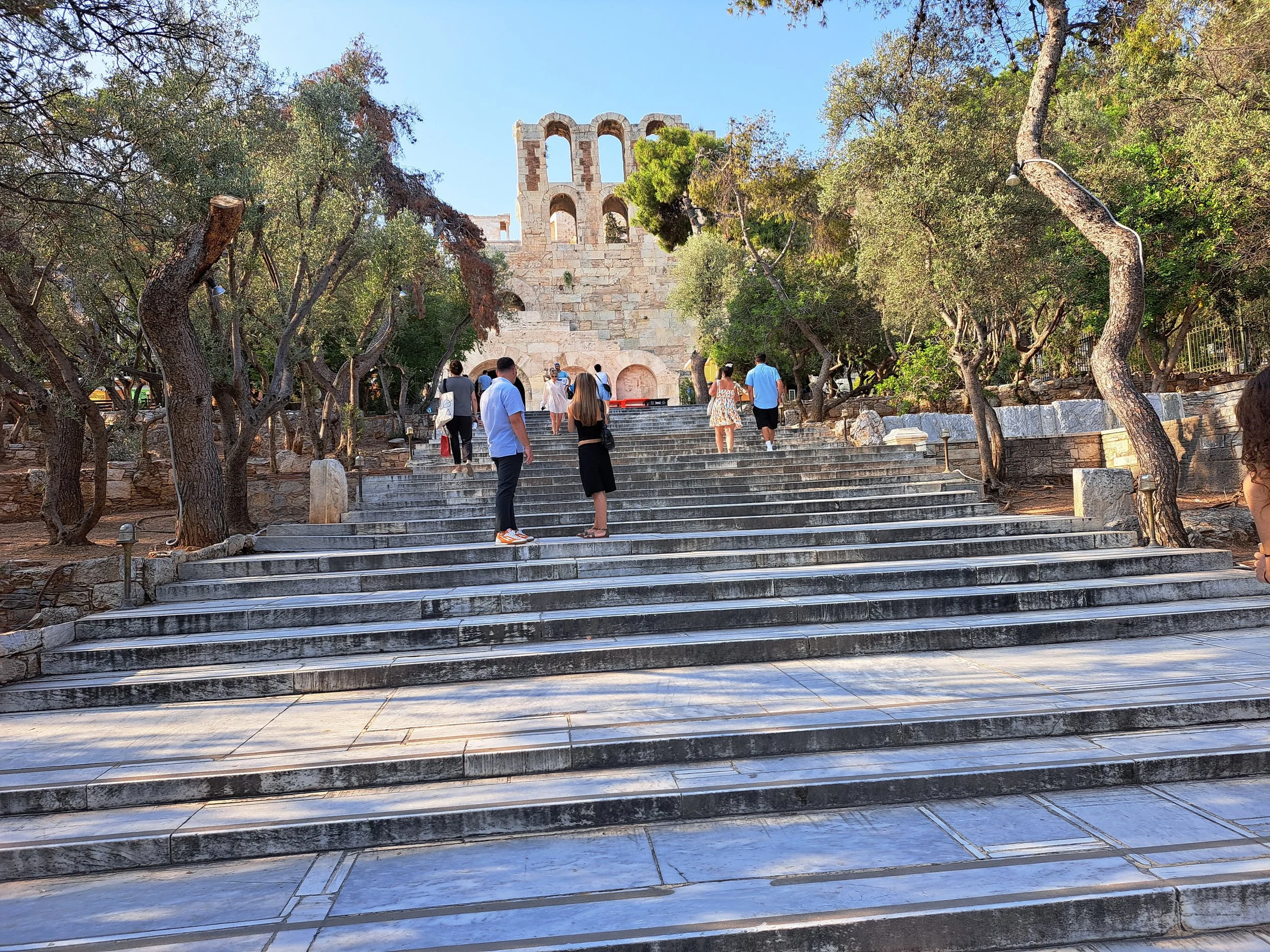
Beneath the Acropolis in Athens.
The wider intellectual world of Athens was equally consequential.
Socrates challenged his fellow citizens to examine their assumptions. Plato explored justice, knowledge, education, and the ideal state. Aristotle investigated politics, ethics, logic, biology, and the nature of human society.
Their works would travel through centuries of scholarship, shaping medieval philosophy and later becoming central to the intellectual revival of the Renaissance and the development of modern Western thought.
Centuries later, European and American political thinkers would repeatedly return to ancient Athens when considering citizenship, political participation, public institutions, and the relationship between the individual and the state.
Beauty as an intellectual language
The Greeks also transformed the Western understanding of beauty.
The architecture of the Acropolis demonstrates proportion, balance, rhythm, and visual harmony. The Parthenon’s architecture embodied ideas about order and proportion that would be studied, imitated, and reinvented by generations of artists and architects.
During the Renaissance, European thinkers and artists looked back to classical Greece and Rome as models of artistic and intellectual achievement.
Centuries later, neoclassical architecture would reproduce Greek columns, pediments, and proportions in museums, universities, government buildings, and civic monuments across Europe and North America.
Final Word
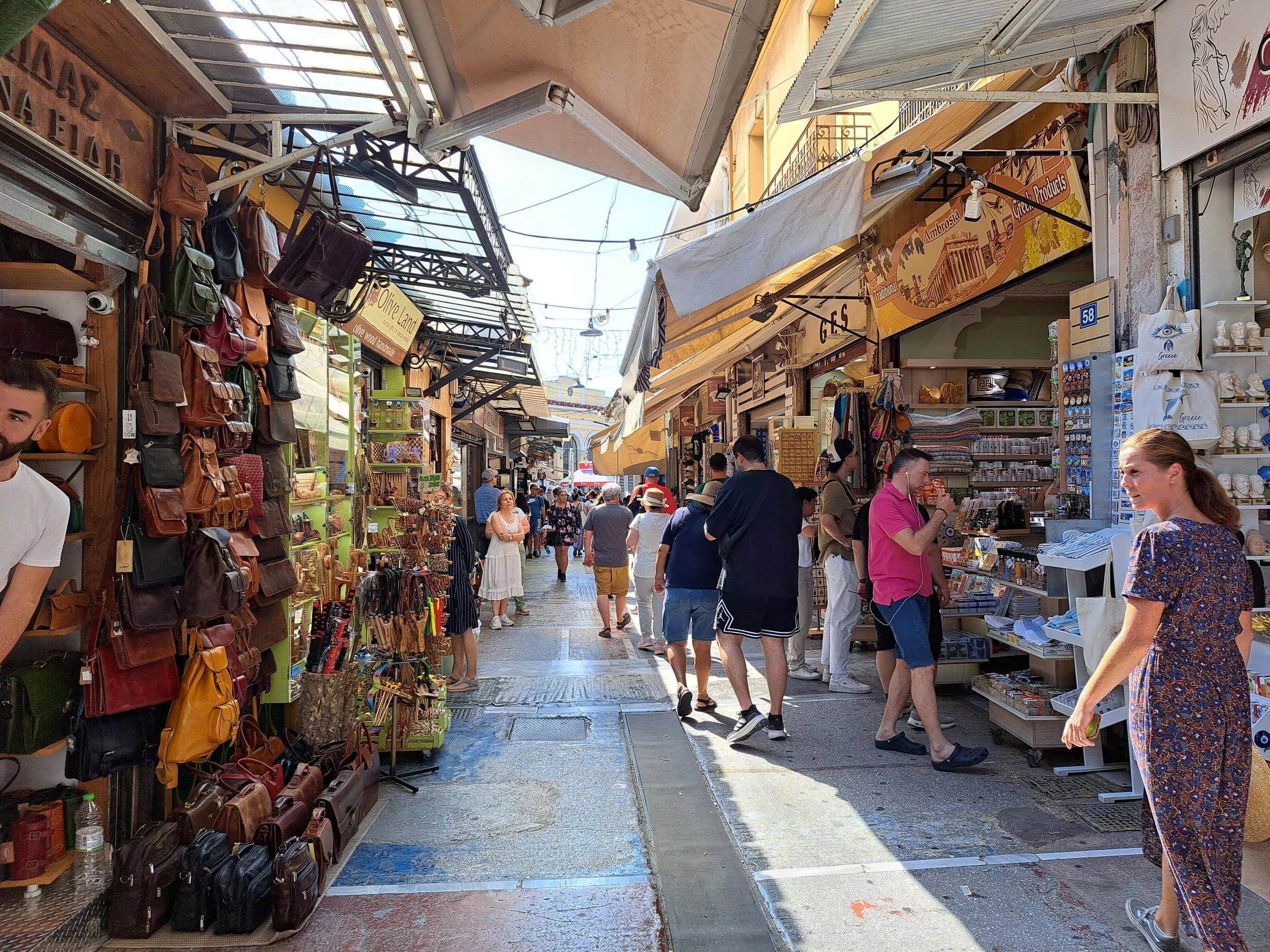
The animated Plaka area in central Athens.
As much as the day visit to the Acropolis is an enriching experience, the view of this landmark at night from the many rooftops in the heart of Athens is on another level. The Acropolis feels majestic, a breathtaking reminder that in Athens, the ancient past is never far from the energy of the present.
Et voilà! That wasn’t just a visit to the Acropolis, it was a glimpse into the birthplace of ideas that continue to shape the modern world.
Five Facts About the Acropolis:
1- The Acropolis of Athens was inscribed as a UNESCO World Heritage Site in 1987.
2- The Acropolis Museum, located near the site, displays many original archaeological discoveries from the Acropolis.
3- The Acropolis is located about 150 meters above sea level and has been used as a religious center and fortress at different points in history.
4- The Parthenon originally contained a huge statue of Athena made of gold and ivory.
5- The buildings are not perfectly straight: ancient Greek architects used subtle optical adjustments to make the structures appear more balanced and symmetrical.