From Tyre to Crete: Europa’s Mediterranean Journey
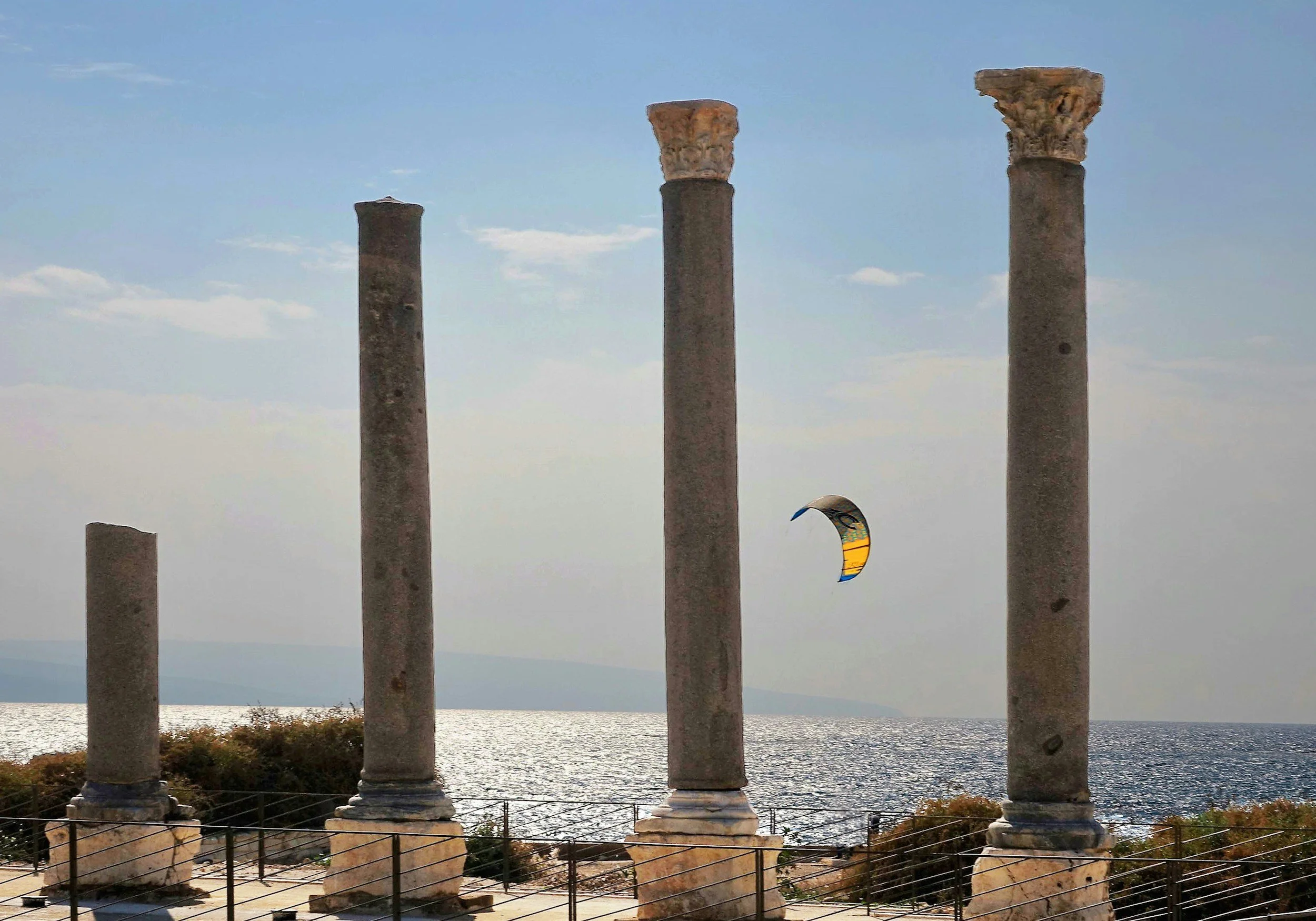
The coastline of southern Lebanon, and in particular the historic city of Tyre, now under bombardment, belongs to a landscape far older than the scars of today: in ancient mythology, this same region was home to Europa, the Phoenician princess whose story would travel across the Mediterranean and echo through centuries.
According to legend, she wandered these shores before being carried across the sea by Zeus, disguised as a bull, an act that would give a name to an entire continent: Europe.
What is this legend?
Historically, the region was part of ancient Phoenicia, a civilization known for its seafaring, storytelling, and cultural exchange. From these coasts, ideas traveled as much as goods did, shaping identities far beyond the Levant.
The story of Europa itself is a testament to that movement, a narrative born in the East, carried West, and embedded into the cultural imagination of Europe.
In this sense, the connection is not just symbolic; it reflects a long history of woven connection between regions that are viewed today as separate worlds.
How was Europa abducted?
In Greek mythology, Zeus was captivated by the extraordinary beauty of the Phoenician princess Europa. To approach her without frightening her, he transformed himself into a gentle white bull and mingled with her father’s herd.
Drawn by the bull’s calm nature, Europa climbed onto its back. At that moment, Zeus suddenly charged toward the sea and swam away, carrying her across the Mediterranean to the island of Crete.
There, he revealed his true face and his love for her, and Europa became the mother of his three children, among them King Minos who symbolized power and was said to have established one of the earliest and most powerful civilizations in the region, the Minoan civilization (3000 BCE to 1450 BCE) recognized as Europe’s earliest urban culture.
What is the message of the story?
The story is one of the most famous myths of abduction in ancient Greek tradition, symbolizing both movement across lands and the blending of cultures between East and West in new civilizations.
Just as Europa’s journey carried memory from one shore to another and the emergence of new beginnings, the resilience of southern Lebanon carries on telling stories of continuity despite the hardships and destruction, inseparable from the everlasting myths!
Et voilà! This is a story of an enduring connection to one’s homeland, transforming difficulties into strength!
Five facts about the mythology of Europa and Zeus:
Europa was a Phoenician princess, daughter of King Agenor of Tyre, according to mythology.
Zeus was King of the Greek gods, god of the sky, thunder, and law, and abducted Europa from the shores of Tyre after being captivated by her beauty.
When they reached Crete, he revealed himself and Europa became mother of three sons: Minos, Rhadamanthus and Sarpedon.
The continent of Europe was named after Princess Europa as a symbol of culture, movement and myth enduring through centuries.
The myth of Europa has been depicted in many works of art, literature and sculpture. Over time, it also inspired tales of exploration and cultural blending in European imagination.