Bruges: Where Fairytale Views Meet Unforgettable Flavors
Nobody warns you that Bruges would feel like stepping inside a snow globe. Here is what happened!
The moment you cross into the medieval center, something makes the outside world feel very far away: the stillness and the way the brick buildings lean toward the canals bring the vibe of a fairytale city.
Let’s discover together this charming city dubbed as the “Venice of the North” and its historic city center recognized as a UNESCO World Heritage Site as well as taste the famous artisan chocolates, fries and beer!
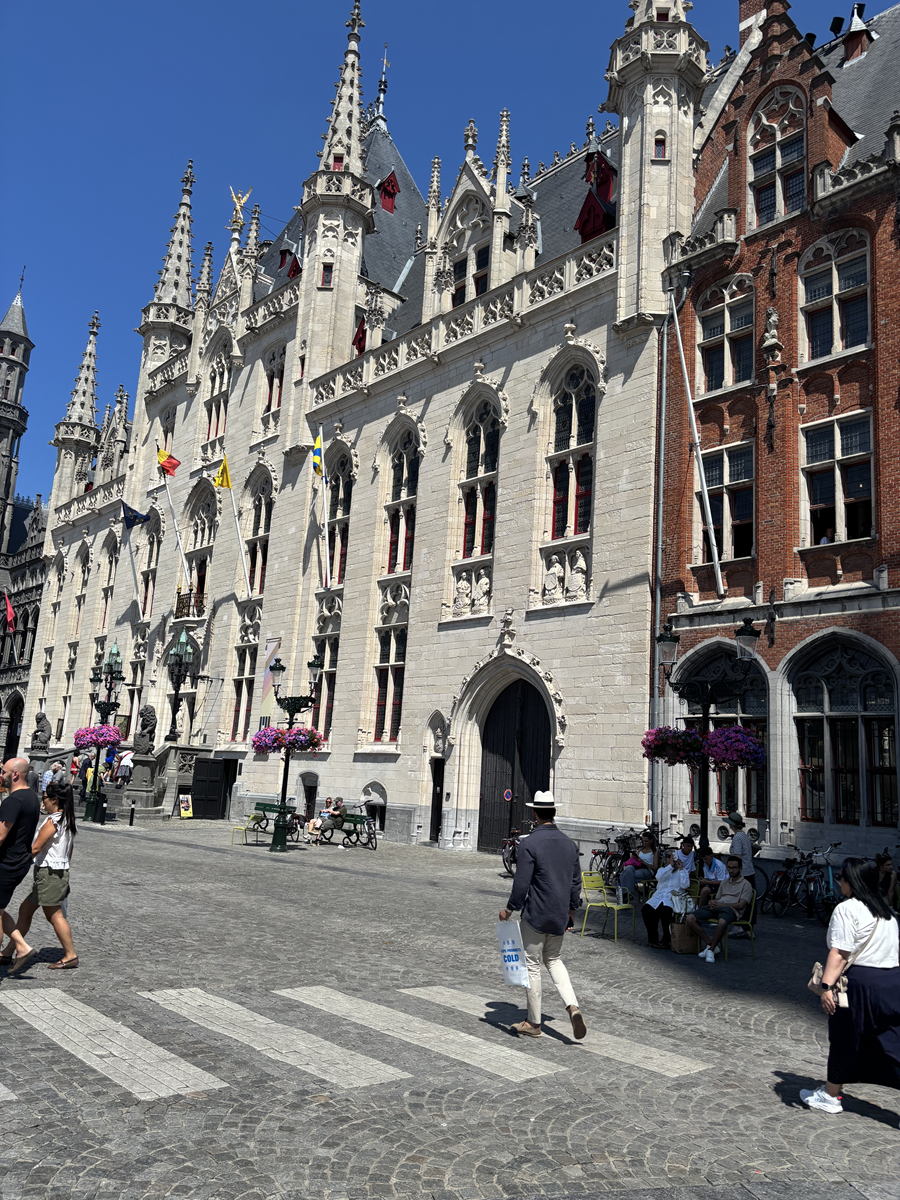
It is impossible to resist Bruges’ timeless and captivating charm
The Historic Center
Bruges is one of Europe's best preserved medieval cities, located around 100 km northwest of Brussels.
With its winding canals, cobblestone streets, medieval squares and beautifully preserved Gothic architecture, the city exudes timeless charm at every turn.
Horse-drawn carriages clip-clop past historic buildings, swans glide gracefully along tranquil waterways, and cozy cafés invite visitors to slow down, the Mediterranean way, and soak in the atmosphere. It is one of Europe's most enchanting destinations.
The historic center of the city inscribed as a UNESCO World Heritage site since 2000, is “an outstanding example of an architectural ensemble. The city’s public, social and religious institutions illustrate significant stages in the history of commerce and culture in medieval Europe”, notes UNESCO.
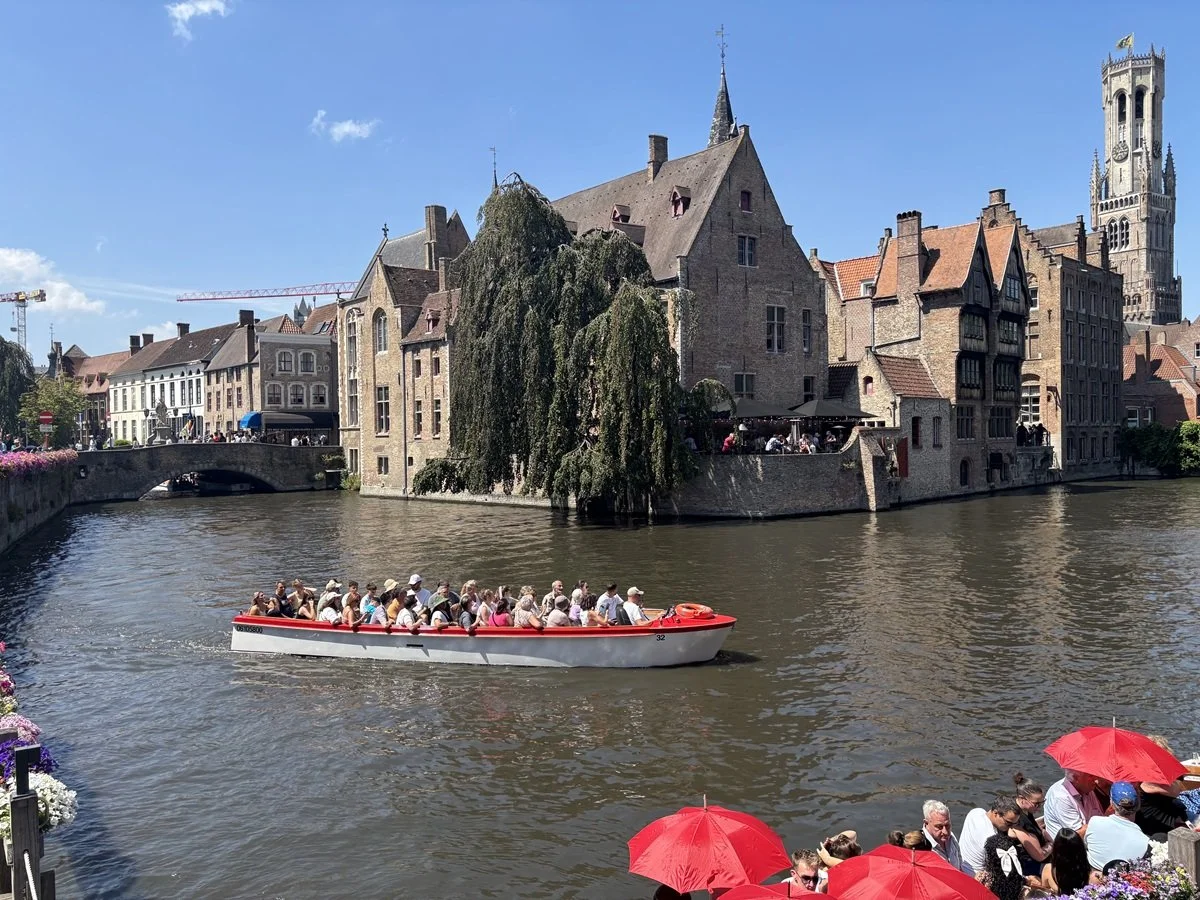
Previously unnoticed architectural details of the medieval city are revealed when viewed from the water
The Canals: Where the City Becomes a Painting
The canals here are quiet, reflecting the medieval gabled houses in water so still it creates a perfect inversion of the city, a mirror Bruges gliding beneath the real one.
The place every photographer eventually finds themselves standing is Rozenhoedkaai: the Quay of the Rosary, where the Reie and Dijver canals meet at a sharp bend. It is, without argument, the most photographed spot in the city, and standing there you understand why immediately.
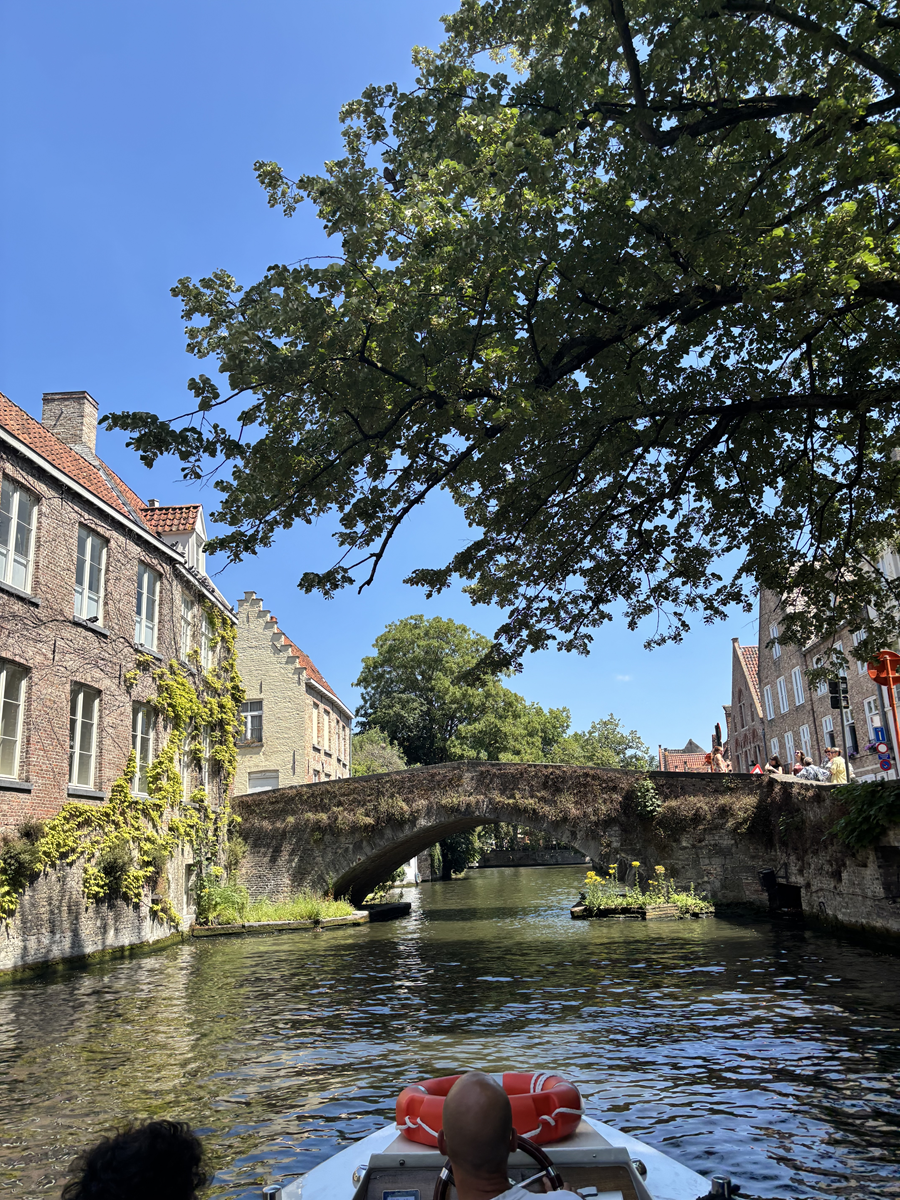
Well worth a half hour’s diversion is to take a canal boat tour
The canal boat tour, boarding near Rozenhoedkaai, lasts about thirty minutes and gives you perspectives the cobblestones cannot. You glide under low bridges, past ivy-covered façades, through arches where swallows nest in the medieval stonework.
Your guide points out houses that have existed since the 14th century. At one point the boat turns, and the Belfry appears framed perfectly between two rooflines, where the collective intake of breath from twenty strangers on a boat is genuinely one of the more moving things I experienced all trip.
The Squares: History With a Heartbeat
Bruges organises itself around two great squares, and both reward the kind of slow, seated, coffee-in-hand appreciation that the city seems specifically designed to encourage.
Markt Square, considered the beating heart of Bruges, hosting markets since the year 958. The neo-Gothic Provincial Palace anchors one end; the Belfry looms over everything else. Climb its 366 steps for a panoramic view across the rooftops — the carillon chimes every fifteen minutes, and the bells are worth every step.
The second square is Burg Square which is quieter and more intimate than the Markt, ringed by Gothic, Renaissance and neo-classical architecture.
The City Hall here dates to 1376, one of Belgium's oldest, and the Basilica of the Holy Blood sits just off the square, housing a relic that draws pilgrims from across Europe.
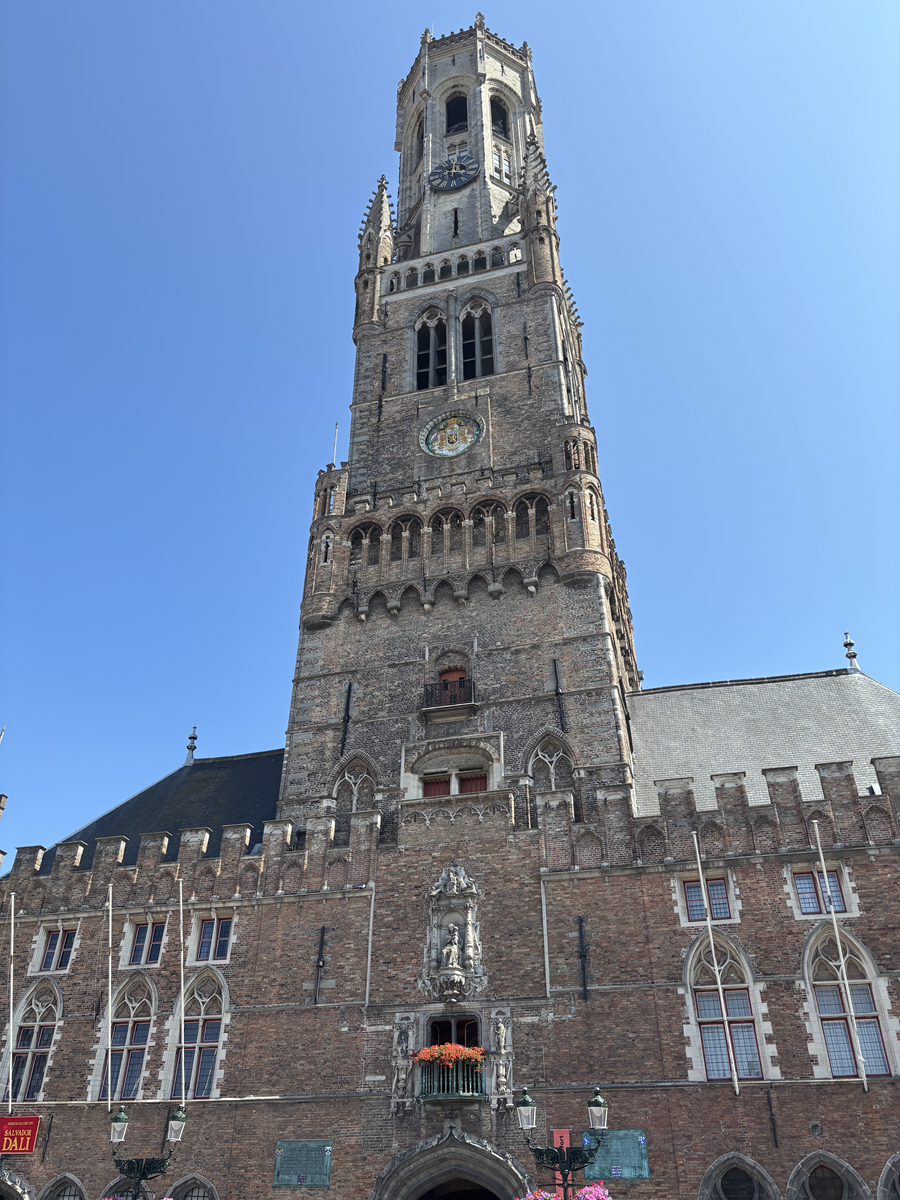
The city’s iconic Belfry offers travelers truly panoramic views of Bruges
The Belfry
The iconic Belfry of Bruges stands 83 meters tall. Visitors who climb its 366 steps are rewarded with panoramic views of the city.
The Belfry of Bruges is a magnificent medieval bell tower overlooking the city's central Market Square. Built in the 13th century, it stood as a symbol of Bruges' prosperity, independence, and civic pride.
Today, it remains one of Belgium's most iconic landmarks and forms part of the UNESCO World Heritage-listed historic center of Bruges.
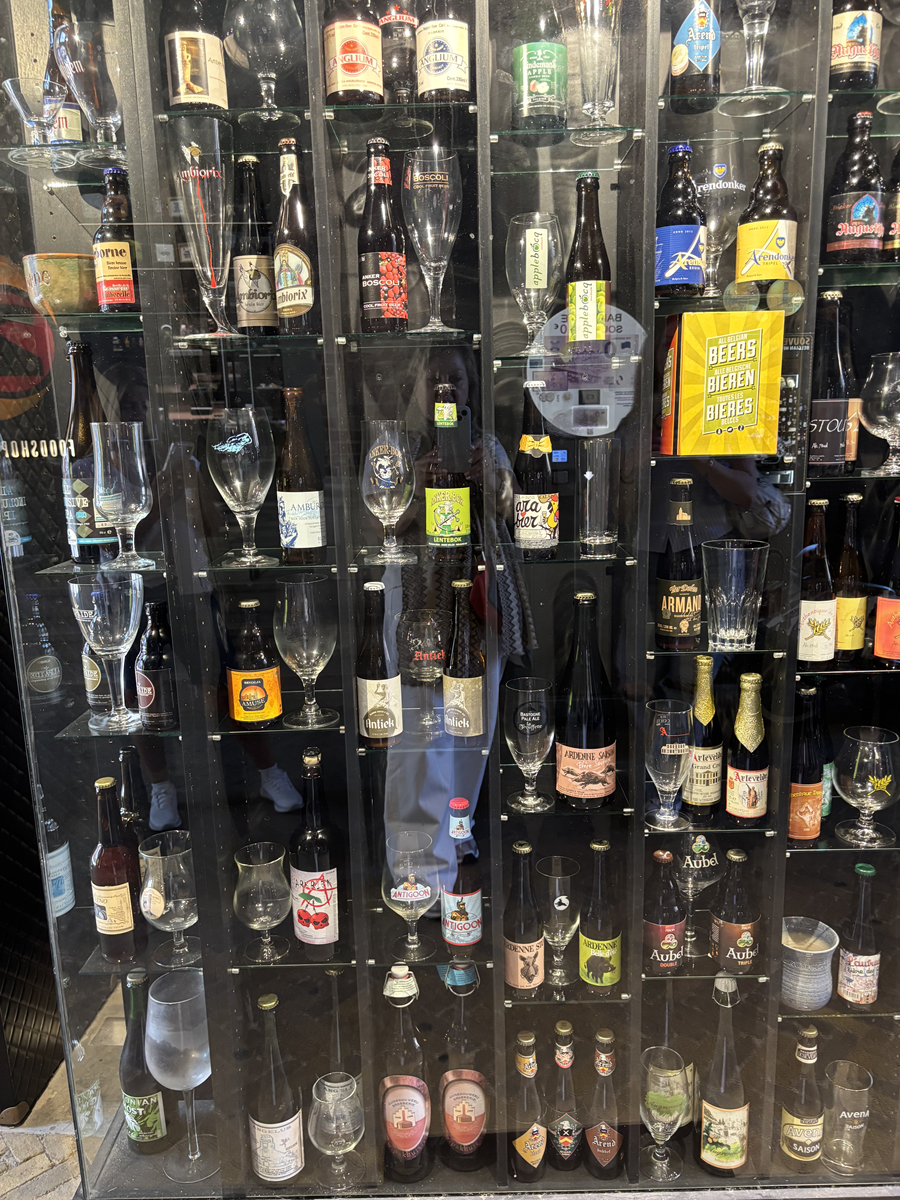
Belgium’s long tradition of beer-making is both art and science
Chocolates, Fries and Beer
Belgian chocolate is a benchmark. Bruges has more chocolate shops per square meter than almost any city on earth.
The tasting there is a structured experience, a flight of flavors that moves from dark single origin to milk, to praline, the way a proper wine tasting moves through a region.
Belgium has also a strong culinary tradition centered on fries and is widely regarded as the country that perfected and popularized them, especially with its distinctive double-frying technique and dedicated fry shops (friteries).
Belgian fries are cut thicker than their French cousins, fried twice, once to cook, once to crisp.
In Bruges you eat them from a paper cone, standing up and the sauce selection is extensive.
Where to eat them? At the small frituren near the Markt and Burg squares. The ones that have been there for decades, with handwritten menus. Those ones.
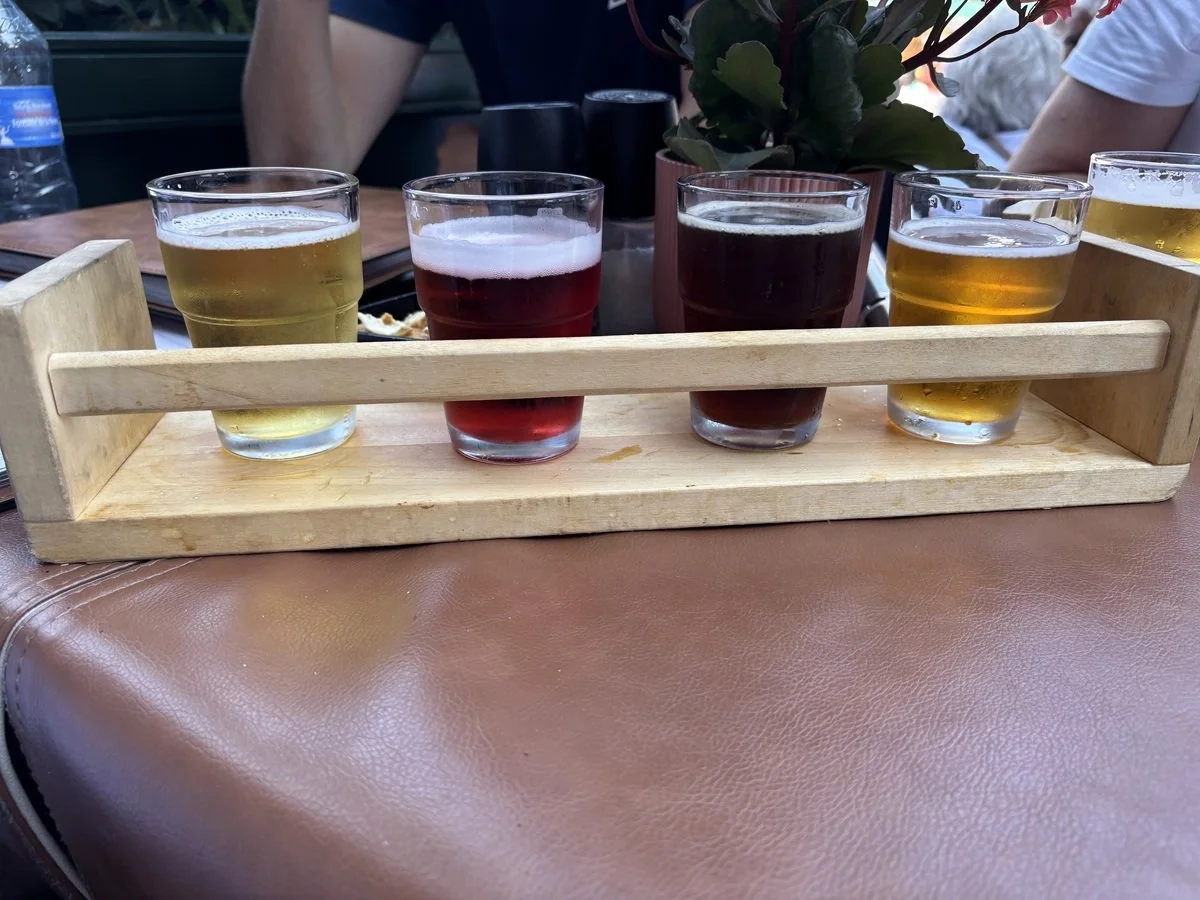
While in Bruges, it is important to leave enough time in your schedule for some beer-tasting
The best companion for fries is beer, and no where is better to taste beers than Belgium where brewing is considered a philosophy.
Belgium brews approximately 1,500 different beers. In Bruges, the relationship between the city and its beer is so deep that one of the only breweries in the world with a pipeline running under a UNESCO World Heritage site is here, De Halve Maan.
Final word
Whether you're visiting for a weekend or for the day, Bruges offers the perfect blend of history, romance, and authentic Belgian charm, making every moment unforgettable.
Et voilà! Few places live up to their postcard image like Bruges and experiencing it in person is even more magical.
Five facts about Bruges:
1- Bruges flourished as one of Europe's wealthiest trading cities during the 12th to 15th centuries.
2- Bruges is famous for its artisan chocolatiers, making it one of the best places in Belgium to sample handcrafted pralines and truffles.
3- The city gained worldwide fame after the 2008 film In Bruges, starring Colin Farrell and Brendan Gleeson.
4- Bruges is exceptionally walkable and bicycle-friendly, making it easy to explore its cobblestone streets and canals at a relaxed pace.
5- Every season offers a different charm, from spring flowers and summer canal cruises to autumn colors and magical Christmas markets.