St Paul’s Pillar: Where history & faith meet
In the heart of Paphos stands one of Cyprus’s most powerful links to early Christianity, the Pillar of St. Paul. According to tradition, this simple marble column marks the place where the Apostle Paul was bound and flogged for preaching Christianity in the 1st century AD. Today, it sits within the archaeological site of Agia Kyriaki Chrysopolitissa Church, a quiet courtyard where ancient ruins, mosaics, and centuries of faith come together.
On a sunny morning during this holy period before Easter, I visited the site which is surrounded by palm trees and the remains of early basilicas. St. Paul’s pillar offers a rare place where archaeology and biblical history intersect. This quiet corner of Paphos tells a story that has echoed across nearly two thousand years.
History feels alive
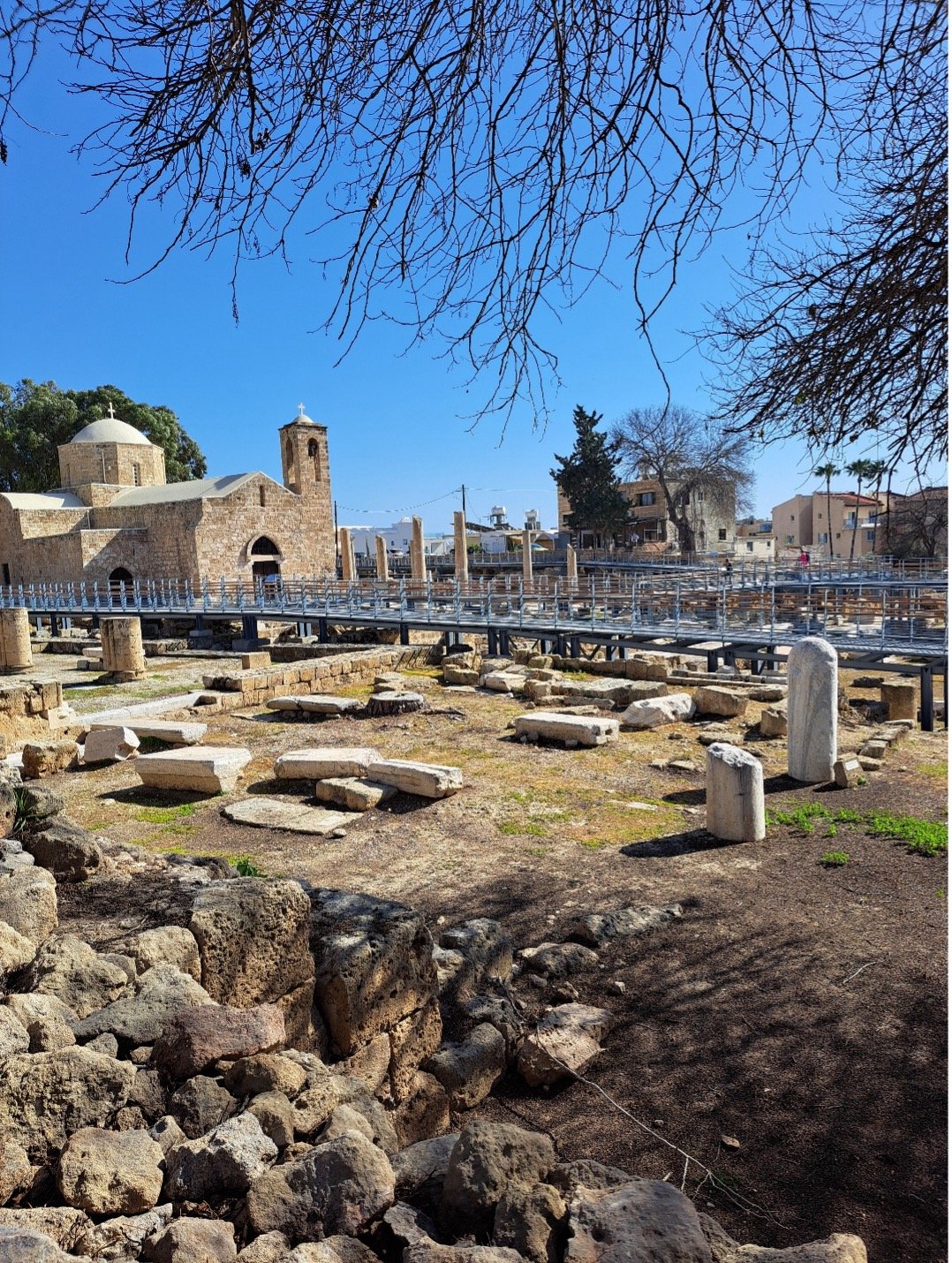
The Pillar of St. Paul and the church of Agia Kyriaki in Paphos.
In the heart of Paphos, as you walk through the ancient stones of the Panagia Chrysopolitissa Archaeological Site, the sounds of modern life slowly fade behind you. Instead, you’re surrounded by columns, ruins, and centuries-old mosaics that whisper stories from the earliest days of Christianity.
Tucked within this historic complex is one of the most fascinating religious landmarks in Cyprus: St Paul's Pillar, standing just beside the beautiful Agia Kyriaki Chrysopolitissa Church.
At first glance, St Paul’s Pillar looks surprisingly simple, a short white marble column surrounded by a small fenced area. Yet the story connected to it stretches back almost two thousand years.
What is this story?
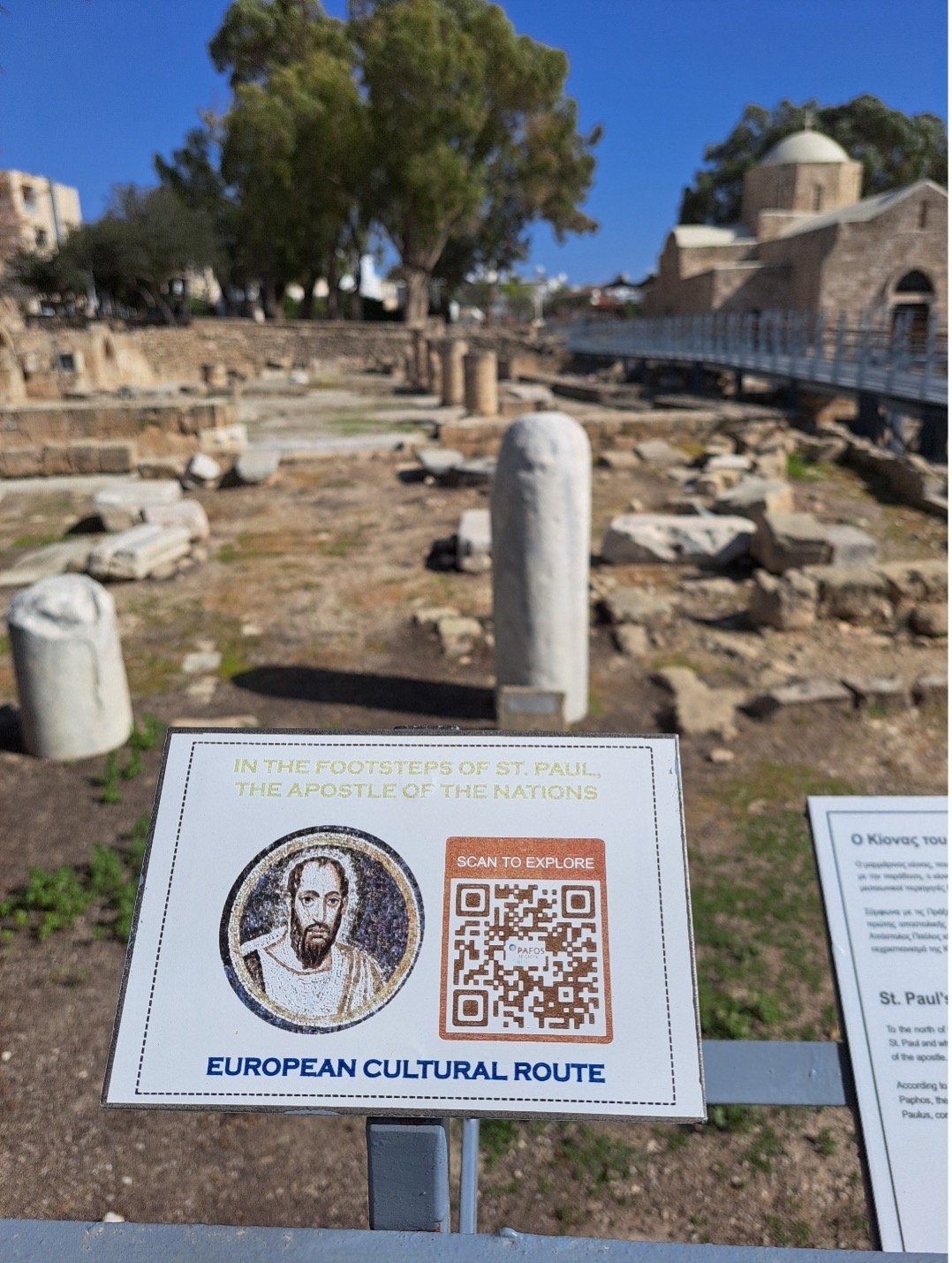
The pillar of St. Paul
According to Christian chronicles, Paul the Apostle visited Cyprus around 45 AD during one of his missionary journeys. He travelled through the island preaching Christianity alongside Barnabas the Apostle, spreading a message that was still new and controversial at the time.
When Paul arrived in Paphos, the island was under Roman rule. His preaching reportedly angered local authorities, and accounts say he was tied to this very pillar and flogged as punishment.
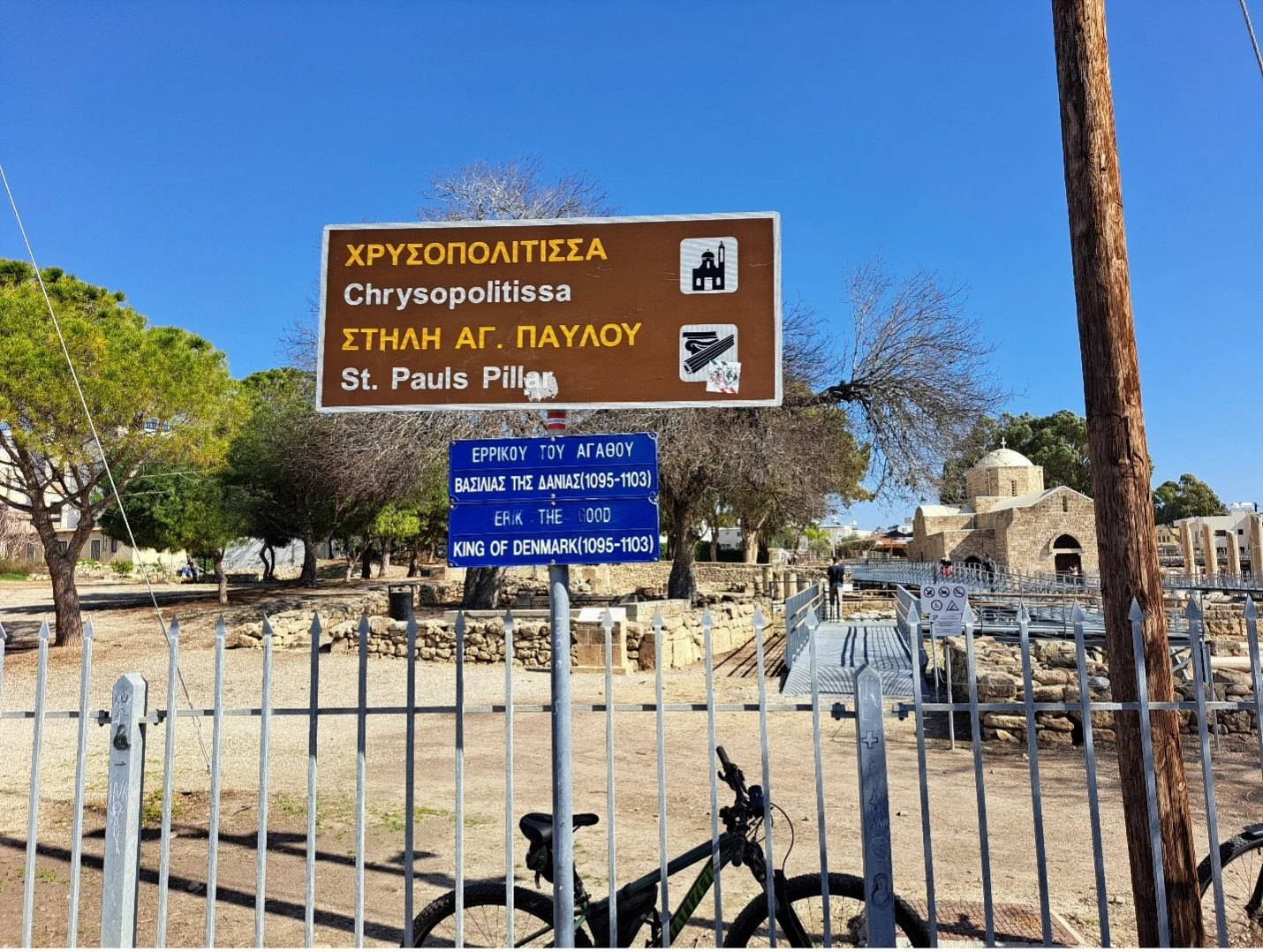
The sign leading to the historical site.
What makes the story remarkable is what happened afterward.
The Roman proconsul Sergius Paulus, who governed Cyprus at the time, is believed to have converted to Christianity after witnessing Paul’s faith and teachings. Therefore, he became one of the first Roman officials to embrace the new religion, a moment that helped Christianity spread throughout the Roman world.
The church besides the pillar
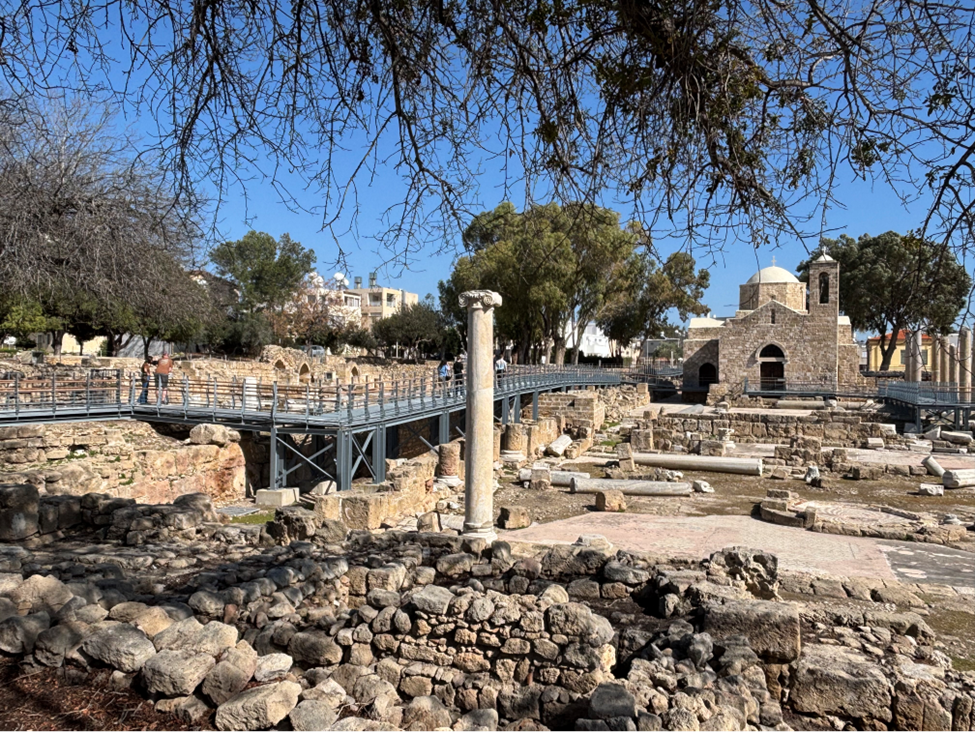
Agia Kyriaki Chrysopolitissa Church near the pillar (left).
Just steps away from the pillar stands Agia Kyriaki Chrysopolitissa Church, a peaceful place of worship surrounded by the ruins of earlier churches.
The church sits on top of one of the largest early Christian basilicas ever built on the island. The original basilica dates back to the 4th century, a time when Christianity was rapidly growing across the Mediterranean.
Walking around the site feels like walking through history as remnants of this earlier structure are scattered everywhere: tall columns, ancient foundations and mosaic floors that have survived for centuries.
The church we see today was built much later, around the 13th century, during the medieval period.
A Rare Place of Christian Unity
One of the most special aspects of Agia Kyriaki Chrysopolitissa Church is its shared use by multiple Christian denominations.
Today, the church hosts services for Orthodox, Catholic, and Anglican communities, making it one of the few places in Cyprus where different Christian traditions worship in the same space.
On some days, you might hear the quiet echo of prayers inside the church while tourists wander through the surrounding ruins outside, a reminder that this ancient place is still alive with faith.
Early history of Christianity
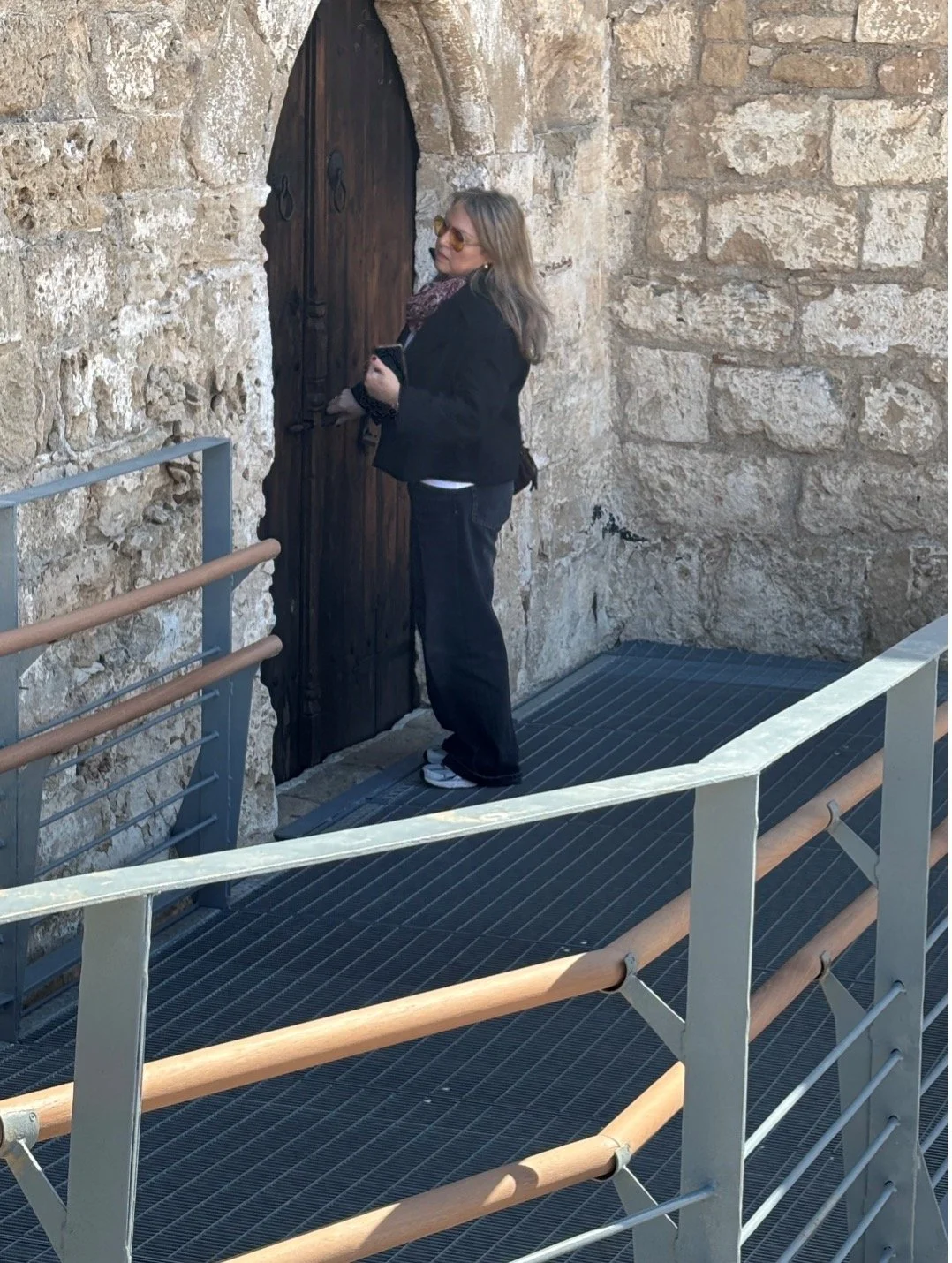
Norma in front of Agia Kyriaki Chrysopolitissa Church.
The simplicity of the site makes the experience even more powerful.
It is a place where history, faith, and archaeology meet. Visiting this site is like stepping into the history of Christianity.
This pillar represents perseverance, faith, and the early spread of Christianity throughout the Mediterranean.
Et voilà! That was more than a visit to landmark, it was about exploring a story that changed history.
Five facts about St. Paul’s Pillar and Paphos:
The wider archaeological area of Paphos is part of the UNESCO World Heritage. It was listed in 1980 because of its rich history especially mosaics, ancient ruins, theatres, and Christian heritage.
Paphos is nestled on the southwest coast of Cyprus, some 150 kms away from Nicosia, and just outside the city lies the famous site of Aphrodite’s rock where the goddess of love and beauty emerged from the sea foam, according to Greek mythology.
In 2017, Paphos was named the European Capital of Culture 2017, celebrating the city’s long cultural history and vibrant arts scene. In Roman times it was the administrative and political center of the island.
St. Paul’s pillar is surrounded by archaeological ruins and continues to be visited by pilgrims and travelers who come to reflect on the beginnings of Christianity in Cyprus.
The mosaics at Paphos Archaeological Park are considered among the finest Roman mosaics in the Mediterranean, many of which date back nearly 2,000 years and depict mythological scenes.