Inside the Walls: The Historic Gates of Nicosia
Few small streets separate the polished rhythm of modern Nicosia where you see the glass storefronts, the chic restaurants, cafés, and office workers carrying iced coffee walking on the wide pavements, and the old heart of the city where almost unexpectedly, the Venetian walls appear.
I wandered into one of those small connecting streets just before sunset, where the contemporary city quietly dissolves into the older heart of Nicosia and the streets narrow all of a sudden. There was no dramatic gateway, no sign announcing history ahead.
The Venetian walls encircle the city where three monumental gates are carved in them, telling a long history. Let’s discover them together!
Built for Defense
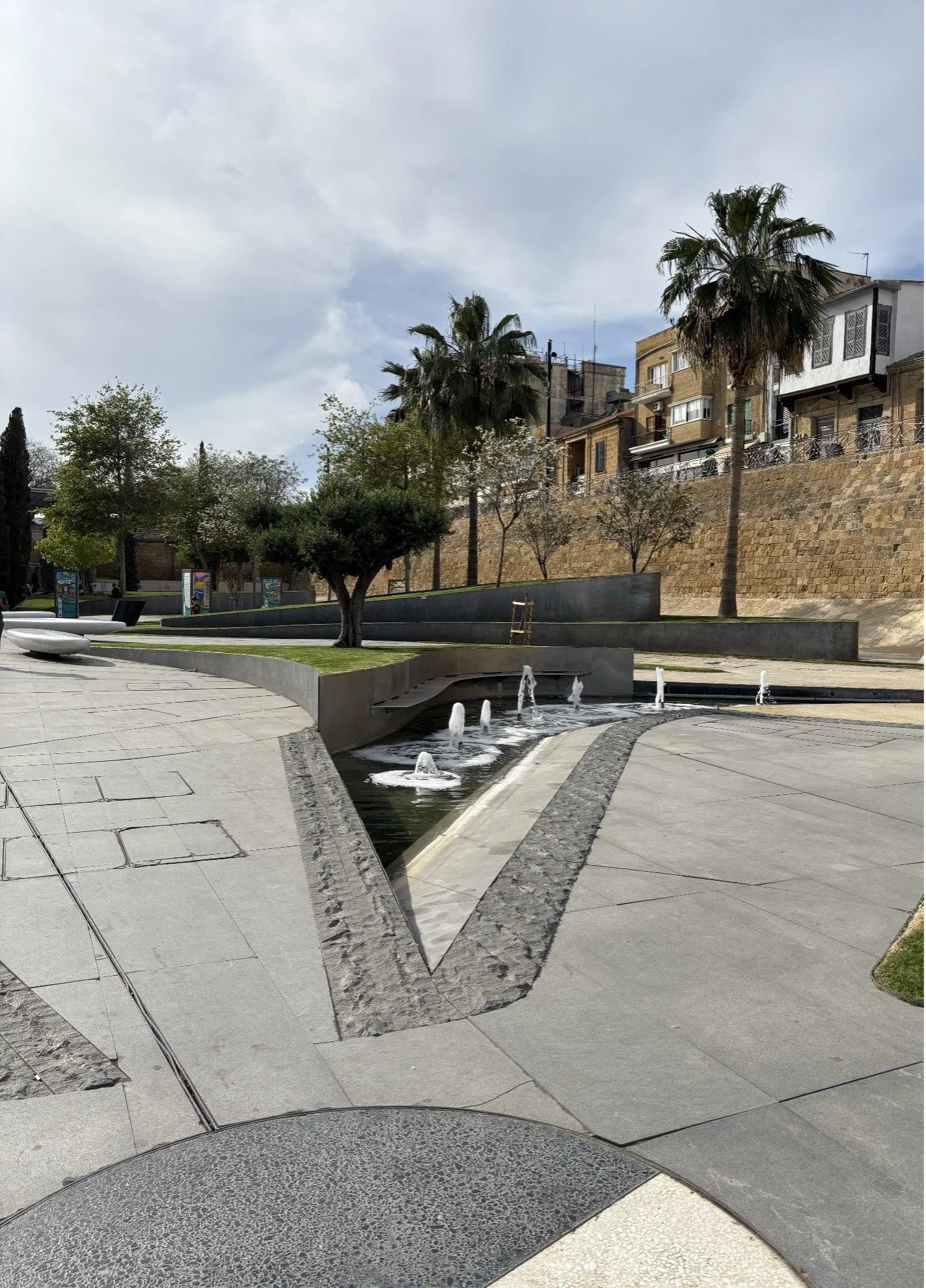
Part of the Venetian wall in old Nicosia.
Stepping into the old city of Nicosia feels like walking into warmth that is both physical and emotional, just by seeing passers-by or people enjoying slow coffees or children playing in Elefteria Square, the beating heart of the old town, where you admire endless views of the Venetian walls.
In the 16th century, the rulers of Cyprus were the Venetians, master traders and naval strategists who understood the dangers posed by the expanding Ottoman Empire. Fearing invasion, they redesigned Nicosia into one of the most sophisticated fortified cities of the Renaissance.
The medieval city was reshaped into a circular fortress surrounded by eleven bastions and deep moats. Three monumental gates provided entry into the city: Famagusta Gate, Kyrenia Gate and Paphos Gate.
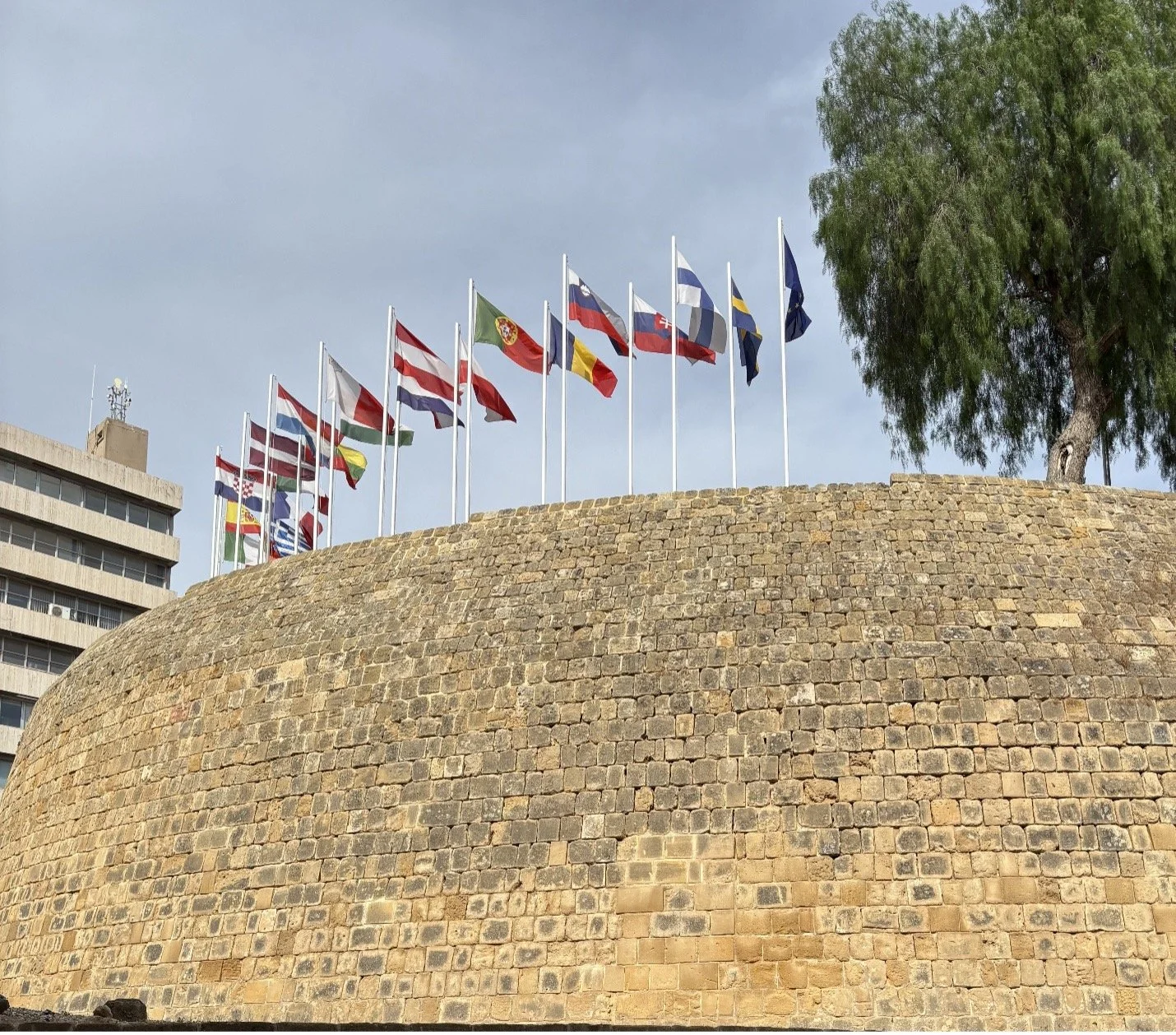
Part of the Venetian walls in the old part of Nicosia.
Each gate faced a different direction of the island and connected the capital to important regional centers. Together, they formed the symbolic and practical arteries of the city.
They were the final barriers before conquest, places where defenders stood against overwhelming force, where refugees gathered, and where the old Venetian order came to an end. Under Ottoman rule (1571 – 1878), the city changed culturally but the gates remained.
That continuity is perhaps their greatest power. Empires disappeared, but the entrances endured.
The Gates
Of the three gates, Famagusta Gate is the most visually striking and arguably the best preserved. Built in 1567 by Venetian military engineer Giulio Savorgnano, the gate originally served travelers heading east toward Famagusta.
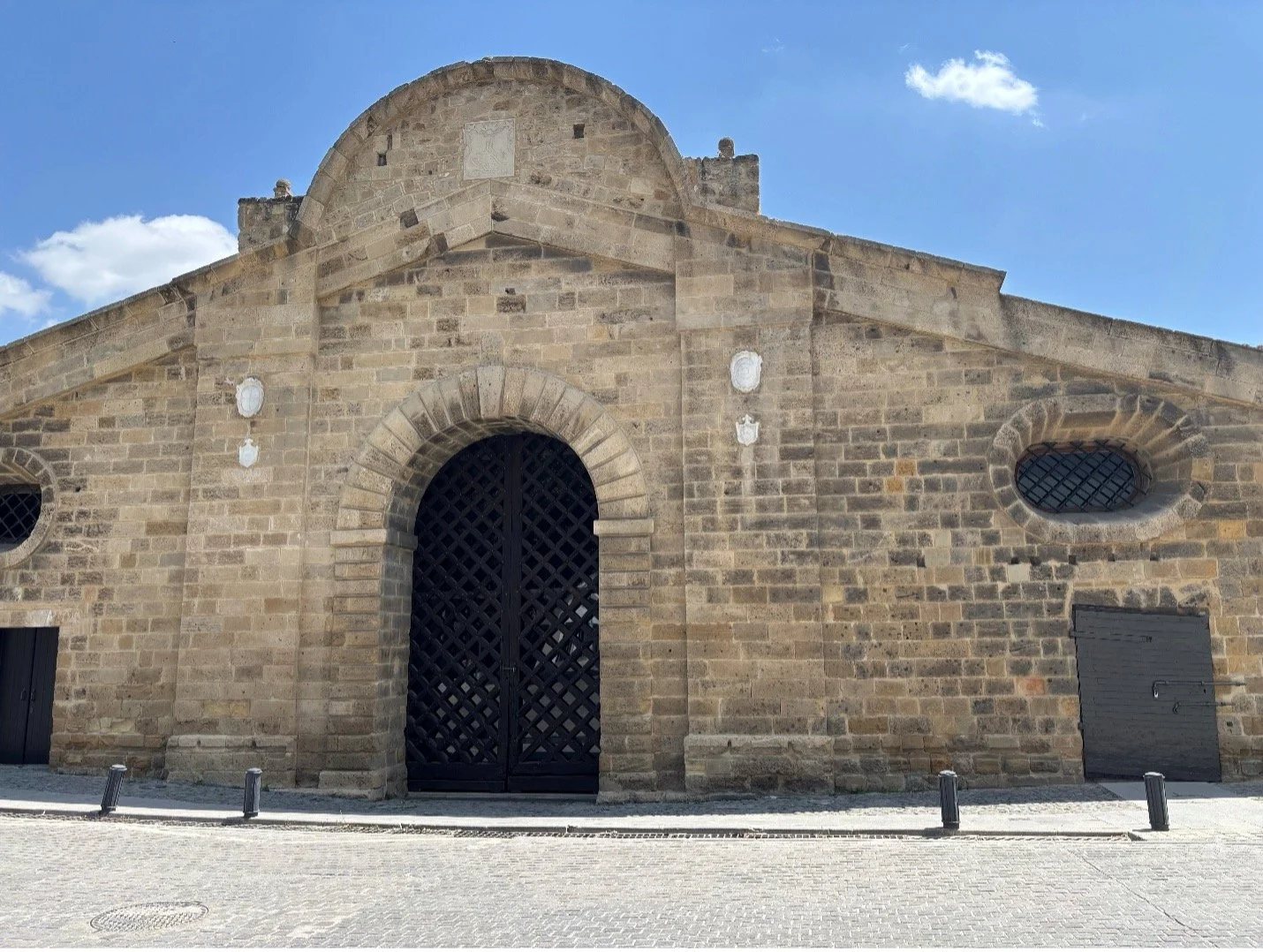
Famagusta Gate in old Nicosia
Today, it serves as a cultural venue hosting exhibitions, performances, and public events. What was once designed for war now invites artistic expression.
Unlike the bustling atmosphere around Famagusta gate where many restaurants, bars and cafes are everywhere, Paphos Gate feels contemplative.
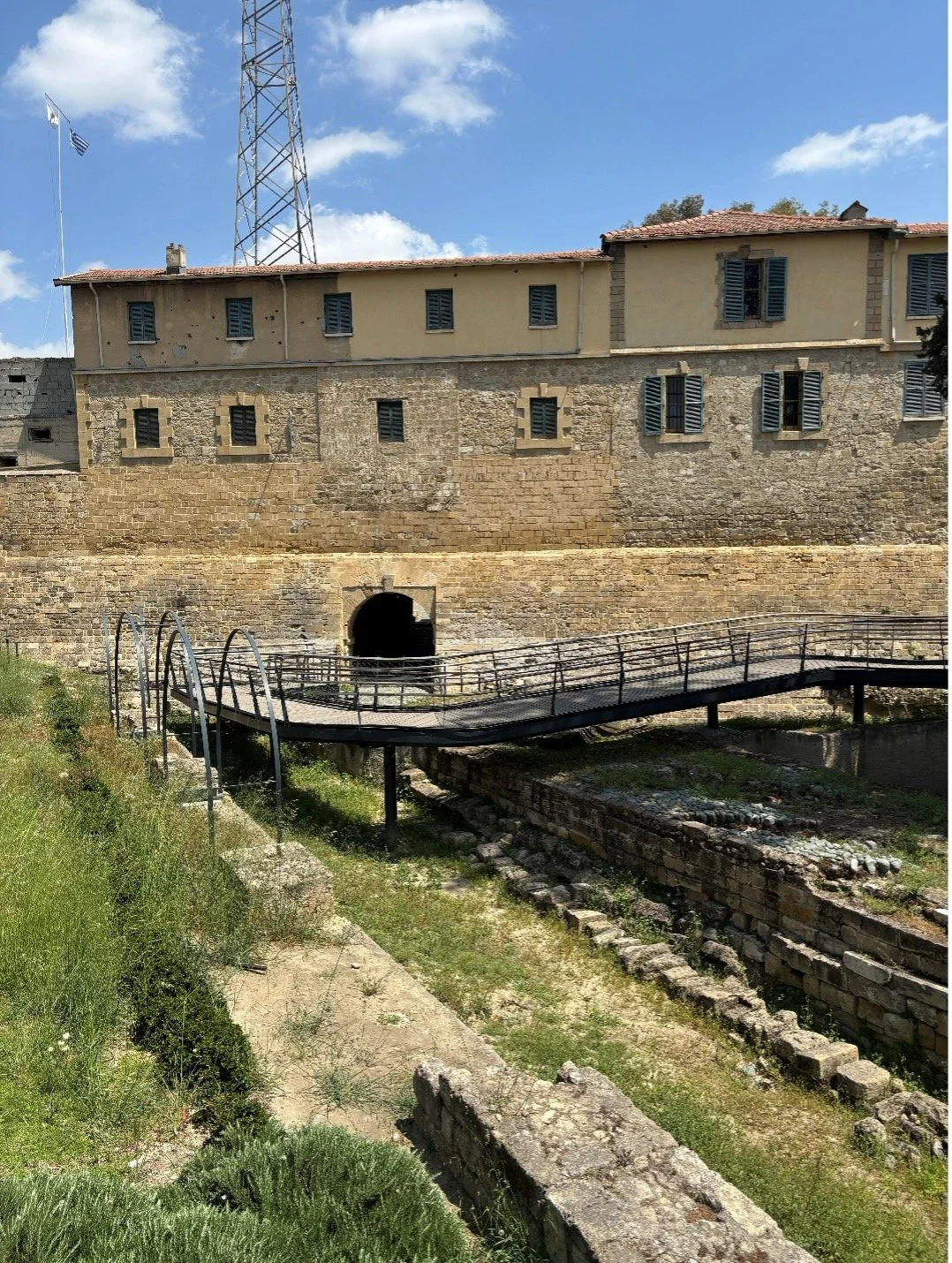
Paphos Gate in old Nicosia
Standing on a street leading to many landmarks nearby, like the Cyprus Museum and the Nicosia Municipal Theatre, the gate allows visitors to imagine the practical realities of earlier centuries, caravans entering at dusk, merchants carrying goods, soldiers checking travelers before allowing passage.
Its relative obscurity is part of its charm, a reminder that history is not only made in grand spectacles, but also in ordinary movement: arrivals, departures, trade, migration, and daily survival.
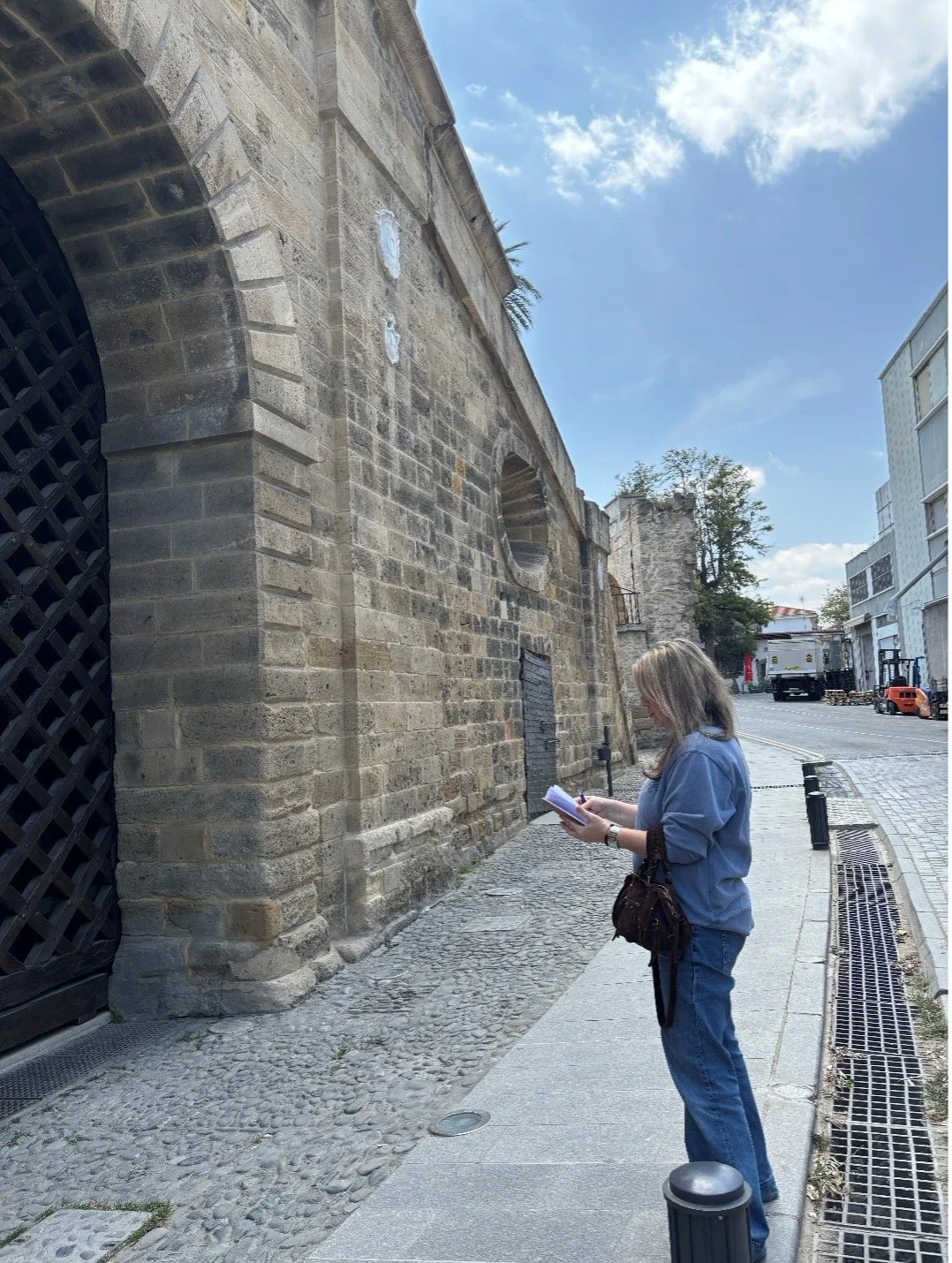
Norma in front of Famagusta Gate
The third one, Kyrenia Gate once opened toward the northern mountains and the harbor town of Kyrenia, currently in the occupied north. It sits amid the layered realities of Nicosia being the last divided capital in the world.
During British colonial rule (1878 – 1960), portions of the walls around the gate were altered to accommodate modern transportation.
Old and New
To walk alongside the Venetian walls and through the gates of Nicosia today is to move through layers of civilization. That is the magic of Nicosia: it does not separate old from new. It lets them coexist, side by side, connected by narrow streets.
They are living architecture, structures that continue to reveal the soul of the city while carrying the emotional weight of centuries.
In Nicosia, history does not sit quietly in the past or behind museum glass, it is lived daily, waiting at a gate!
Et voilà! Are you ready for a walk in Nicosia’s old town?
Five Facts about Nicosia’s walls and gates:
The Venetian Walls of Nicosia were built between 1567 and 1570 during the rule of the Republic of Venice which started in 1489.
They were designed according to Renaissance military engineering principles, with thick, low fortifications built to absorb cannon fire.
The fortification system includes 11 bastions, each named after influential Venetian noble families.
The old city of Nicosia is enclosed in an almost perfect circular shape.
The walls contain three historic gates: Famagusta Gate facing east, Paphos Gate facing west and Kyrenia gate facing north.