Loukoumi: Mediterranean sweet, Cypriot tradition
From family gatherings to festivals and local markets, one sweet is always present and continues to hold a special place in Cypriot culture: it is the famous Loukoumi or Cyprus delights.
Soft, chewy, colorful and sugar dusted: Loukoumi, the eastern Mediterranean sweet lives on as a symbol of tradition and craftsmanship in the region. And just as with the island’s well-loved savory product, Halloumi cheese, the sweet comes with a rich history.
In fact, Loukoumi as the sweet is known locally, is associated mainly with the village Geroskipou, which I visited during a trip to the Paphos district and met there with a local producer.
What is Loukoumi?
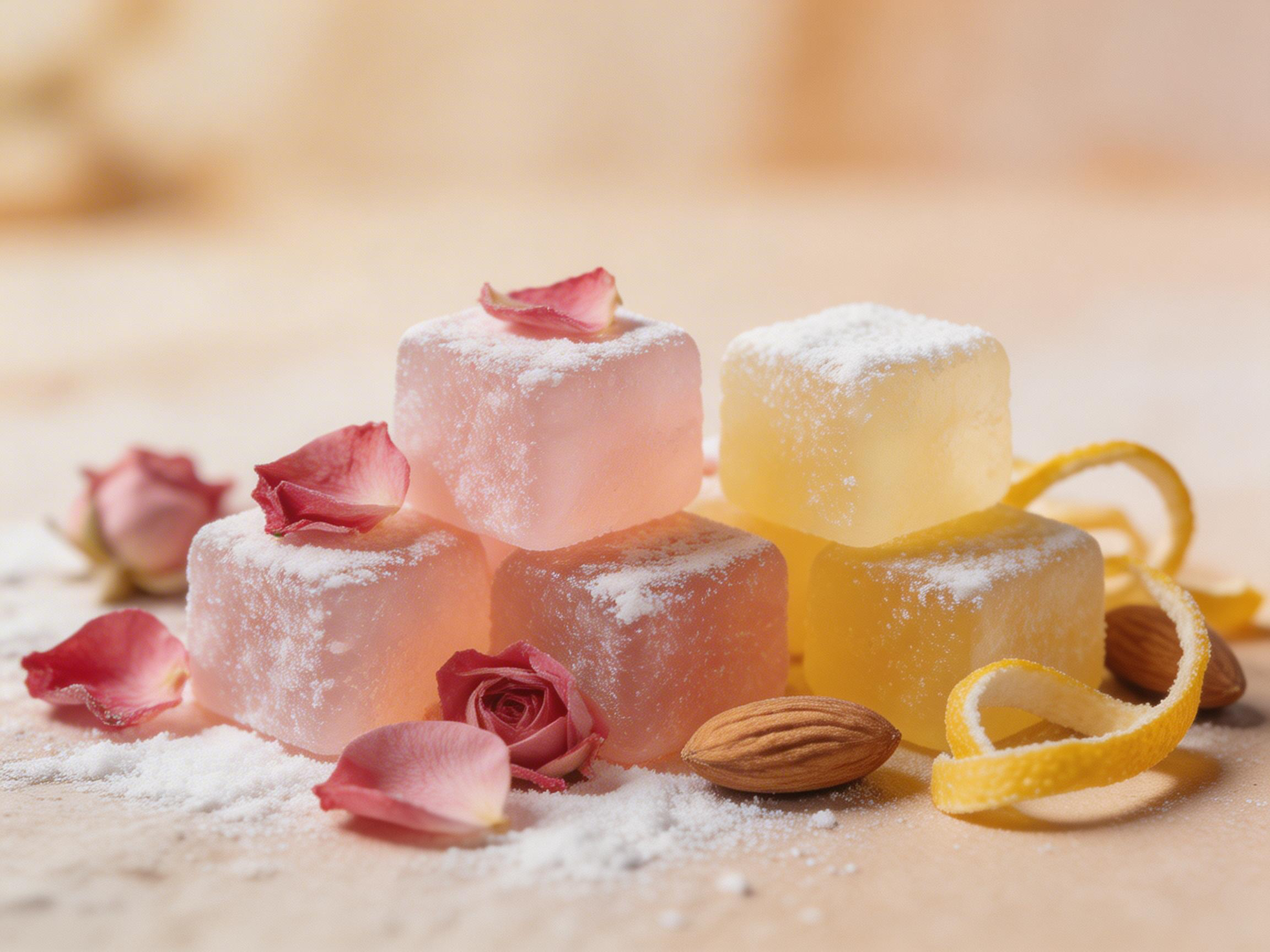
Traditional Cyprus Loukoumi
This traditional confection is made of cornstarch, sugar and natural flavorings such as rosewater, lemon, bergamot, citrus, fruit variations and nuts like pistachios or almonds, which are optional.
It is widely enjoyed in many countries in the Eastern Mediterranean, and considered more than just a dessert. It represents hospitality, celebration and sharing. Its delicate texture and subtle flavors make it a timeless treat that connects generations.
From Cyprus to Lebanon and across the region, loukoumi, known as “rahat al-halkoum” in Arabic meaning “comfort of the throat”, is shaped by centuries of tradition and cultural exchange. It is widely enjoyed and often served with coffee, especially during gatherings.
How did Loukoumi production start in Cyprus?
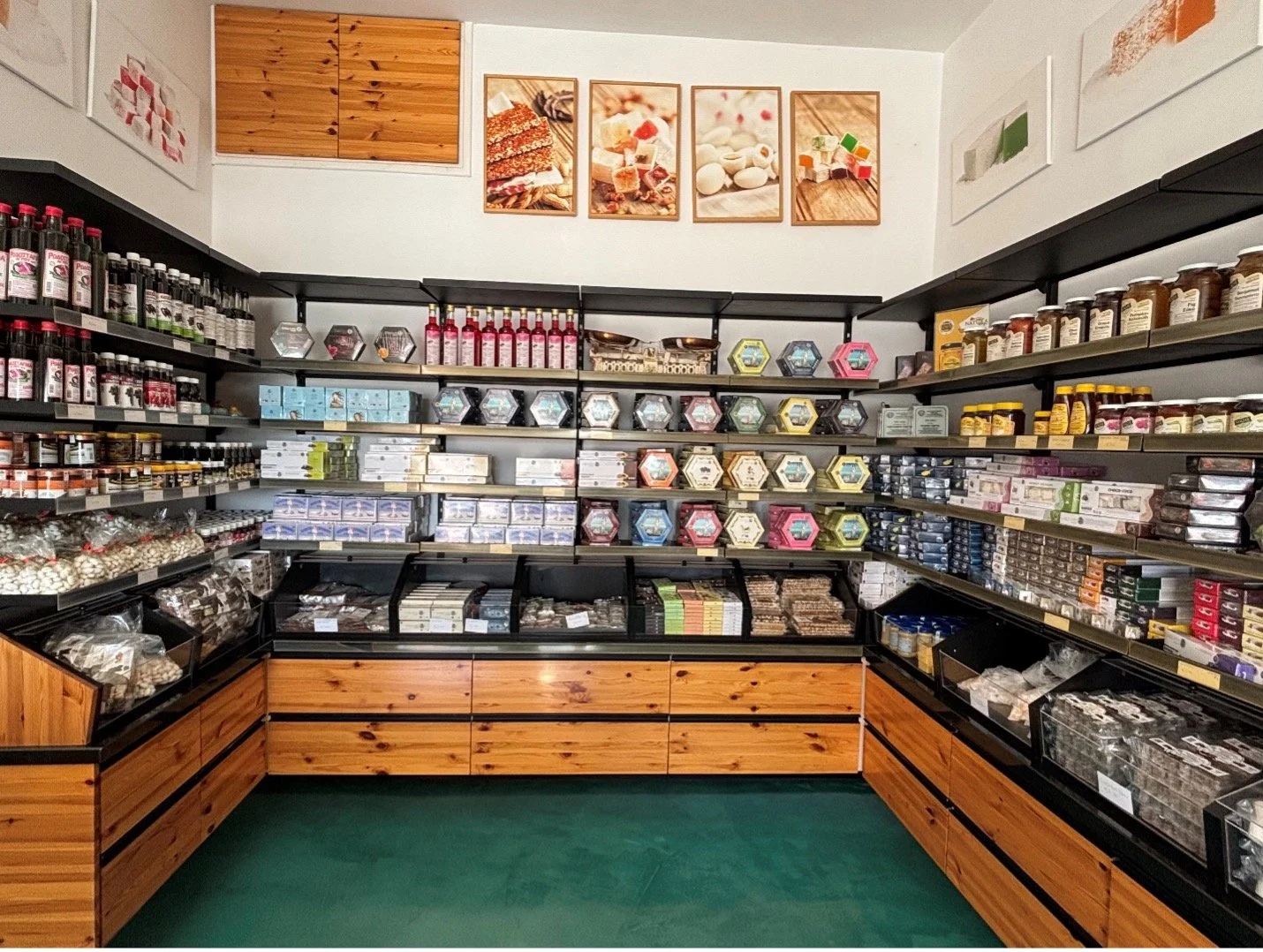
Variations of Loukoumi displayed in Aphrodite Delight shop in Geroskipou near Paphos.
Loukoumi has been part of Cypriot life for generations and it represents one of the island’s long culinary traditions.
It was introduced to Cyprus during Ottoman times, but the village of Geroskipou developed its own distinctive recipe and method. The craft was commercialized in the late 19th and early 20th centuries, and the sweets became closely associated with Geroskipou’s cultural identity. Family-run producers helped preserve traditional methods across generations
In Cyprus, offering sweets to guests is a long-standing tradition, and loukoumi is one of the most common treats served with coffee or tea. Small cubes of the soft confection are often presented on a plate when friends or relatives visit, reflecting the island’s warm and welcoming culture.
For many families, the taste of loukoumi brings back memories of childhood visits to grandparents, celebrations, and village festivities.
How is Loukoumi made?
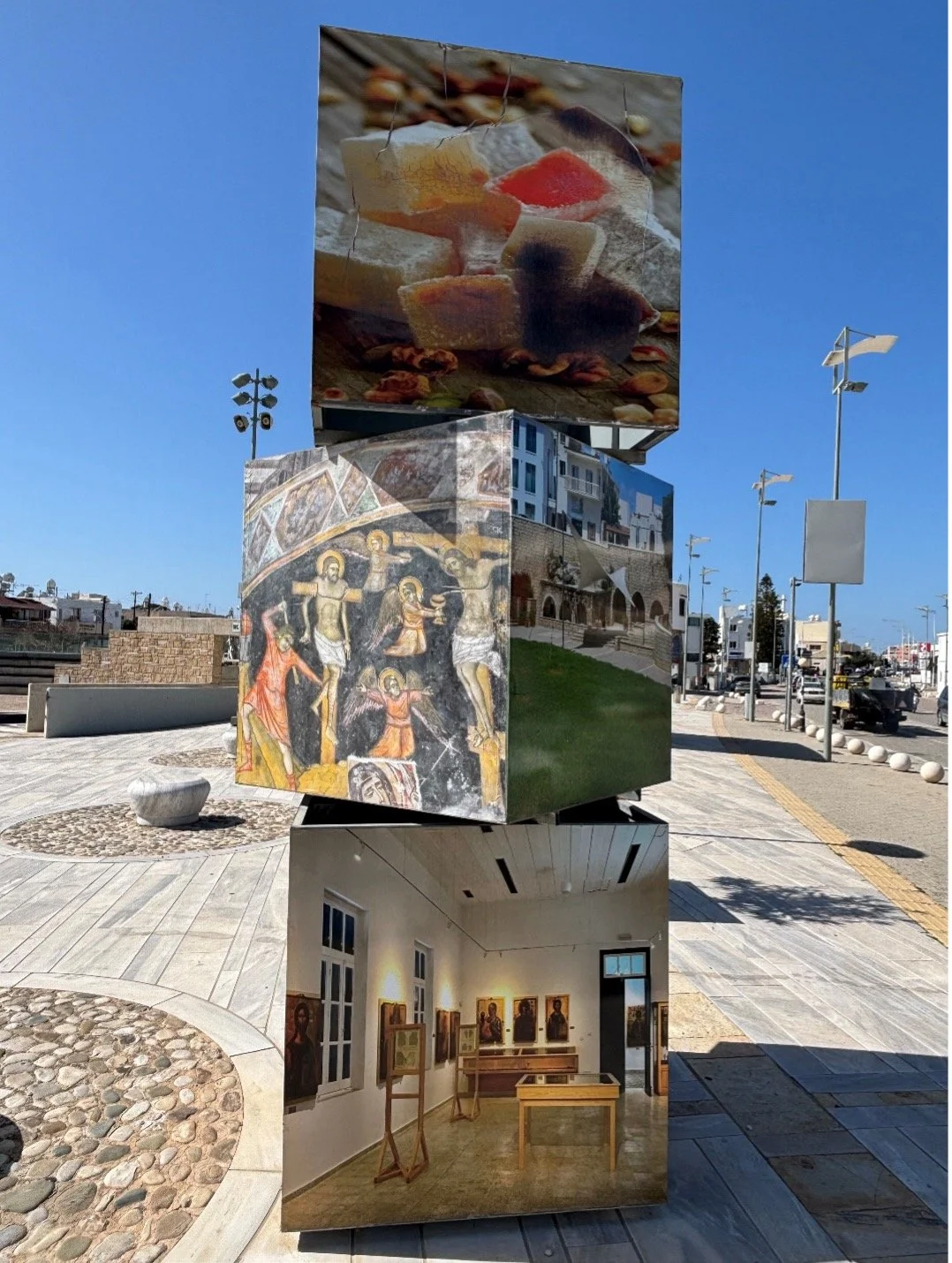
Image of Loukoumi on a main road in Geroskipou near Paphos.
Although the ingredients are simple, making loukoumi requires patience and skill. The traditional recipe involves cooking the mixture of cornstarch, sugar and water with the flavorings slowly and stirring it until it thickens into a smooth gel consistency.
Once it reaches the right texture, it is poured into trays to cool and set. Afterward, the confection is cut into small cubes and generously coated with powdered sugar or cornstarch to prevent sticking.
The process may take several hours, but the result is a soft, fragrant sweet that melts gently in the mouth.
Aphrodite Delights!
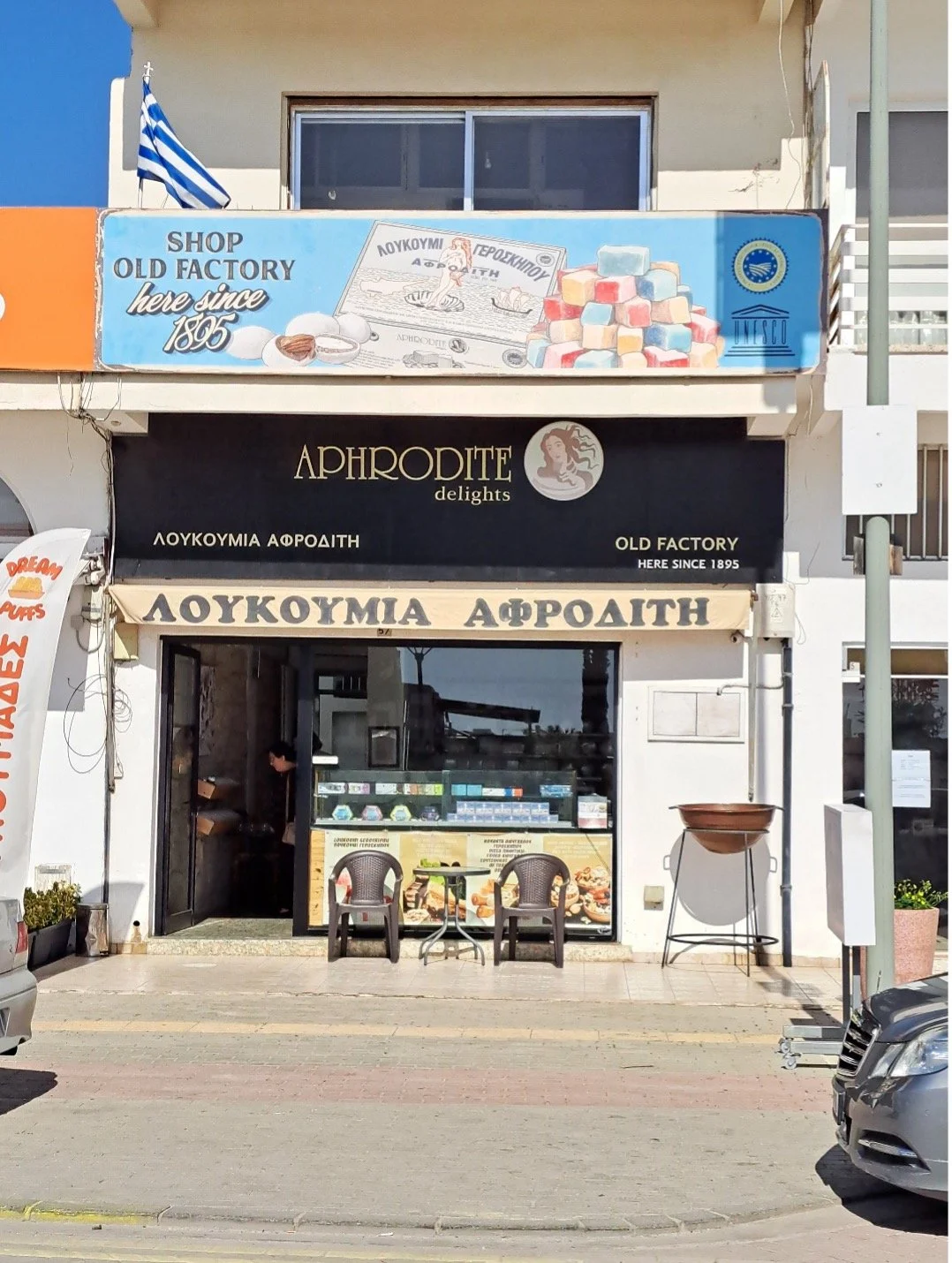
Aphrodite Delight shop in Geroskipou in the Paphos district.
On the way from a stop at Aphrodite’s rock to Paphos, there is one place where visitors can experience this sweet tradition firsthand: the Aphrodite Delights shop and old factory in the historic village of Geroskipou.
All kinds of Loukoumi and local sweets are displayed in the shop where I met Mrs. Gabriella Gabriel, from the founder’s family, who kindly showed us around the old factory.
The village itself, just outside Paphos, became famous for its sweets and one of the most well-known places in Cyprus for authentic loukoumi.
Mrs. Gabriel explained how the family traditions continued from 1895 when Sophocles Athanasiou returned to his home village of Geroskipou after many years of living overseas and established the delights industry where his “Loukoumi Geroskipou” soon became a local delicacy.
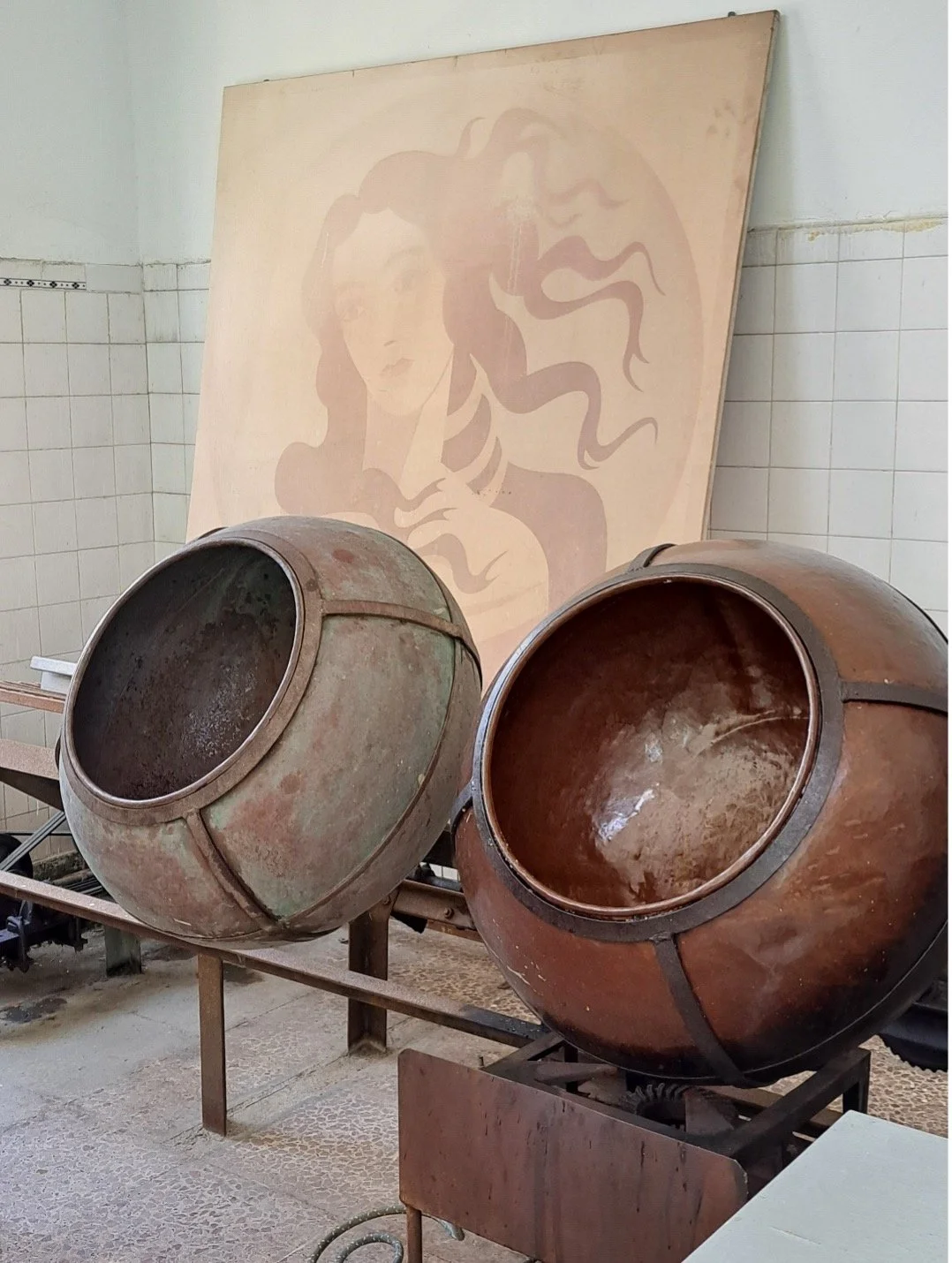
Inside the old factory of Aphrodite Delight in Geroskipou.
She said that the technique is passed through generations as they still use the same authentic recipe, gluten and gelatin free. She also explained the ancient method of making Loukoumi that was utilized in the factory where everything was manual and took more time.
The best sellers are the “traditional flavors, which are rose and bergamot with almonds” as she noted.
Here at the shop, not only delicious samples are offered but history is revived. Nowadays, travelers today going to Paphos often stop in Geroskipou specifically to taste this famous local specialty.
What makes Loukoumi special?
At first glance, loukoumi may look like a simple sweet cube covered in powdered sugar, but its taste lies in its delicate balance of texture and flavor.
Traditional loukoumi is soft, slightly chewy, and lightly scented with natural flavorings. It is neither overly sugary nor heavy, which makes it the perfect accompaniment to strong coffee. It is also considered as a fasting sweet during Lent.

The landscape surrounding Aphrodite’s rock near Paphos.
Because of its long shelf life and beautiful packaging, loukoumi has become one of the most popular souvenirs from Cyprus.
Boxes of the sweet are often decorated with images inspired by Greek mythology or the island’s landscapes, and many reference Aphrodite, the goddess of love who, according to legend, was born nearby in the coast of Paphos.
Taking a box of loukoumi home is more than just bringing back a dessert, it’s carrying a small piece of Cypriot culture.
Et voilà! That was the highlight of our day in the Paphos district!
Five Facts about Loukoumi:
“Loukoumi Geroskipou” has Protected Geographical Indication (PGI) status in the European Union since 2007, meaning only loukoumi made in that region using traditional methods can carry the name.
Loukoumi is exported to countries across Europe and the Middle East making it one of Cyprus’ most recognizable traditional sweets.
Traditional loukoumi takes 2 to 3 hours of continuous cooking and stirring to reach the right consistency.
After pouring into trays, it needs 12 to 24 hours to set before cutting.
Geroskipou produces a significant share of Cyprus’ loukoumi, with more than ten traditional workshops operating in the area.