Soutzoukos, The Cypriot Sweet That Shows Up Everywhere
This is not just a Cypriot treat. It's a calendar. Soutzoukos marks every celebration, every harvest, every moment worth remembering on this island.
There is a smell that belongs to Cypriot celebrations. It rises from a copper pot at the edge of a village square mingling with wood smoke, and leading your eyes to long, dark strings of Soutzoukos hanging in the afternoon light.
If you grew up in Cyprus, you didn't need to ask what that sweet was. And if you're discovering it for the first time, consider this your introduction to one of the most quietly extraordinary things this island makes.
Born From Abundance
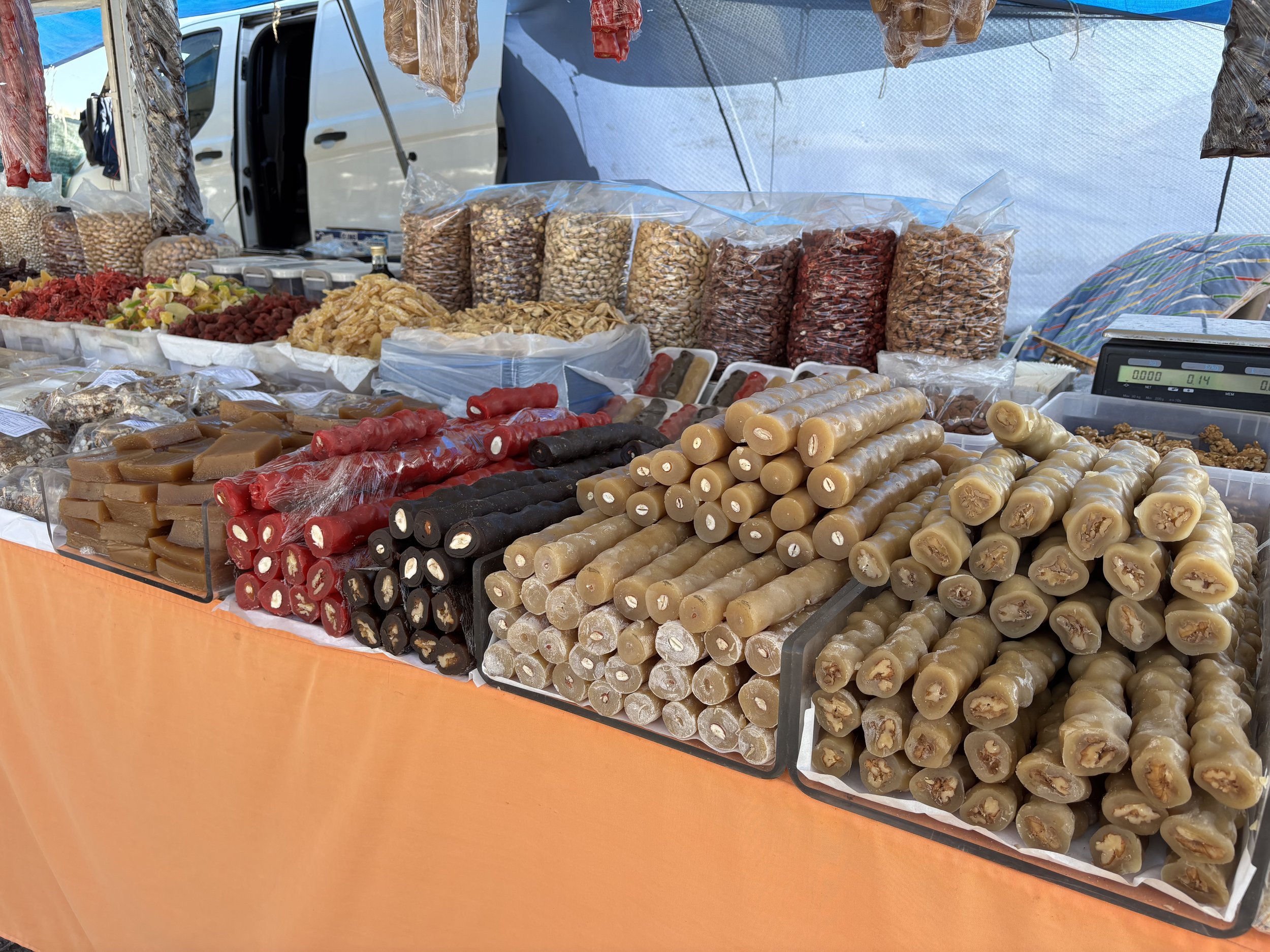
Different flavors of Soutzoukos displayed in Ayia Napa during Kataklysmos (Pentecost) weekend.
Its production is rooted in the mountains. The villages of Omodos, Arsos, and the Troodos wine region gave birth to Soutzoukos in the late 19th century, when wine-making scaled up in the mountainous and semi-mountainous villages of Marathasa and Pitsilia.
It was born from abundance, specifically from what to do with the surplus of grape must (pressed grape juice) after harvest. Nothing was wasted. The grapes gave wine and the must gave Soutzoukos. The tradition gave everything else.
That is how Soutzoukos became the taste of celebration.
How is it Made?
Making Soutzoukos is an act of quiet devotion. There are no shortcuts, no substitutes for time. The process has barely changed in over a century, and that stubbornness is part of what makes it extraordinary.
The steps:
1- Almonds or walnuts are soaked in water to soften, then threaded carefully onto strings two to three meters long.
2- Grape must is boiled down and thickened with flour into moustalevria which is a warm, glossy, deeply fragrant syrup that smells like the earth after harvest.
3- The nut strings are dipped into the hot mixture, pulled out, and hung to dry. This is repeated three to five times over hours or days until each string is roughly an inch thick.
4-The finished Soutzoukos hangs to dry for up to twenty days. Only then is it ready: chewy, deep purple-brown, smelling of concentrated grape and roasted nut.
Slice it into rounds and the cross-section is almost architectural: the pale crunch of almond or walnut at the center, wrapped in layer after layer of glossy grape. It pairs with strong Cypriot coffee the way red wine pairs with cheese, each makes the other more itself.
The Festival Sweet
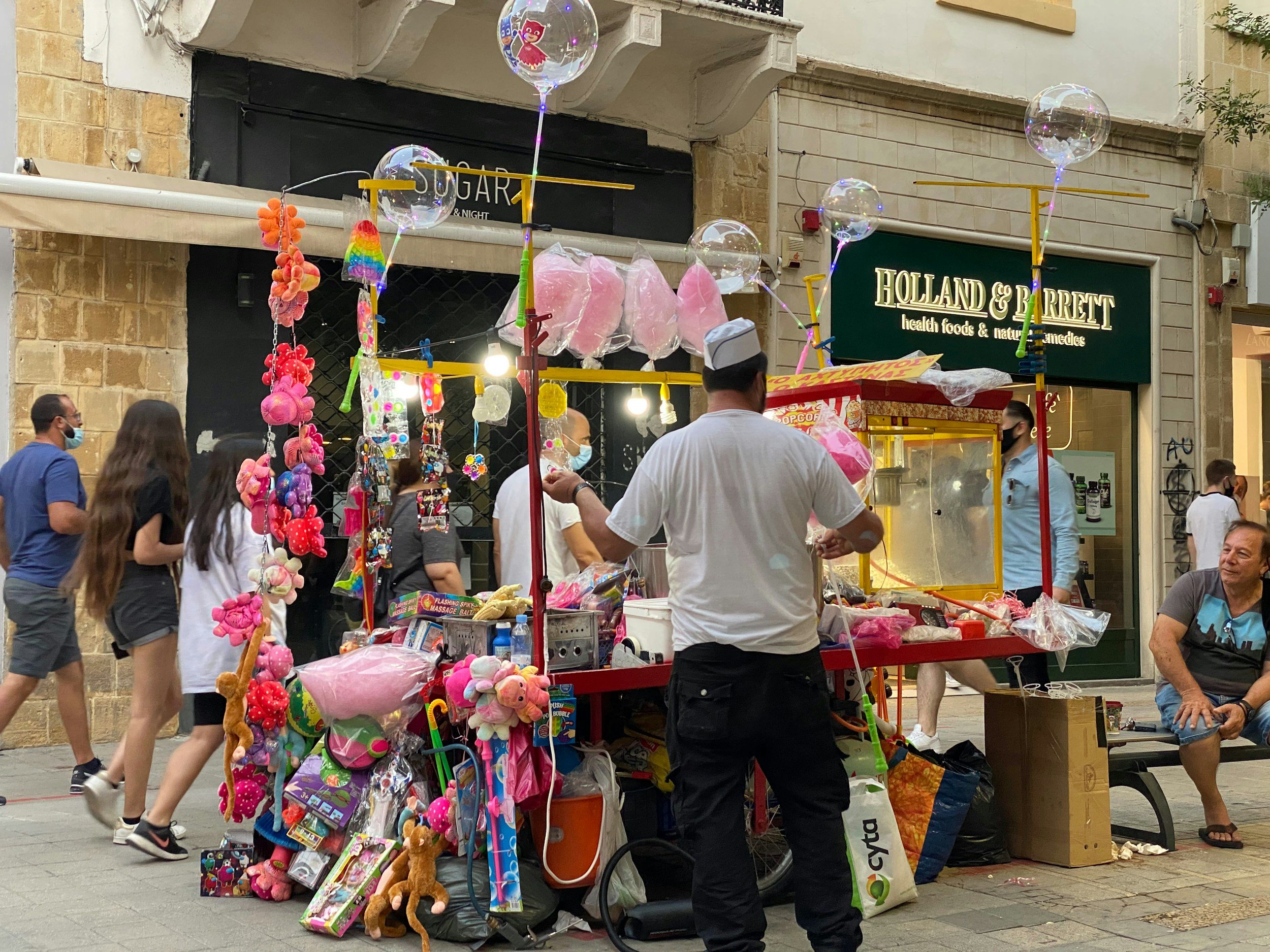
What is remarkable about Soutzoukos isn't just the taste. It's the consistency of its presence. Across the Cypriot calendar, across religious festivals, harvest celebrations, village fairs, and seaside markets, Soutzoukos is simply always there.
It is one of the few foods that belongs to every season and every occasion without ever feeling out of place, starting from Kataklysmos (The Festival of the Flood) celebrated 50 days after Easter, the Grape Harvest Festival in Autumn, to the village festivals.
What these occasions share is the instinct to mark time with something handmade and meaningful.
A Symbol of Hospitality
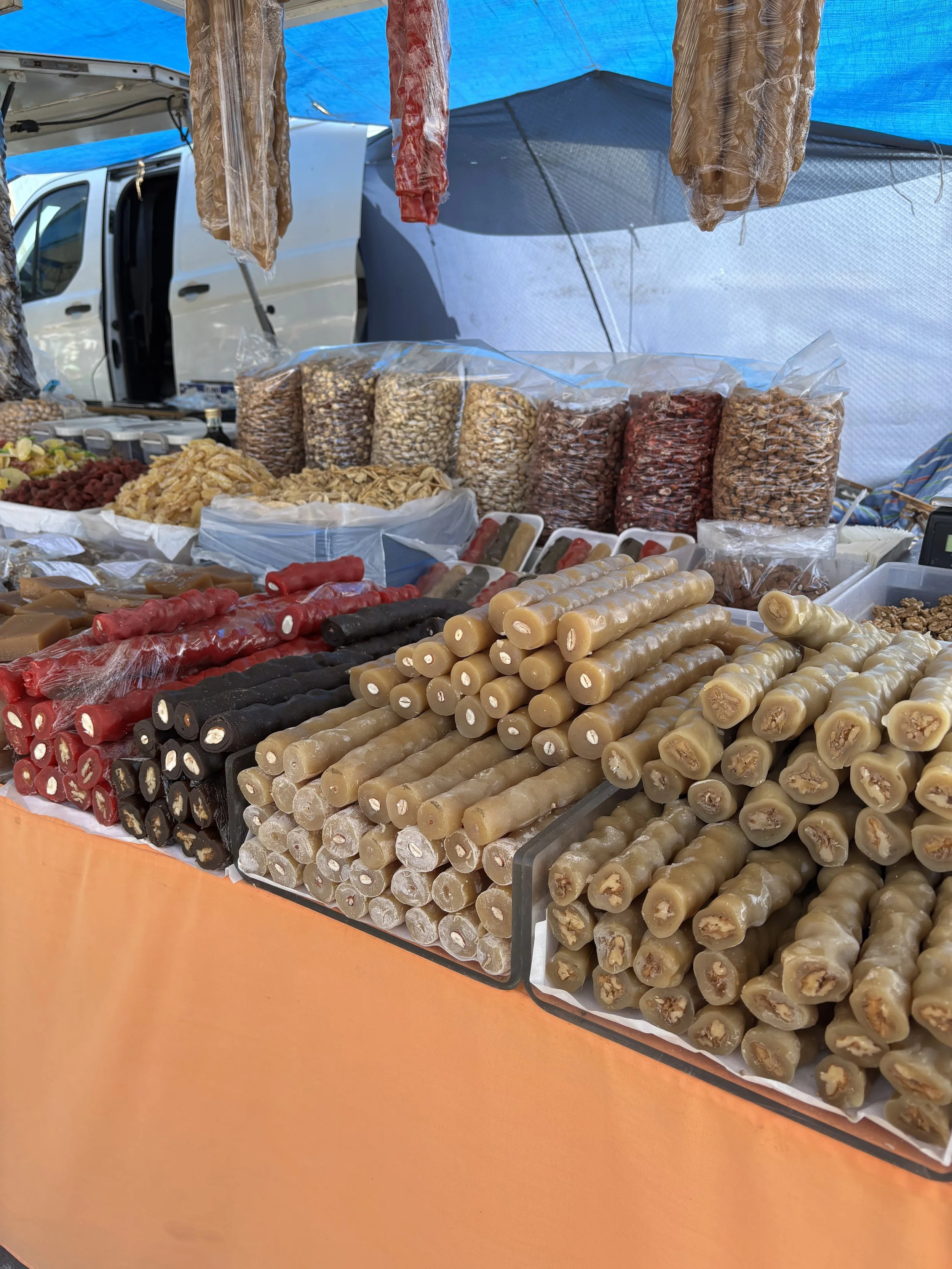
Soutzoukos hanged and displayed on a traditional sweet stall in Ayia Napa.
In Cyprus and the Eastern Mediterranean in general, food is never just about food. Offering something you made with your hands, something that took days, that came from your vines, that carries the flavor of the village, is a form of welcome that no words quite replicate.
Soutzoukos has always held that role. It is described consistently as a symbol of hospitality and abundance, something shared with guests, gifted to visitors, and passed between generations as both recipe and memory.
This sweet is available in supermarkets and old markets as well as the festivals, but the best version is always the one you eat standing at a festival stall, paper in hand, while a folk band tunes up somewhere nearby and the smell of grape must is still in the air.
That version comes with the whole story attached.
Et voilà! That was the story of an authentic sweet that forms part of Mediterranean traditions and harvest heritage.
Five facts about making Soutzoukos:
1- Soutzoukos is closely connected to Cyprus' wine-making heritage, as it uses grape must produced during the annual grape harvest.
2- The process has traditionally been a family and community activity, often bringing together several generations during the harvest season.
3- It reflects a traditional Mediterranean philosophy of minimizing waste by transforming surplus grapes into long-lasting food products.
4- Today, it remains a popular accompaniment to Cypriot coffee and is frequently purchased by visitors seeking an authentic taste of Cyprus.
5- Before refrigeration, Soutzoukos was a practical way to preserve the grape harvest for months, allowing families to enjoy grape-based foods long after the harvest season ended.