Byblos, Where the Alphabet Was Born!
The city most associated with the development of the Phoenician alphabet is Byblos. A small coastal city north of Beirut that holds the distinction of being one of the oldest continuously inhabited cities on earth.
People have lived in Byblos for approximately seven thousand years. The city was already ancient when the Phoenicians were at the height of their power.
Let’s go on a tour in this historical city reaching the iconic old harbor!
Historical background
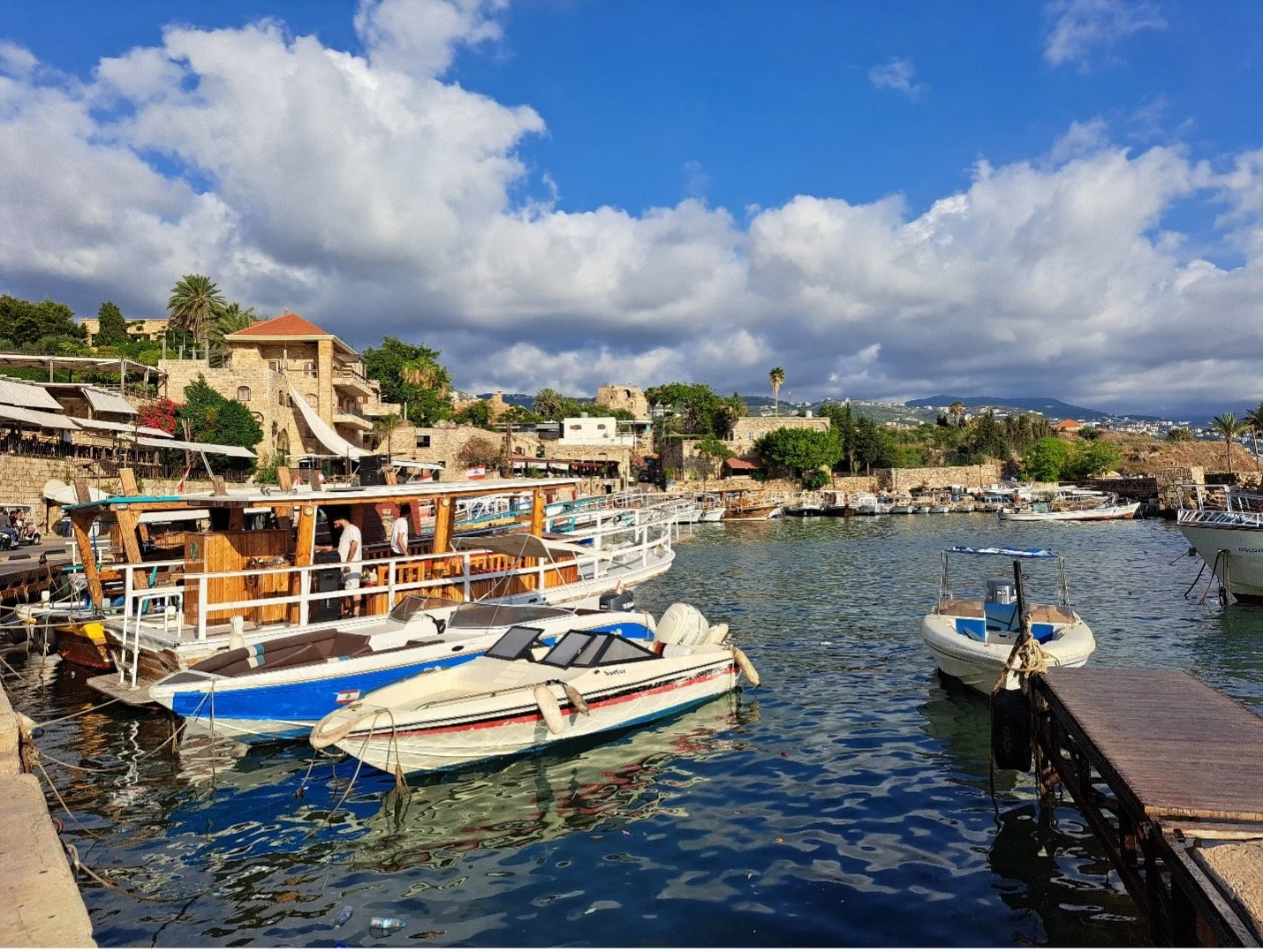
The historical Byblos harbor.
Nestled along Lebanon's Mediterranean coast, 37 km north of Beirut, Byblos was a thriving Phoenician port and it played a pivotal role in maritime trade, the spread of the alphabet, and cultural exchange across the ancient world.
Today, its remarkable archaeological treasures, charming old souks, and picturesque harbor make Byblos a captivating destination where thousands of years of history come to life.
Its close proximity to Beirut makes it one of the most popular day-trip destinations in Lebanon, offering visitors a unique blend of ancient history, seaside charm, traditional souks, and waterfront restaurants, all within an easy drive from the capital.
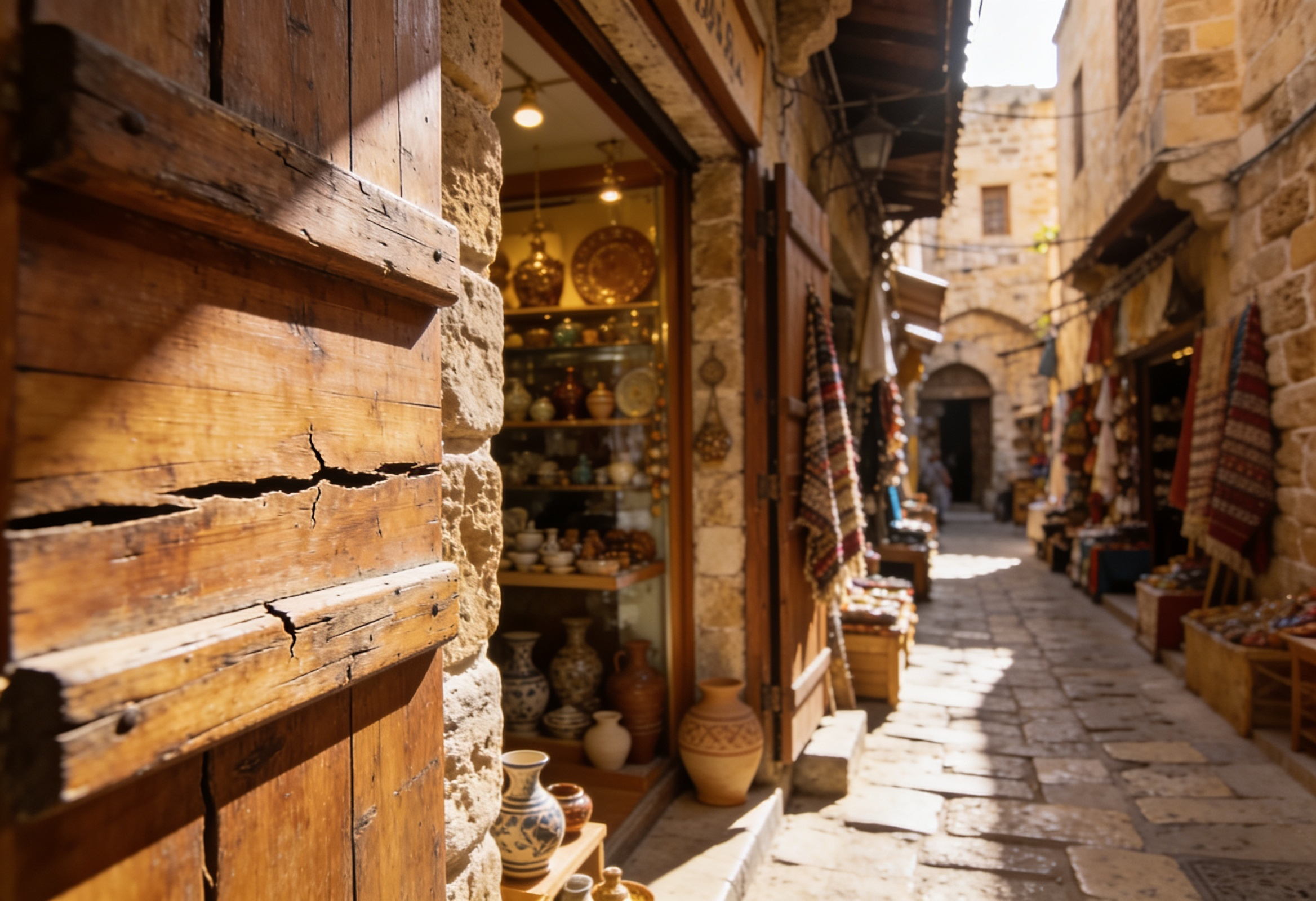
Walking through the old souks of Byblos, where stone streets, seaside charm, and centuries of history meet.
It has been inhabited through the Neolithic period, the Chalcolithic, the Bronze Age, the Iron Age, through Phoenician, Persian, Greek, Roman, Byzantine, Arab, Crusader, Ottoman, and modern Lebanese periods, an unbroken chain of human habitation that makes it one of the longest-running cities in human history.
The Journey of the Letters
The Phoenician alphabet did not stay Phoenician for long. The Greeks encountered it through trade, through the Phoenician colonies that dotted the Mediterranean and through the simple fact of proximity, sometime around the ninth or tenth century BCE. They did something characteristically Greek with it: they took it apart, examined it, and improved it.
The Greek modification was conceptually significant. Alpha, the first letter of the Greek alphabet, derives directly from the Phoenician aleph, originally representing a glottal stop, repurposed by the Greeks as the vowel A. Beta from beth. Gamma from gimel. Delta from dalet.
The names of the Greek letters are Phoenician words. Aleph means ox in Phoenician, the shape of the letter, rotated, still resembles the head of an ox. Beth means house. Gimel means camel. Dalet means door. The letters of the alphabet the Western world uses carried their Phoenician meanings in their names for centuries after the meanings themselves were forgotten.
The Greek alphabet spread across the Mediterranean world, and when Rome rose to dominance, the Romans adapted the Greek alphabet for Latin, adjusting its shapes and its phonetic values for their own language.
The Latin alphabet that the Romans carried across their empire, into Gaul, into Britain, into Iberia and into North Africa, became the ancestor of every Western script.
The letters of the English alphabet are Roman letters which came from Greek letters coming from Phoenician letters.
The Phoenician letters were carved on stone in Byblos three thousand years ago by traders who needed a faster way to keep accounts.
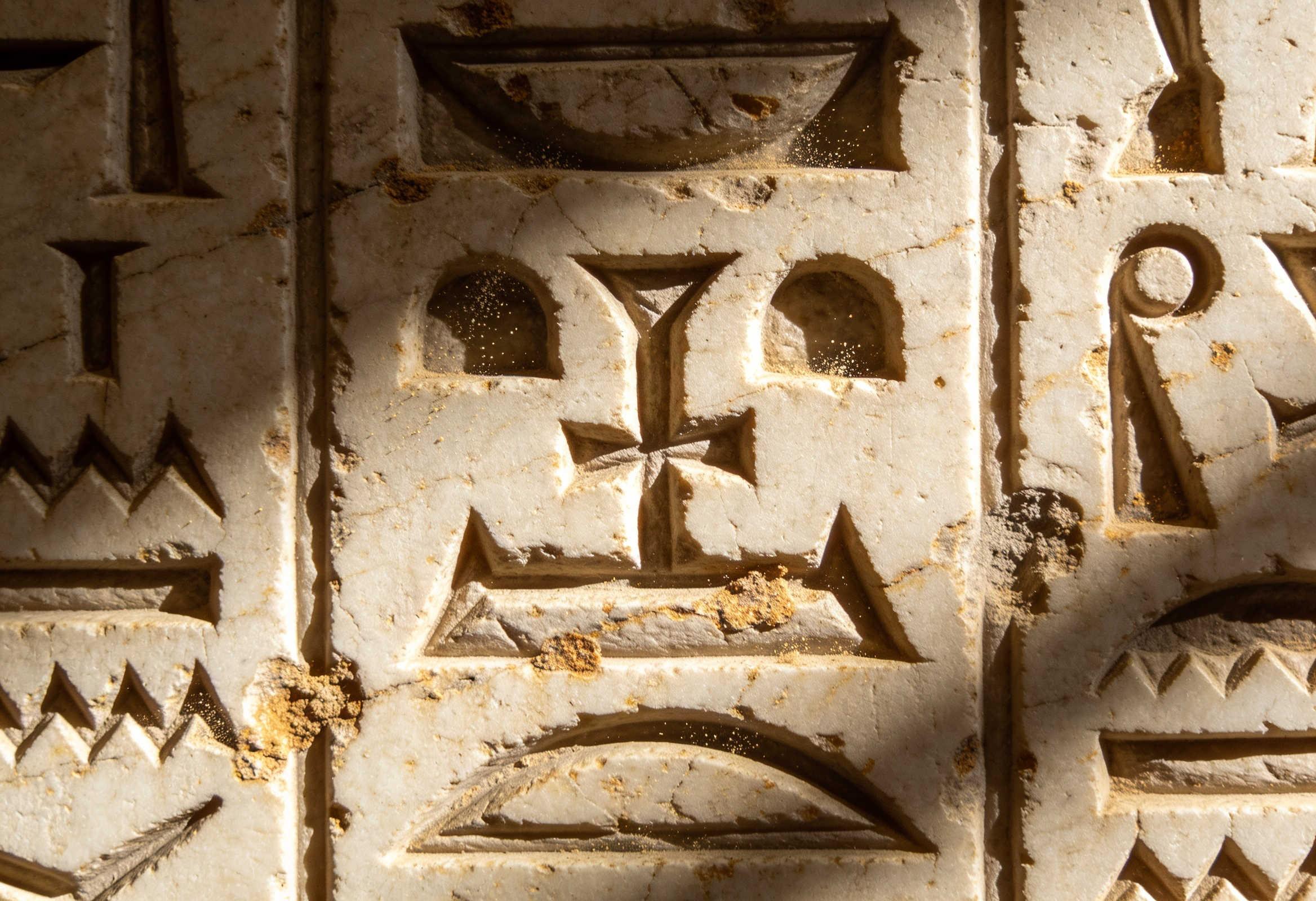
Ancient Phoenician letters from Byblos, tracing the origins of the alphabet that shaped the written world.
The Ancient and the Living
The archaeological site of Byblos today is one of the most extraordinary in the entire Mediterranean. Roman columns, standing alongside Phoenician temples, next to Crusader fortifications, alongside a modern Lebanese town that goes about its daily business a few meters from ruins that span seven thousand years of human presence.
It is the Mediterranean Edit's deepest subject in physical form, the ancient and the living, inseparable, on a single hillside above the sea.
UNESCO World Heritage Site
Byblos is a UNESCO World Heritage Site, inscribed in 1984 alongside Tyre, recognized for its extraordinary archaeological layers and its role as one of the first and most significant centers of the ancient world.
UNESCO says “Byblos is a testimony to a history of uninterrupted construction from the first settlement by a community of fishermen dating back 8000 years, through the first town buildings, the monumental temples of the Bronze Age, to the Persian fortifications, the Roman road, Byzantine churches, the Crusade citadel and the Medieval and Ottoman town”.
Also, in a mention of the birthplace of the Alphabet, UNESCO says that “Byblos is also directly associated with the history and diffusion of the Phoenician alphabet. The origin of our contemporary alphabet was discovered in Byblos with the most ancient Phoenician inscription carved on the sarcophagus of Ahiram”.
These are not ruins in the sense of dead places. They are living cities that happen to contain within them some of the most significant archaeological evidence in human history.
The Phoenician Legacy in Lebanon Today
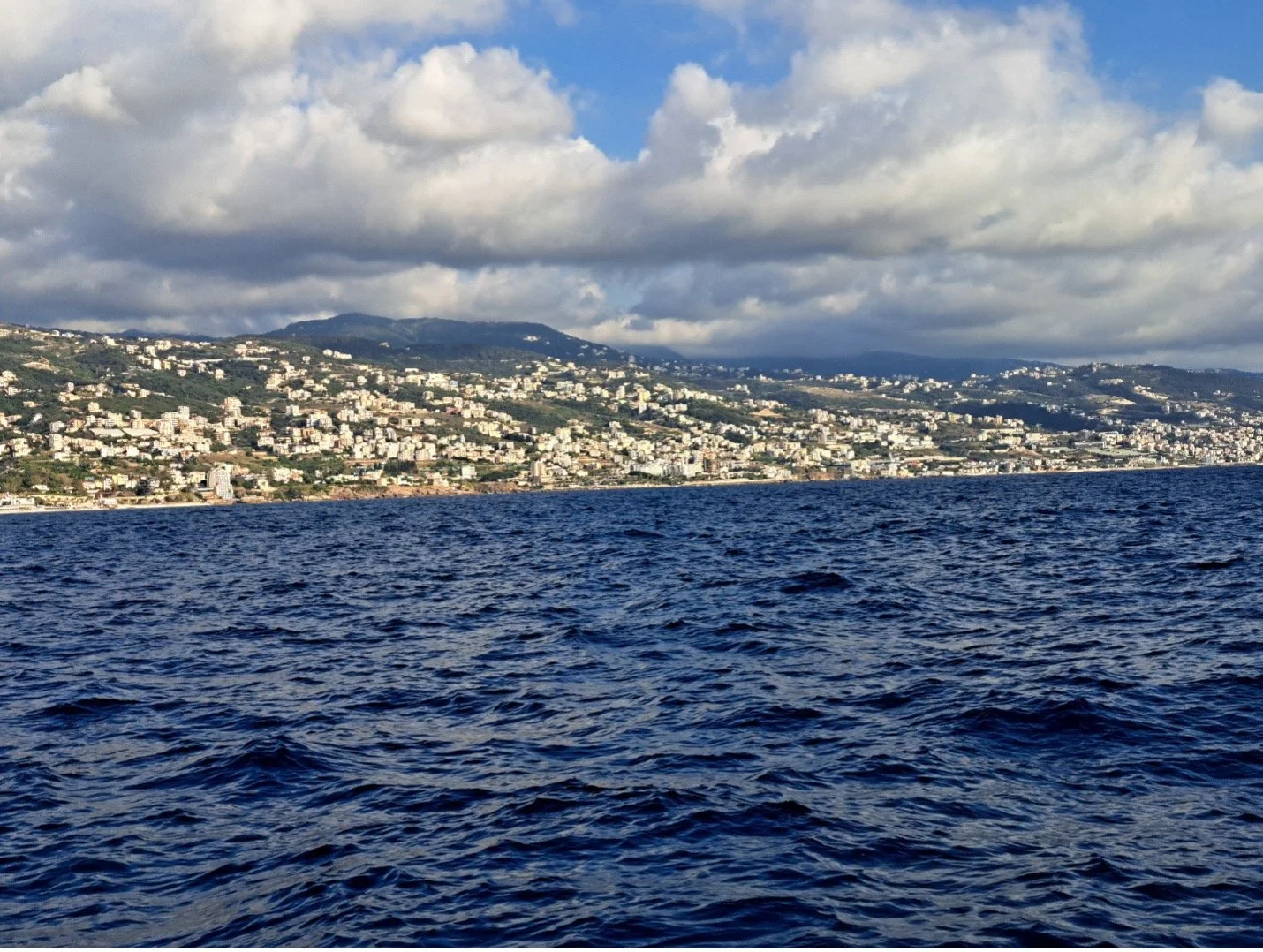
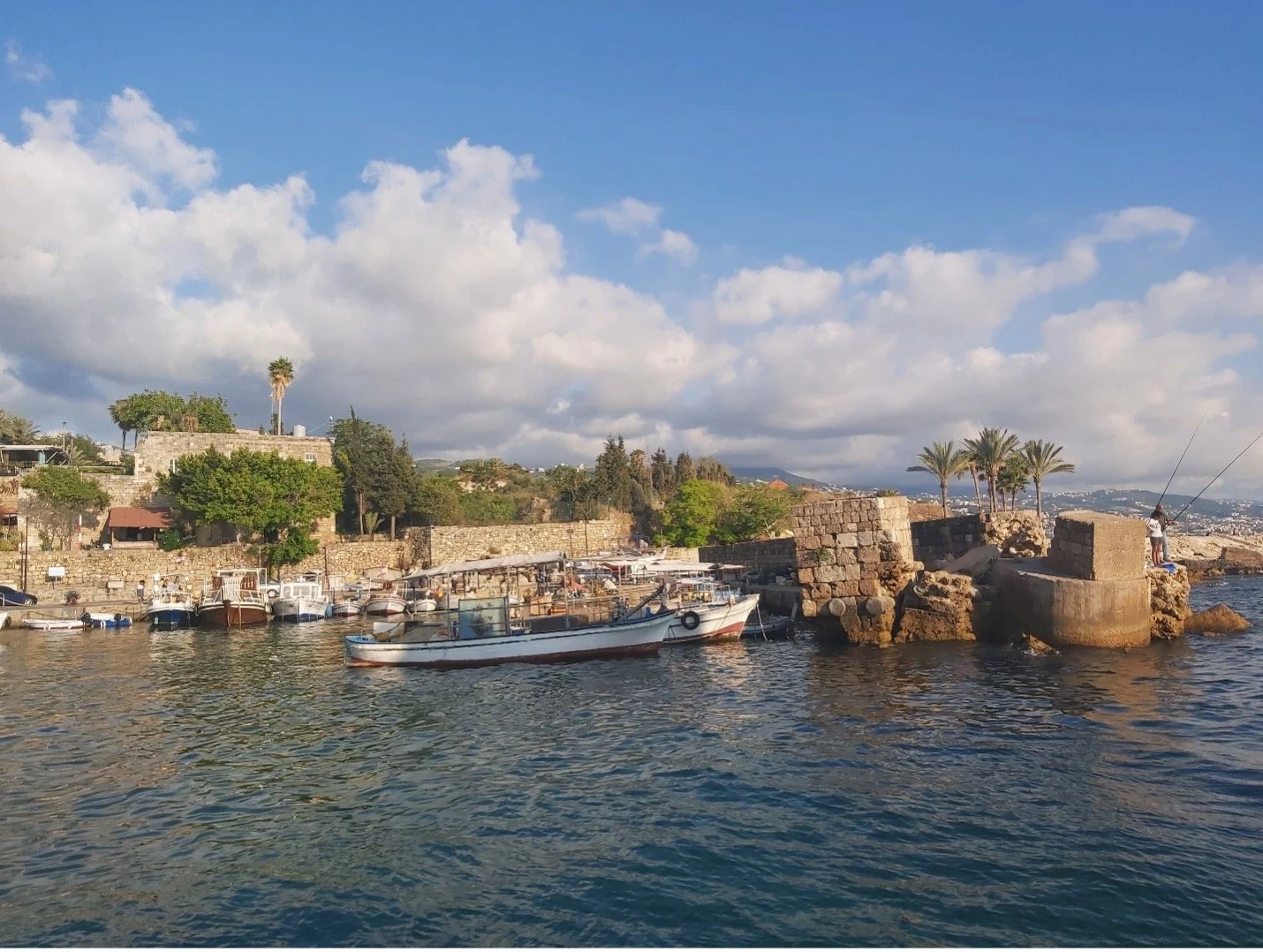
During a boat trip off the coast of Byblos.
Phoenicia did not fall in a single moment. It was absorbed gradually, incompletely, never entirely, into successive empires.
Modern Lebanon sits on Phoenician ground.
Tyre, Sidon, and Byblos are still inhabited, the oldest continuously occupied cities in the world. Their ancient layers visible in archaeological sites that coexist with living towns, restaurants, fishing boats, and the ordinary daily life of people who walk over two thousand years of history on their way to work.
The alphabet survived the fall of Phoenicia, as it has already traveled too far, been adapted by too many peoples, been written into too many languages to be destroyed with any single city. It had escaped its origins and it belonged to the world now.
Final Word
Every word you have ever written, every message you have ever sent, every book, all of it traceable, in a direct and unbroken line, to a Phoenician shoreline on the eastern Mediterranean.
The alphabet crossed the Mediterranean with Greek traders, crossed Europe with Roman legions, crossed the Atlantic with Spanish and Portuguese colonizers, crossed the Pacific with missionaries and merchants. It became the script of science, of law, of literature, of every digital interface you have ever touched.
It came from here, from Byblos!
Et voilà! That is Phoenicia. That is Lebanon. That is the Mediterranean!
Five Facts About Byblos:
The name "Byblos" is linked to the Greek word "biblion" (book), because papyrus imported from Egypt was traded through the city's port.
Papyrus was the ancient world's equivalent of paper and Byblos became famous as the Mediterranean's main trading center for papyrus, giving the city a lasting connection to the history of writing and books.
The picturesque Old Harbor has welcomed traders, fishermen, and travelers for thousands of years and remains one of Lebanon's most photographed waterfronts.
The impressive Byblos Castle, built by the Crusaders in the 12th century, offers panoramic views of the city and coastline.
The blend of ancient ruins, medieval architecture, vibrant souks, and the Mediterranean Sea gives Byblos a unique atmosphere where history and modern life coexist.