Thucydides Trap and the Mediterranean roots of geopolitics
When the Chinese leader Xi Jinping opened on May 14 a Beijing summit with the American President Donald Trump by quoting a Greek historian, millions of people rushed to search the phrase online in order to understand what it is all about.
"Can China and the United States overcome the Thucydides Trap?" he said, invoking one of the oldest concepts in geopolitics identified by an Athenian historian from the Mediterranean world observed a pattern of human behavior that still shapes international politics today.
What is the Trap?
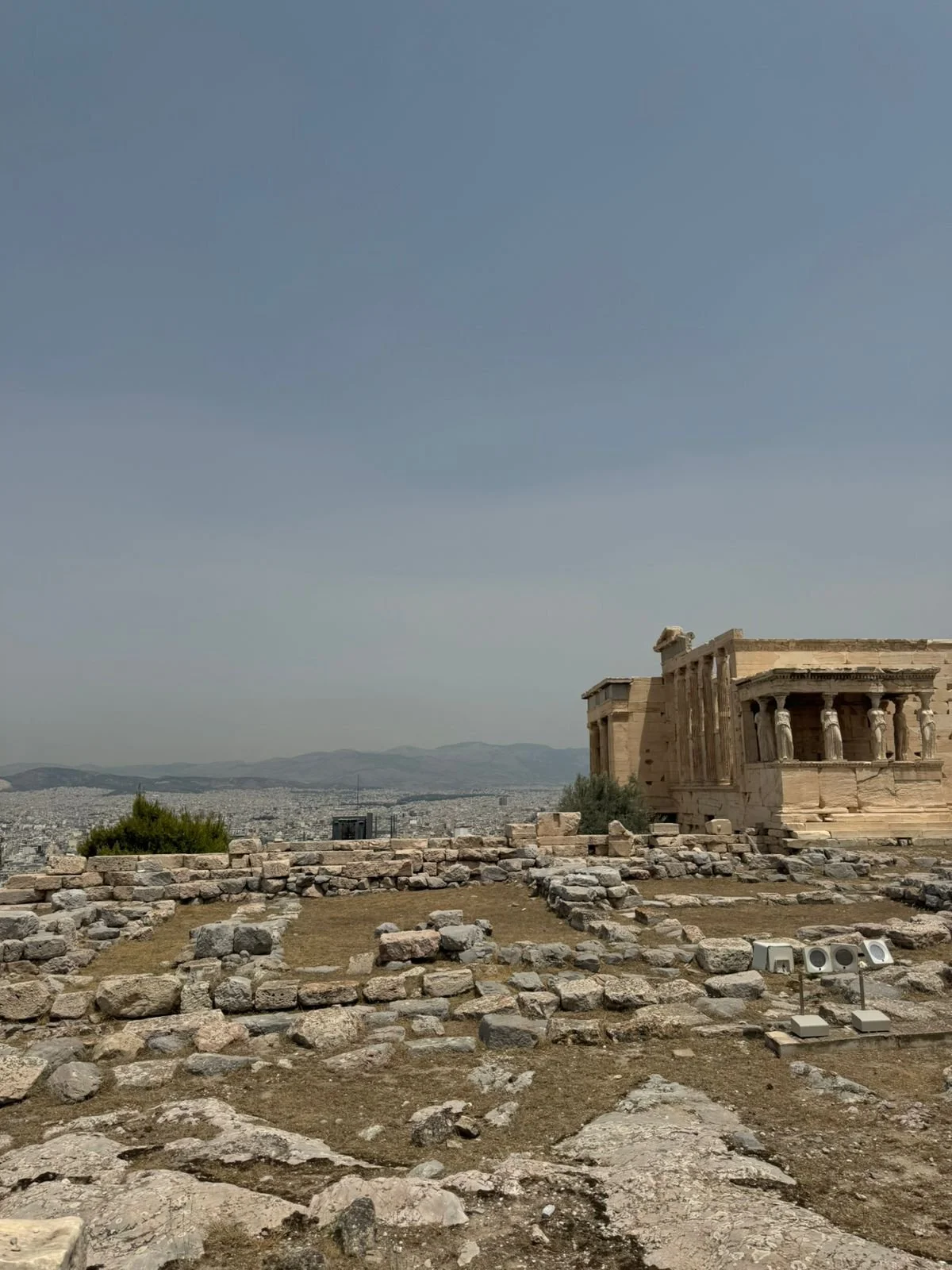
During a visit to the Acropolis in Athens
More than two thousand years before modern political science and the language of “superpowers” and “global order,” one man named Thucydides understood something modern: wars are not caused only by ideology or morality, but by fear, ambition, insecurity, and changing balances of power.
Thucydides was an Athenian general and historian who lived through the Peloponnesian War between Athens and Sparta in the 5th century BC.
One sentence from his work History of the Peloponnesian War still feels contemporary:"It was the rise of Athens and the fear that this instilled in Sparta that made war inevitable."
He made one devastating observation: That is the trap.
A rising power grows. An established power feels threatened, not by what was done, but by what is becoming. Both sides respond rationally and the spiral begins.
From here the Chinese leader mentioned the trap because his country’s geopolitical and technological ambitions, are reshaping the global order in ways that structurally diminish American influence.
He asked in front of Trump, “can China and the United States overcome the so-called ‘Thucydides Trap’ and create a new paradigm of major-country relations?”
How does the Trap work?
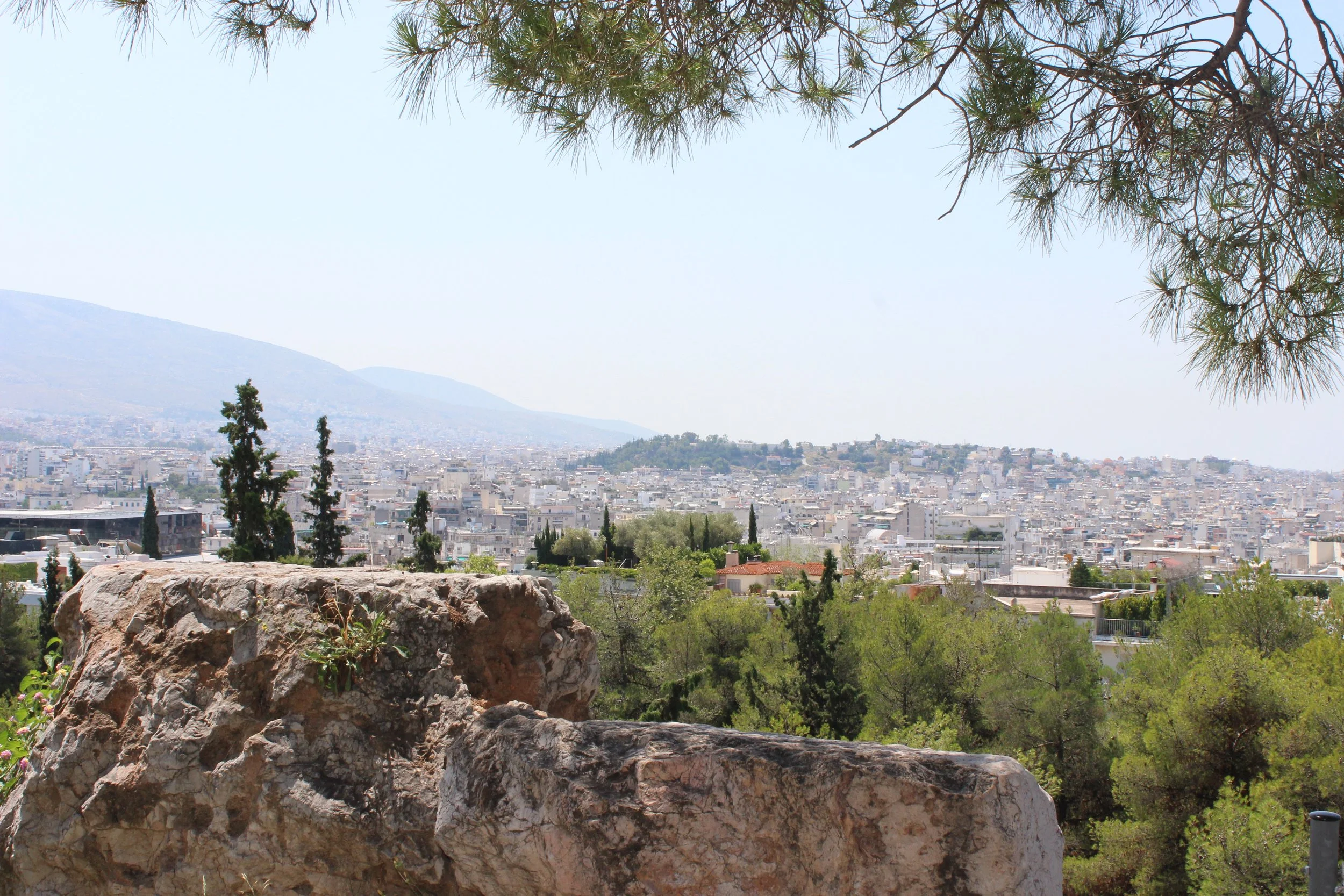
A view of Athens from the Acropolis.
What makes the Thucydides Trap so enduring as a concept is its structural nature.
It does not require bad faith from either party, it does not require that either the rising power or the established power wants war, it just requires the following sequence:
1- A rising power grows, economically, militarily, technologically and culturally.
2- The established power observes this growth and calculates what it means for the future balance of power.
3- The established power begins to take defensive actions like alliances, sanctions, arms buildups to protect its position.
4- The rising power interprets these defensive actions as aggressive containment.
5- Both sides enter a spiral of mutual suspicion, miscalculation, and escalation.
6- A specific incident, often minor, triggers the conflict that structural conditions has made almost inevitable.
The genius of Thucydides is that he identified this pattern at a time when it had only happened once, in front of his eyes.
He saw the structure beneath the surface, and he understood that the war between Athens and Sparta was not about the specific incidents that started it. It was about a power transition that neither side knew how to manage.
The origins of the concept
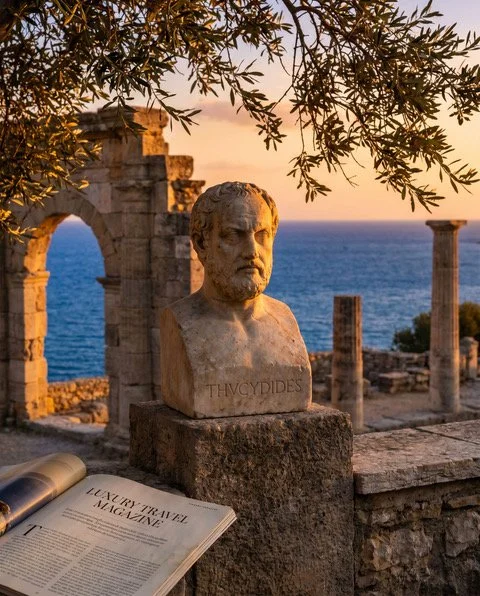
The idea associated with the Greek historian has become one of the most discussed concepts in contemporary geopolitics.
After failing to thwart the fall of a colony he was in charge of, Athens exiled him for 20 years. In exile, Thucydides could travel among both Athens and its enemies. He could interview Spartans and Athenians alike.
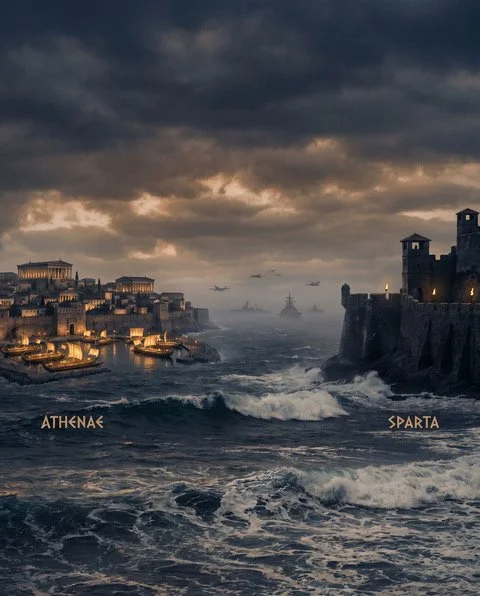
His History of the Peloponnesian War is the first work in the Western tradition to apply what we would now call empirical standards to the analysis of political events: the gathering of evidence, the cross-examination of sources, the identification of structural causes beneath the surface of immediate events.
Centuries later, Harvard political scientist Graham Allison would use this insight to coin the term “Thucydides Trap”: the dangerous tension that emerges when a rising power threatens an established one.
And this is exactly what the Chinese leader wanted to convey by using this term in 2026. It was a double message, both a warning and an invitation simultaneously, hinting that conflict is not inevitable.
Final word from the Mediterranean
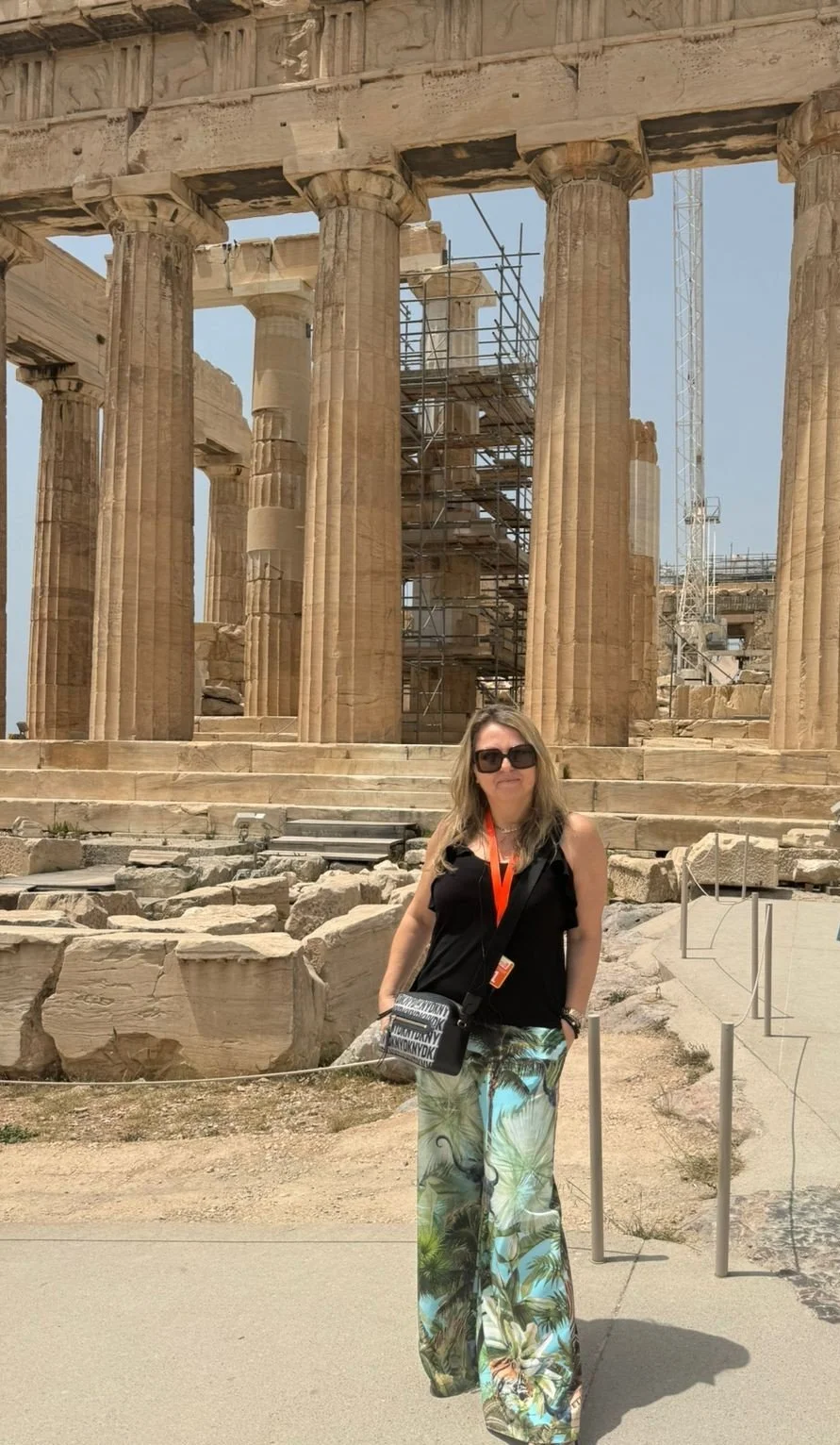
Norma during a guided tour of the Acropolis in Athens.
So, why modern strategists, diplomats, military planners, and political theorists continue to return to ancient Mediterranean thinkers for insight into the twenty-first century?
Because the Mediterranean was not simply a geographical region, it was the original arena of civilization-scale competition, a crossroads of maritime trade, empire, philosophy, diplomacy, and war.
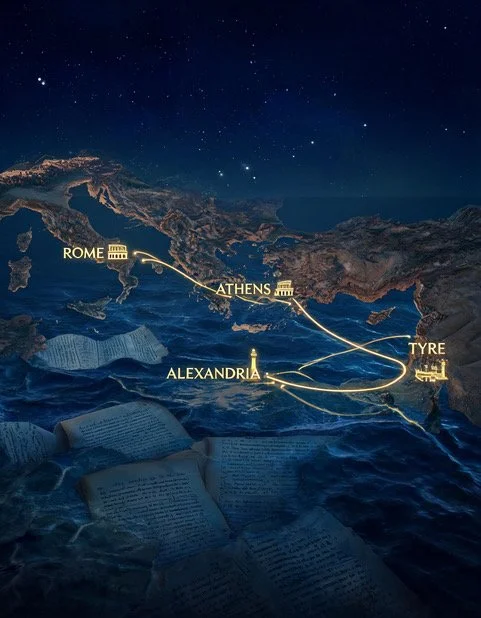
Long before the Atlantic became the center of global power, the Mediterranean connected continents, economies, and cultures through sea routes that shaped history itself.
In many ways, it was the cradle of geopolitics.
The Mediterranean did not merely witness history; it taught humanity how history works.
Et voilà! That was a reminder of how lessons of antiquity remain strikingly relevant today!
Five facts about The Thucydides Trap and the wars:
The Peloponnesian War lasted nearly three decades from 431 to 404 BCE and it ended the Athenian Golden Age.
Thucydides is considered one of the first historians to analyze war through political realism rather than mythology.
His concept is often used to study competition between great powers emphasizing miscalculation and insecurity.
The Chinese leader went back to the “trap” concept because his country’s rise is considered the most rapid and consequential power transition in modern history.
Harvard political scientist Graham Allison studied 16 cases over the last 500 years in which a rising power threatened to displace an established one and he found that in 12 of those 16 cases, war occurred.