Halloumi Cheese: The salty, squeaky symbol of Cypriot heritage
A Culinary Journey from a savory slice of tradition to the world
Halloumi cheese forms an integral part of the Cypriot culture and cuisine, originating in Cyprus since centuries and mainly the Byzantine period (around the 12th–16th centuries), it spread throughout the Middle East and the Mediterranean, becoming popular worldwide. How Halloumi cheese is made in the heart of Cyprus? Let’s discover all the process through a tour in the factory of one of the largest and oldest producers on the island: Charalambides Christis.
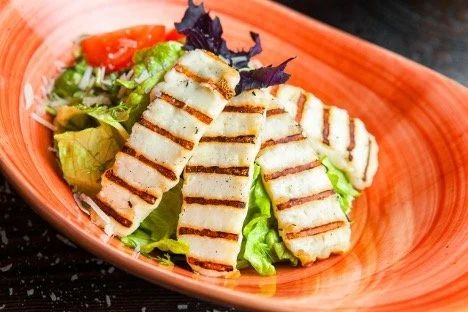
Grilled Halloumi cheese on a bed of green salad leaves.
Grilled or pan fried, added to salads or pizzas or sandwiches, served with watermelon or sprinkled on top of the village pastas and raviolis, the Halloumi cheese which originated in Cyprus is a necessary staple on each table in the island and makes an essential part of its famous mezze, it is a highly adaptable cheese and has traveled the world also! What is this cheese and why is it connected with Cypriot culture?
No journey in the culinary traditions of the Mediterranean region is complete without tasting the famous rubbery and squeaky Halloumi cheese which is a semi-hard cheese made from a mixture of goat and sheep milk, while cow’s milk is used in the mass production variety. It is one of the most adaptable cheeses in the world and is often described as the “king of grillable cheeses”.
It is not just cheese it is a slice of the Mediterranean culture, centuries of tradition, and pure salty delight. Halloumi cheese has deep roots in Cypriot heritage and traditions; it has been part of the Cypriot culinary culture for generations. In Cyprus it has been a staple for centuries: no house on the island wasn’t steeped in the scent of the famous golden Halloumi pie, baked with eggs, flour and dried mint.
Halloumi has a long-standing history in Cypriot culture, with written records of its production going back to the Byzantine period (around 395–1453 AD). It was originally crafted as a way to preserve milk in the hot Mediterranean climate and recently acquired the status of Protected Designation of Origin (PDO).
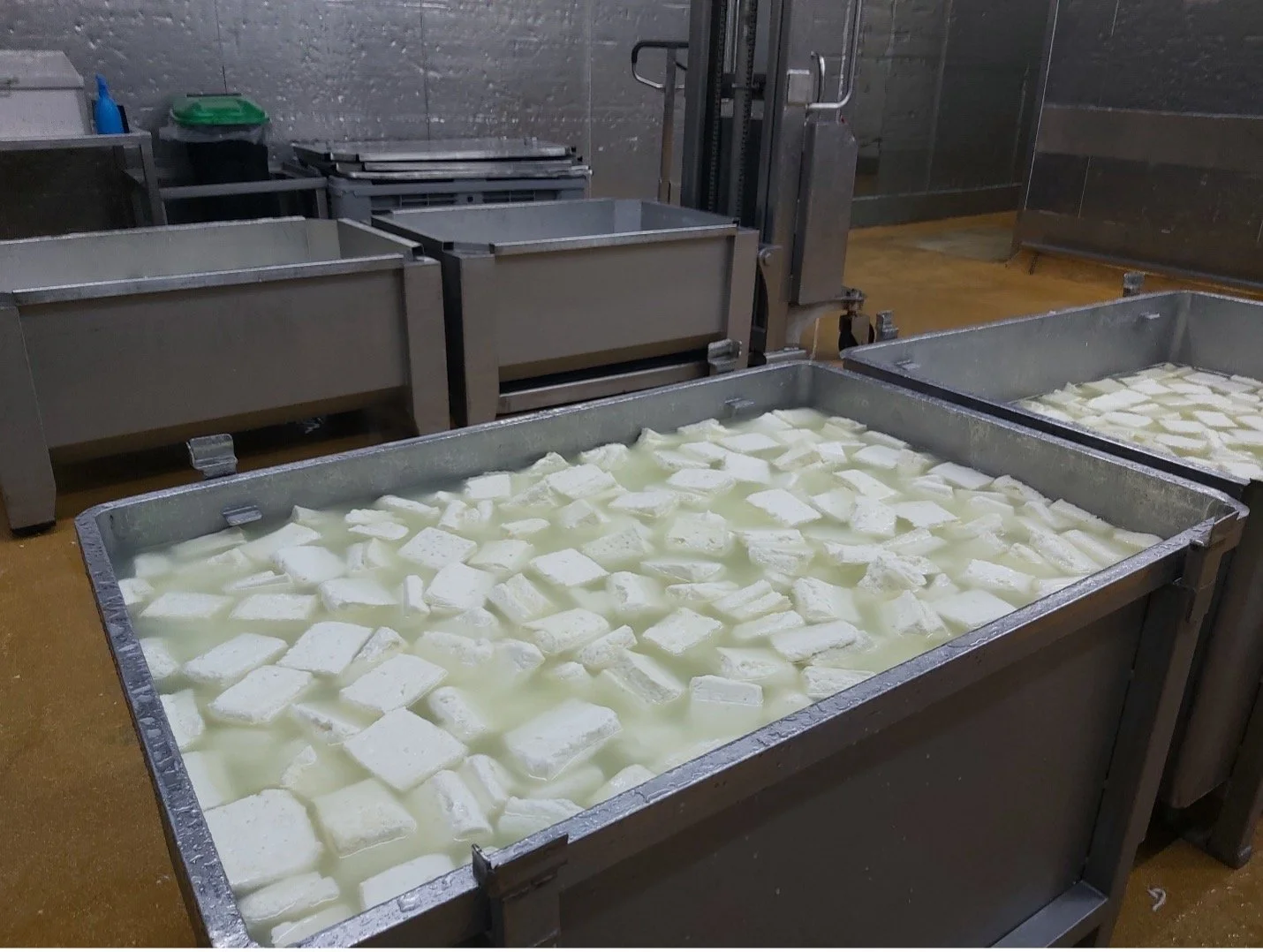
Halloumi blocks in brine as seen inside the factory of Charalambides Christis in Limassol.
It has been officially recognized as part of Cyprus's intangible cultural heritage, documented in a detailed volume on the island's dairy culture that was approved by the National Commission for UNESCO, the United Nations Educational, Scientific and Cultural Organization. This recognition, which includes other dairy products, acknowledges the historical and cultural importance of halloumi cheese in Cypriot life, tradition, social solidarity and identity. The term ‘intangible cultural heritage’ is defined by UNESCO as ‘the practices, representations, expressions, knowledge, skills – as well as the instruments, objects, artefacts and cultural spaces, associated therewith – that communities, groups and, in some cases, individuals recognize as part of their cultural heritage’.
It is believed that Halloumi originated in rural Cyprus where shepherds made it as a way to preserve excess milk from goats, cows and sheep as its ability to keep well without refrigeration made it ideal for the hot Mediterranean climate. Gradually, families and villages started producing halloumi together, and recipes were passed down through generations. It became a key part of Cypriot culture and cuisine, eaten fresh or grilled and often stored in brine with mint.
Producing halloumi in Cyprus evolved with time reflecting a blend of tradition and adaptation with the modern global demand, and what makes this flagship cheese of Cyprus so special is its high melting point as you can grill or fry it without it turning into a mess. Instead, it develops a beautiful golden crust and a chewy, almost squeaky bite that’s unlike any other cheese.
Halloumi like you have never seen it before!
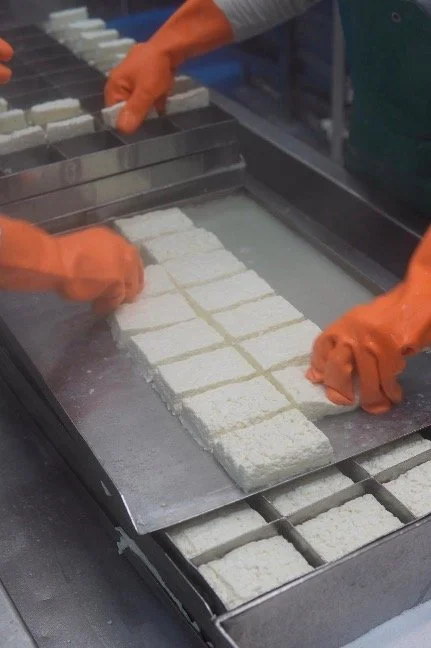
The process of Halloumi making.
At the forefront of authentic halloumi production stands Charalambides Christis, Cyprus’ largest and oldest dairy company. With a legacy built on quality and tradition, the company has mastered the delicate balance between preserving authentic cheese-making techniques and embracing modern advancements in production.
On a nice sunny day, I visited with the Cypriot content creator specialized in nutrition Giorgos Omerou the factory of the company in Limassol where one of the managers was waiting for us to start a tour and discover the process of making halloumi cheese. Giorgos spoke about the nutritional value of Halloumi saying it is rich in protein, calcium and phosphorous, and the best way to eat it is to combine it with complex carbohydrates or another protein.
As one of Cyprus' leading exporters of dairy and cheese products, Charalambides Christis brings the authentic taste of Cypriot halloumi to markets worldwide. It has an annual processing of more than 85 million liters of cow’s milk and 15 million liters of goat’s and sheep’s milk with local sales of various dairy products reaching €145 million and exports of around €40 million in 32 countries worldwide as it shows on the company’s website.
After wearing the necessary sanitary covers, hairnets, masks, aprons, and covering the boots, we entered the factory where immediately the heat is felt, as the temperature is higher due to the heating process of the cheese and the heavy machinery.
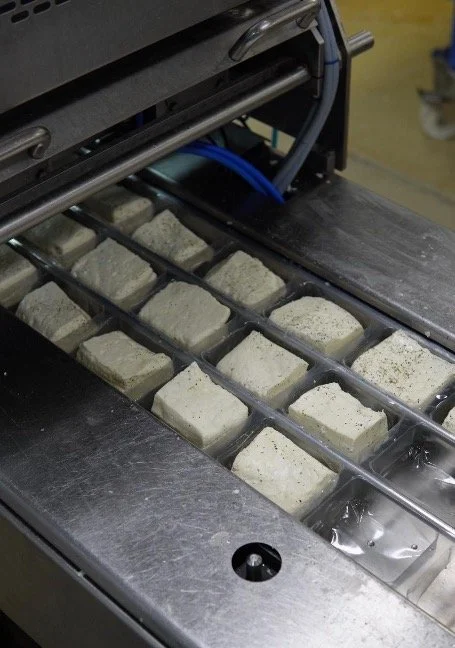
The first step is heating the pasteurized milk which is a mix of cow’s, sheep’s and goat’s milk before curdling it. At Charalambides Christis there are also variations of single kind of milk without mixing it with the other kinds. The second step involves curdling the milk by putting it in big tanks then separating the curds and draining them to form dense blocks. After that, the blocks are pressed and poached in whey which contributes to its ability to be fried or grilled, and finally it is cooked again, folded and salted and sprinkled with dried mint then the final step is storing it in brine between 8 to 72 hours as per the PDO requirements before starting the packaging process. In what reflects the company’s unwavering commitment to nutritional excellence and safety, the halloumi blocks are passed through special machines to detect any traces of metal content.
PDO status
Halloumi is a proud symbol of Cypriot identity, and in 2021, the European Union granted Protected Designation of Origin (PDO) status to the traditional Cypriot Halloumi which means that the rubbery cheese can only be produced in Cyprus under strict criteria.
Halloumi PDO must be made from sheep’s and/or goat’s milk, or a mixture of those with cow’s milk. The official standard says “with or without cow’s milk.” That means cow’s milk is optional, not mandatory, but if used, must follow the rules. Since 2021, the name “Χαλλούμι / Halloumi / Hellim” is registered in the EU PDO scheme. This means only halloumi made in Cyprus following the approved product specification can legally use that name in the EU.
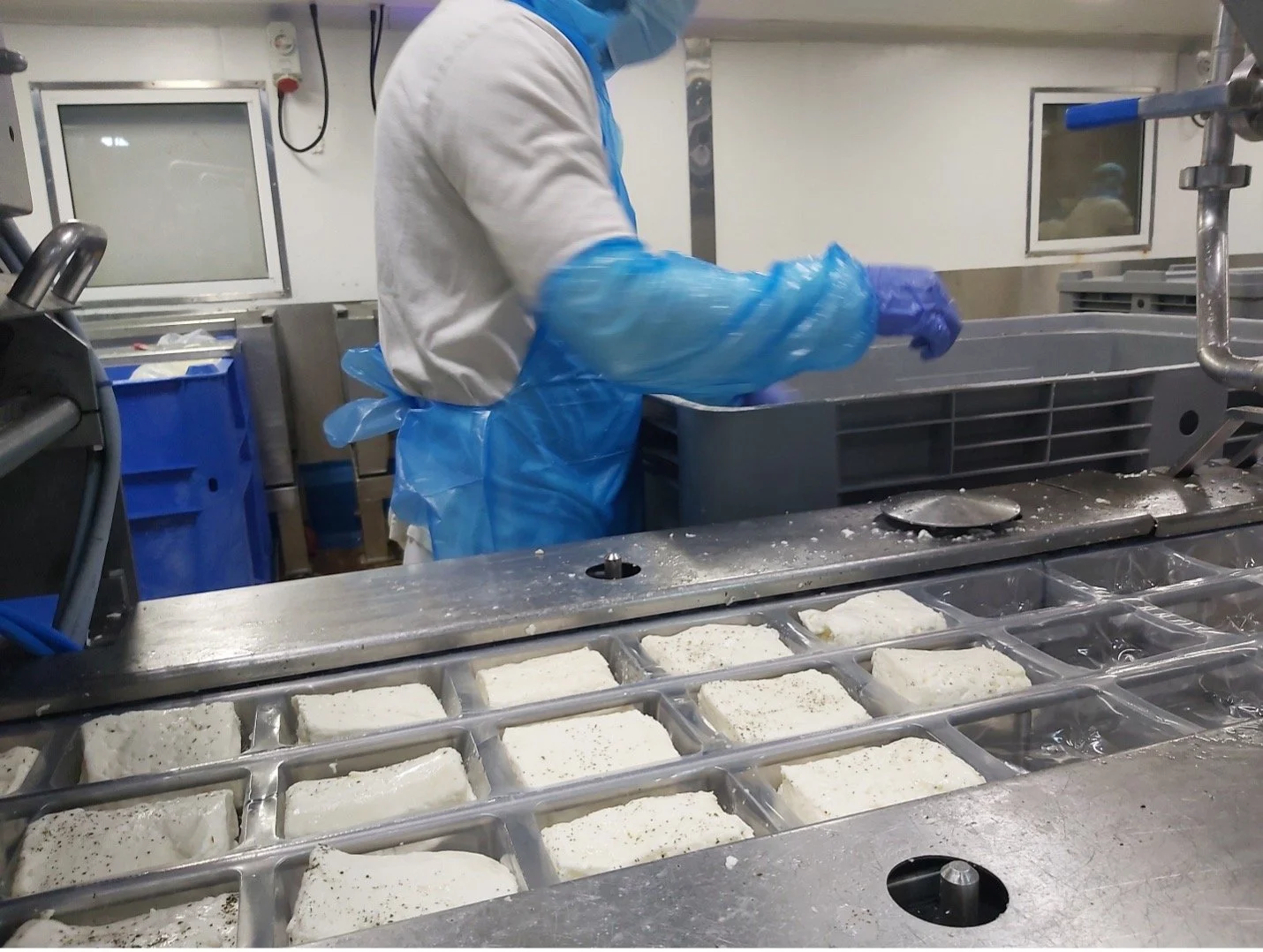
Halloumi blocks in the final stages of production.
Under PDO rules, authentic halloumi must be produced in Cyprus using traditional methods and must comply with relevant EU standards on animal health, food safety, hygiene and there is an internationally accredited inspection body delegated for checks throughout Cyprus to make sure these specifications are met.
The production of halloumi is a generations-old artisan practice that has been passed down through families, originally as a social and cooperative activity among rural women. This deep cultural root is what the PDO designation and the intangible heritage application aim to protect.
Which wine pairs with Halloumi?

Cheers from Mykonos!
Nothing beats having the local Halloumi cheese with a similar local wine, and the white series are considered the top choice, starting with the Xynisteri, the native white variety of Cypriot grapes, and it has a light, floral and citrusy texture. Other white wine choices can be Assyrtiko variety from Greece, mainly the island of Santorini, which makes with its dry citrusy flavor, a perfect Mediterranean match for a Mediterranean cheese, as well as the classic Sauvignon Blanc which balances the saltiness.
As for the Red series for those who prefer it, the best option will be light and fruity reds served chilled in general like Pinot Noir variety or Grenache.
For Rosé lovers, it is widely recommended to go for Mediterranean dry Rosé originating specially from Cyprus, Greece or France.
Recipes and heritage

Sunday Grills in a hotel near Makronissos Beach in Ayia Napa.
Cyprus enjoys a rich and diverse culinary history that reflects its strategic location in the Eastern Mediterranean and its long history of colonization and cultural exchange. It is a fusion of Greek, Middle Eastern, and Western European influences, shaped over thousands of years. Early cuisine in the Ancient Periods was based on local agriculture, mainly grains, olives, grapes and legumes. Then the Greeks introduced the concept of meze, which is many small dishes to be shared on a meal, while the Medieval period brought the Italian influences of pasta, then the Ottoman rule brought to the table the lamb kebabs, and finally the British rule brought the tea culture and roast dinners.
The various recipes of Halloumi combine all those influences in different versatile dishes and endless ways to serve this famous cheese. When the ideas dry up ... trust me, nothing clears creative fog quite like a Halloumi toasted sandwich topped with tomato slices, my children’s favorite for years. Golden, crispy edges and that salty melt make all the difference on a late weekday dinner or breakfast.
How to eat Halloumi?
1. Grilled or fried: cut the Halloumi into thick slices then grill or pan-fry then serve along with pita bread or plain with a drizzle of honey.
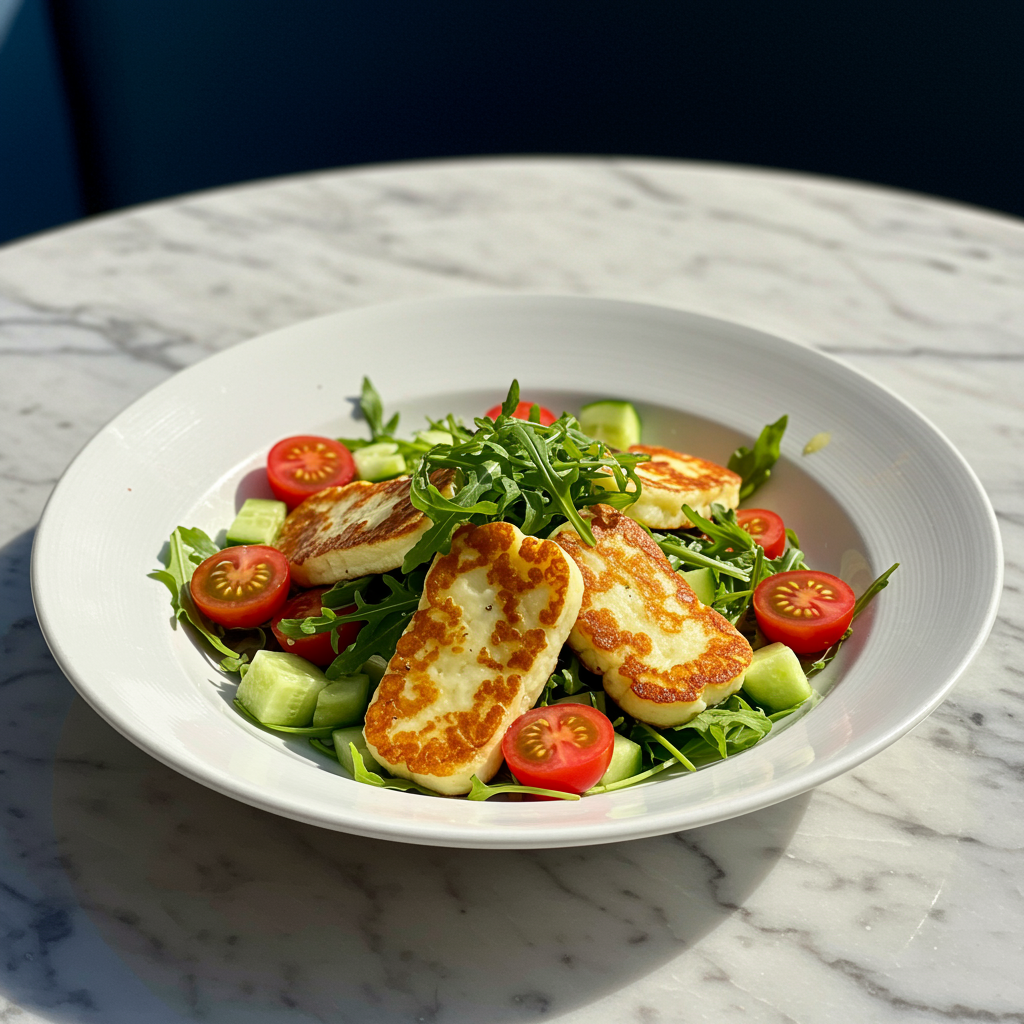
2. Watermelon Salad: cut the Halloumi into cubes and toss with watermelon cubes and some chopped mint leaves and then drizzle with a lemon and honey and olive oil sauce.
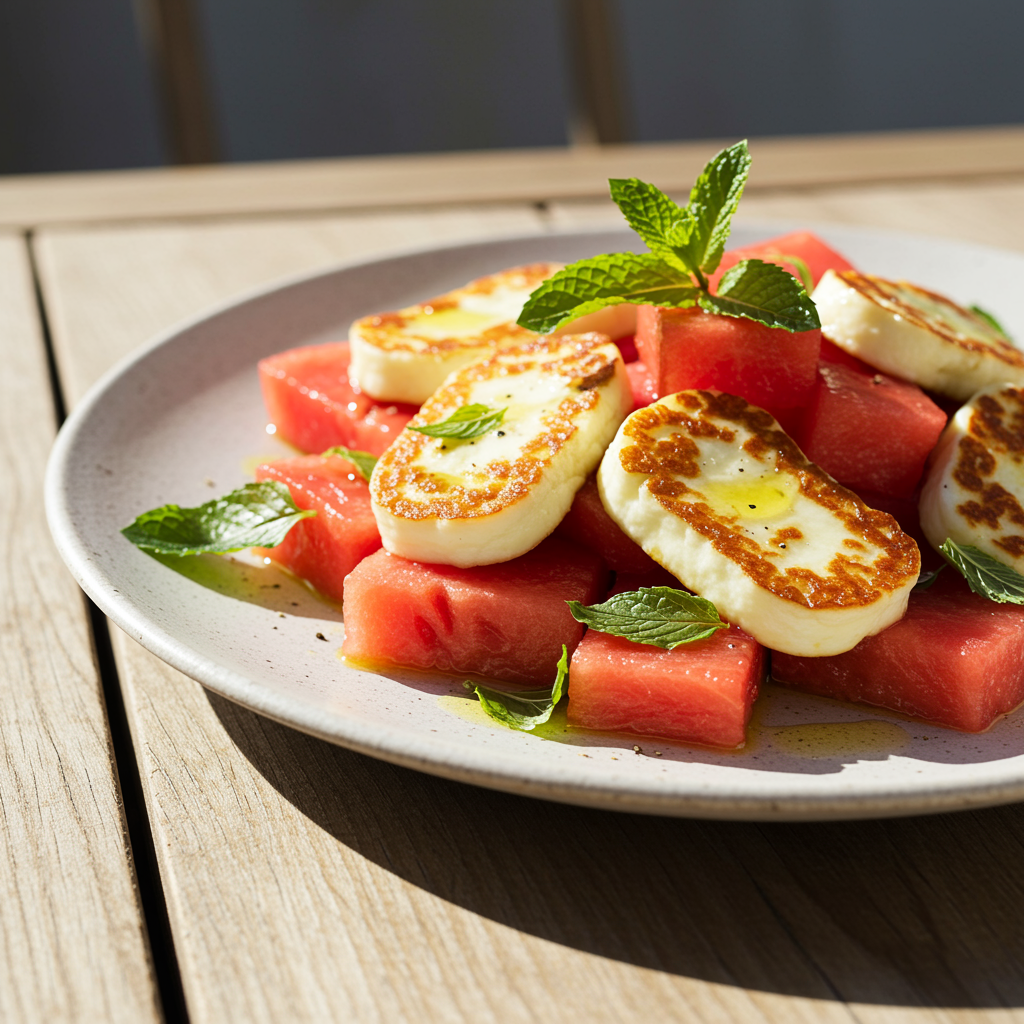
3. Pasta Salad: toss Halloumi cubes into some boiled pasta of your choice, then add boiled or grilled chicken (optional), some sundried tomatoes and arugula leaves and drizzle with a sauce made of Pesto, lemon juice, and olive oil.
4. Cyprus Sandwich/Wrap/Pita: the famous “Cyprus Sandwich” consists of Halloumi and Lountza (cured pork loin) paired with tomato and cucumber in Cypriot bread or Pita bread. The most modern variation of this sandwich designed to satisfy the taste of youngsters consists of placing Halloumi on a tortilla wrap with a pesto spread and some spinach or rocket leaves and cherry tomatoes.
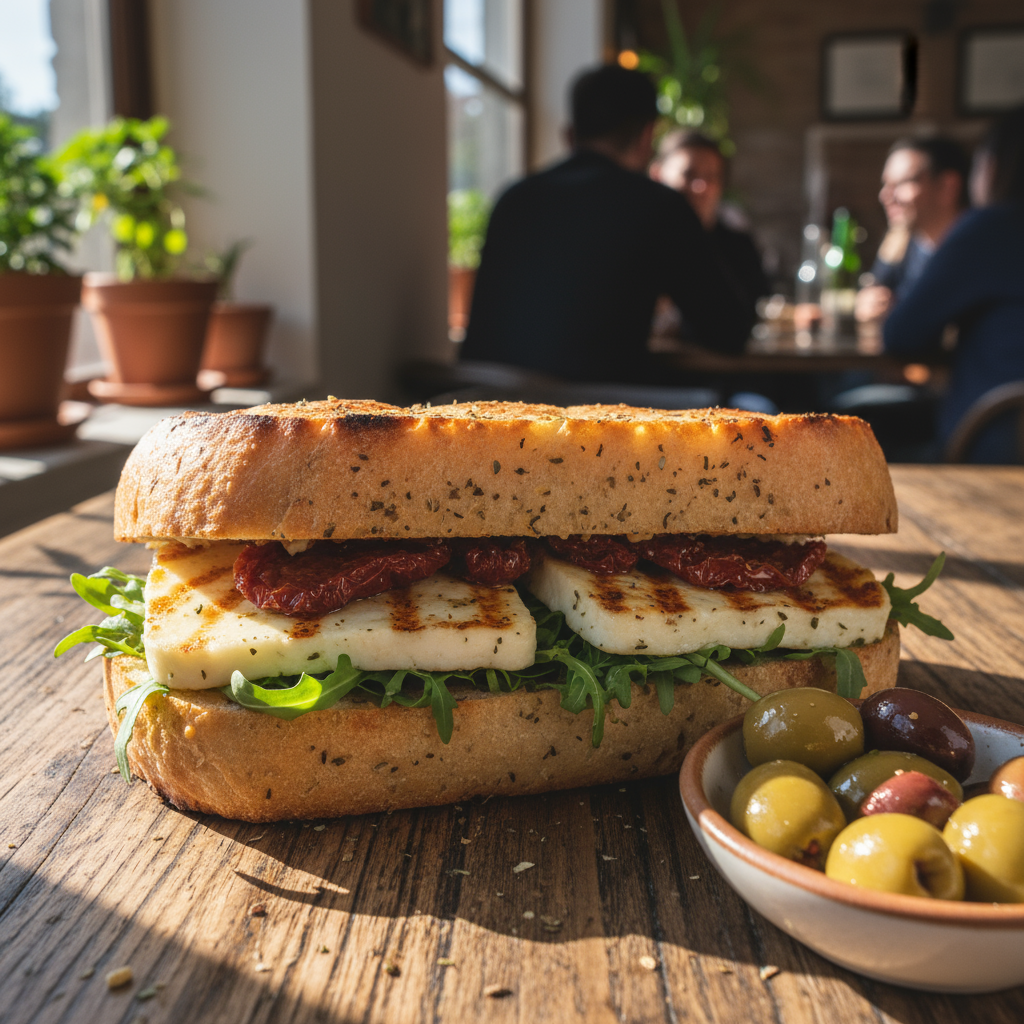
5. Halloumi Pie/cake: the traditional Halloumi cake is the king of all occasions, and can be found on almost all tables in Cyprus, especially on celebrations from birthday parties to name days to family gatherings or women’s brunches to accompany coffees.
6. Halloumi cubes in Trahana soup: Trahanas is a dried grain-and-dairy product which can be soaked in water to make a comforting winter soup with broth and usually finished with adding the Halloumi cubes.
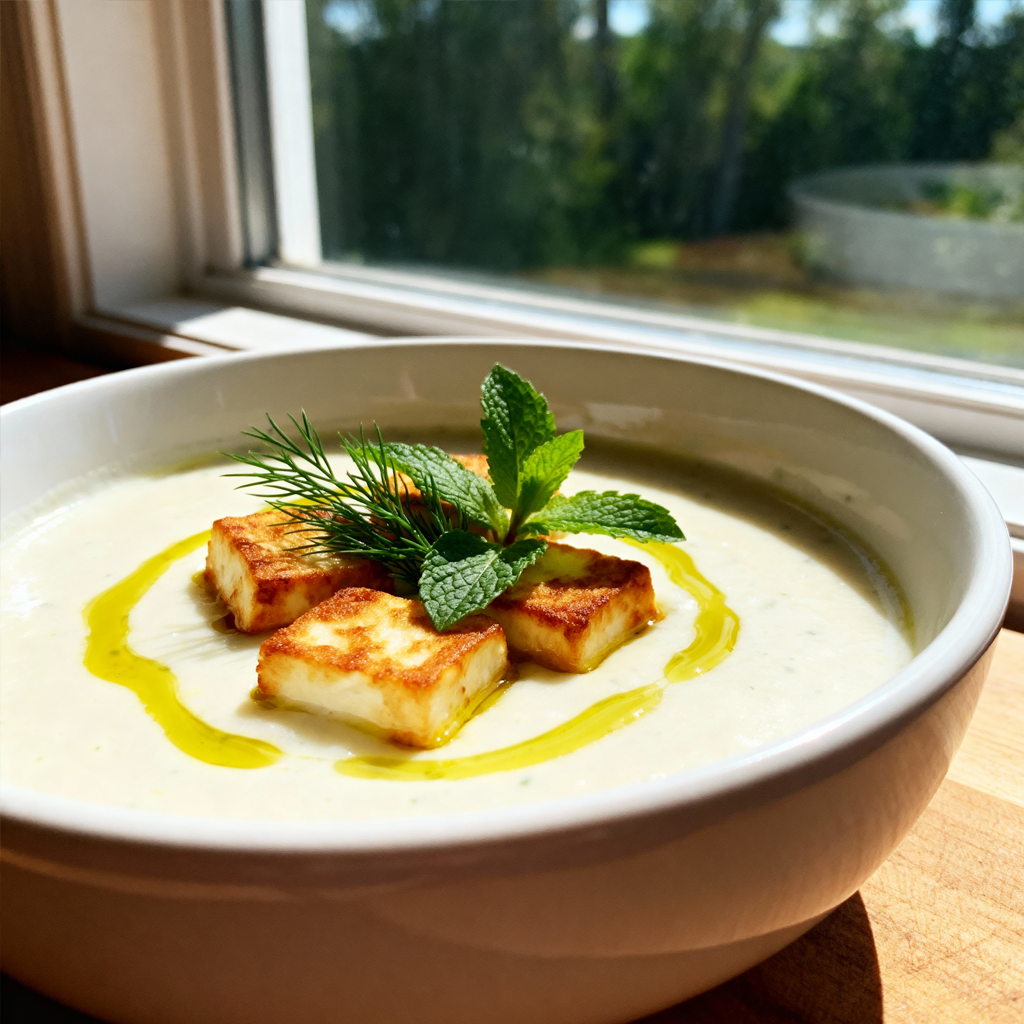
7. Halloumi sprinkled on village pasta or ravioli: shredded Halloumi cheese is a delicacy that tops village pasta, brown small pasta, or handmade ravioli dishes. It can be part of the Cypriot meze or eaten separately as a main dish.
8. Halloumi skewers: wrap Lountza or bacon around Halloumi cubes, drizzle with some olive oil and grill. Alternatively place the Halloumi cubes on a skewer with cherry tomatoes, colored pepper cubes and grill.
A taste of home, bringing comfort and shared in many other countries, each in his own way. It is a slice of warmth and welcoming note, served also with the famous Lebanese mezze in almost all restaurants.
Et voilà! Off to another place where Halloumi is enjoyed on most tables, the country of Cedars!
Five things to know about Halloumi Cheese
Halloumi is one of the few cheeses boiled as part of its production
It is high in protein and calcium, and fat also, light versions are also available. 100 grams of Haloumi provide 320 calories, 20-22 grams of protein and 25-27 grams of fat.
Halloumi is popular globally as it is considered a meat substitute in Vegetarian diets because of its high protein content
It is stored in salty brine so that it lasts longer refrigerated.
A package of 200 grams of Halloumi costs an average of 3 Euros in Cyprus.