Amsterdam: A Perfect Blend Between Heritage &Innovation
You step off the train at Centraal Station and Amsterdam is already happening around you, in every direction, at full volume.
The bicycles moving past in numbers, the smell of stroopwafel from a market stall mixing with canal water and coffee from a brown café and the particular warmth of a city that has been welcoming strangers since the seventeenth century and has not lost the habit.
From the moment you wander along its iconic canals, lined with elegant centuries-old townhouses and charming bridges, it's clear why this Dutch capital captivates visitors from around the world. It is a city where history and innovation live side by side.
The Charming Canals
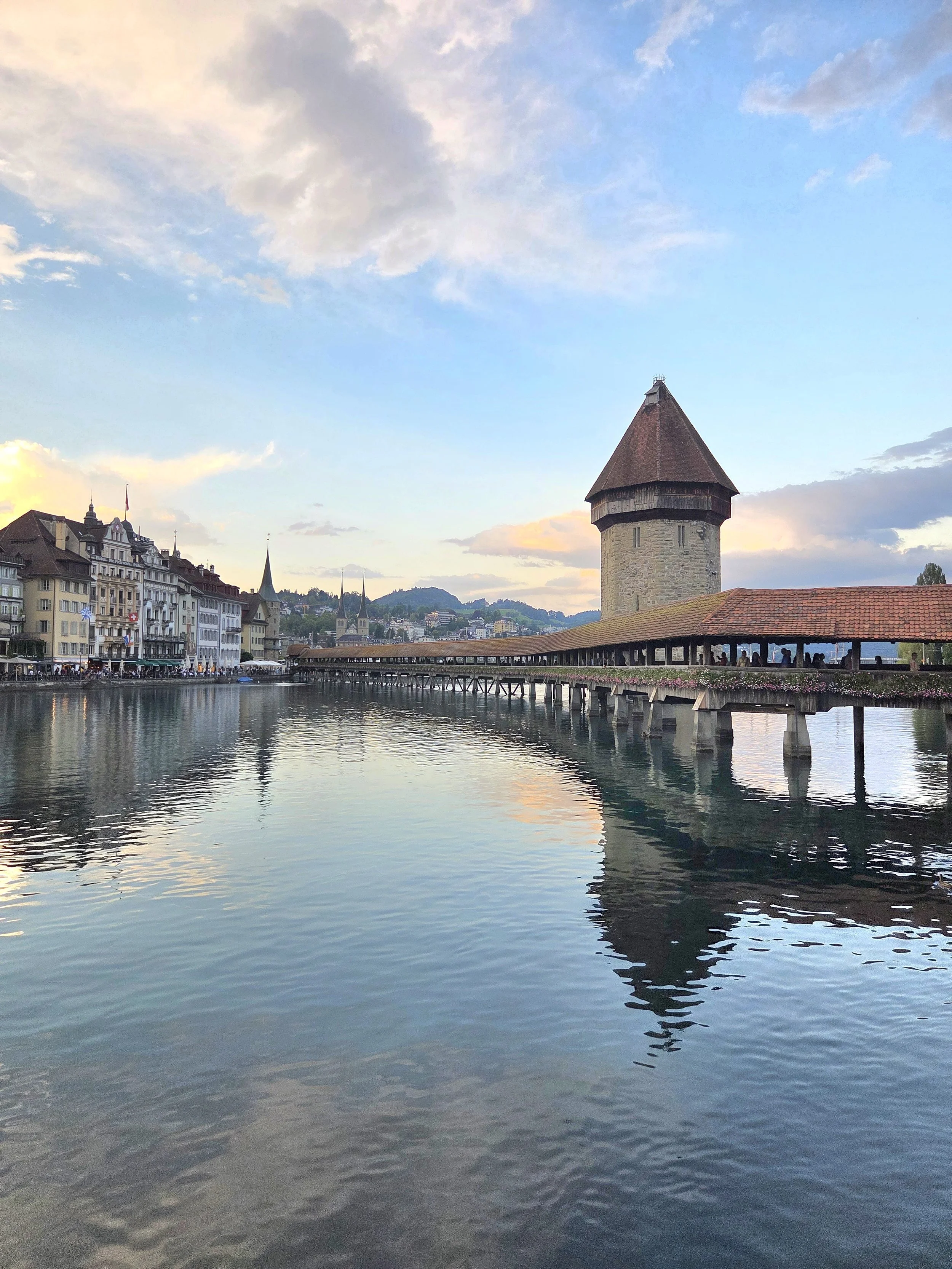
One side of Amsterdam’s canals.
The canals are not a feature of Amsterdam. They are Amsterdam.
They are the structural logic of a city that built itself on water because it had no choice and then turned that constraint into the most beautiful urban planning in northern Europe.
The canal ring, the grachtengordel, was constructed in the seventeenth century, during what the Dutch call the Golden Age, when Amsterdam was the most important trading city in the world.
The four main canals were dug in concentric arcs around the medieval city center, lined with warehouses and merchant houses built in the specific Dutch style: narrow, tall, with the distinctive stepped or bell-shaped gables that give the Amsterdam skyline its immediately recognizable silhouette.
UNESCO inscribed the canal ring as a World Heritage Site in 2010, recognizing it as an outstanding example of urban planning and civil engineering.
No other city looks like this, no other city feels like this.
The canals are Amsterdam's memory, carrying in their reflections everything the city has witnessed.
The Houses
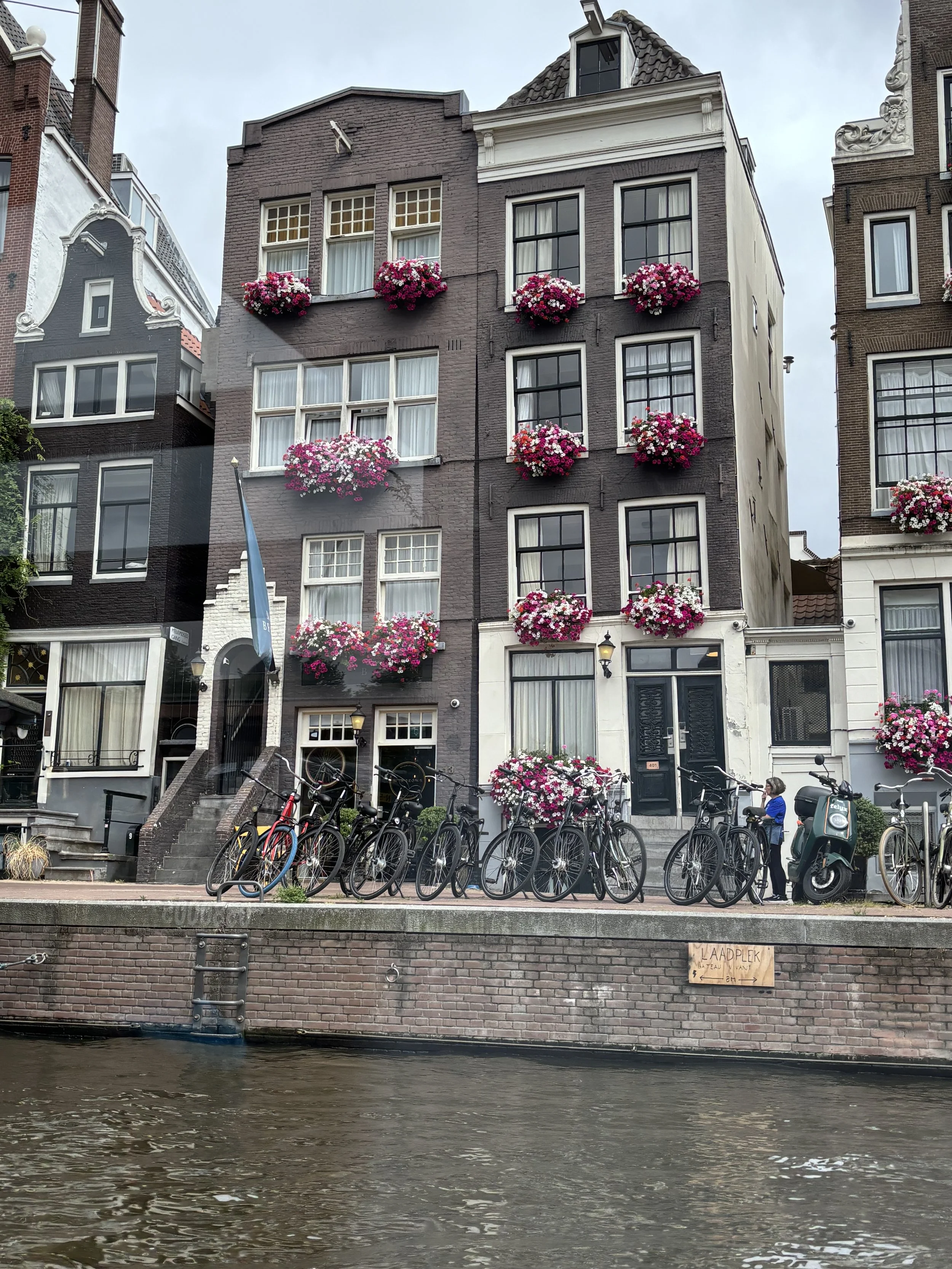
Houses overlooking the water in Amsterdam
Many of Amsterdam's iconic canal houses are 300 to 400 years old, with a significant number dating back to the 17th century.
Thousands of these buildings are protected as national monuments, and many are still used as homes, offices, hotels, and museums.
Why are they so narrow? The common answer is that property taxes were once based partly on the width of a building's façade, encouraging owners to build tall, narrow houses.
Cosmopolitan Spirit
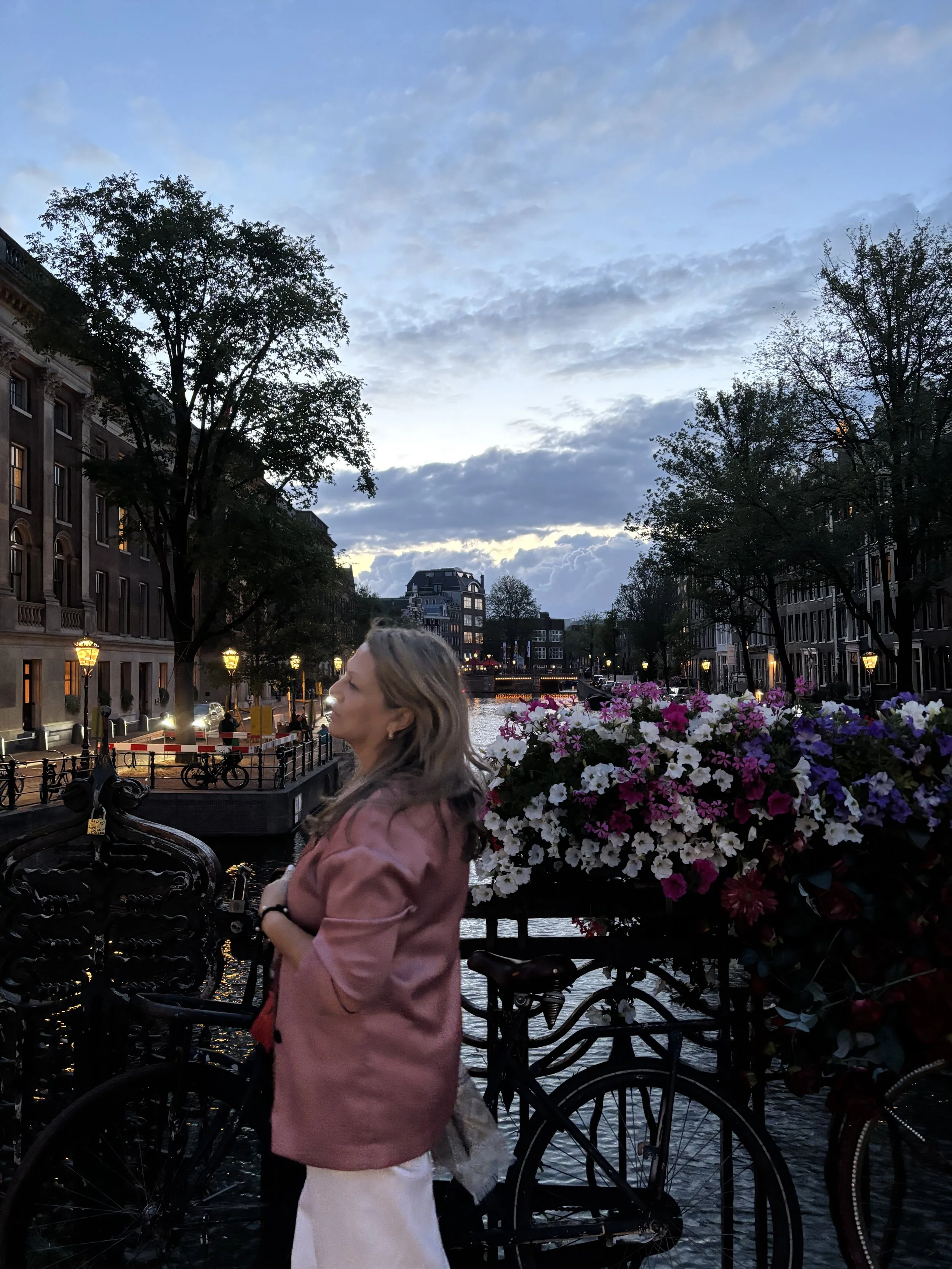
Norma talking a walk near the canals
Amsterdam is one of the most cosmopolitan cities on earth.
Not cosmopolitan as a synonym for expensive or international, cosmopolitan in the original sense.
A city of the world. A city that has always understood that its strength comes from everywhere and belongs to everyone.
It all started in the Dutch Golden Age (1588 to 1672) which was a period of concentrated artistic, scientific, commercial, and intellectual achievement. The country became, within a generation, the center of the world's trade, the home of the world's most advanced science, and the producer of some of the greatest paintings in the history of art.
Like that Amsterdam emerged as one of the world's foremost centers of trade, finance, and cultural exchange.
Merchants, artists, scholars, and entrepreneurs from across Europe and beyond made Amsterdam their home, creating a vibrant, diverse community where new ideas flourished.
This laid the foundations for the open, international outlook that continues to define Amsterdam today.
Walking through its historic streets and picturesque canals, you can feel the vibe of a city where centuries of global connections continue to shape a modern, innovative, and multicultural society.
In the heart of the city Dam Square is always lively, with street performers, cafés, shops, and visitors from around the world, making it a perfect starting point for exploring Amsterdam's canals, museums, and historic neighborhoods.
European values
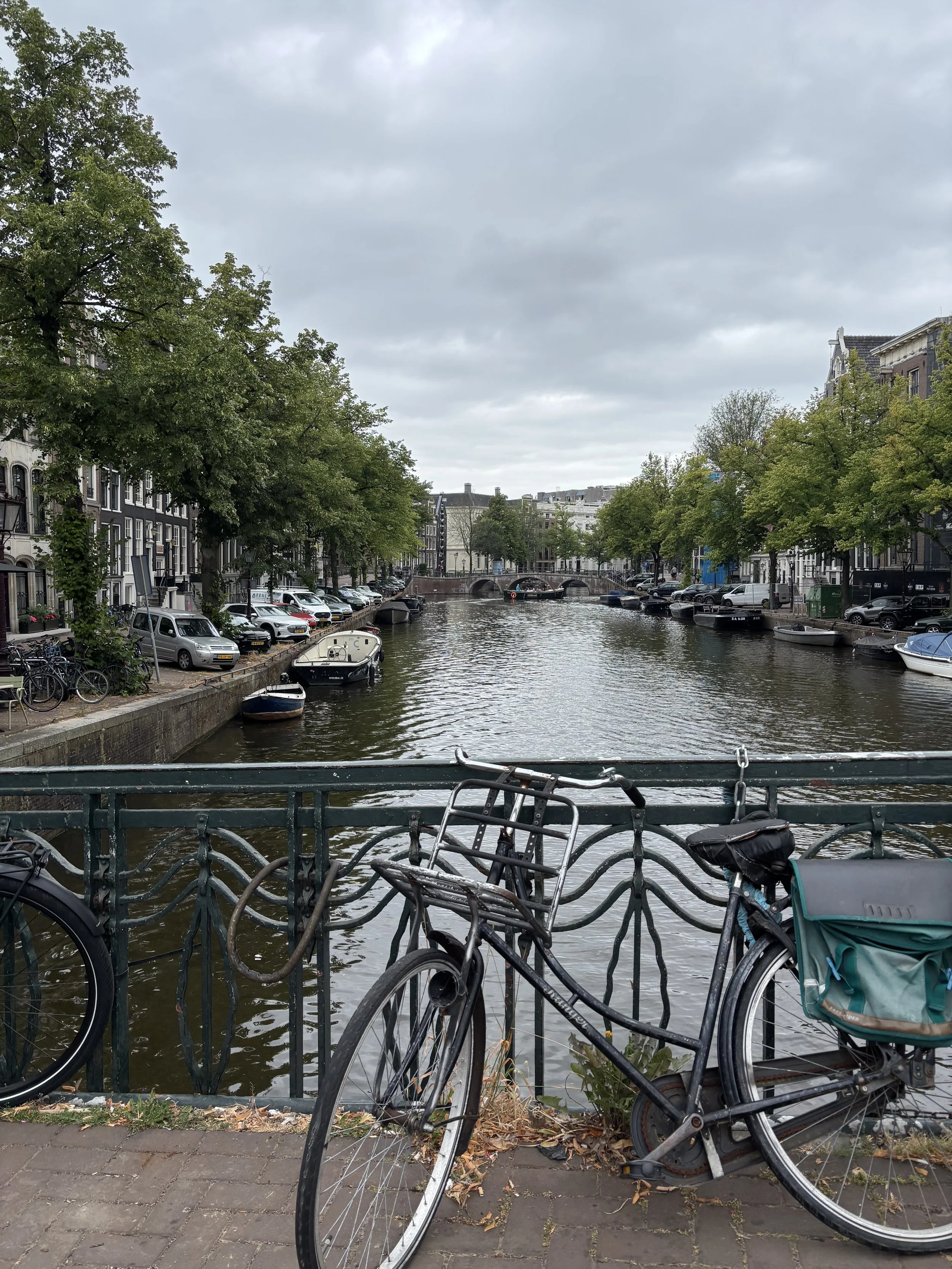
Another view of the canals in Amsterdam.
Amsterdam is a living reflection of many of Europe's defining values: openness, diversity, sustainability, and respect for cultural heritage.
Its welcoming, multicultural atmosphere brings together people from around the world, while its commitment to cycling, green urban planning, and environmental responsibility demonstrates a forward-looking approach to modern living.
At the same time, the city's carefully preserved historic architecture, world-renowned museums, and centuries-old canals showcase a deep appreciation for history and culture.
By successfully blending innovation with tradition, Amsterdam embodies a European vision of progress that values inclusivity, quality of life, and the preservation of its rich heritage.
Multicultural food experience
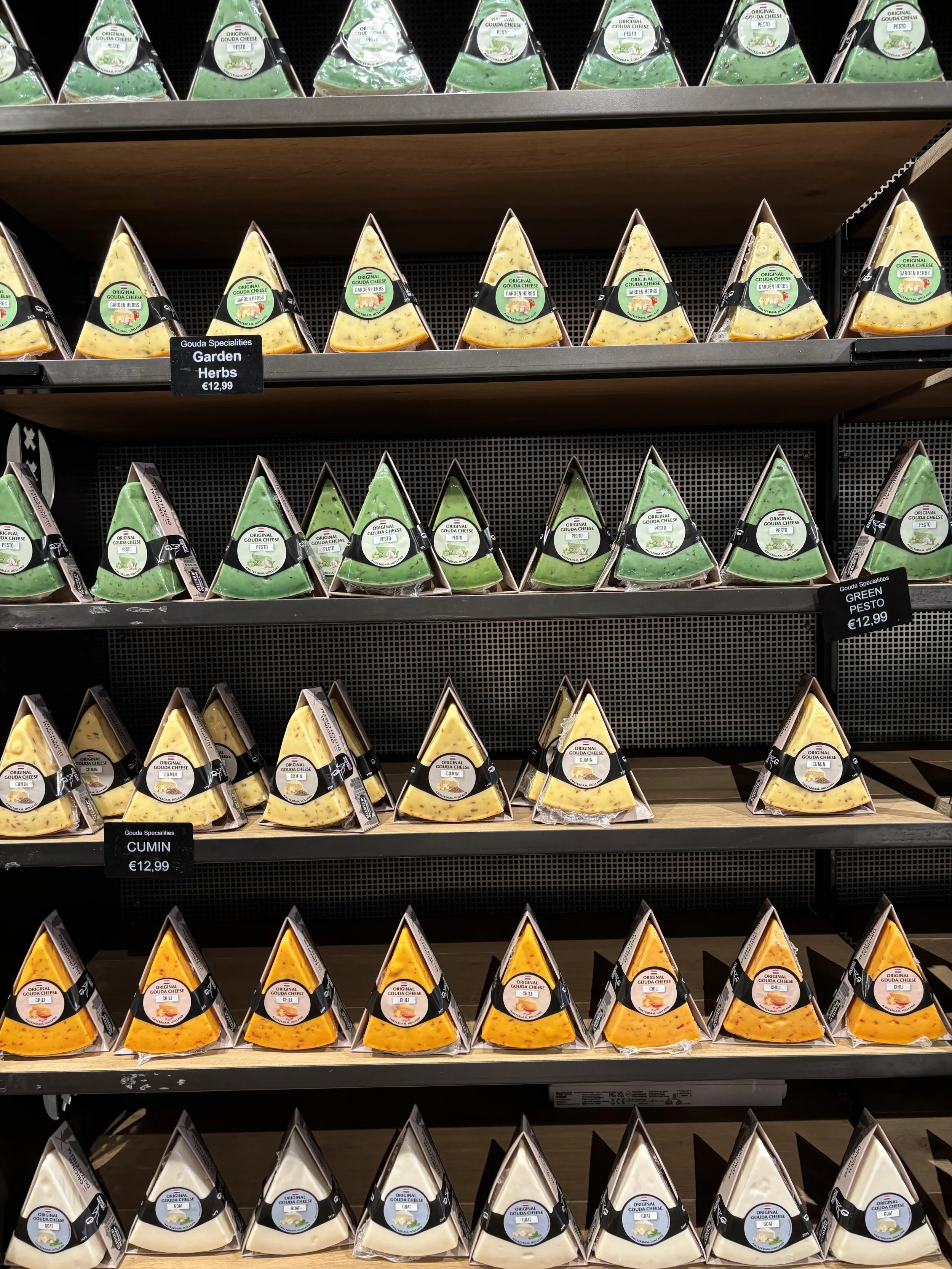
Gouda selection in one cheese store in the center of Amsterdam.
Amsterdam's multicultural character is perhaps best experienced through its diverse culinary scene.
The city offers an extraordinary variety of flavors from around the world. Visitors can savor traditional Dutch specialties such as herring, bitterballen, fries, and stroopwafels, while also enjoying authentic flavors from the world or fusions.
From bustling food markets and cozy canal-side cafés to Michelin-starred dining, Amsterdam's food culture reflects the city's celebration of cultural diversity.
Final word
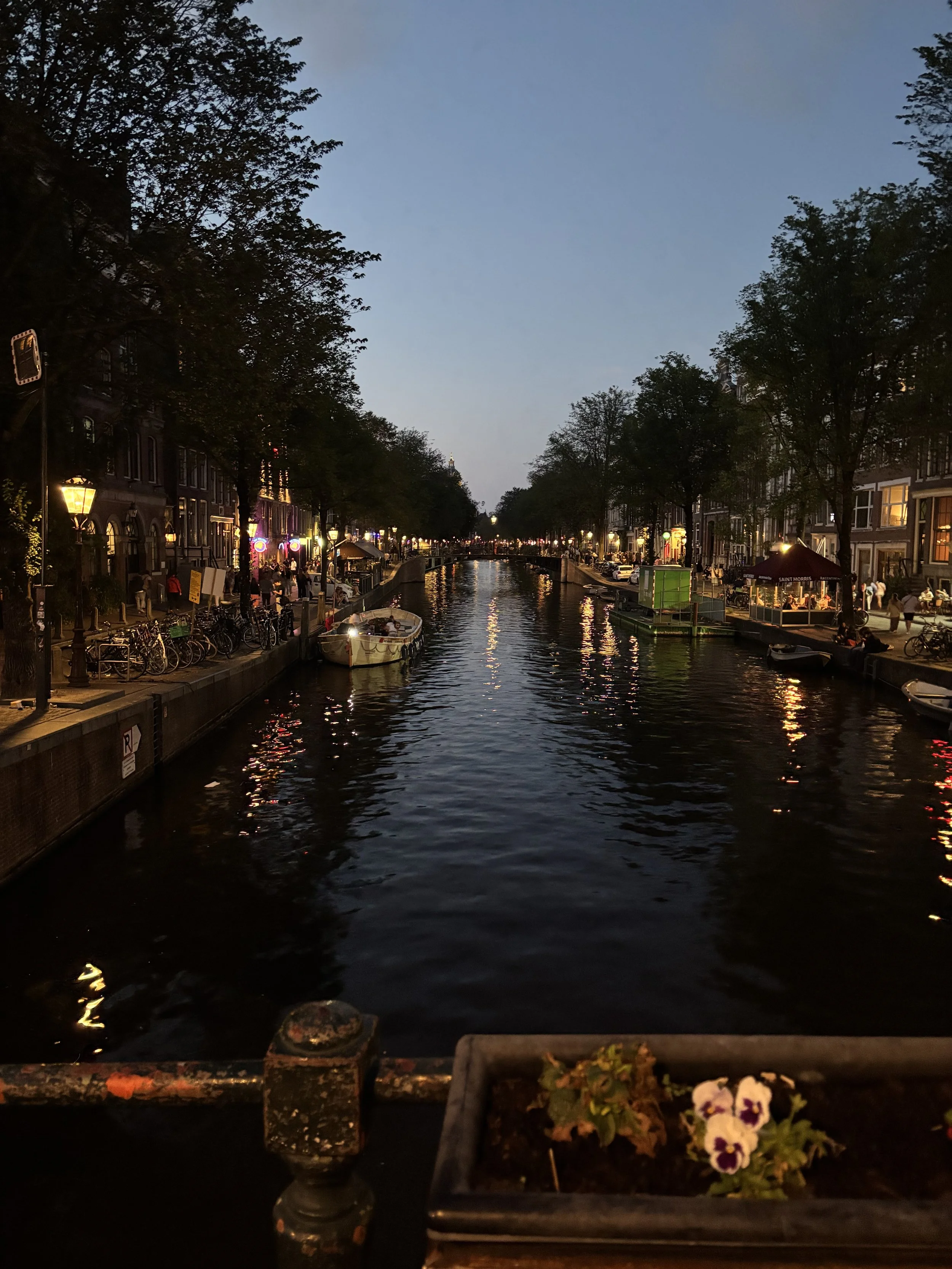
One of Amsterdam’s canal at night
What makes Amsterdam genuinely unusual among European cities of its age and character is the coexistence, comfortable, unforced, of innovation and history.
Amsterdam's great gift is not its museums or canals or food or design culture, it is the invitation to stay, to sit down.
The Mediterranean Edit recognizes this quality immediately; the conviction that time spent sitting is not time wasted.
Et voilà! That was a tour in an unusual city that keeps reinventing itself!
Five Facts About Amsterdam:
1- Amsterdam is the constitutional capital of the Netherlands, while the seat of government is in The Hague.
2- The city is home to people from more than 180 nationalities, making it one of the world's most diverse cities
3- Amsterdam is a cycling capital where there is an estimated 900,000 bicycles in the city, and cycling is the one of the primary ways of transport.
4- The Netherlands is globally known for its tulips, and Amsterdam's iconic flower markets celebrate this long-standing horticultural tradition.
5- During the 17th century, known as the Dutch Golden Age, Amsterdam became one of the world's most important centers of commerce and finance.