The Neighborhood Behind Aznavour’s Iconic “La Bohème”
Rising above Paris, the legendary hill of Paris’ Montmartre neighborhood has long been a haven for painters, poets, musicians, and dreamers.
Legendary French singer Charles Aznavour immortalized the neighborhood in his timelessly classic song, “La Bohème”.
In this way, through Aznavour's poignant lyrics, Montmartre became not only a place on a map, but a symbol of youthful dreams, creativity, and a Paris that continues to captivate the imagination.
Let’s rediscover the hill once more, this time through Charles Aznavour’s eyes!

Charles Aznavour, the “Frank Sinatra of France”. Photo credit: Mariusz Kubik
The Soul of Bohemian Paris
For Aznavour, Montmartre embodied a vanished era of youthful dreams, struggling artists, passionate love, and the fragile beauty of moments that could never be recovered.
Through songs such as “La Bohème”, Aznavour returned again and again to the theme of time passing, reflecting on the bittersweet distance between the innocence of youth and the wisdom of later years.
Montmartre became a symbol of everything fleeting: friendships that fade, dreams that evolve, and memories that grow more precious with time.
His music preserved the soul of a Paris that existed in his memories, allowing the spirit of its bohemian streets to live on long after the artists who once filled them had gone.
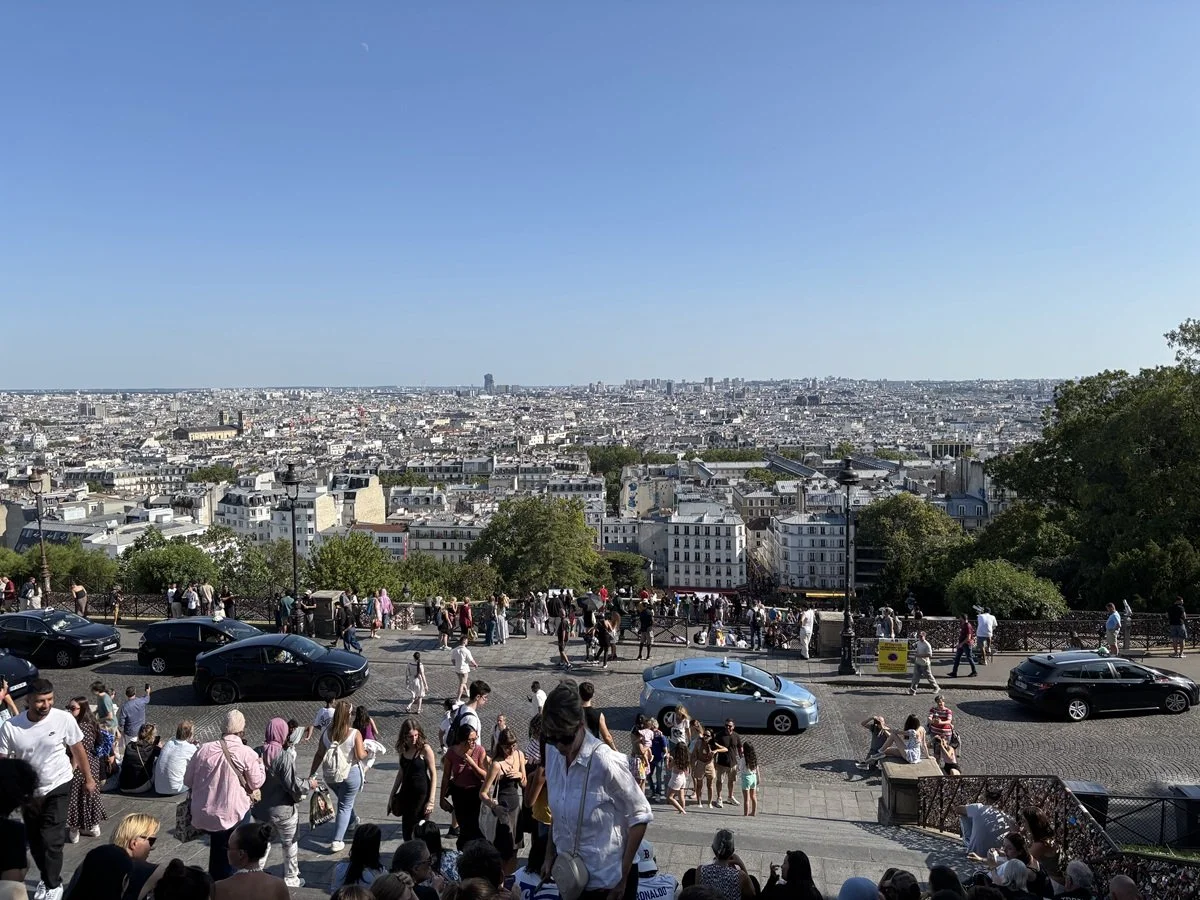
For Aznavour, Montmartre was associated with struggling artists and fleeting beauty
In fact, you cannot walk through Montmartre and not think of Charles Aznavour, because he spent a career putting into words the precise feeling that the hill produces in everyone who has ever loved it and left it.
La Bohème
Released in 1965, “La Bohème” remains one of Charles Aznavour's greatest masterpieces.
More than a love song, it is a nostalgic tribute to the bohemian life that once defined Montmartre. Through Aznavour's poignant lyrics, Montmartre became a symbol of the ache for youth, for the version of yourself that walked Parisian streets without knowing they were forming you. This is the theme that runs through his songs. In his music, the past is not dead, it is simply standing just behind you, at a café table, waiting for you to turn around.
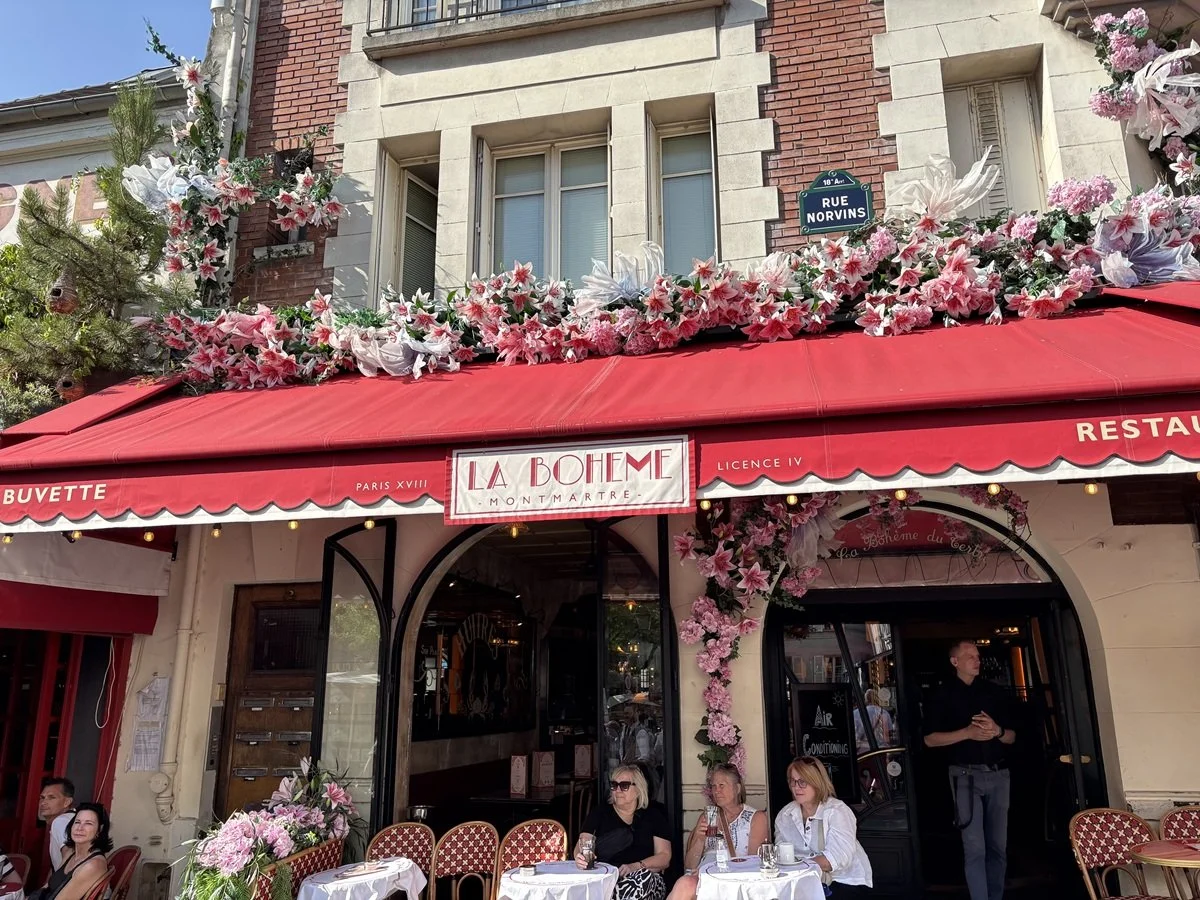
Here, echoes of Aznavour’s beloved songs abound - including an homage to his masterpiece “La Bohème”
In a translation of the French lyrics of “La Bohème”, Aznavour sings: “I am telling you about a time, that people younger than 20 would not know. Montmartre at the time was hanging its lilacs”. He adds: “I go for a walk, to my old address, I no longer recognize, neither the walls, nor the streets that witnessed my youth … I look for the studio of which nothing remains”.
The Hill of Arts
Long before tourists climbed its winding streets, Montmartre was a humble village on the outskirts of Paris. During the late nineteenth century, its inexpensive studios and lively cafés attracted artists seeking inspiration rather than wealth.
Here, names that would later become legendary, including Pablo Picasso, Amedeo Modigliani, Henri de Toulouse-Lautrec, and Vincent van Gogh, shared tiny apartments, painted through the night, debated philosophy in smoky cafés, and dreamed of recognition.
Money was scarce. Inspiration was everywhere.
This atmosphere of artistic struggle gave birth to what became known as the bohemian lifestyle, living simply while dedicating one's life entirely to art.
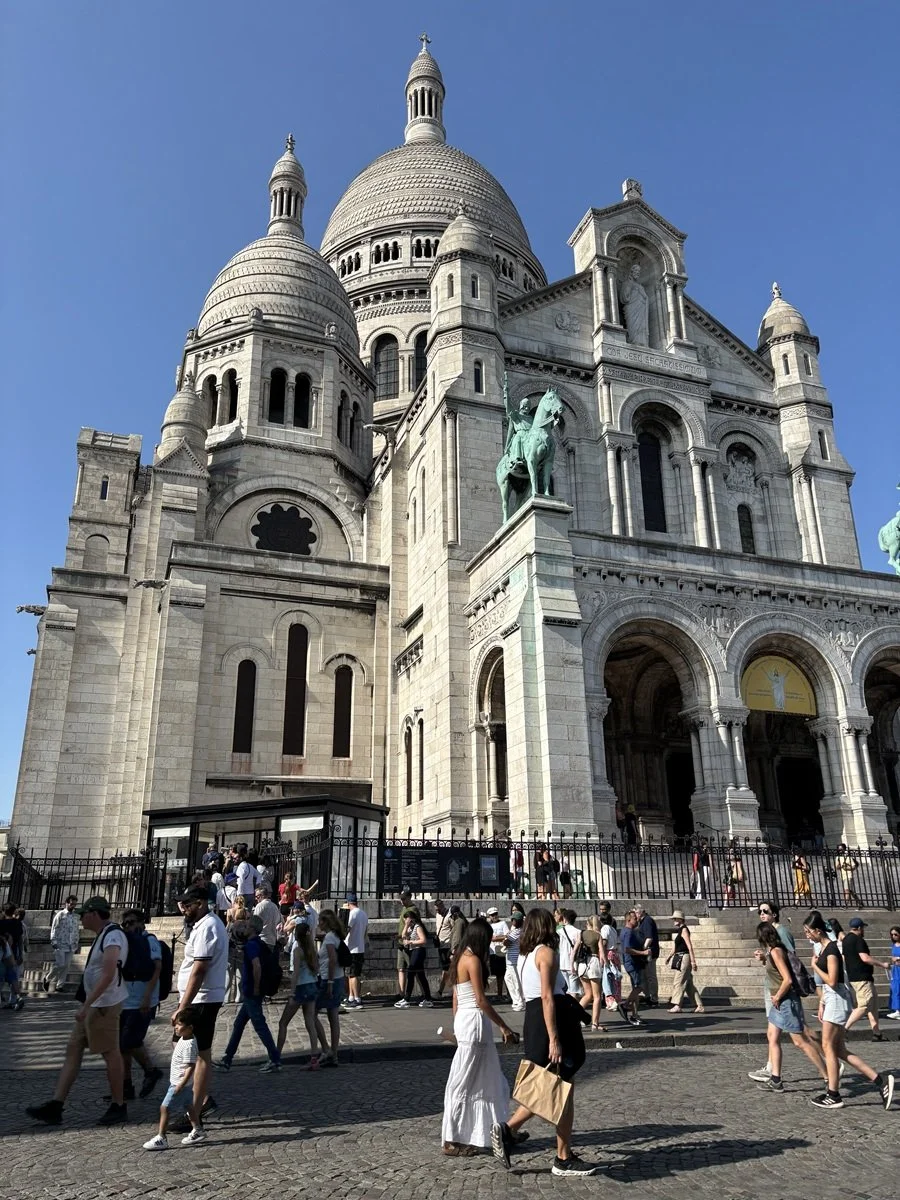
An indisputable landmark of the neighborhood is the Basilica of Sacré-Cœur
Why Montmartre Endures
Today, millions of visitors come to Montmartre each year. Some arrive to admire the Basilica of Sacré-Cœur. Others come for the artists of Place du Tertre or the panoramic views across Paris.
Many simply come to experience the atmosphere they have imagined through books, paintings, films, and songs.
Thanks to Charles Aznavour, Montmartre has become a universal symbol of bohemian life, where creativity mattered more than comfort, where dreams outweighed possessions, and where art offered a way of seeing the world with wonder.
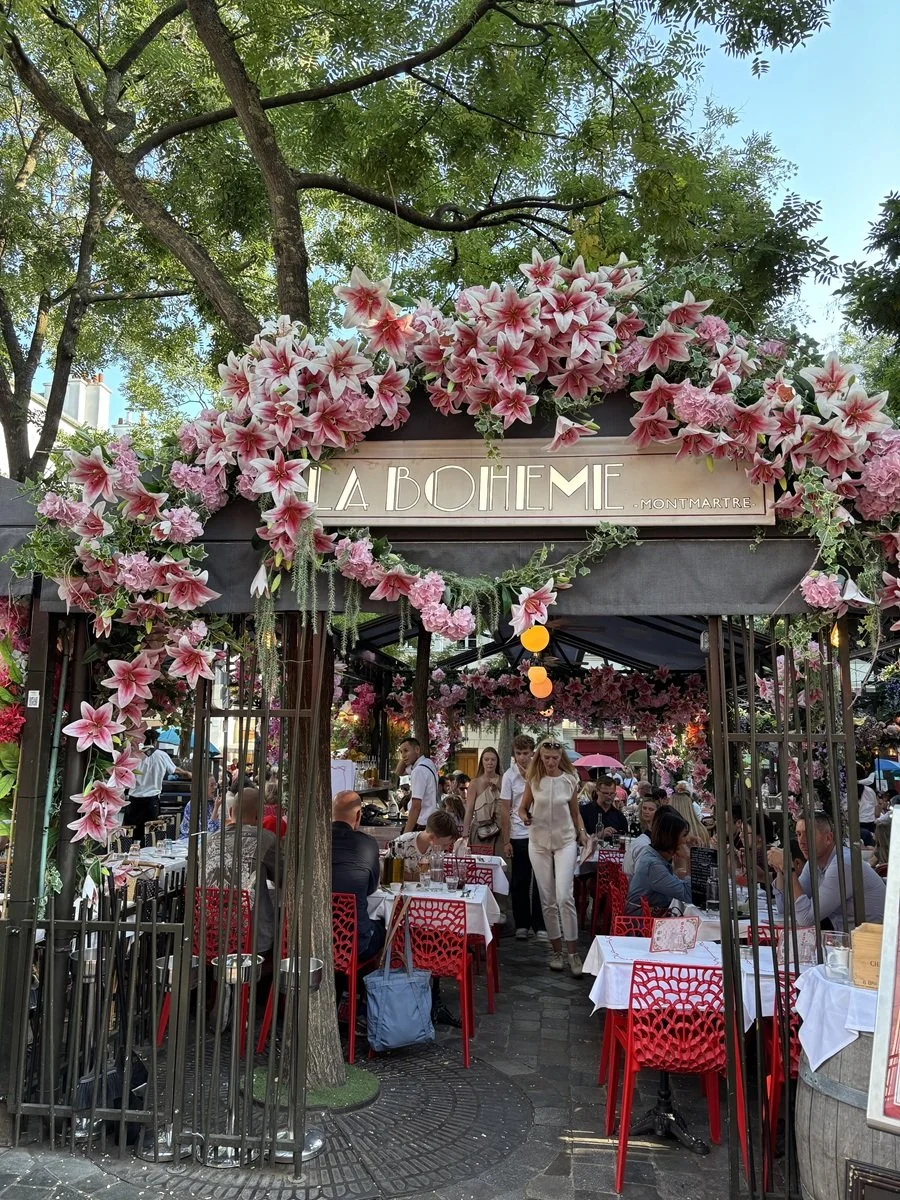
Few can resist the charm of Montmartre’s intimate and creative spaces
Final Word
One reason “La Bohème” continues to resonate across generations is that it speaks to a universal experience. Through the timeless voice of Charles Aznavour, its bohemian soul will continue to echo far beyond the rooftops of Paris.
Montmartre remains a symbol of every artist’s journey; it embodies the start of every dream leading to success. The Parisian hill remains the perfect symbol of that beginning.
Et voilà! Beyond every corner in Paris lies another story, another masterpiece!
Five Facts About Montmartre and Aznavour:
1- Charles Aznavour made Montmartre famous around the world through his iconic 1965 song La Bohème.
2- La Bohème tells the story of a struggling painter looking back on his youthful years in Montmartre, when he was poor but inspired, surrounded by artists, love, and hope.
3- In 2025, the City of Paris inaugurated the Belvédère de la Bohème in Montmartre, naming the viewpoint after Aznavour's famous song in recognition of its lasting connection to the neighborhood.
4- A recurring theme in Aznavour's music is nostalgia, the idea that places preserve memories long after the people and moments have disappeared.
5- Place du Tertre has been a gathering place for artists for more than a century and remains one of the few squares in Paris where painters continue to work outdoors.