Belgium's Three Culinary Treasures: Chocolate, Beer & Fries
Some destinations are remembered for their monuments. Others for their landscapes. Belgium, however, has earned a place in travelers’ hearts through three simple pleasures that have become symbols of its national identity: world-famous chocolate, exceptional beer, and perfectly golden fries.
These aren't just foods, they are traditions, crafted with passion, celebrated with pride, and enjoyed as part of everyday Belgian life.
Belgian Chocolate: A Legacy of Excellence
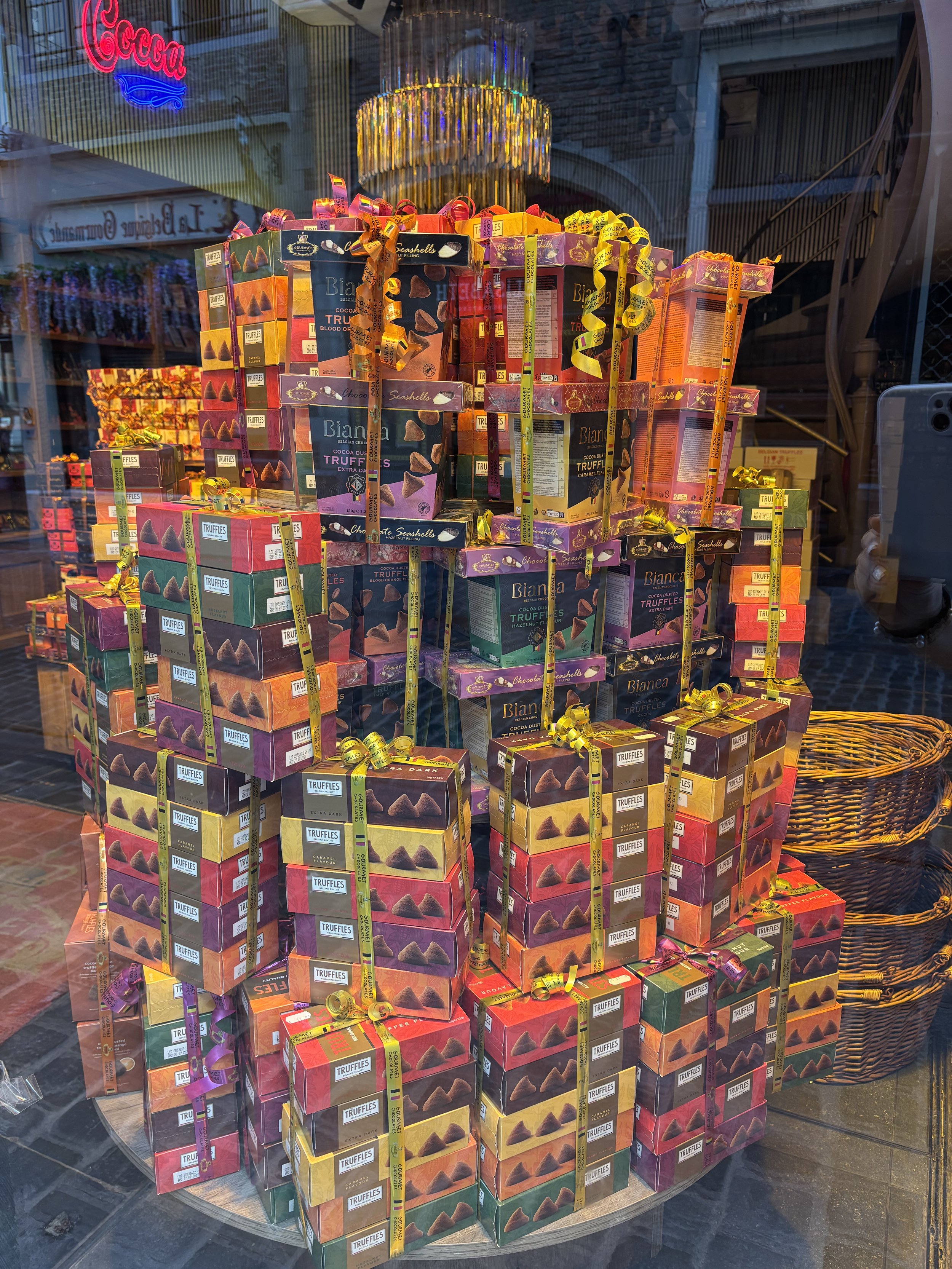
Elegant boxes of chocolate displayed in one shop near Grand Place in Brussels.
No visit to Belgium is complete without indulging in its legendary chocolate.
Renowned for its exceptional quality and craftsmanship, Belgian chocolate has been delighting the world for centuries.
Master chocolatiers combine the finest cocoa with generations of expertise to create silky pralines, handcrafted truffles, elegant chocolate bars, and artistic confections that are as beautiful as they are delicious.
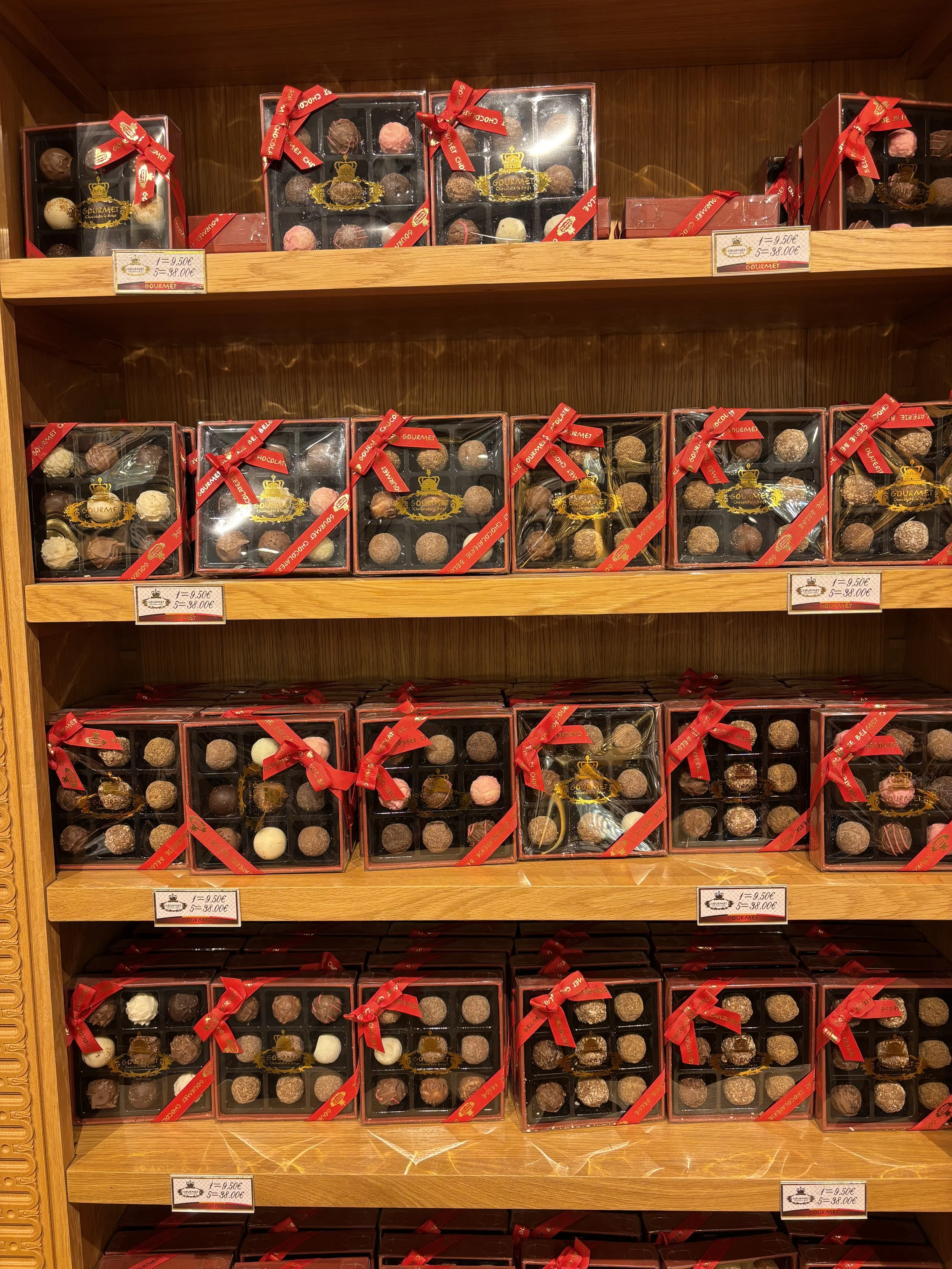
Chocolate displayed in one shop near Grand Place in central Brussels.
What sets Belgian chocolate apart is its commitment to quality. Many chocolatiers continue to produce their creations in small batches using traditional methods, ensuring every piece delivers a luxurious experience.
Walking through cities such as Brussels, Bruges, or Antwerp, you'll find elegant chocolate boutiques where irresistible aromas drift onto the cobbled streets, inviting visitors inside to sample one of Belgium's sweetest traditions.
Chocolate here is part of the country's cultural heritage.
Belgian Beer: Centuries of Brewing Tradition
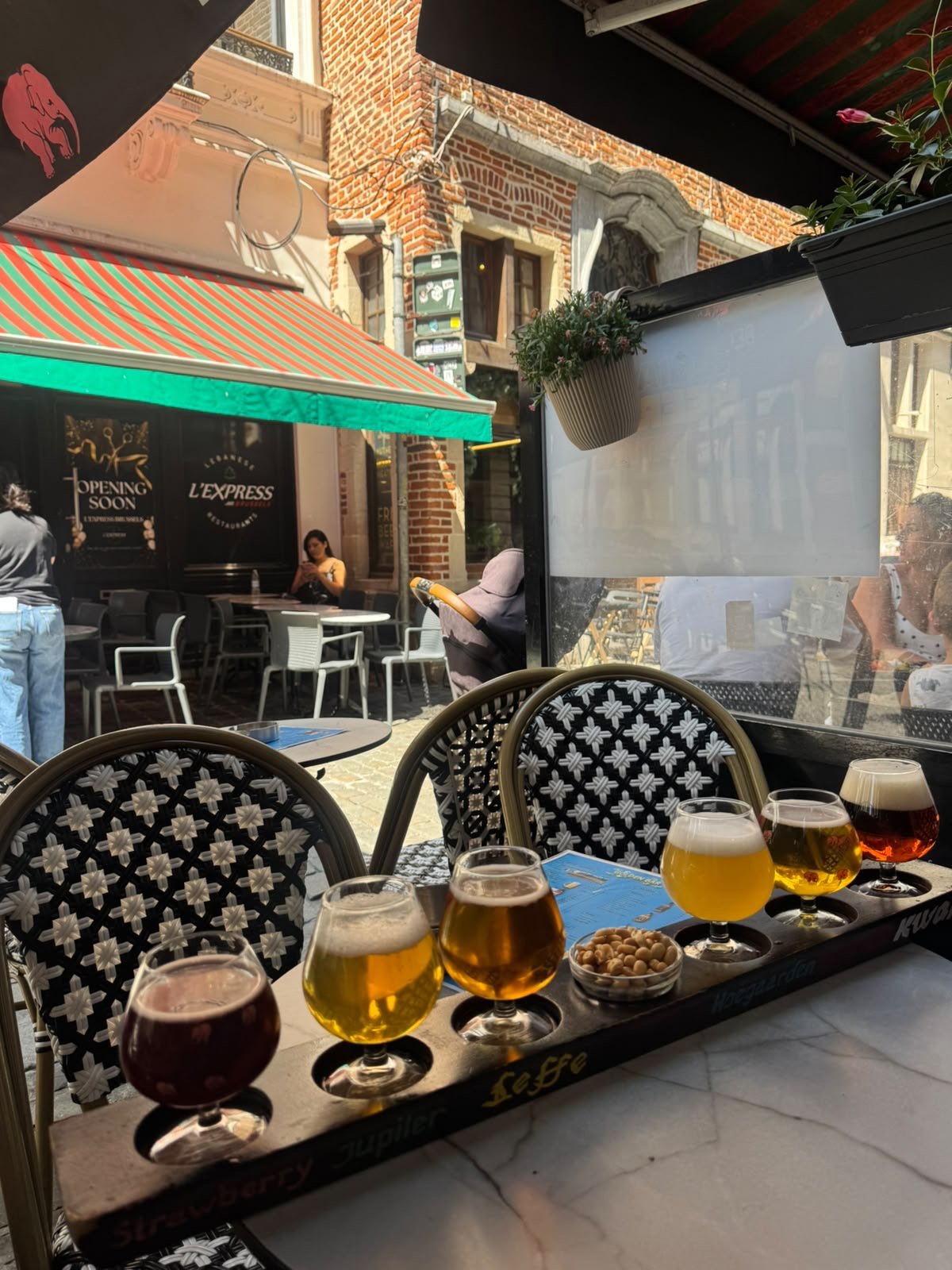
Beer tasting in central Brussels.
Belgium's brewing heritage has earned international recognition and reflects the country's dedication to craftsmanship and authenticity.
Despite its relatively small size, the country produces hundreds of distinctive beers, each with its own character, flavor profile, and brewing technique.
From refreshing blond ales to rich Trappist beers, fruity lambics, and complex abbey brews, Belgium offers one of the world's most diverse beer cultures.
One of the highlights of my time in Brussels was discovering a unique fruity beer that was both refreshingly crisp and exquisitely crafted. Bursting with vibrant fruit notes and a delicate balance of sweetness and acidity, it offered a delightful twist on Belgium's renowned brewing tradition.
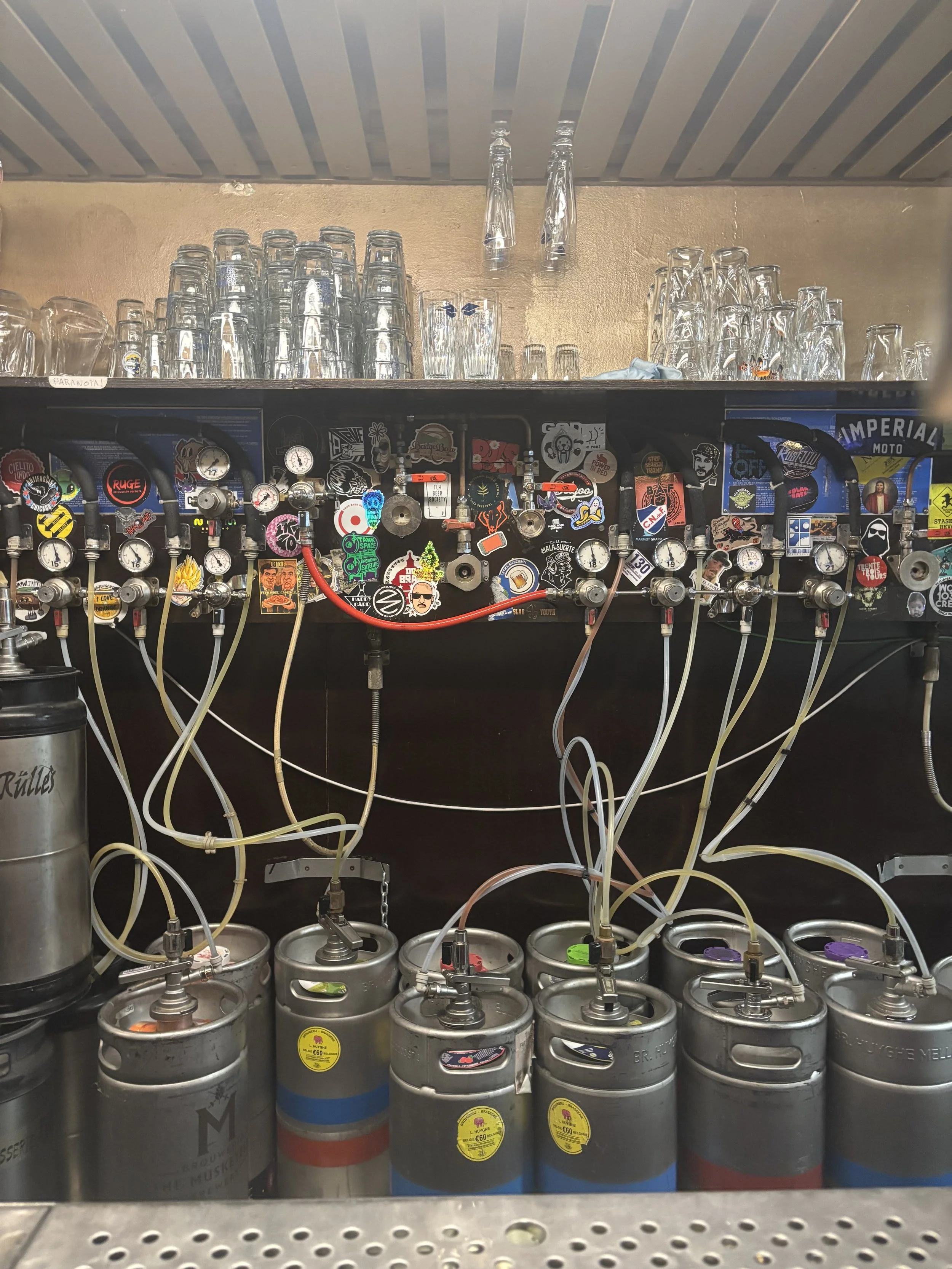
Draft beer in one bar in central Brussels.
Brewing has been part of Belgian life for centuries, with monasteries playing a vital role in preserving traditional methods. Today, many historic breweries continue to honor those techniques while embracing innovation.
Belgian beer culture was inscribed on UNESCO's Representative List of the Intangible Cultural Heritage of Humanity in 2016, recognizing the country's centuries-old brewing traditions, diverse beer styles, and the social role of beer in Belgian life.
Almost 1,500 types of beer are produced in the country using different fermentation methods. Since the 80s, craft beer has become especially popular.
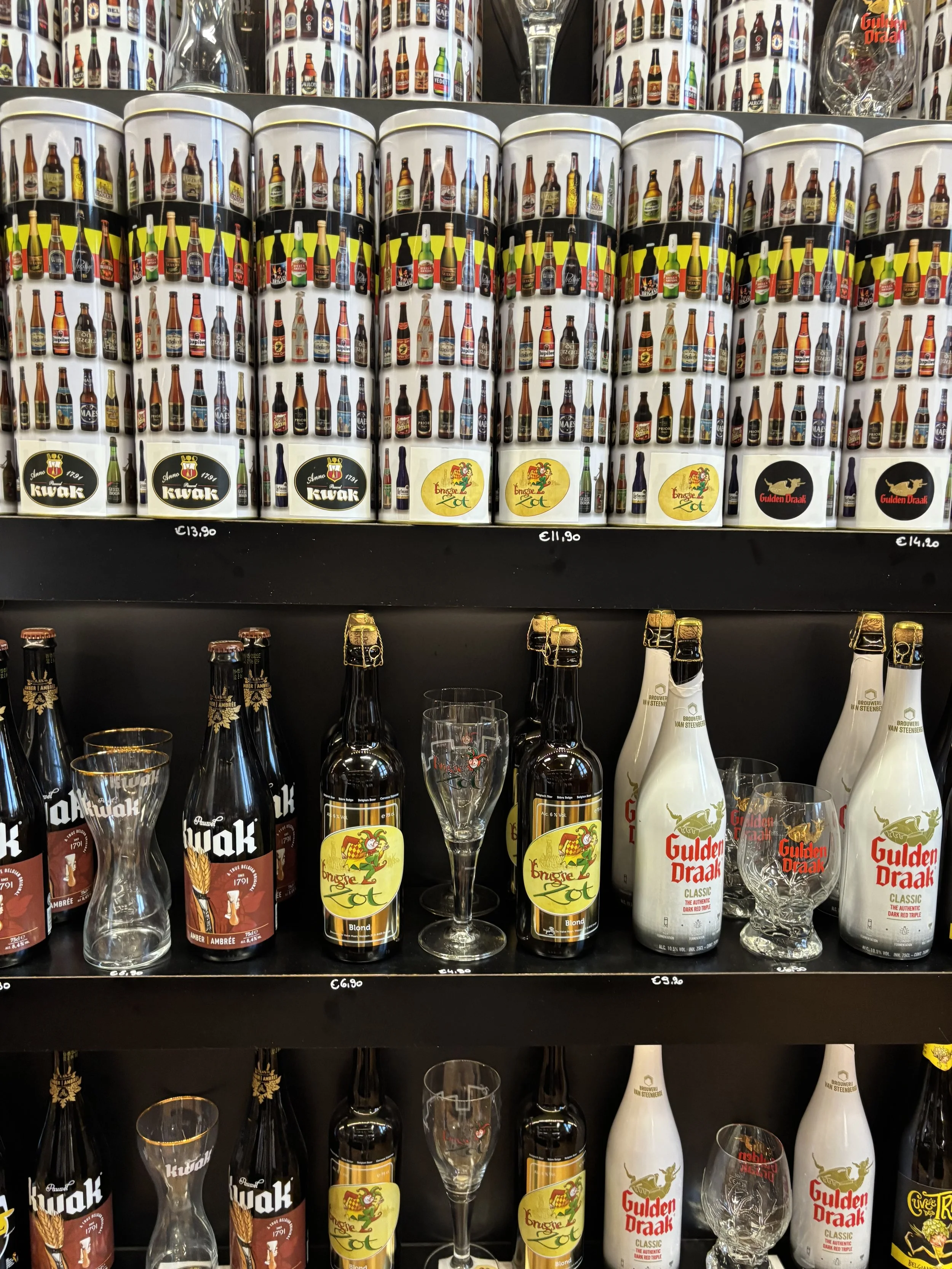
Each beer accompanied with its own glass.
But the glass of beer is not optional: in Belgium, beer is served in its own glass.
Every major Belgian beer has a specific glass designed to enhance its particular characteristics, like the curve of the bowl to concentrate the aroma, the width of the mouth to control the rate of carbonation release, the thickness of the base to maintain temperature.
Belgian Fries: A National Institution
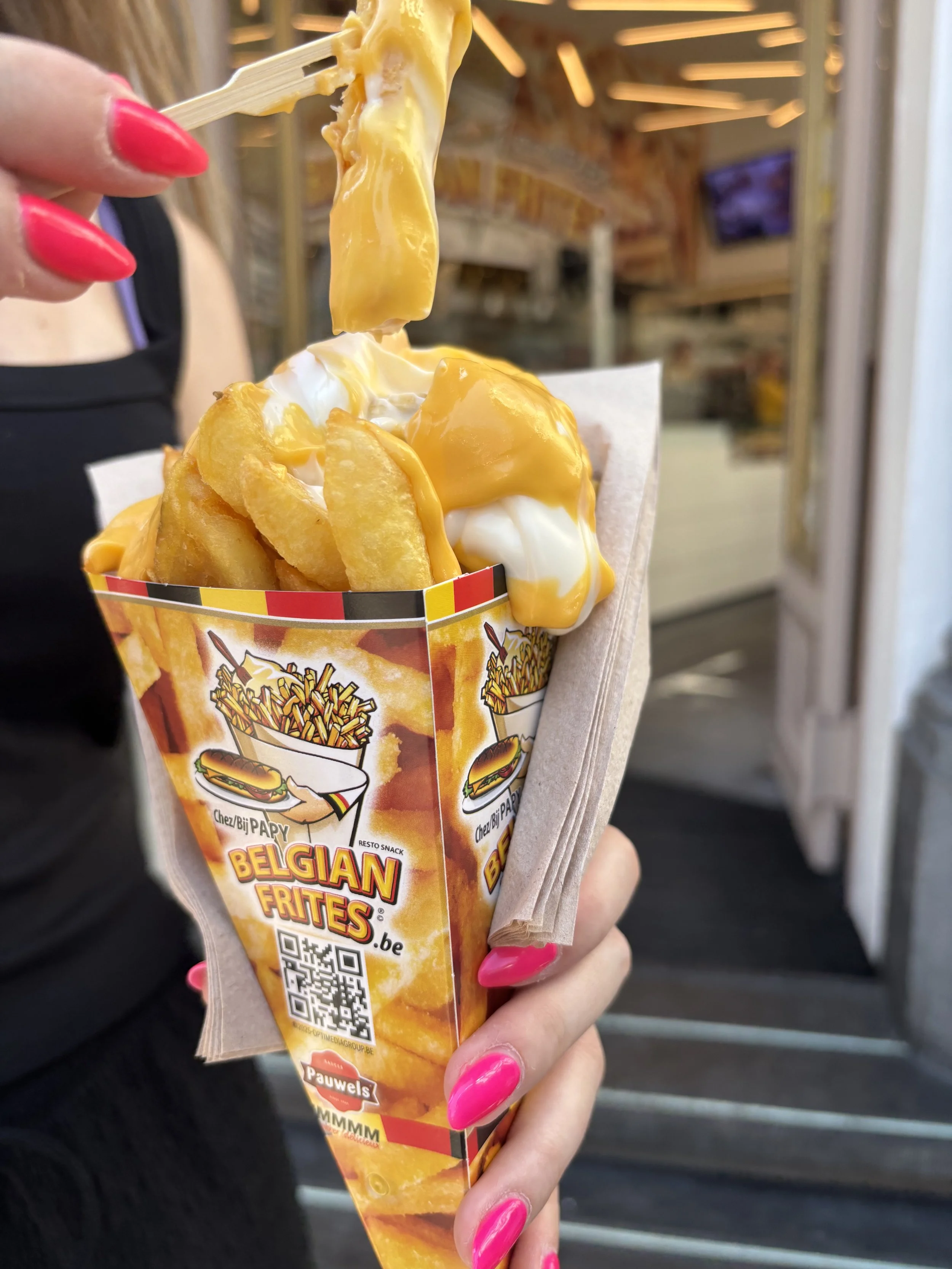
The traditional Belgian fries served in a cone on one of the streets in central Brussels.
The Belgian fry is not simply a potato cut and dropped into hot oil.
It is a two-stage process that requires patience and precision. The secret lies in the cooking method.
Fresh potatoes are cut into thick strips and traditionally fried twice: once at a lower temperature to cook them through, and a second time at a higher temperature to create the crisp, golden exterior while keeping the inside wonderfully soft and fluffy.
They are served in a paper cone, and across the country, local friteries and fritkots serve freshly prepared fries with an astonishing variety of sauces, from classic mayonnaise to a variety of sauces.
Belgian fry culture is recognized locally as cultural heritage. The fritkot is not merely a food stand, it is officially and formally, a piece of living culture.
For Belgians, fries are far more than a side dish, they're a cherished part of everyday life.
Final word
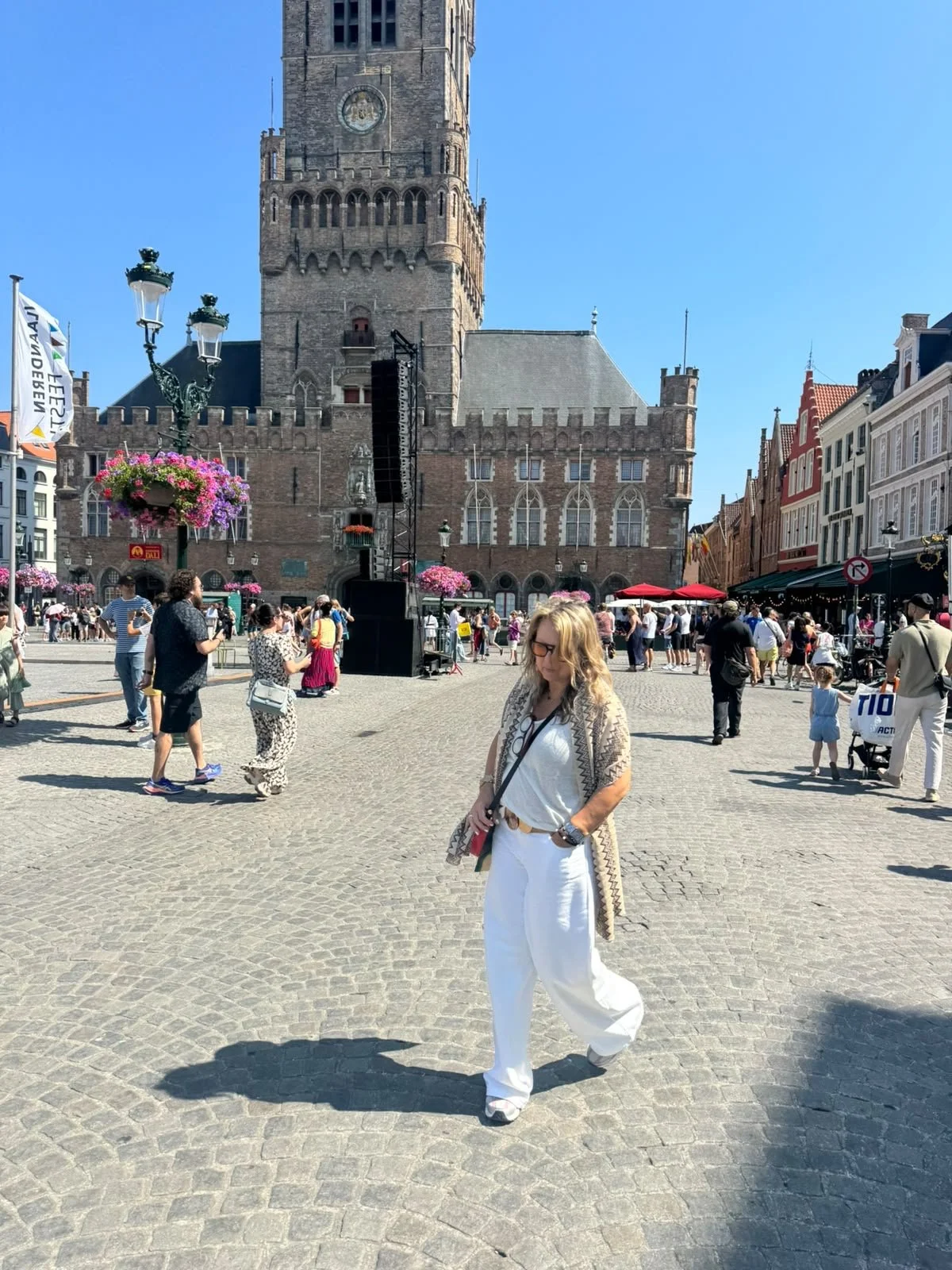
Norma in the square of Bruges.
What an experience! Together, crispy Belgian frites and world-famous Belgian beer offer one of the most authentic ways to experience Belgium's rich gastronomic heritage, where simple ingredients meet centuries of craftsmanship and tradition.
Chocolate added, those three famous culinary treasures make visiting Belgium a unique experience of exploring authentic food culture. Because after all, discovering a city is not only visiting landmarks but living the full experience.
Et voilà! That was a culinary journey celebrating the heart, soul, and flavors of Belgium.
Five Facts About Belgium’s Culinary Treasures:
1- Belgium is home to more than 2,000 chocolatiers and around 16 chocolate museums and produces over 220,000 tons of chocolate each year making it one of the world's leading chocolate producers.
2- The praline, a chocolate shell with a soft filling, was invented in Brussels in 1912 by chocolatier Jean Neuhaus.
3- Belgium is home to more than 400 breweries of beer, ranging from centuries-old abbeys to innovative craft producers.
4- Belgians maintain that fries originated in Belgium, not France, dating back to the late 1600s.
5- Fries are considered a national culinary icon and are enjoyed as a snack, side dish, or even a complete meal.