How Amsterdam Put Dutch Cheese on the Map?
Walking through the heart of Amsterdam, it is impossible not to notice the abundance of cheese shops nestled among the city’s bustling shopping streets, their windows filled with golden wheels and wedges that seem to invite passers-by to stop and taste a piece of Dutch tradition.
The most famous of which are Edam and Gouda which are now familiar on breakfast tables and cheese boards around the world. The younger addition was Maasdam with its distinctive nutty, hole-filled cheese.
Yet the story of Edam and Gouda, which carry the names of towns outside the capital, began not in Amsterdam’s elegant canals, but in the green, water-rich countryside where generations of Dutch farmers turned abundant milk into cheeses that could be stored, transported, and traded.
Amsterdam: Gateway for Dutch Cheeses
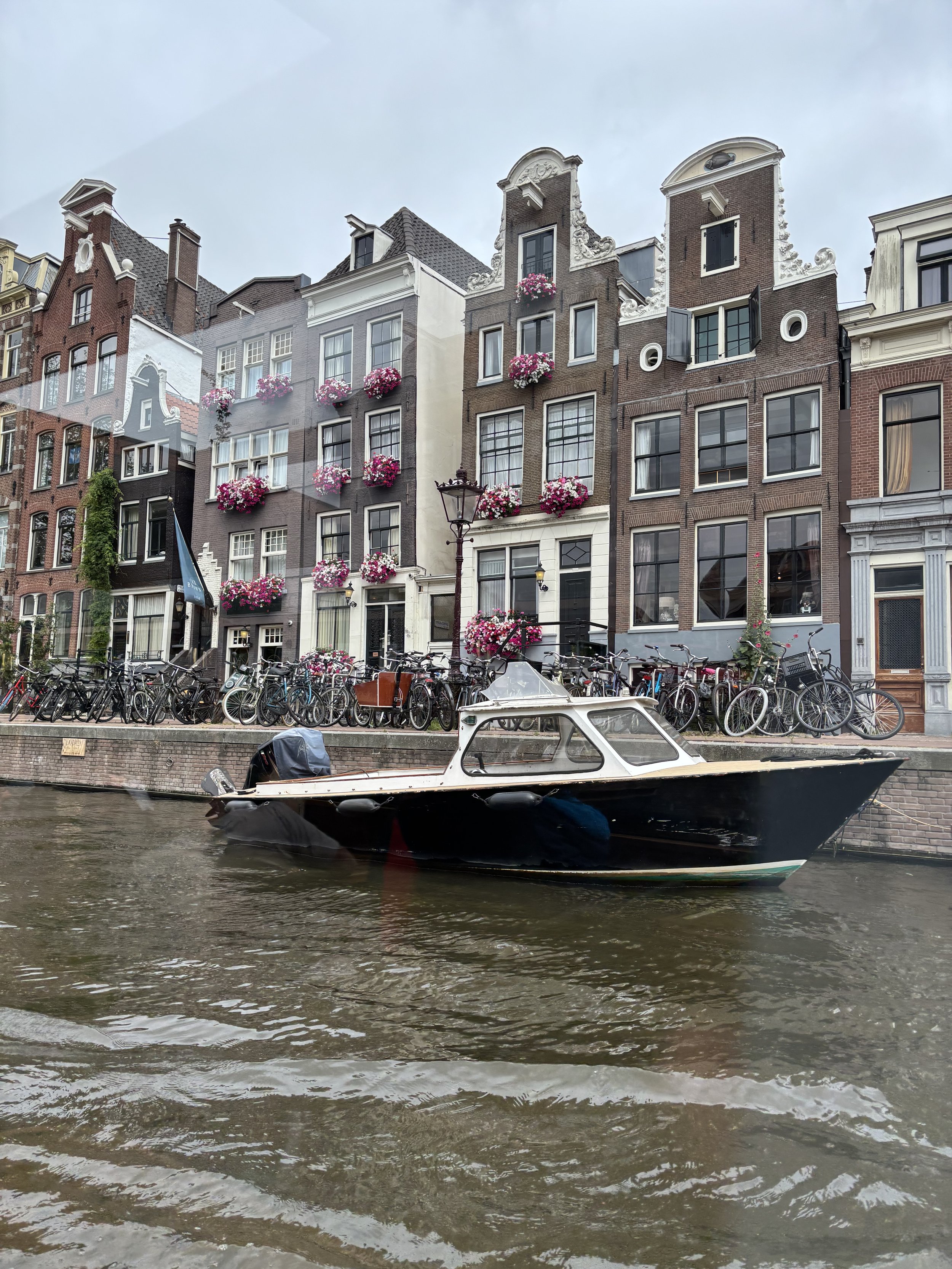
Canals of Amsterdam.
Few foods capture the character of the Netherlands quite like its cheeses.
There is also a fascinating connection between these cheeses and Amsterdam as the capital’s historic role as a major trading and maritime center helped Dutch cheeses reach markets far beyond the Netherlands.
Cheese from the surrounding countryside could be transported along the country's extensive network of canals and waterways to Amsterdam, where merchants, markets, and ships connected local producers with international buyers.
In this sense, Amsterdam became an important gateway for Dutch cheese: the towns gave the cheeses their names and traditions, while the capital's commercial networks helped carry their flavors across Europe and eventually around the world.
Today, the cheese shops and markets of Amsterdam offer a delicious reminder of that history, bringing together the rural traditions of Gouda, Edam, Maasdam, and other Dutch cheeses in the heart of the city.
The Golden Age
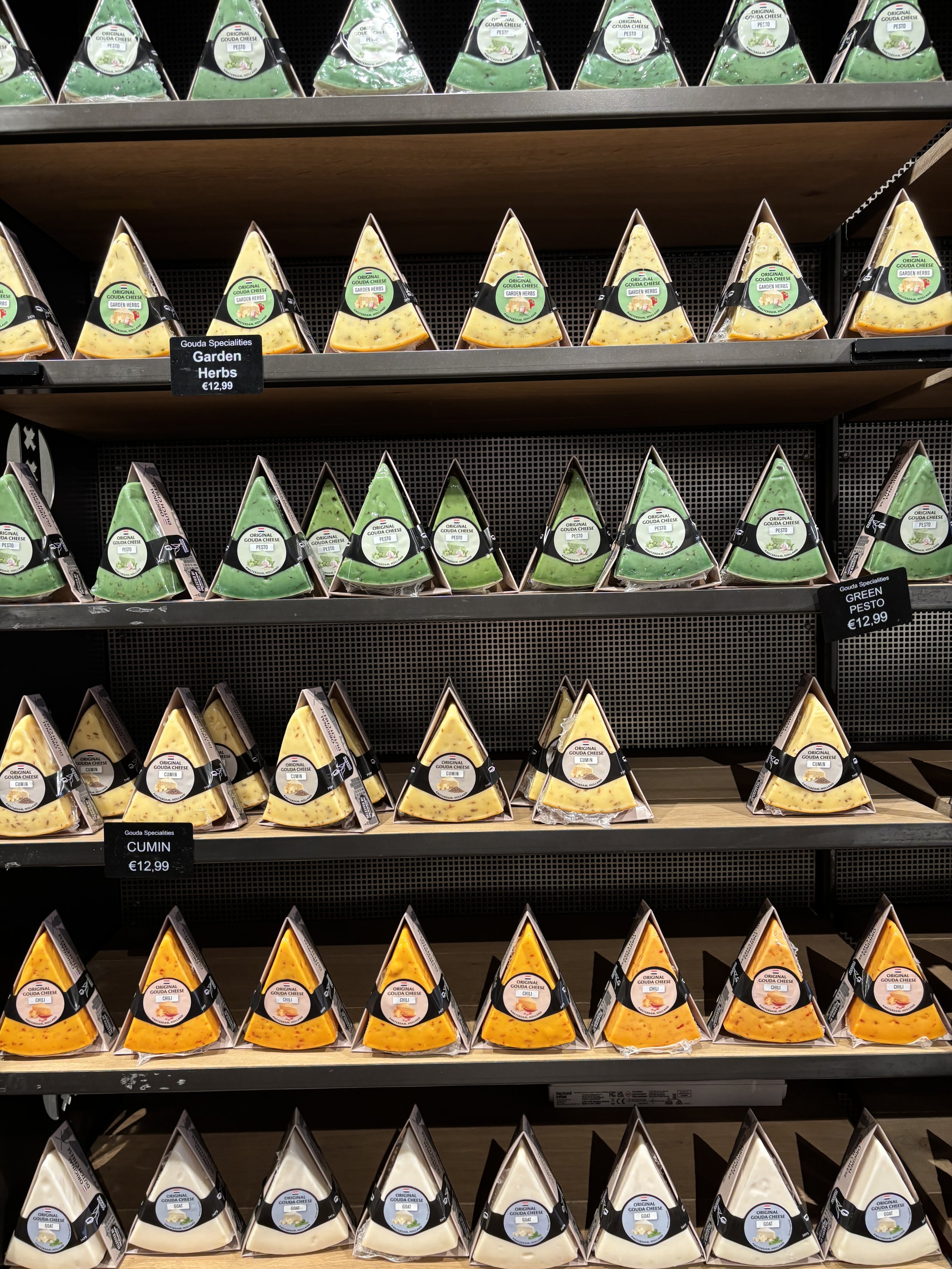
Blocks of cheese displayed in one shop in Amsterdam.
All this happened during Amsterdam’s Golden, in the 17th century, when the city grew from a prosperous Dutch trading town into one of the world’s most important commercial and financial centers.
At the heart of this transformation was the Dutch Republic’s maritime trade, which connected Amsterdam with Europe, Asia, Africa, and the Americas.
The city’s famous canal belt was developed during this period, creating both an elegant urban landscape and an extraordinarily efficient system for moving goods.
Amsterdam’s merchants traded spices, sugar, grain, timber, textiles, wine, and many other commodities, including the cheeses produced in the Dutch countryside and brought to the city for trade and export.
The wealth generated by trade transformed Amsterdam itself. Magnificent merchant houses appeared along the canals.
This helped turn Dutch agricultural production into an international business. The story was not simply about making excellent cheese; it was also about packaging it, transporting it, trading it, and creating demand for it abroad.
Edam: the cheese that travelled beautifully
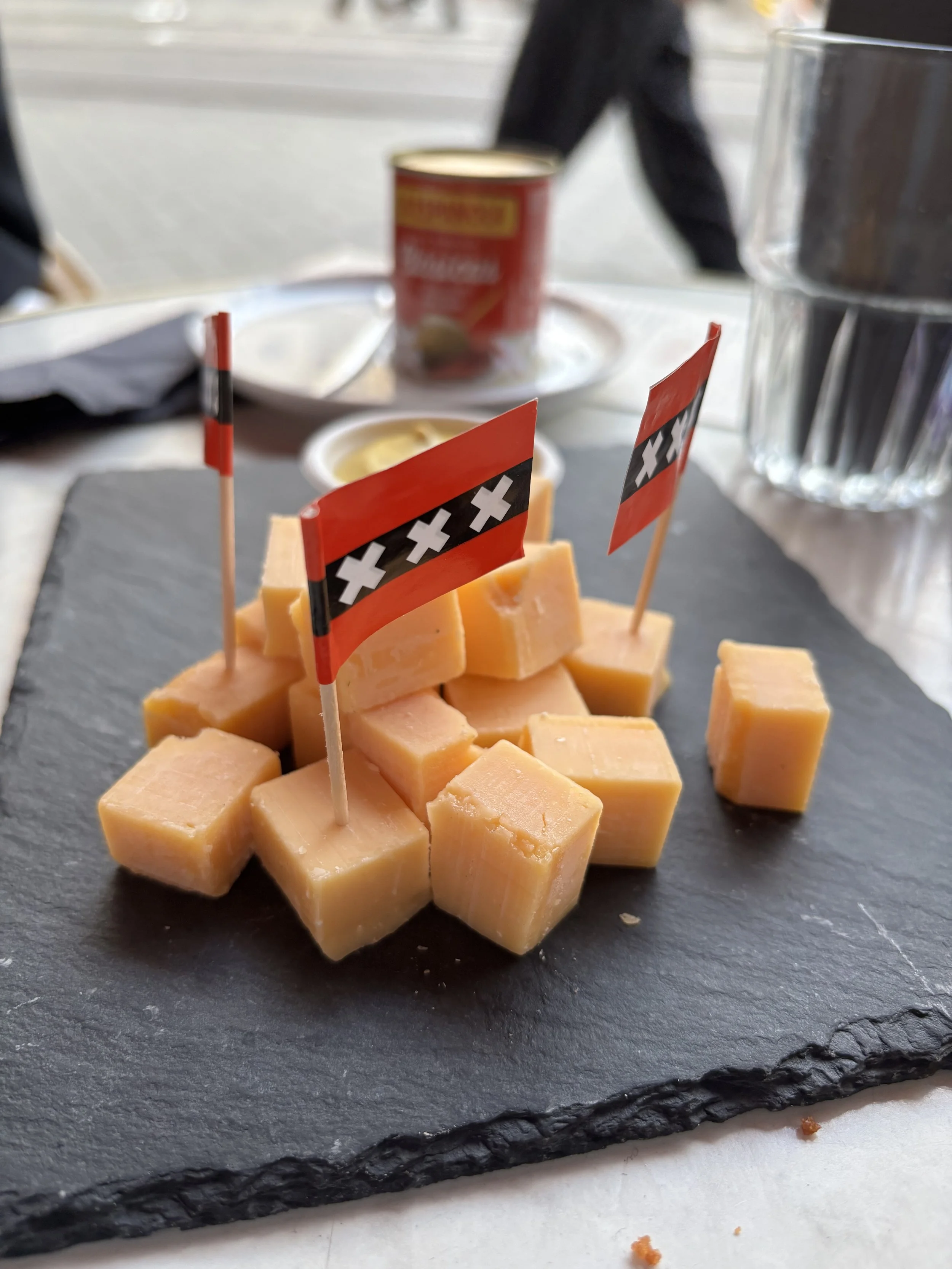
Local cheese served in one of Amsterdam’s bars.
Edam cheese was named after the town of Edam in North Holland, and it became particularly famous for its ability to withstand transportation.
Its characteristic red wax coating became almost a visual signature of Dutch cheese abroad. The coating helped protect the cheese during journeys, while the relatively firm texture allowed it to travel without easily deteriorating.
Edam became an important export product, particularly during the period when Dutch merchants were building extensive international trading networks. A wheel of Edam could leave the Netherlands and travel considerable distances, carrying with it a small taste of Dutch agricultural life.
Gouda: a global classic
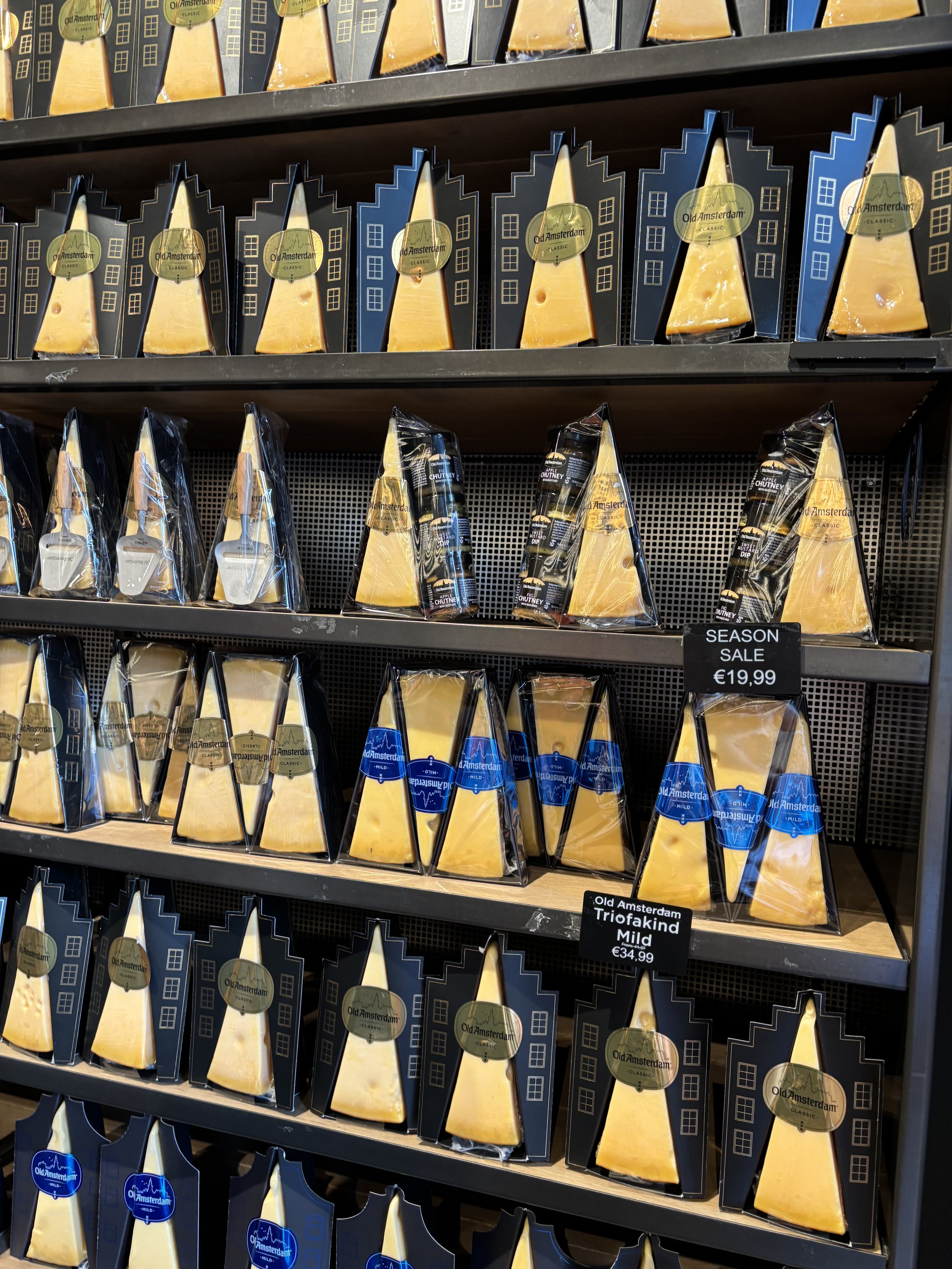
Variety of cheeses in one of Amsterdam’s shops.
Gouda is named after the historic city of Gouda, in South Holland, where cheese was traditionally brought to market, rather than necessarily being produced there.
For centuries, farmers from the surrounding countryside brought their wheels to Gouda’s famous cheese market. There, cheese became part of a sophisticated trading culture.
Traditional Gouda is made from cow’s milk and is known for its smooth texture and mildly sweet, buttery flavor when young. As it ages, it becomes firmer and develops deeper caramel, nutty, and sometimes slightly crystalline notes. This versatility helped make Gouda an ideal cheese for both everyday eating and long-distance trade.
Maasdam: a younger member of the family
Maasdam is considerably younger than Gouda and Edam. Developed in the Netherlands in the twentieth century, it is recognizable by its large holes and slightly sweet, nutty flavor.
It is often compared with Swiss cheeses because of its appearance and texture, but its character is distinctly Dutch.
Its development reflects something interesting about Dutch cheese culture: tradition has always existed alongside adaptation. Dutch cheesemakers have continued to develop new styles and flavors while maintaining the country's reputation for high-quality dairy products.
Final word

The canals of Amsterdam by night.
Today, Amsterdam’s many cheese shops keep the trading tradition alive, making Dutch cheese part of the city’s visitor experience.
Cheese shops display enormous wheels of Gouda in different stages of maturity, alongside Edam, Maasdam and countless other Dutch varieties.
So, when you cut into a wedge of Gouda in Amsterdam, you are tasting more than a local specialty. You are tasting a small part of a centuries-old story.
Et voilà! That was another culinary experience in the heart of Europe, and the journey continues.
Five Facts About Dutch Cheeses:
1- Cheese has been made in the Netherlands for thousands of years, with evidence dating back to around 800 BCE.
2- The Netherlands has a natural advantage for cheesemaking, as much of its landscape is low-lying, wet pastureland, making it particularly well suited to dairy farming.
3- Gouda and Edam were ideal cheeses for the age of Dutch maritime expansion, as their durable character made them practical provisions for ships undertaking long voyages.
4- Amsterdam helped turn local food into an international commodity and that’s how cheeses that originated in small Dutch towns became internationally recognized foods.
5- Gouda is smooth and buttery while Edam is firmer, lighter and mildly nutty, traditionally recognized by its distinctive round shape and red wax coating.