Notre-Dame de Paris: Walking Through Victor Hugo's Masterpiece
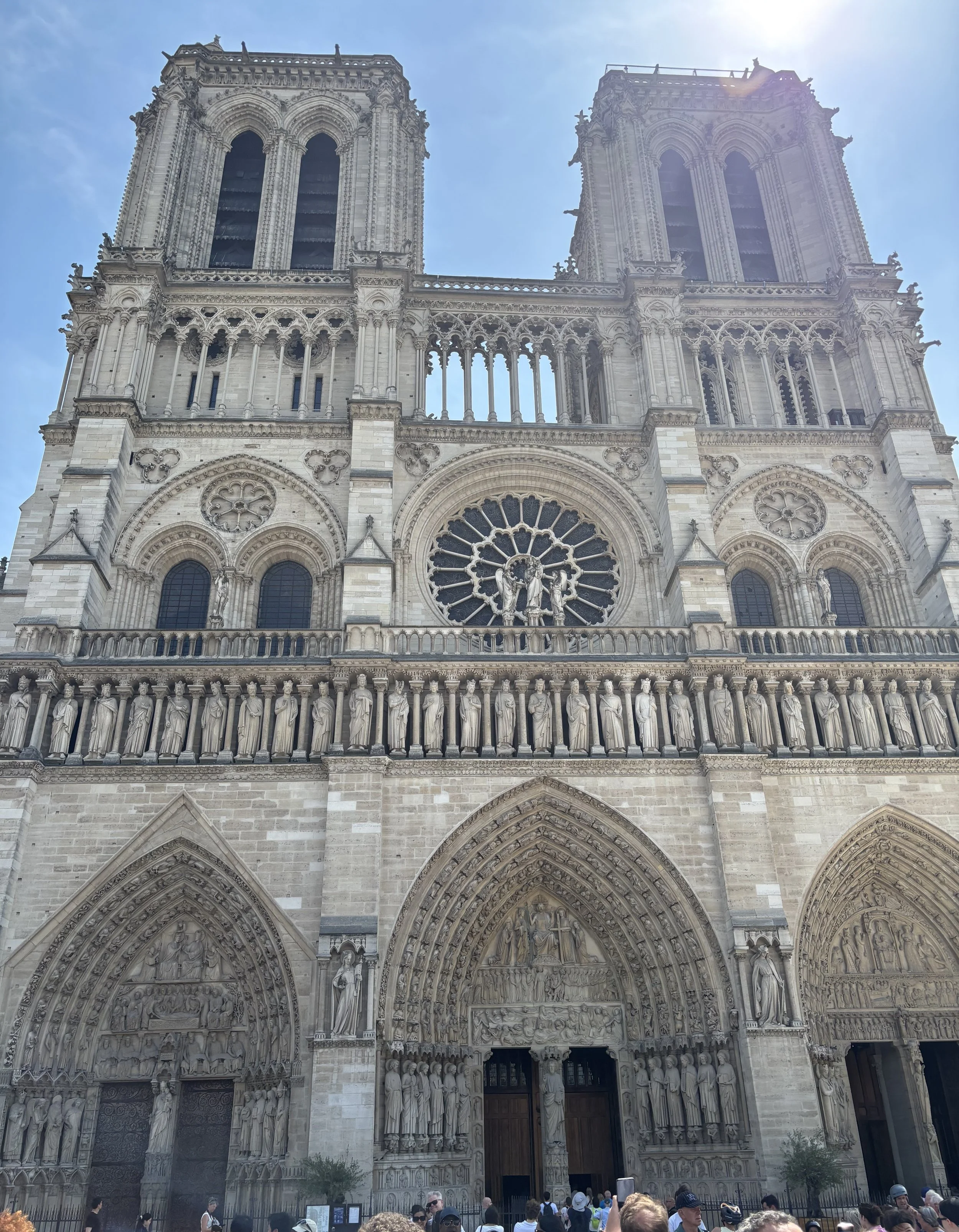
Notre Dame Cathedral in the heart of Paris.
From a distance, Notre-Dame appears almost as a silhouette against the Parisian sky, two towers standing between rooftops and trees, but as I approached the square before the famous cathedral, I imagined the events of Victor Hugo’s masterpiece “Notre Dame de Paris”.
One can almost picture medieval Paris crowding the space, the noise of merchants and bells, the movement of beggars and nobles, the restless energy of a city gathered beneath the cathedral’s shadow.
In that same square you cannot but imagine the dance of beautiful Esmeralda, one of the most vivid and tragic figures of the novel, Hugo’s heroine, the impulsive, passionate woman who embodies the freedom of youth.
Let’s go together on a tour in that iconic cathedral!
The Cathedral and the Novel

Visiting the cathedral with my cousin.
Standing on the Île de la Cité, gazing at its soaring Gothic façade and intricate sculptures, here is the magnificent Notre-Dame Cathedral.
I couldn't help but think of Victor Hugo's timeless novel, Notre-Dame de Paris (The Hunchback of Notre-Dame). Published in 1831, the novel did more than tell the tragic story of Quasimodo, Esmeralda, and Archdeacon Claude Frollo, it reignited public appreciation for the cathedral at a time when it had fallen into neglect.
Hugo's masterpiece ultimately inspired the restoration that preserved one of France's greatest architectural treasures.
As I walked around the cathedral, every detail, every stained-glass window, and stone arch seemed to echo scenes from the novel. It was easy to imagine Quasimodo watching over Paris from the bell towers or Esmeralda dancing in the square below.
Its towers seem to hold centuries of human drama within them: love, desire, cruelty, faith, loneliness, and redemption. And as you finally turn away, Notre-Dame remains behind you, a place where literature and the living city briefly seem to occupy the same ground.
This is what makes the cathedral more than a landmark; it is a living character in one of literature's most celebrated works.
“Belle”
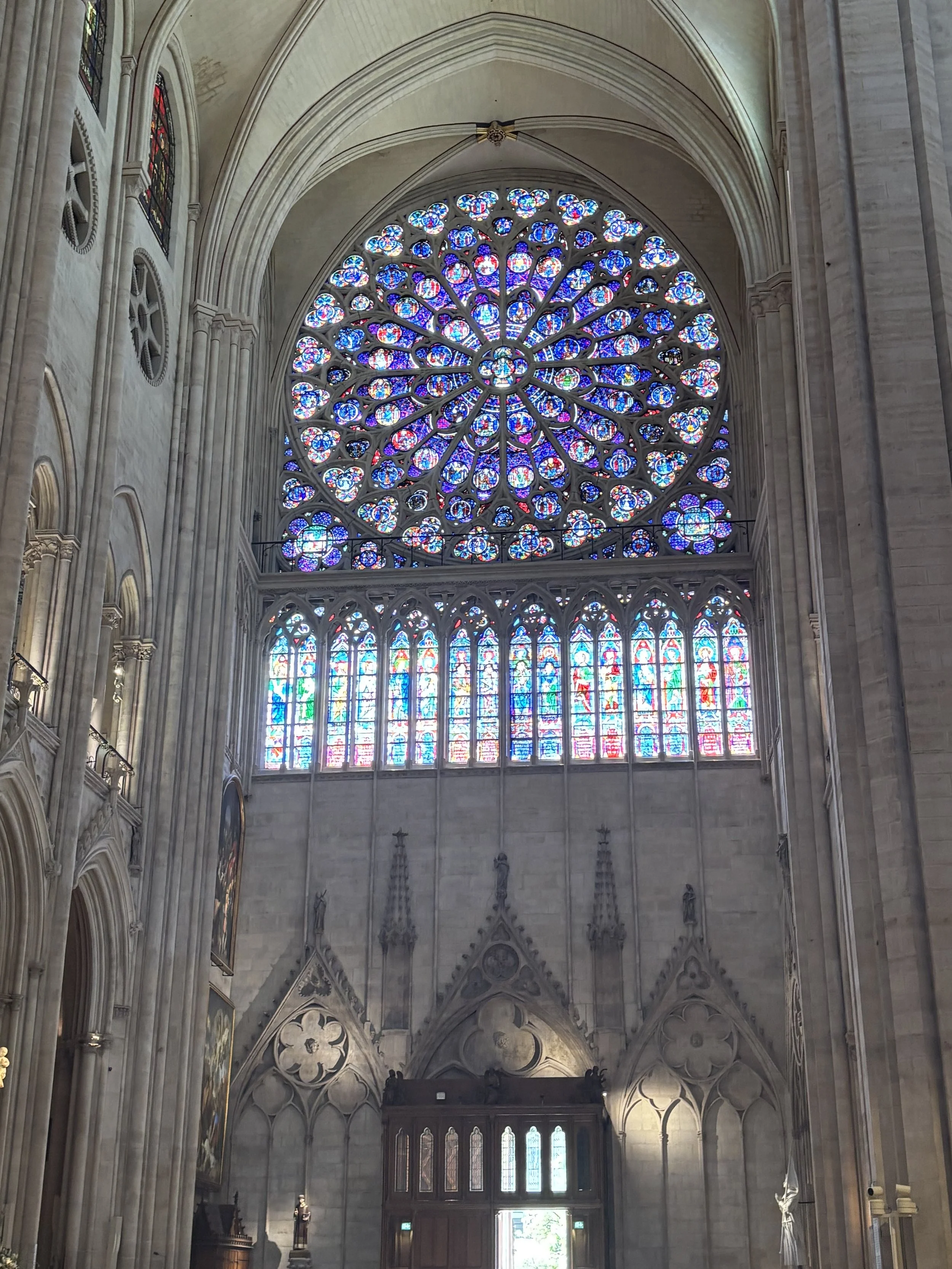
The cathedral from inside.
The experience became even more emotional as the melody of "Belle" played in my mind. Composed by Riccardo Cocciante for the acclaimed musical Notre-Dame de Paris, the song captures the conflicting emotions of Quasimodo, Frollo, and Phoebus as they are captivated by Esmeralda's beauty.
Their voices reveal contrasting feelings: Quasimodo’s tender admiration, Phoebus’s physical attraction, and Frollo’s obsessive, conflicted desire. Together, the song captures one of the novel’s central tensions: Esmeralda becomes a projection of each man’s longing, while remaining a vivid and independent figure in her own right.
Powerful, dramatic, and unforgettable, Belle has become one of the most iconic French-language songs ever written, adding another cultural layer to the cathedral's enduring legacy.
Still Standing Tall
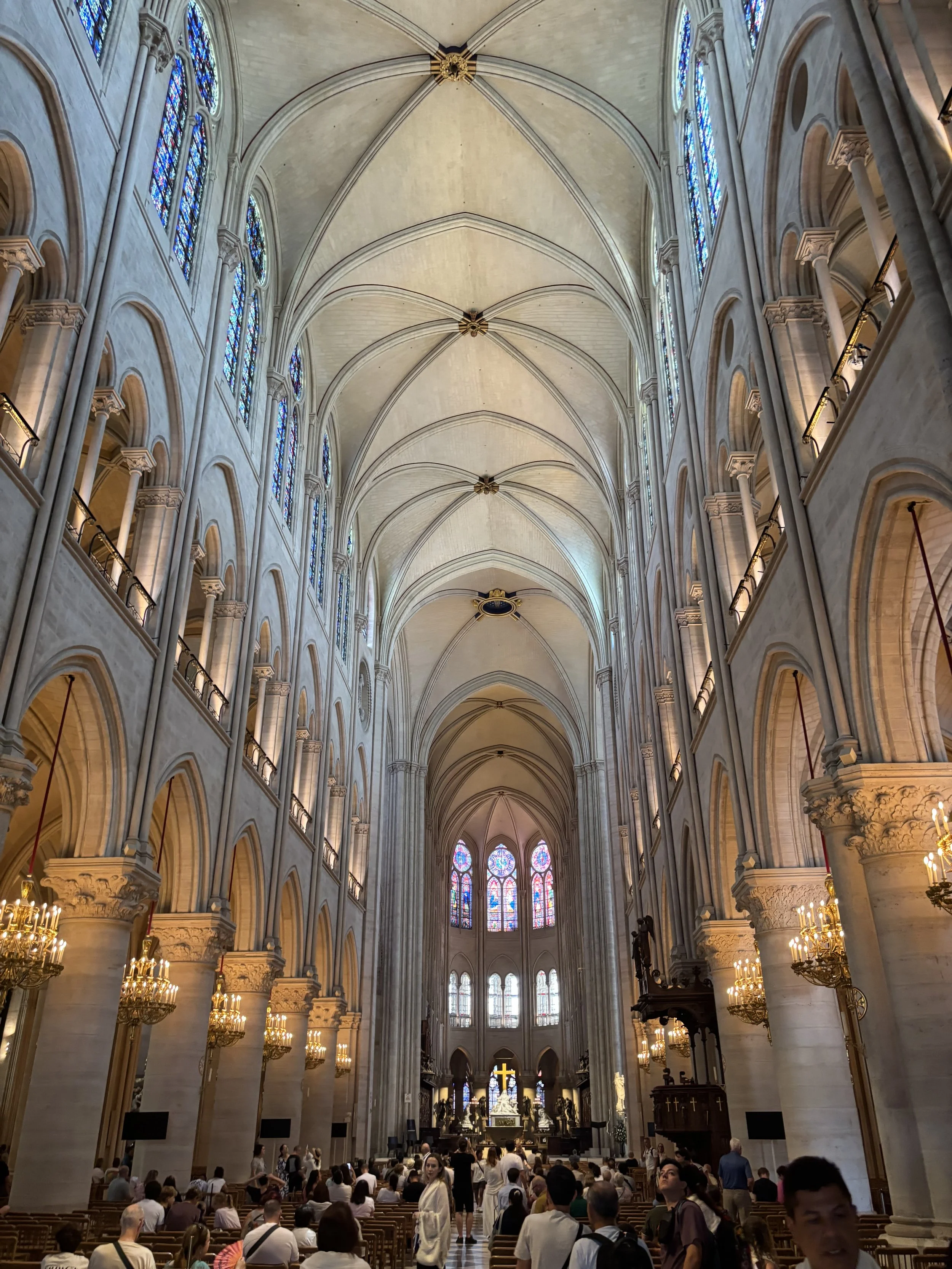
Inside Notre Dame de Paris.
Even after the devastating 2019 fire, Notre-Dame continues to stand as a symbol of resilience, faith, and the enduring spirit of Paris.
The restoration work took about five and a half years, and the cathedral reopened in December 2024.
Seeing the restored cathedral in person was both moving and inspiring, a testament to the importance of preserving our shared cultural heritage.
This cathedral tells a story that has inspired generations and continues to captivate travelers from around the world.
Final Word
Visiting Notre-Dame reminded me that Paris is far more than its cafés, museums, shopping destination and monuments.
It is a city where architecture, literature, music, and history intertwine, allowing every visitor to experience centuries of artistic inspiration in a single walk.
Five Facts About Notre Dame de Paris:
1- Construction of the cathedral began in 1163 during the reign of King Louis VII and was largely completed by the mid-14th century.
2- Its architectural style is French Gothic, famous for its flying buttresses, pointed arches, ribbed vaults, and enormous rose windows.
3- Its famous features are the twin towers, three large rose windows, gargoyles, bells, and the central spire.
4- In 1804 Napoleon Bonaparte was crowned there, Emperor of the French, in a ceremony attended by Pope Pius VII.
5- In 1909 Joan of Arc was beatified at Notre-Dame and she was later canonized in 1920.