The Tastes of Europe: A Culinary Journey
You cannot visit Europe without experiencing its daily rituals, and beyond the landmarks, museums, and landscapes, some of its stories are found on a plate.
From its celebrated cuisine to the flavors of street food, there is a piece for everyone and every taste.
A warm croissant eaten at a Parisian café, a bowl of onion soup, the famous Moules et Frites, a paper cone of Belgian fries shared on a city street, or a slice of Dutch cheese at a bustling market can reveal something about the place that no guidebook quite captures.
Let’s take a culinary journey through central Europe and discover its memorable tastes.
Food As Art of Living
Food in Europe is not simply nourishment, it is tradition, identity, craftsmanship, geography, and everyday life.
From the refined elegance associated with French cuisine to Belgium's joyful street-food culture and the Netherlands' deep relationship with dairy and local produce, each bite reflects the character of the cities and communities that created it.
France and Gastronomy
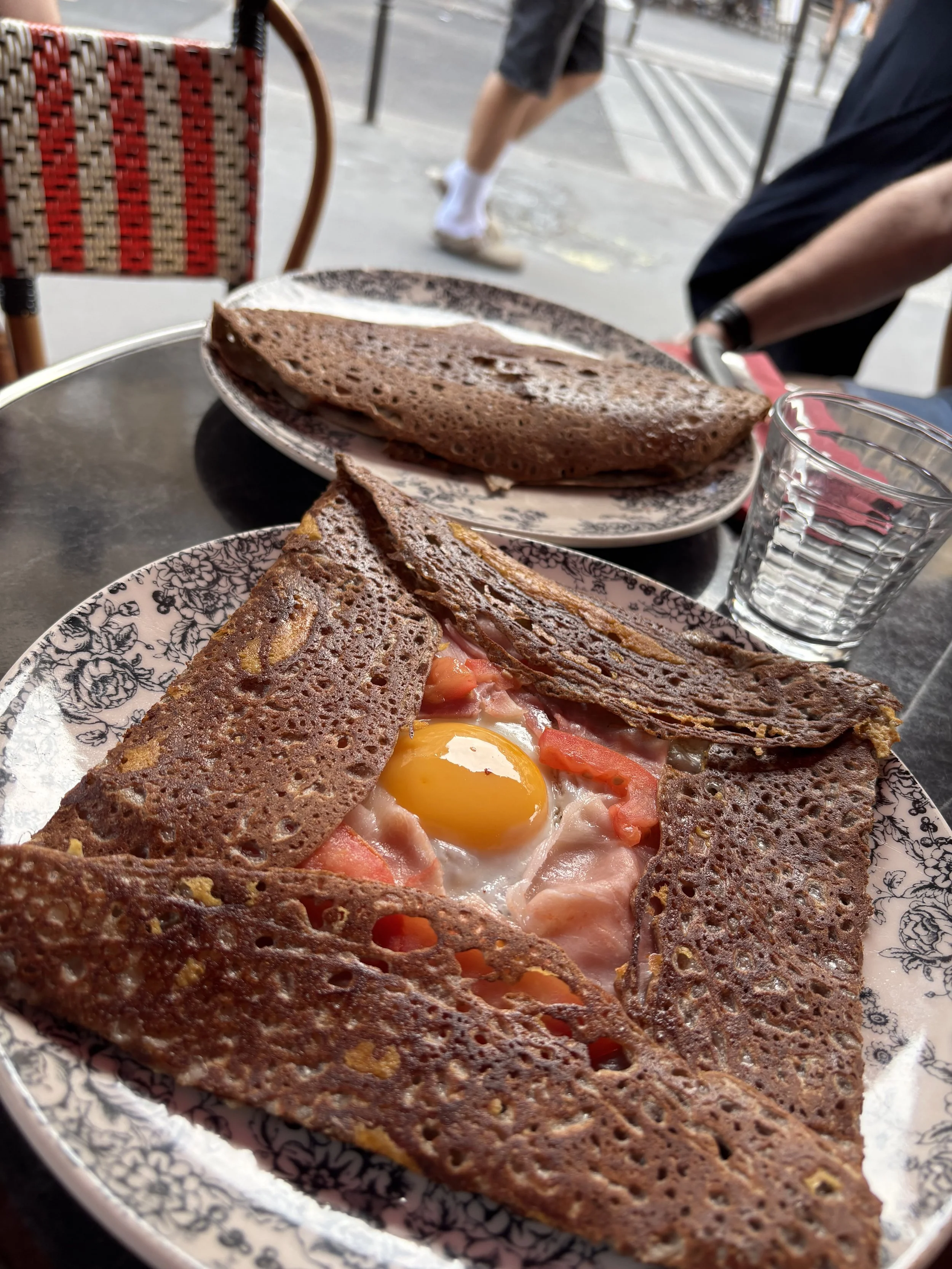
Crepe as served in one Creprie near Châtelet–Les Halles in Paris.
Few countries are as closely associated with gastronomy as France. Here, eating is an experience built around pleasure, conversation, craftsmanship, and the appreciation of good ingredients.
French gastronomy is officially recognized as an important part of the country's cultural heritage, with the French gastronomic meal recognized by UNESCO as intangible cultural heritage.
And you can feel this philosophy everywhere, from neighborhood bakeries to grand restaurants and small cafés.
And I’m not exaggerating when I say I had the best croissants and crêpes I’ve ever tasted in Paris, and of course the famous Jambon Beurre Sandwich. But the exquisite tastes definetley come from the typical French dishes.
Escargots: A Taste of French Tradition
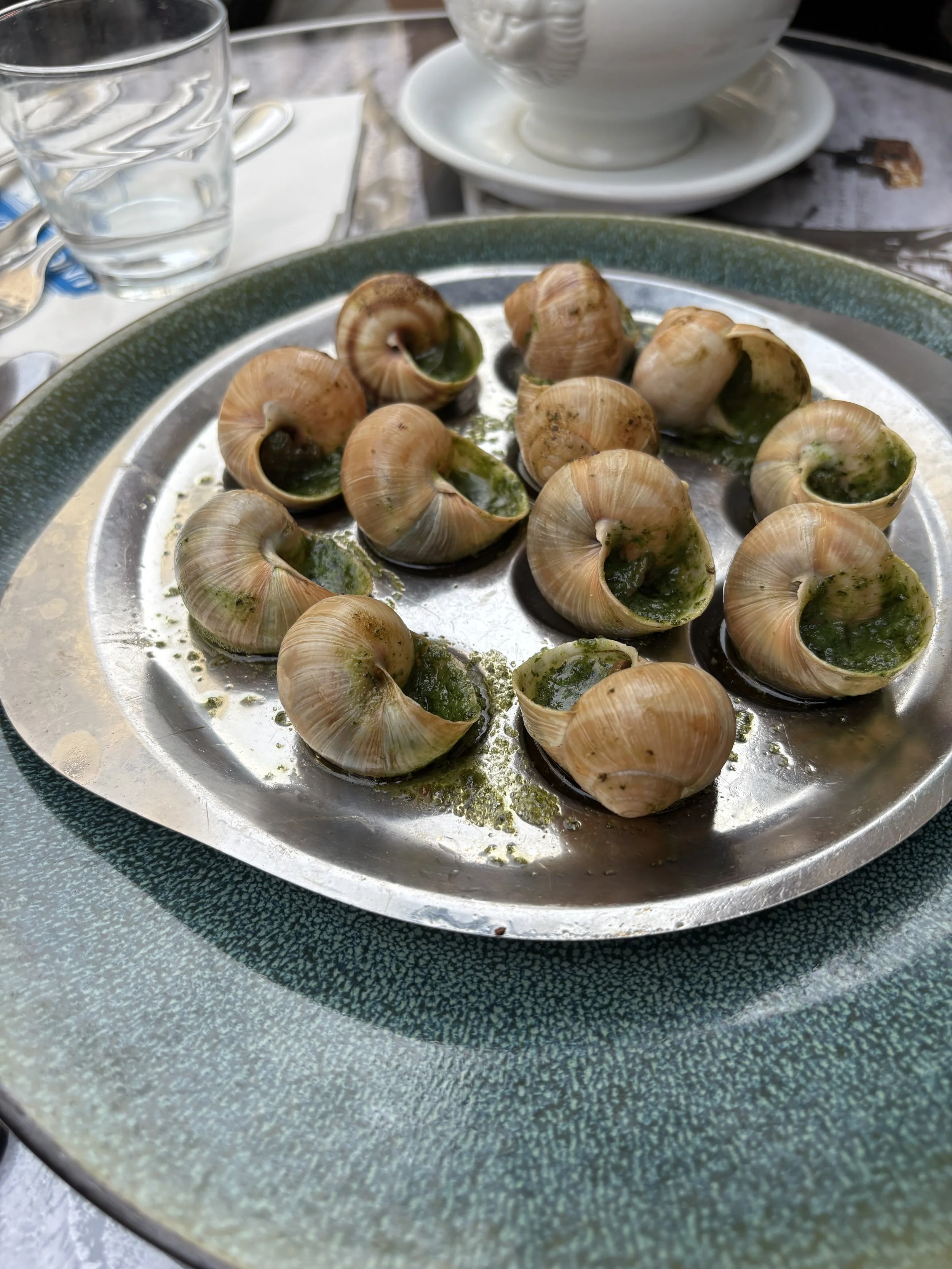
Escargots served as appetizer in one brasserie on rue St. Michel in Paris.
For many visitors, escargots are one of the most intriguing introductions to French cuisine.
Traditionally associated with Burgundy, escargots de Bourgogne are prepared with garlic, parsley, and butter, creating a dish that is far more about richness and aroma than the ingredient itself.
France's tourism authority lists escargots de Bourgogne among the country's emblematic traditional dishes. But the experience is about more than trying something unusual.
Escargots represent an aspect of French food culture that values transformation: simple ingredients can become something elegant through technique, seasoning, and presentation.
Soupe à l'Oignon: Comfort in a Bowl
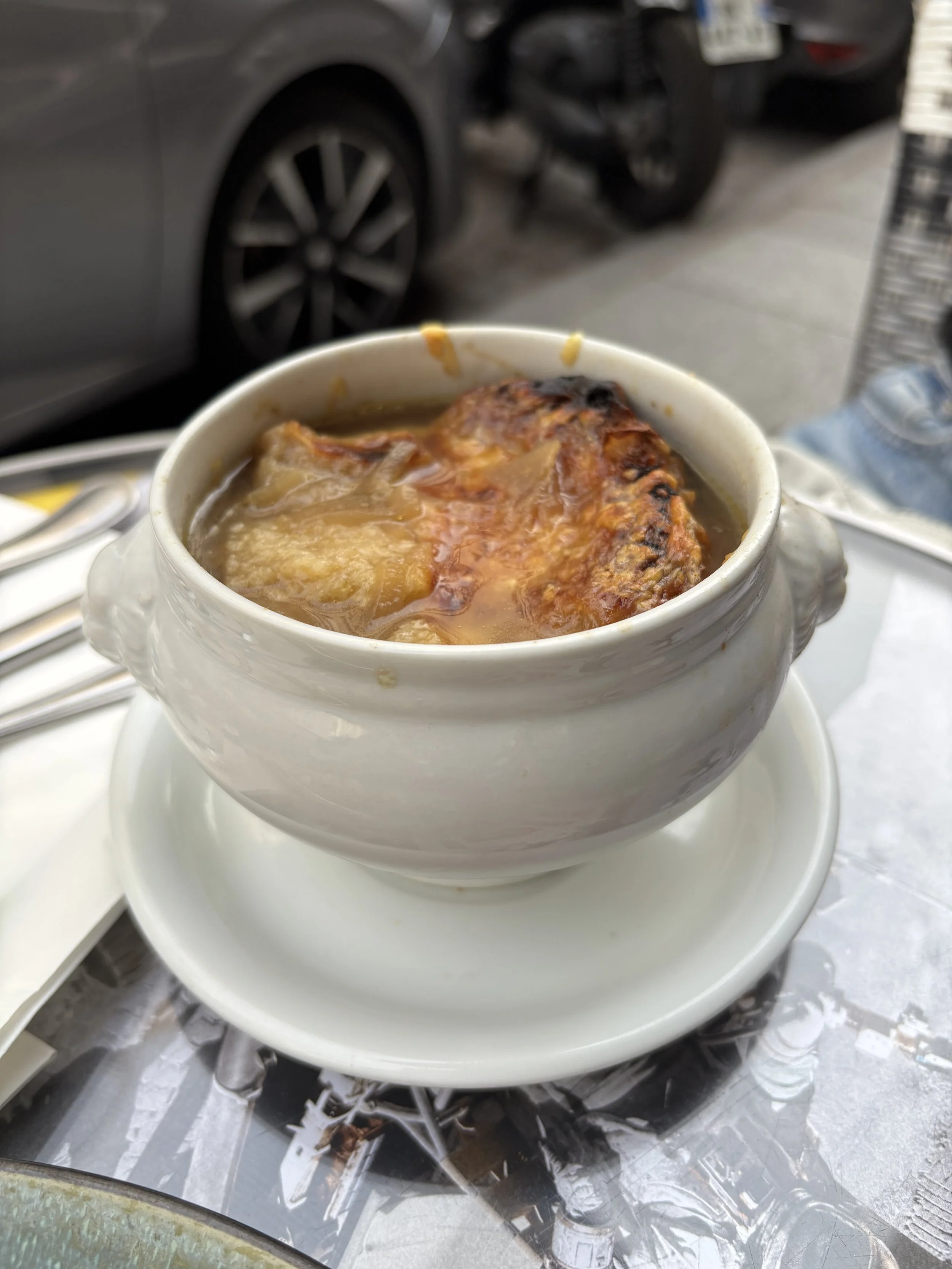
The famous onion soup served as first course in one restaurant near Boulevard St. Michel in Paris.
French onion soup offers an entirely different experience.
Rich broth, slowly caramelized onions, toasted bread, and melted cheese create a dish that feels warm, rustic, and deeply comforting. France's national tourism site includes soupe à l'oignon gratinée among its emblematic traditional dishes.
It is comforting and makes you feel at home in Paris at night, a bowl shared after a long day of walking through the city, when the streets are cold and the lights of cafés glow against the evening.
Perhaps that is why it has endured: it transforms humble ingredients into something deeply satisfying.
The Croissant: Paris in Every Layer
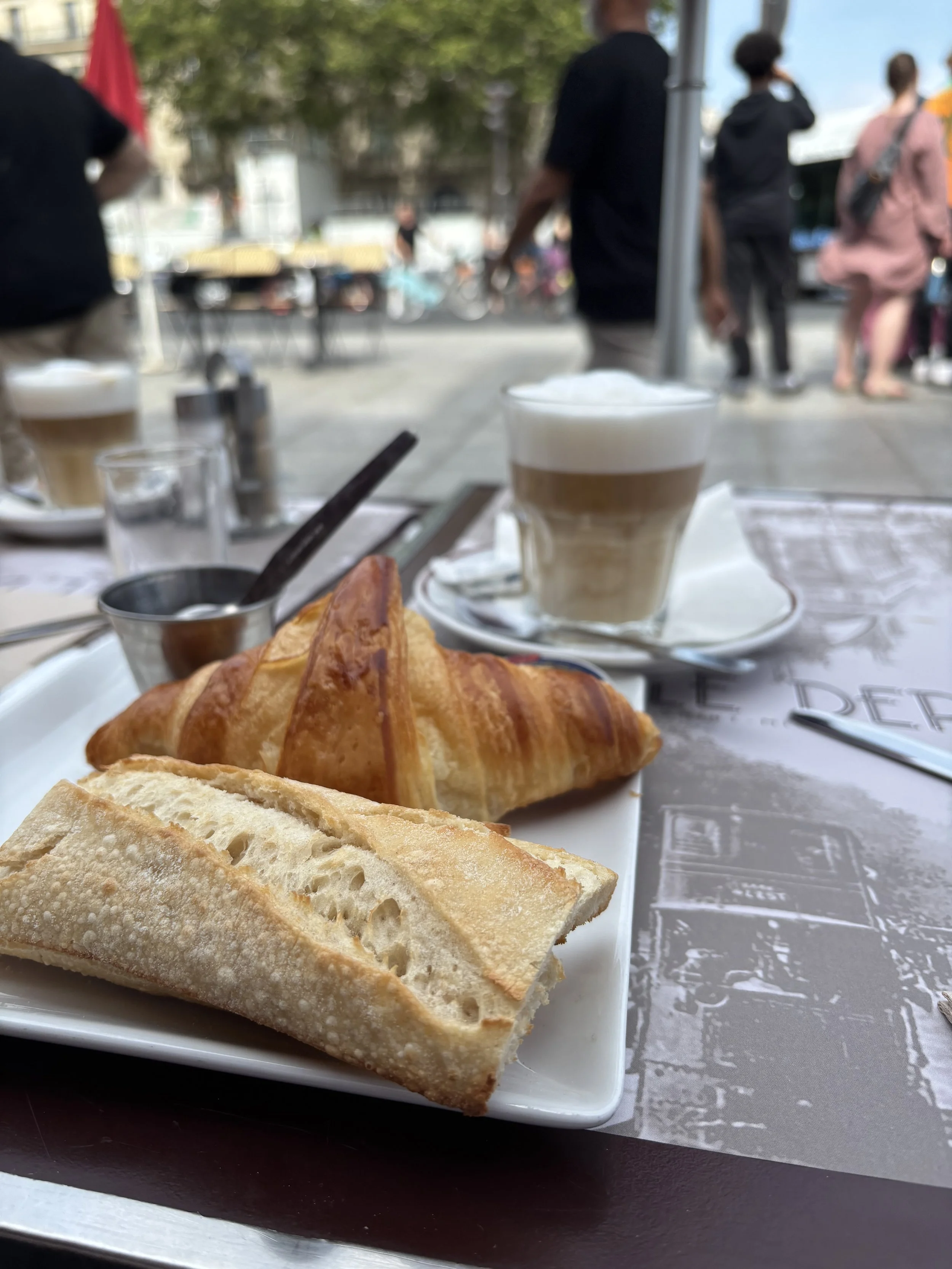
Parisian breakfast in one of the cafes on Boulevard St. Michel.
Few foods evoke Paris as instantly as the croissant.
Golden, flaky, buttery, and delicate, it is the quintessential bakery breakfast. Its magic lies in its simplicity: flour, butter, yeast, and time transformed into layers that shatter delicately with every bite.
The croissant belongs to the rhythm of Parisian mornings: walking along a quiet street as cafés begin to open, stopping at a boulangerie, and carrying a warm pastry back into the city.
This ritual captures something essential about Paris: elegance does not always require ceremony.
Macarons: Parisian Elegance in Miniature
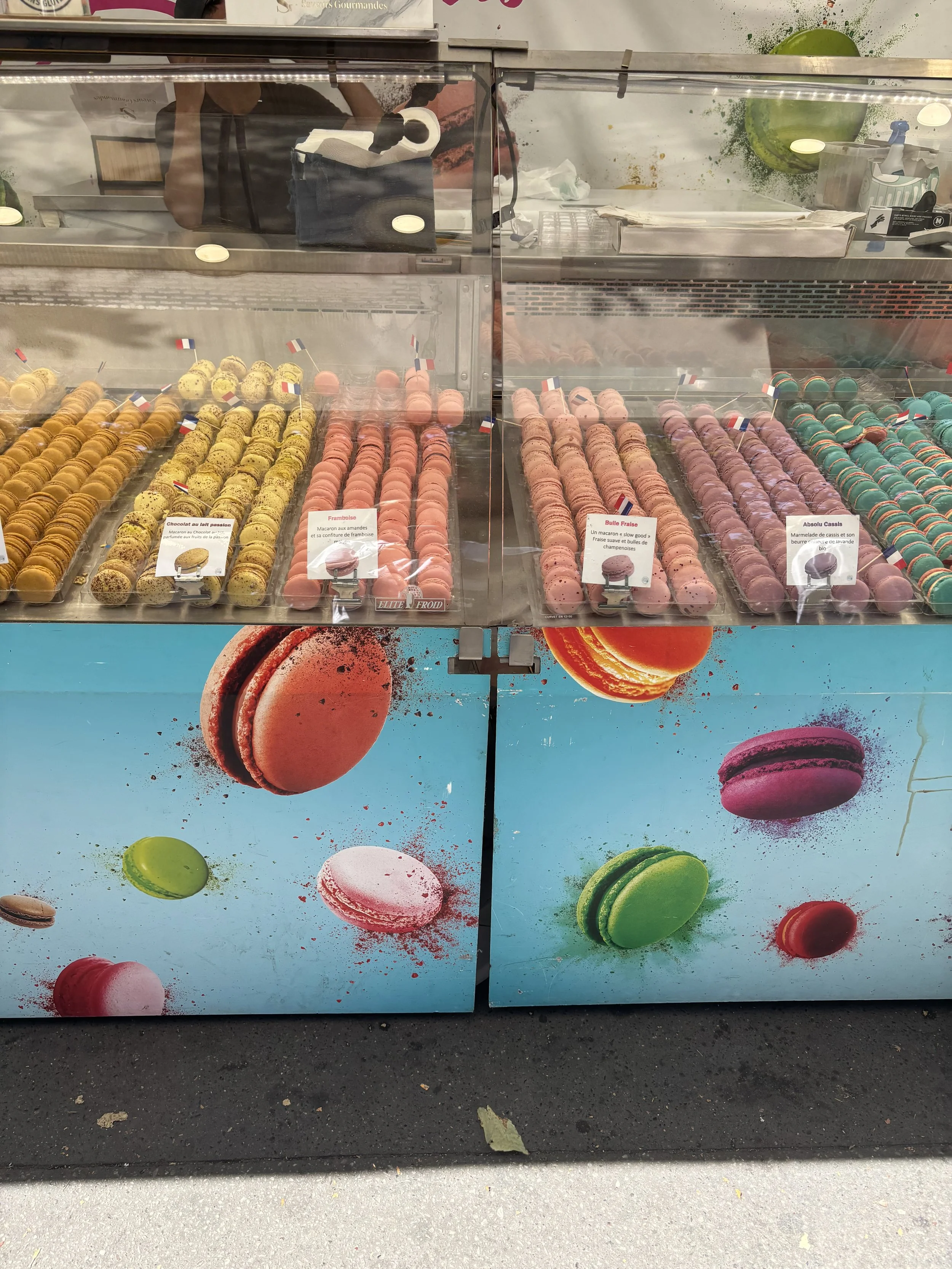
Macarons displayed among street festivities in Paris around mid-July.
If the croissant represents the relaxed side of French mornings, the macaron represents French pastry at its most delicate.
With their smooth shells, crisp exterior, soft filling, and extraordinary range of colors and flavors, macarons are almost miniature works of art.
They also reflect the French fascination with precision. The beauty of a macaron depends on balance, texture, color, sweetness, and presentation all working together.
In Paris, pastry is often part of the visual landscape. A pâtisserie window can feel almost like a gallery, inviting you to admire the food before you taste it.
Crêpes: The Joy of the Street
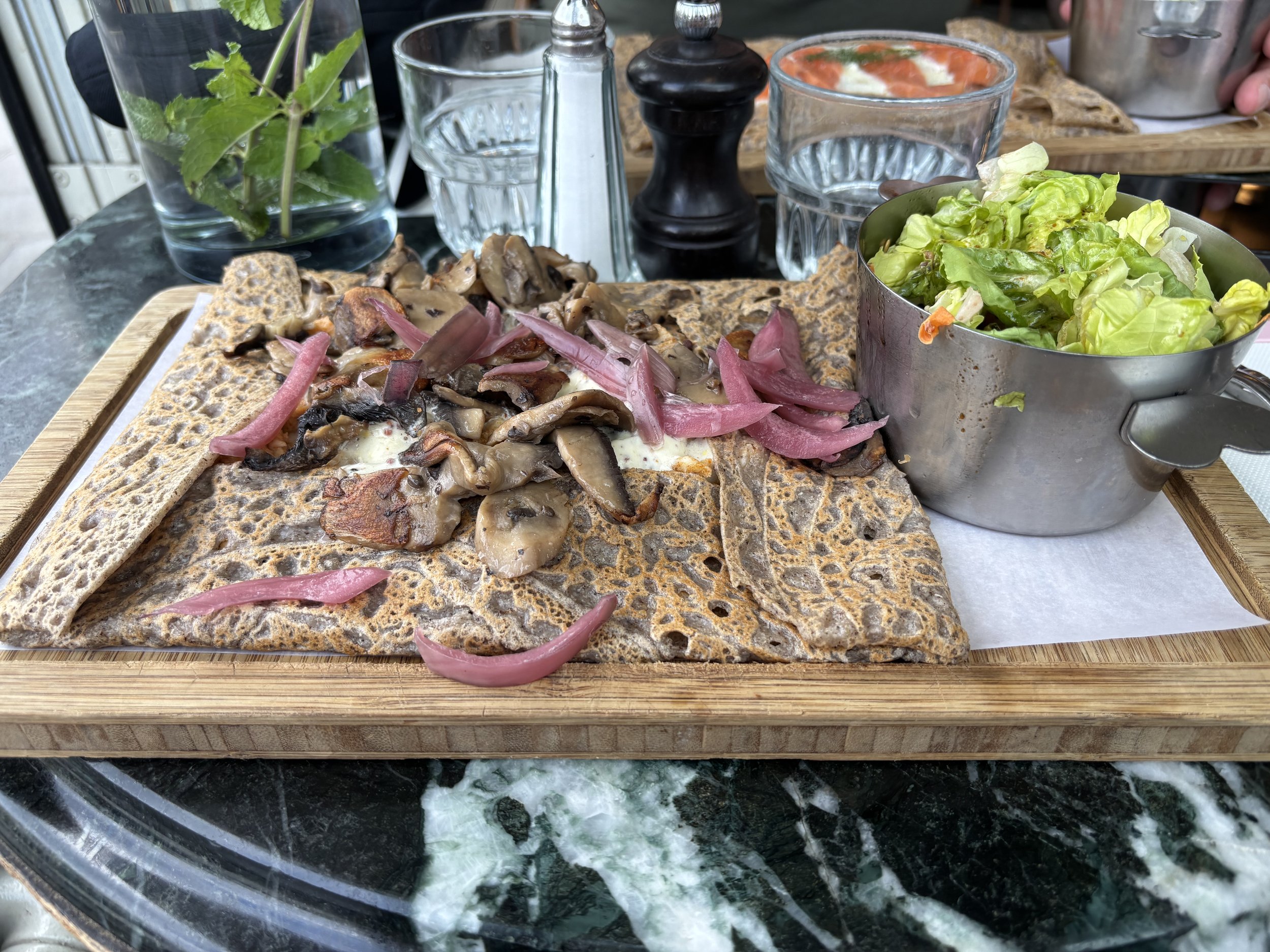
Mushroom Crepe as served in one famous Creprie overlooking Notre Dame Cathedral in Paris.
Then comes the crêpe, a more spontaneous food.
Thin, warm, and endlessly adaptable, crêpes can be filled with sugar, chocolate, fruit, or savory ingredients. They are equally at home at a casual street stall, a neighborhood crêperie, or a festive gathering.
Their appeal lies in their accessibility. Unlike elaborate restaurant dishes, a crêpe can be eaten while wandering through a city.
It is food that encourages movement and discovery.
Belgium And Enjoying Simple Foods
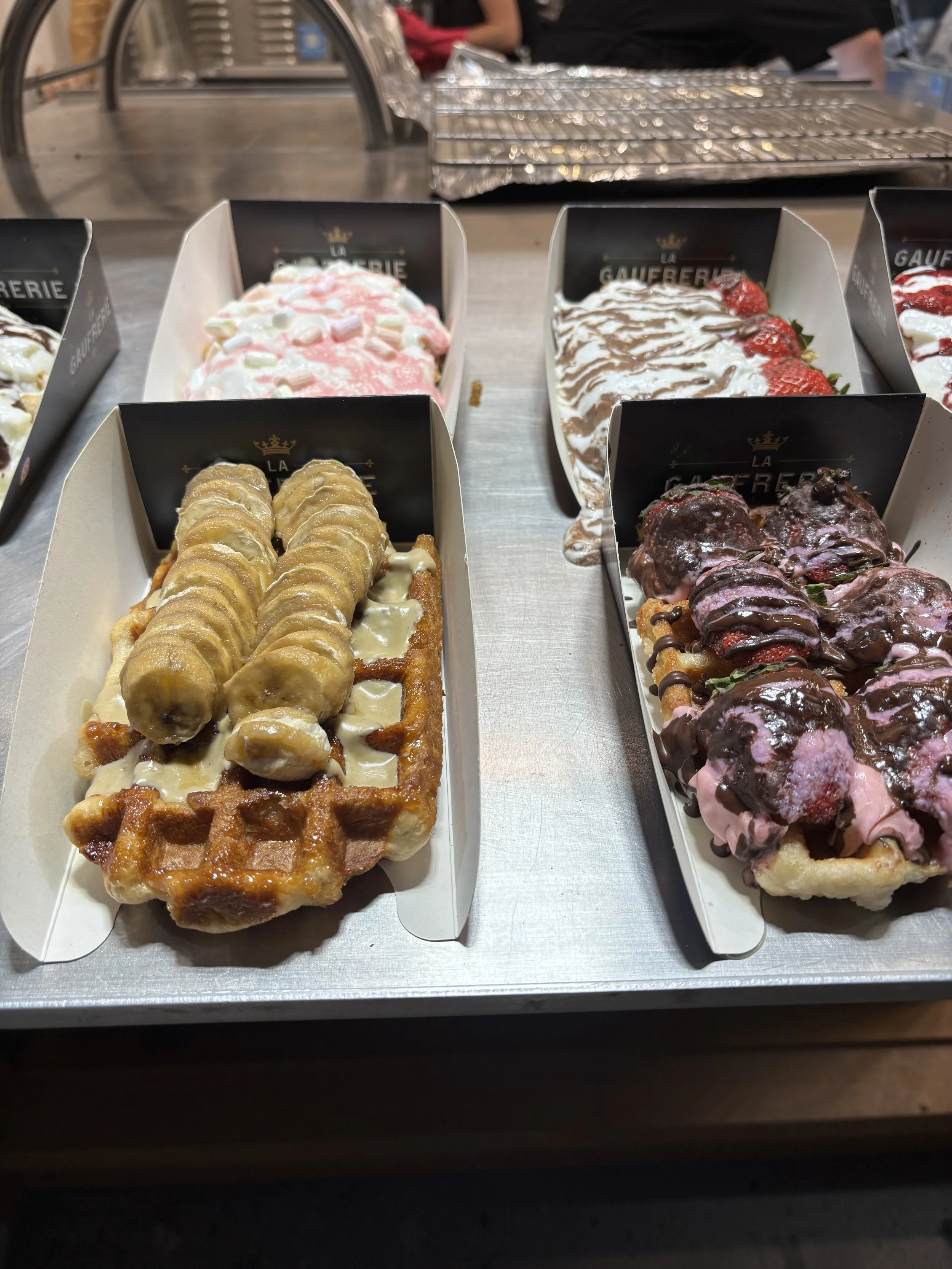
Waffles in one shop in the heart of Brussels.
Cross the border into Belgium and the culinary mood changes.
Belgian food has influences from both its Flemish north and French-influenced Wallonia, creating a cuisine that is diverse despite the country's relatively small size.
But some of Belgium's most famous foods are remarkably uncomplicated.
Fries. Waffles. Chocolate. Beer.
The secret is not complexity. It is doing simple things exceptionally well.
The Netherlands: Cheese, Fries and Canals
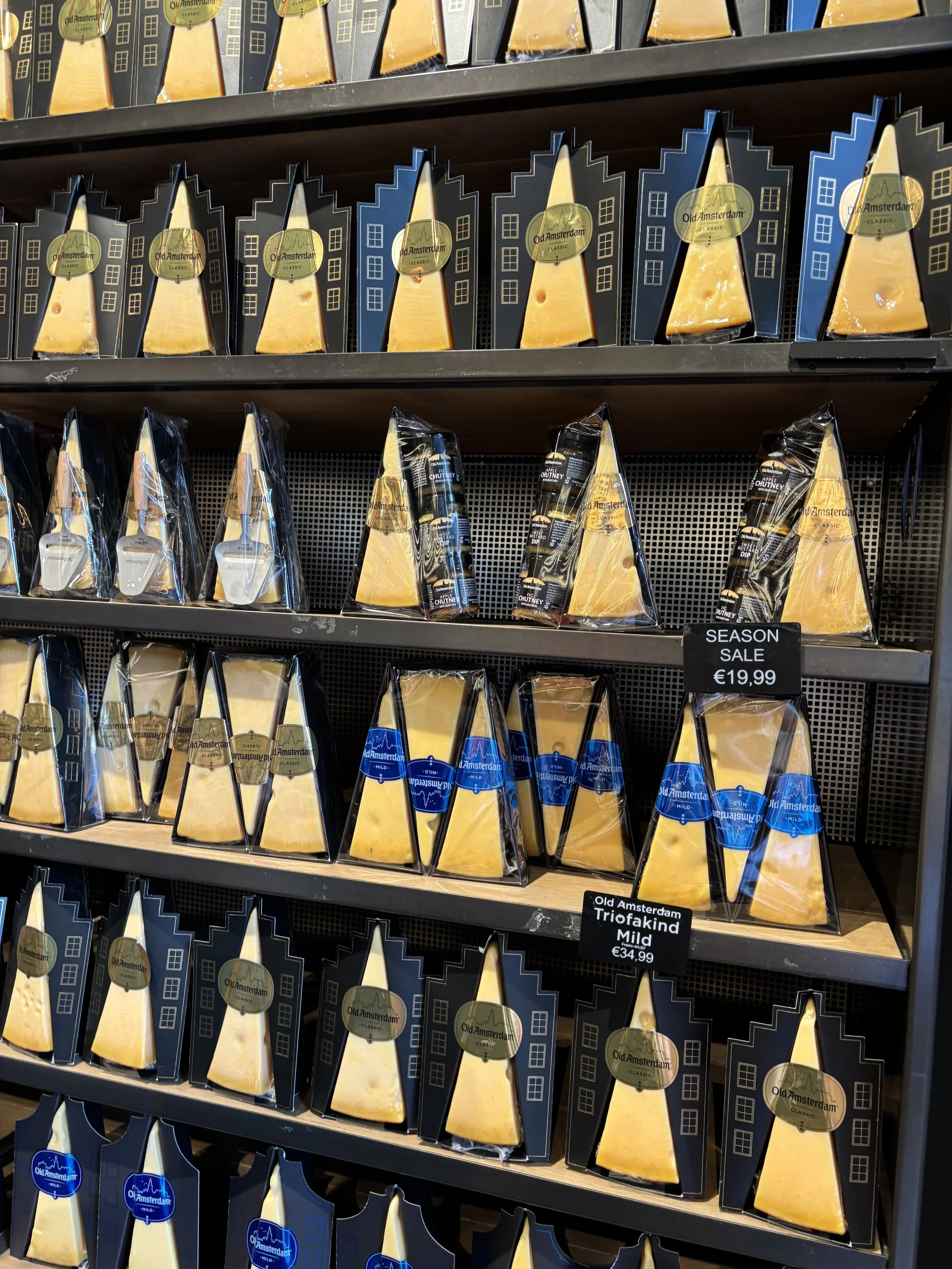
Variety of cheeses displayed in a shop in Amsterdam.
In the Netherlands, food is deeply connected to the landscape.
The country's wet, pasture-friendly environment helped make dairy farming and cheesemaking central to Dutch food culture. Historical evidence shows cheese was already being eaten in the region centuries ago.
Cheese is therefore more than a product in the Netherlands; it makes part of the country's identity.
Gouda and Edam are perhaps the best-known Dutch cheeses, but the country's cheese culture is much broader.
Final Word
What makes European food so captivating is that these dishes connect you to the rhythm and routine of the city.
You can photograph the Eiffel Tower, walk beside the canals of Amsterdam, admire Brussels' historic squares, and visit Europe's great museums.
But some of your strongest travel memories may come from much smaller moments. And this is a reminder that cuisine is a form of cultural storytelling.
Five Facts About European Food Traditions:
1- European food culture is highly regional, even within one country, traditional dishes and ingredients can change dramatically from one region to another.
2- Bread is central to French food culture as baguettes and other breads are commonly served with meals and are deeply connected to everyday French life.
3- French cuisine values fresh, quality ingredients: Seasonal produce, regional products, butter, herbs, and carefully prepared sauces play an important role.
4- Markets, bakeries, cafés, cheese shops, chocolatiers, and street-food traditions make eating an important part of experiencing France, Belgium and the Netherlands.
5- Mussels are popular Belgian and French dish, Moules-frites, mussels served with fries, is one of the best-known food combinations.